A New Era of Renewable Cooperation Between Türkiye and Saudi Arabia
Türkiye and Saudi Arabia have taken a significant step toward strengthening their energy partnership with a landmark solar power agreement that reflects both countries’ growing commitment to renewable energy and regional cooperation.
A Landmark Solar Agreement
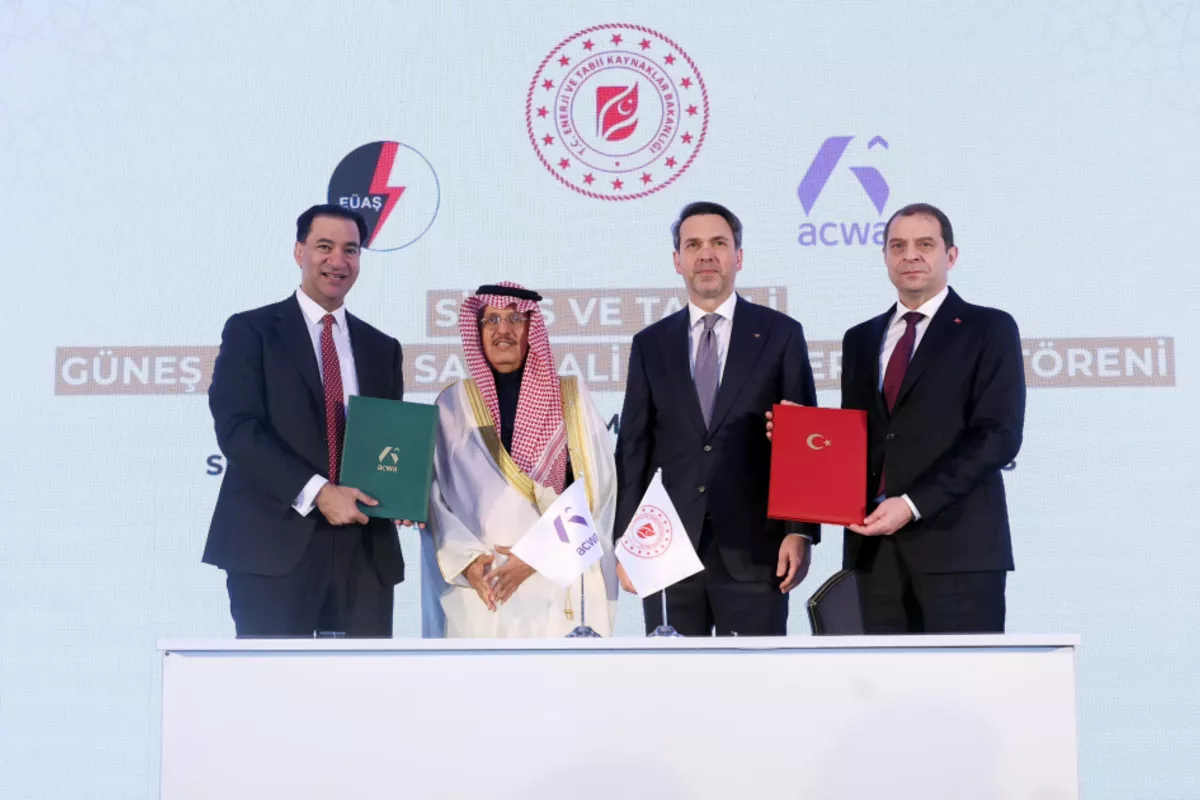
The deal, signed in Istanbul between Türkiye’s Energy and Natural Resources Ministry and Saudi energy company ACWA Power, covers the construction of two major solar power plants in central Türkiye. With a combined capacity of 2,000 megawatts (MW), the facilities are expected to generate enough electricity to power approximately 2.1 million households.
The agreement follows a $2 billion intergovernmental energy accord reached during President Recep Tayyip Erdogan's visit to Riyadh on Feb. 3, underscoring the political momentum behind expanding economic and energy ties between the two countries.
The signing ceremony also included a power purchase agreement between Türkiye’s state-owned Turkish Electricity Generation Corporation (EÜAŞ) and ACWA Power, ensuring long-term offtake and financial viability for the projects.
Where the Projects Will Be Built
The solar plants will be located in the provinces of:
- Sivas Province
- Karaman Province
Together, they form part of a broader 5,000-MW renewable energy framework between Türkiye and Saudi Arabia. A second phase is expected to add another 3,000 MW of solar and wind capacity in the coming years.
Construction is set to begin within the year, with both plants scheduled to enter commercial operation by early 2028.
Driving Down Costs and Boosting Localization
Energy and Natural Resources Minister Alparslan Bayraktar described the initiative as one of the largest domestic and foreign investments ever made in Türkiye’s energy sector.
A key feature of the agreement is its emphasis on competitive pricing and local participation. Officials say the electricity generated under the project will be procured at the lowest price level achieved in Türkiye to date. Additionally, the localization rate for both projects will be at least 50%, helping stimulate domestic manufacturing, supply chains, and employment in the renewable energy sector.
International financial institutions have expressed interest in supporting the project, including the European Bank for Reconstruction and Development (EBRD) and the International Finance Corporation (IFC), reflecting global investor confidence in Türkiye’s renewable energy ambitions.
A Broader Renewable Energy Transformation
The solar agreement comes as Türkiye accelerates what officials describe as an energy “revolution.” In recent years, the country has rapidly expanded its renewable capacity, particularly in solar and wind power.
Installed solar and wind capacity has grown from negligible levels two decades ago to more than 40,000 MW today. In the past year alone, renewable sources accounted for 62% of newly installed electricity capacity.
Türkiye’s long-term energy goals are ambitious:
- Increase solar and wind capacity to 120,000 MW by 2035
- Achieve net-zero emissions by 2053
- Reduce dependence on imported energy resources
- Deliver more affordable electricity to households and industry
These targets align with broader global climate efforts. Türkiye is preparing to host the United Nations’ COP31 climate summit on its Mediterranean coast later this year, with Australia playing a leading role in the negotiations.
Strengthening Regional Ties
Beyond energy, the agreement reflects steadily improving diplomatic and economic relations between Türkiye and Saudi Arabia. In recent years, the two countries have expanded cooperation across trade, investment, and regional diplomacy, including coordination on Gaza and support for Syria’s new government following the ouster of Bashar Assad in late 2024.
The renewable energy partnership signals a shared strategic vision: leveraging economic collaboration to support long-term stability, sustainability, and growth.
Why This Deal Matters
The Türkiye-Saudi solar agreement stands out for several reasons:
- Scale: 2,000 MW in the first phase alone
- Economic impact: Billions in investment and strong local industry participation
- Climate alignment: Supports long-term decarbonization goals
- Regional cooperation: Reinforces strategic ties between two key regional powers
As the projects move from agreement to construction, they are poised to become a flagship example of cross-border collaboration in clean energy - and a cornerstone of Türkiye’s broader renewable transformation.