Why Türkiye–Saudi Cooperation Matters for the Middle East
Daily Sabah, a Turkish daily newspaper, has published an article highlighting the enhancement of Türkiye-Saudi Arabia relations amid the ongoing the tensions in Middle East.
The Caspian Post republishes the article.
The upward trajectory in relations between Türkiye and Saudi Arabia continues to gain significant momentum. Amid the ongoing volatility and conflicts across various parts of the Middle East, the rapprochement between these two major regional powers and their pursuit of synchronized policies are poised to profoundly reshape numerous geopolitical dynamics. It is an inescapable truth that Ankara and Riyadh possess a profound mutual complementarity across a diverse range of sectors, with the economic realm standing at the forefront. Even though numerous dossiers of regional friction weigh heavily upon the agendas of both leaders, their strategic frameworks for resolving these tensions exhibit a remarkable convergence.
Emerging Bilateral Ties
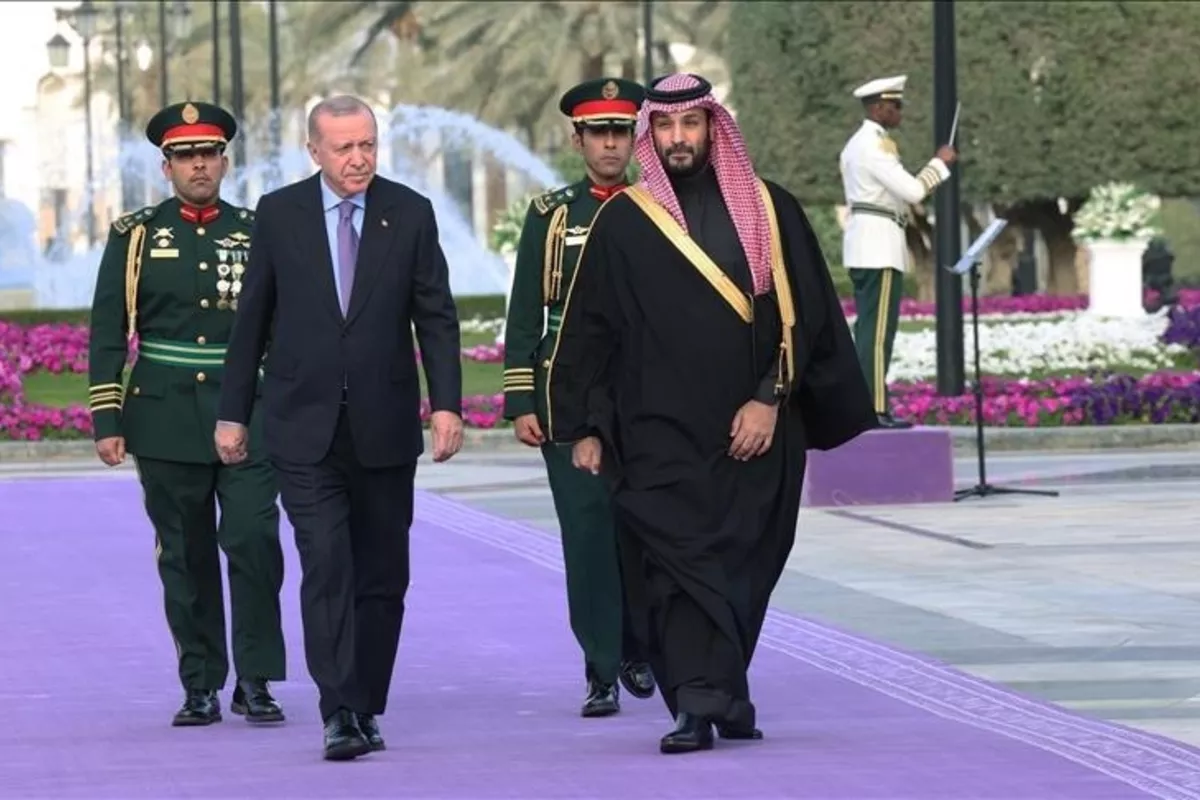
Türkiye and Saudi Arabia have completely left behind their tense competitive environment as of 2022, meeting on a rational cooperation platform centered on economic and regional pursuits. The effects of the rapprochement between these two regional powers extend beyond the chaotic environment of the Middle East, holding the potential to create a global impact. President Recep Tayyip Erdoğan's choice of Riyadh for his first overseas trip in 2026 carries much more significance than a simple diplomatic courtesy visit, given these factors and the timing. The visit, which will focus on economic integration, defense industry cooperation and regional crises, will go down in history as an important milestone in a structural partnership.
In terms of economy and trade, the reality is that the trade volume between the two countries is far from its potential. Despite an increase in recent years, the trade volume, hovering around $8 billion (TL 347.99 billion), is far from the long-term target of $30 billion. The projects under Saudi Arabia's “Vision 2030,” launched in line with its efforts to diversify the economy and end its dependence on oil, offer unique opportunities for the Turkish business world. Numerous Saudi initiatives, primarily the NEOM, Qiddiya and Red Sea projects, represent a significant market for Turkish contracting firms. Riyadh's goals largely align with Türkiye's production, industrial and technological capabilities. Syria's rapid and steady progress toward stability following the revolution means that the shortest route between Türkiye and Saudi Arabia is becoming active again, which will inevitably have a positive impact on trade relations. Given the size of the business delegation accompanying Erdoğan, it is highly likely that new business agreements will be signed in the fields of renewable energy, health, tourism and digital transformation during the visit.
One of the most strategic areas of cooperation is the defense industry. This trade involves not only the purchase and sale of products between the two countries, but also critical steps such as joint production and technology transfer. The Saudis' interest in Turkish defense industry products and projects, particularly Baykar, Aselsan and Turkish Aerospace Industries (TAI), will be one of the key topics of the visit. The Akıncı UAV agreement signed between Baykar and Riyadh in July 2023 remains the largest defense industry export in Türkiye's history. Technology transfer and joint production with Turkish companies, within the scope of Saudi Arabia's defense product localization policy, serve as a driving force for economic relations. As a non-Western partner capable of reliable production in line with NATO standards, Turkish companies are of great value to the Saudis. In scenarios involving a planned trilateral defense pact between Türkiye, Saudi Arabia and Pakistan, Turkish air defense systems are expected to form the “technological backbone” of this structure.
Working for stability
Although economic and defense industry issues are at the forefront, the most critical geopolitical dimension of this rapprochement is its impact on regional security equations. The developments of the last two years, including the genocide in Gaza, the Syrian revolution, the 12-Day War and the Doha attack, have led the countries of the region to seek a collective security response by the local actors of the region, no longer dependent on external actors such as the United States. Contingent, delayed and ineffective against Israel, the U.S. security guarantees have forced many actors, notably Riyadh and Ankara, to produce their own security. In this context, a trilateral defense cooperation mechanism between Türkiye, Saudi Arabia and Pakistan is on the agenda. The combination of Türkiye's military, technological and production capacity, Saudi Arabia's financial power, and Pakistan's nuclear deterrence and human resources will inevitably affect the balance of power in the region.
In recent years, Ankara and Riyadh's common stance on many regional crises has come to the fore. Israel's genocide in Gaza and its occupation of the West Bank draw the ire of both sides, and they act in full harmony in seeking to exert legal, political and economic pressure. Israel's expansionist policies are perceived not only as a Palestinian problem but as a direct threat to the security architecture of the entire region. In the struggle for the recognition of Palestine as a state, the two countries have made joint diplomatic efforts, as a result, 160 of the 193 U.N. member states have recognized Palestine as a state. The stipulation of an independent Palestinian state within the 1967 borders with East Jerusalem as its capital is another diplomatic stance in which both countries are aligned side by side.
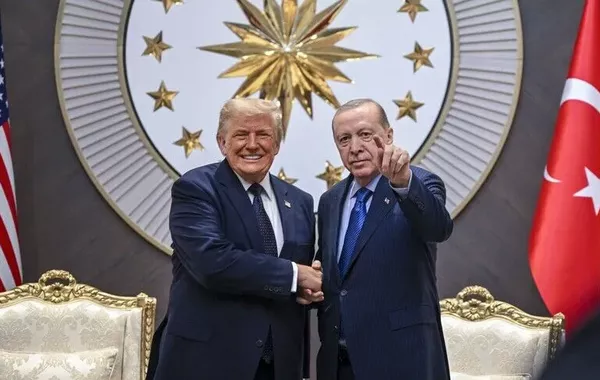
Both countries are actively cooperating on Gaza, working together to deter Israel, exert diplomatic pressure and rebuild post-war Gaza. On this issue, which will be one of the most critical topics of the visit, combining Türkiye's contracting capacity with Riyadh's financial power in the reconstruction of Gaza could produce effective results. On the diplomatic dimension, acting as a bloc in the Board of Peace mechanism proposed by Donald Trump is among the main agenda items. The overlap between the moral and political positions of Türkiye and Saudi Arabia on the situation in Gaza is of great importance for the future of the Palestinian people.
Ankara and Riyadh are acting in harmony in the process of Syria's uprising, which started with the revolution on Dec. 8, 2024. Both capitals' foreign policy of “prioritizing peace and stability” and the principle of “opposing any development that pushes the region into uncertainty” will be decisive for Syria's recovery. Riyadh and Ankara's support for Syrian President Ahmed al-Sharaa's administration in terms of territorial integrity, the economy and the search for diplomatic legitimacy has resonated globally, prompting Trump to completely revamp his Syria policy and laying the groundwork for the fight against separatist structures such as the YPG. The “reconstruction of Syria,” one of the main agenda items of the visit, is planned to combine the technical and financial capabilities of Türkiye and Saudi Arabia, just like Gaza. The strategies of “solving the problems by the countries of the region” and “rebuilding Syria and returning it to the international system” adopted by both sides are the key to stabilizing Syria.
In almost all of the destabilizing developments in the region, such as Sudan, Yemen, Libya and Iran, the alignment between Ankara and Riyadh is remarkable. This alignment is not just a seasonal or conjunctural rapprochement, but the result of a strategic vision of “regional ownership.” In particular, the irrational regional policies of the U.S. are bringing the ancient peoples of the region closer to cooperating with each other. About a possible U.S. attack on Iran, rather than forming an “anti-Iran bloc,” the two sides are converging on a strategy aimed at preventing a regional war. There is a joint diplomacy of de-escalation on the Washington-Tehran line, and similarly, in Sudan and Yemen, a coordinated policy combining humanitarian aid and diplomacy is being pursued to maintain central authority and end the conflicts.
Because “imported solutions” do not always yield the desired results in the region, a new strategic alliance is emerging. In this context, the rapprochement between Türkiye and Saudi Arabia goes far beyond the improved relations between the two countries and points to the rise of a new geopolitical axis in the Middle East.