Iran crisis: A Litmus Test for Western Unity
The Middle East has long served as a stress test for Western unity. From the invasion of Iraq to the intervention in Libya, moments of crisis in the region have repeatedly exposed the tensions between American military assertiveness and Europe’s strategic caution. The latest escalation with Iran may prove to be the most consequential test yet.
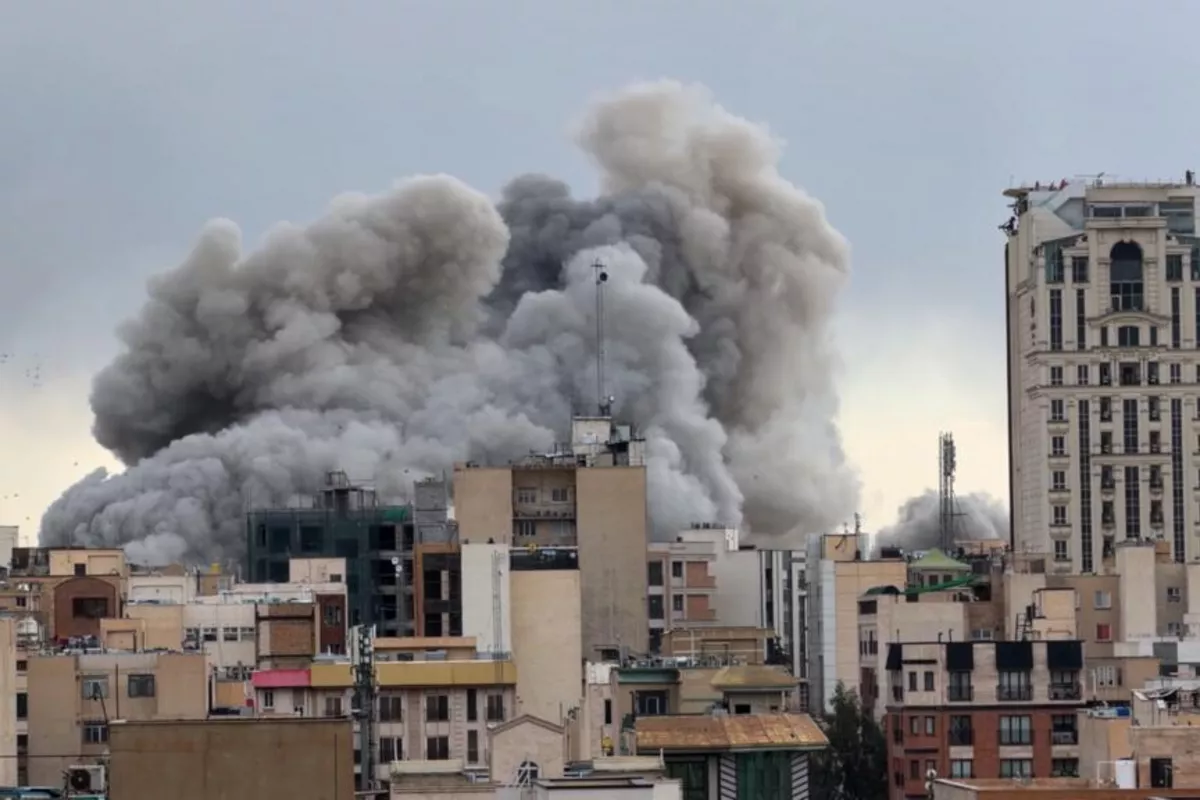
When the U.S. and Israel launched sweeping airstrikes across Iran on Feb. 28, the operation was presented as a decisive effort to neutralize Tehran’s nuclear ambitions. Yet the political aftershocks have spread far beyond Iran itself. Across Europe, governments are grappling with a more fundamental question: not only how to respond to Iran, but whether the Western alliance still possesses the cohesion and legitimacy required to act collectively in an increasingly unstable world.
U.S. Unilateral Gamble
According to Washington, the strikes carried out by the U.S. Air Force and Navy were designed to achieve two primary objectives: eliminating the imminent risks posed by Iran’s nuclear program and forcing the Iranian regime to either reform or face systemic change. The scale of the operation became immediately clear when Supreme Leader Ayatollah Ali Khamenei was assassinated during the first wave of attacks.
Within days, his son, Mojtaba Khamenei, was declared his successor, highlighting the magnitude of the shock the operation sought to impose upon the Iranian regime. Yet while Washington and Tel Aviv defended the campaign as a necessary act of preventive security, the strategy has not produced Western unity. Instead, it has revealed deep fractures within the trans-Atlantic alliance.
Several traditional allies, including Spain, France, the United Kingdom and Italy, have shown little enthusiasm for endorsing another large-scale military intervention in the Middle East. What Washington presents as decisive leadership, many European capitals increasingly interpret as strategic unilateralism.
For decades, the trans-Atlantic alliance rested upon a foundation of shared security interests, consultation and diplomatic coordination. Yet the decision by the current U.S. administration to launch simultaneous bombardments against Iran and Lebanon without meaningful European coordination has sparked considerable outrage across the continent. The dual strikes on Tehran and Beirut have already resulted in hundreds of civilian deaths and the displacement of nearly 800,000 people in Lebanon alone. A growing number of international legal scholars and diplomats argue that the operations fall outside the recognized framework of international law.
The result has been something deeper than a policy disagreement. It has triggered a crisis of identity within the European Union itself. European Commission President Ursula von der Leyen’s initial suggestion that the “rules-based international order” had effectively collapsed triggered sharp backlash from Madrid and Paris, forcing her to issue a public clarification. Her later pledge of “unshakeable commitment” to international law before the European Parliament in Strasbourg revealed the deeper uncertainty gripping Brussels as it attempts to respond to Washington’s military adventurism.
Between Loyalty and Autonomy
If the crisis has exposed anything, it is the increasingly fragmented nature of Europe’s strategic outlook. Even among governments traditionally aligned with Washington, the reaction has been marked by hesitation, caution and, increasingly, open criticism.
In the U.K., historically the U.S.’ closest partner, the political establishment is navigating the crisis with notable restraint. The domestic debate in London has become so sensitive that senior Conservative figures such as Kemi Badenoch have publicly denied advocating British participation in the U.S.-Israeli campaign.
Italy has also adopted a carefully calibrated position. Prime Minister Giorgia Meloni acknowledged in parliament that the U.S.-Israeli operation against Iran had taken place “outside international law,” while simultaneously warning that Europe cannot allow Iran’s regime to acquire nuclear weapons. She further emphasized that Italy “is not at war and has no intention of entering the war,” reflecting the delicate balance European governments are attempting to maintain between strategic alignment with Washington and concerns over the legality and consequences of the intervention.
Across the continent, this ambiguity is becoming increasingly visible. French President Emmanuel Macron has used the crisis to revive his long-standing argument for “European strategic autonomy,” warning that Europe must not be drawn into a conflict it neither initiated nor controls. A destabilized Iran, after all, would inevitably generate migration pressures, regional instability and security risks that Europe, rather than the U.S., would ultimately have to manage.
Spain remains the most outspoken critic of the intervention. Prime Minister Pedro Sanchez has refused to endorse the strikes and has downgraded Spain’s diplomatic representation in Tel Aviv, arguing that unilateral military action risks further destabilising an already fragile international order.
Taken together, these reactions reveal a Europe that is neither united behind Washington nor capable of articulating a fully independent strategic response. The result is a continent caught between strategic dependence and political hesitation, watching events unfold rather than shaping them.
Defining Moment
The comprehensive strikes of Feb. 28 may have achieved certain tactical objectives against Iran’s nuclear infrastructure. Yet the broader strategic consequences are becoming increasingly difficult to ignore. Reports concerning Mojtaba Khamenei’s opaque financial network, spanning London, Dubai and other global financial centres, continue to surface in Western media. But Washington’s reliance on military escalation rather than diplomatic engagement has not produced stability. Instead, it has alienated allies, emboldened geopolitical rivals and exposed a Western alliance that appears increasingly divided and strategically fatigued.
Iran may indeed become the ultimate litmus test. Not simply for the Iranian regime, but for the cohesion of the West itself. If this crisis reveals anything, it is that the greatest challenge facing the Western alliance may no longer be Iran’s nuclear programme, but its own eroding unity.
Find the original article here