Green Tourism Revolution in Central Asia: Bishkek Unveils New Kazakhstan-Kyrgyzstan Eco-Corridor Master Plan
Central Asia is stepping into a green tourism era as Bishkek unveils a new eco-corridor master plan connecting Kazakhstan and Kyrgyzstan. Published in Travel and Tour World, the plan aims to promote sustainable travel, protect natural landscapes, and boost cross-border tourism while fostering regional cooperation in environmental conservation.
The landscape of Central Asian travel is being reshaped by a visionary commitment to sustainability and regional cooperation. A significant milestone was reached in Bishkek on February 12, 2026, with the official presentation of a comprehensive green update to the Almaty-Bishkek Economic Corridor (ABEC) tourism master plan. This strategic document, which outlines the future of travel between Kazakhstan and Kyrgyzstan, was meticulously prepared with the specialised assistance of the Asian Development Bank (ADB). The gathering brought together governmental representatives, regional officials from the Issyk-Kul and Chui regions, and key stakeholders from the international development sectors to align on a common ecological vision, The Caspian Post republishes the article.
A Shift Toward Ecological Responsibility
While the foundational ABEC tourism master plan was initially ratified in 2019, the newly unveiled version reflects a profound shift in global travel priorities. According to insights provided by Kyrgyzstan’s Ministry of Economy and Commerce, the updated framework is anchored by three primary pillars designed to protect the region’s pristine natural heritage.
The first of these pillars is dedicated entirely to green tourism. Under this initiative, the development of specialized eco-tourism routes is being prioritized. This includes the expansion of high-altitude hiking and cycling trails that allow for immersive exploration without the environmental degradation associated with motorized transport. Furthermore, sustainable accommodation facilities are being encouraged to ensure that the influx of visitors does not overwhelm the fragile mountain ecosystems, alpine lakes, and national parks that define the Almaty-Bishkek corridor.
Integrating Sustainability and Resource Efficiency
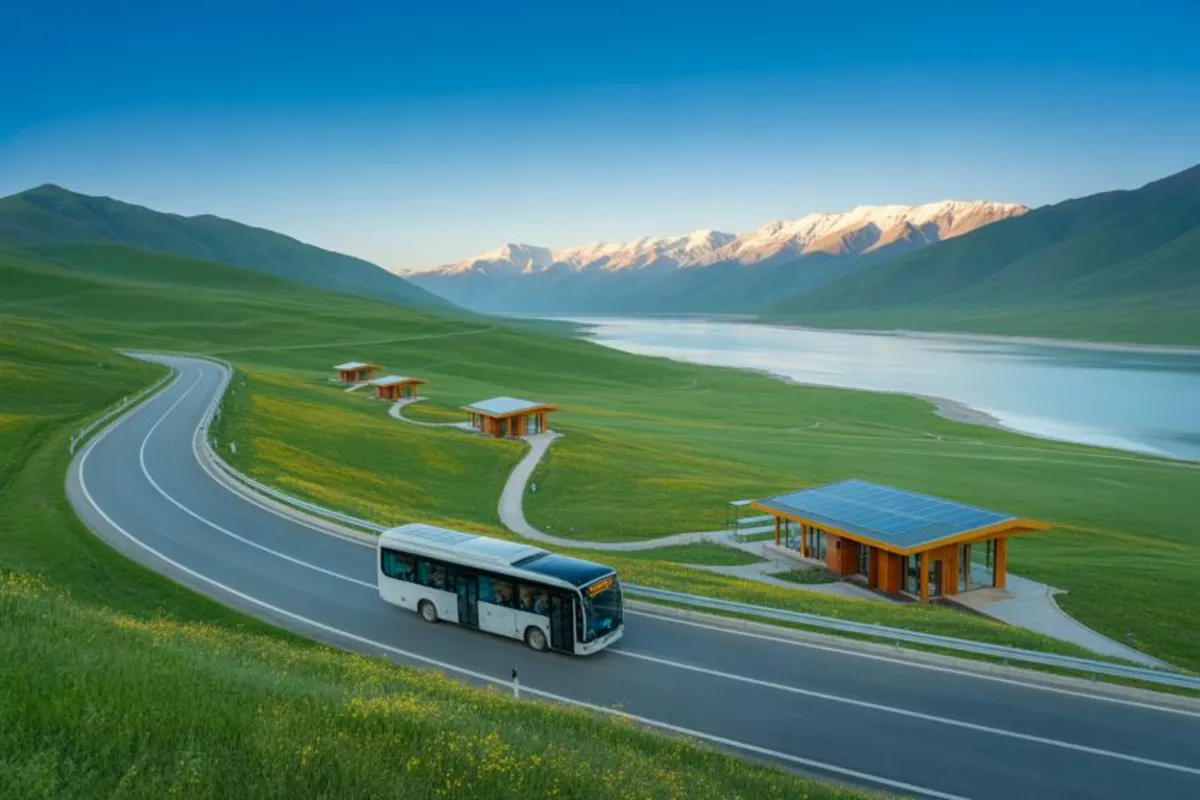
The second priority outlined in the master plan focuses on the long-term sustainability of the tourism sector’s infrastructure. A significant emphasis is placed on improving resource efficiency across all hospitality operations. The introduction of renewable energy sources-such as solar and wind power-is being facilitated to power remote mountain lodges and lakeside resorts.
Additionally, green logistics are being promoted to modernize the way goods and travelers move through the corridor. By focusing on the reduction of the carbon footprint associated with tourism activities, the plan seeks to ensure that the economic benefits of travel do not come at a cost to the climate. These measures are intended to transform the region into a model for responsible development within the broader Eurasian context.

photo: Meran Group
Enhancing Regional Connectivity Through Technology
Beyond environmental conservation, the third focus area involves the seamless integration of regional borders and transport networks. Digitalization is being leveraged to streamline border-crossing procedures, reducing the bureaucratic friction that has historically hindered multi-country itineraries.
The development of sustainable transport solutions is also being coordinated to strengthen the physical links between Kazakhstan and Kyrgyzstan. By creating more convenient and interconnected tourist routes, the ABEC initiative aims to foster a unified travel destination. It is expected that these improvements will not only benefit international tourists but also enhance the mobility of local residents who frequent these transboundary landscapes.
Financial Mobilization and Investment Strategy
The updated master plan is not merely a conceptual document; it is designed as a catalyst for significant financial mobilization. Efforts are being made to attract robust investment from the Asian Development Bank, national governments, and the private sector. By identifying priority projects along the corridor, the plan provides a clear roadmap for development partners to allocate resources effectively. These investments are projected to modernize the tourism value chain, from high-end eco-resorts to local community-based tourism enterprises, ensuring that the economic impact is felt at every level of society.
Bridging the Gap: The Almaty to Issyk-Kul Shortcut
Perhaps the most anticipated component of the ABEC initiative is the proposed construction of an alternative highway linking Almaty, Kazakhstan’s vibrant financial hub, with Lake Issyk-Kul, the crown jewel of Kyrgyz tourism. Currently, the journey between these two points is significantly hampered by the formidable Tianshan mountain ranges.
Although Almaty and the northern shores of Issyk-Kul are separated by a mere 80 kilometres in a straight line, travellers are currently forced to take a circuitous route through Bishkek. This existing path extends the journey to over 460 kilometres, often resulting in an exhausting eight-hour drive to reach the resort town of Cholpon-Ata. The geographical barriers have long been a point of frustration for Almaty residents who view the lake as their primary weekend getaway.
A Direct Route to the Future
To address this logistical challenge, Kazakhstan and Kyrgyzstan signed a memorandum of understanding in 2007, proposing a route that completely bypasses Bishkek. This direct link would pass through Uzynagash and Kemin, connecting Almaty directly to the lake’s northern shore. While the project had previously been delayed, its inclusion in the updated green master plan has renewed interest in its completion.
If this ambitious infrastructure project is realised, the travel distance will be reduced to around 260 kilometres. This reduction would significantly reduce travel times, making the “Pearls of the Tianshan” more accessible than ever before. This highway is envisioned not only as a convenience but also as a long-term artery for regional growth, capable of handling traffic while respecting the environmental sensitivity of the mountain passes it crosses. This master plan brings the dream of a seamless, environmentally friendly, and integrated Central Asian travel experience closer to reality.