The Ugly Duckling is the story of a creature that does not yet recognize its own kind, is unable to find its place within a small world that misreads it, and gradually searches for its true identity. For a swan placed in a flock where it does not belong, being perceived as a mistake of birth within the narrow confines of a coop is also a matter of fate. Who knows, perhaps those who underestimate it are merely defending the boundaries of their own small order. As the duckling passes through swamps, cold waters, and loneliness, its identity slowly emerges through endurance. Its eventual transformation into a swan is, in the end, more a verdict of geography, time, and nature than a miracle. In other words, it is inevitable.
The fairy tale recounted above also represents the fate of unmanned systems, commonly known as drones, in recent military science literature. Even at the end of the Second Karabakh War, assessments suggesting that the operational effectiveness of unmanned systems was limited were considered “grounded and realistic” in contemporary publications.
In the context of the Russian-Ukrainian War, which broke out a couple of years later, data from both the Russian and Ukrainian Defense Ministries indicate that more than eighty percent of destruction on the battlefield - from target detection to kinetic strike capability - is being carried out by unmanned systems. It should also be underlined that, in an ongoing armed conflict, it is highly difficult for parties to agree on data. In the Black Sea, Ukrainian robotic systems have managed to take 30 percent of the Russian Black Sea Fleet out of the conflict. Meanwhile, during the NATO Steadfast Dart 2026 exercise, the Bayraktar TB-3 took off autonomously from TCG Anadolu and landed back on the warship after hitting targets in the Baltic Sea. In short, the golden age of robotic warfare systems is making itself evident.
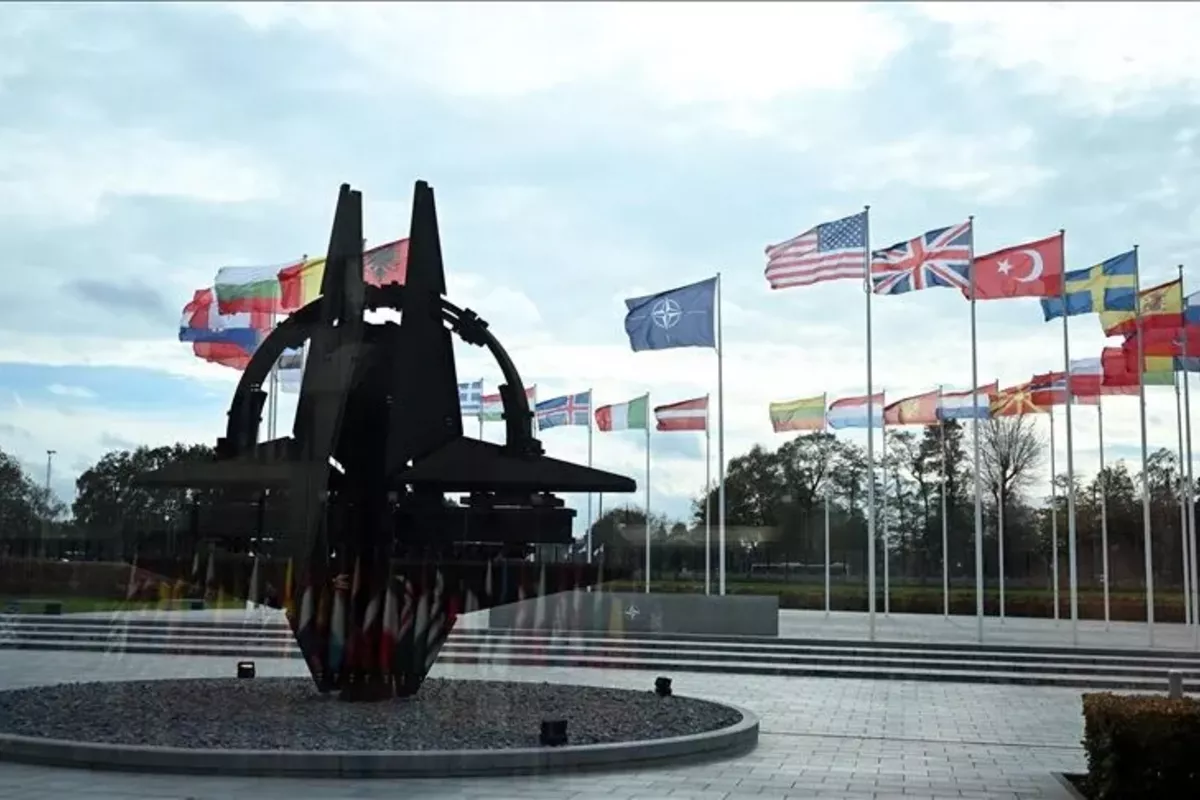
Now, the critical question regarding NATO’s Ankara Summit is as follows: Where will NATO stand within this bright fairy tale?
A Turning Point: Poland 2025
On September 10, 2025, the mass violation of Poland’s airspace by Russia’s Gerbera-type unmanned aerial vehicles became one of the critical thresholds for the security environment that has been taking shape for NATO since 2022. Subsequently, NATO’s Eastern Sentry exercise demonstrated that the Alliance’s air defense, crisis management, and political-military deterrence reflexes are working simultaneously in Eastern Europe. However, the real significance of the Poland 2025 incident is not the downing of a few unmanned vehicles. The Russian military elite is testing the deterrent effect of low-cost airspace violations against NATO’s reaction time, rules of engagement, and Article 5. These activities are part of a continuous shadow campaign carried out below the threshold that would trigger a large-scale military reaction. Russia’s gray-zone activities against Europe, conducted concurrently with the invasion of Ukraine, also serve as a second front.
Although the picture drawn above may seem like a tactical escalation, in substance, it is connected to the concrete, strategic reality that NATO has had to face lately. The agenda of the Alliance seems to be shifting from a platform-centric warfare-readiness paradigm toward fields such as joint data architecture, artificial intelligence, autonomy, and multispectral capabilities. Nevertheless, within the scope of lessons learned from Ukraine, USVs, or unmanned surface vehicles, and UCAVs, or unmanned combat aerial vehicles, stand out not merely as a new platform family, but as factors that transform combat network architecture.
The Russian-Ukrainian War has rendered this transformation even more visible on the battlefield, as the Ukrainian experience does not just involve drone usage. Low-cost systems, software integration, artificial intelligence, and almost real-time tactical-technological adaptation produce outcomes together. Fast innovation groups such as the Brave1 cluster in Ukraine and high-tech actors such as the A1 Center have highlighted the stark contrast between themselves and the highly bureaucratic procurement processes of most NATO allies. Ukraine has become one of the leading implementers in the robotic warfare field in Europe; it has relatively offset its artillery ammunition gap and established a reconnaissance-strike complex that has slowed down the pace of Russian penetration. The same Ukraine is now able to strike strategic energy and defense industry targets deep within Russia.
However, it is not realistic to say that conventional firepower is being replaced solely by drones. NATO forces will continue to rely on factors such as artillery, armored forces, manned air power, long-range precision strikes, and air defense. Nonetheless, the Steadfast Defender exercises, which constitute the largest-scale activity since the Cold War, reflect the force-generation principles in question. This on-point approach for the Alliance positions UAVs and UCAVs as factors that enable conventional capabilities to function in a more destructive, flexible, and cost-effective manner.
What Sort of Defense Planning?
If US support diminishes, Europe’s main gap will not just be in the number of warplanes or main battle tanks. The primary problem will be how to replace the intelligence, deep-attack, air defense, space, cyber, and logistics architecture that the US has long provided.
The main issue for the Eastern Flank is that low-cost unmanned systems such as Shahed-Geran and Gerbera drones may tie up expensive weapons and political decision-making processes. Low-cost, ambiguous, and hard-to-detect unmanned systems also define the threat along the Poland and Romania line. Scrambling warplanes against low-cost drones may demonstrate Alliance unity; however, it is neither cost-effective nor technically sustainable as a presumed defense model. Using expensive missiles against cheap drones does not offer a sustainable cost equation for NATO’s defense.
The pace of drone competition is decisive for NATO. As electronic warfare intensifies, artificial intelligence-supported drones that are able to detect certain targets are turning into a core capability.
More importantly, NATO’s future military vision will be shaped by countries that are able to integrate unmanned systems, electronic warfare, secure supply chains, microchip and critical-component independence, the defense of the Eastern Flank, and multi-domain operations.
The Ankara Summit will therefore not only be a political gathering about burden-sharing, but also a test of whether NATO can translate lessons from Ukraine into a more adaptive defense-industrial and operational agenda. In that sense, the role of the host nation is not incidental.
Within this broader picture, Türkiye is among the NATO allies that bring relevant operational and industrial experience to the unmanned-systems domain. The combat record of the Bayraktar TB2 in Karabakh, Libya, Syria, and Ukraine highlighted the operational relevance of Turkish UCAVs against Russian- and Soviet-made air defense and armored systems, particularly in permissive or contested environments. Poland’s procurement of 24 Bayraktar TB2s, initiated in 2022 and completed in 2024, and Romania’s Bayraktar TB2 contract illustrate how Turkish unmanned systems have become part of the capability mix on NATO’s eastern and Black Sea flanks. Looking ahead, platforms such as KIZILELMA could further broaden this portfolio if they mature operationally and find suitable mission sets within allied force planning.
Against NATO, a combination of disinformation, cyberattacks, sabotage, proxy actors, and unmanned-system incursions is being utilized without crossing the threshold of open warfare. NATO needs more than drones. What the Alliance needs is a combat network architecture that is able to learn, produce, and update faster, rendering gray-zone pressure below the Article 5 threshold obsolete. The defense-technology aspect of the Ankara Summit will take shape precisely in this domain.
Find the original article here