In June, Central Asia hosted the world’s largest critical-minerals conference. The Astana Minerals and Mining Conference was held from June 11-12 in Kazakhstan’s capital. Delegates from mining companies and many foreign governments convened to buy and sell products and discuss policies shaping the industry.
That such a conference is hosted in Central Asia itself is a sign of the region’s significance to the critical minerals industry, which supplies core components for semiconductors, circuits, and batteries that underpin the momentous growth of technology-particularly artificial intelligence-in our time.
The most pronounced participant in the conference was America. The US government and private industry sent senior officials to Astana who declared America’s permanent commitment to mining in Central Asia. “We are here for the long term,” said Assistant Secretary of Commerce David Fogel at the conference, adding that “now is the time for action.”
This interest is new and deliberate. It is a part of the Trump administration’s strategy to support competition against China through Central Asia, which Chinese companies have already dominated. The US approach is already bringing billions of dollars to Central Asia’s economy and could be transformative. It merits attention.
America’s Interests in Central Asian Critical Minerals
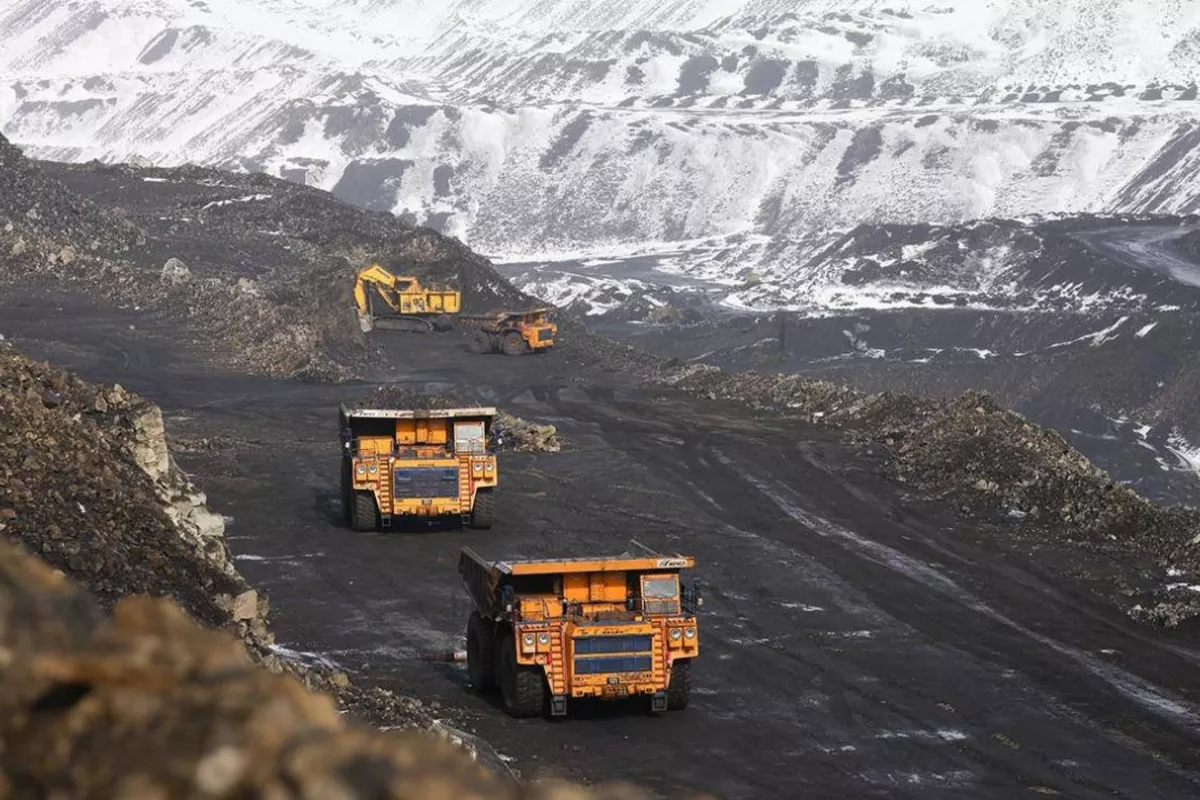
The United States wants to mine critical minerals from Central Asian countries and export them back to America as part of its energy, infrastructure, and technology supply chains. The minerals in question include lithium, chromium, manganese, zinc, tungsten, copper, and uranium-all of which are in very high demand due to explosive growth in these industries.
Lithium, for instance, is a key element in rechargeable batteries for mobile devices, laptop computers, and electric vehicles. Copper forms the wiring in electrical circuits. Manganese and zinc, by contrast, are alloy components for steel. Tungsten has a high density and high melting point, which make it useful across a wide array of industries, including aerospace, defense, lightbulbs, and manufacturing. Uranium, meanwhile, is an essential fuel for nuclear energy production, which the Trump administration has aggressively promoted since taking office.
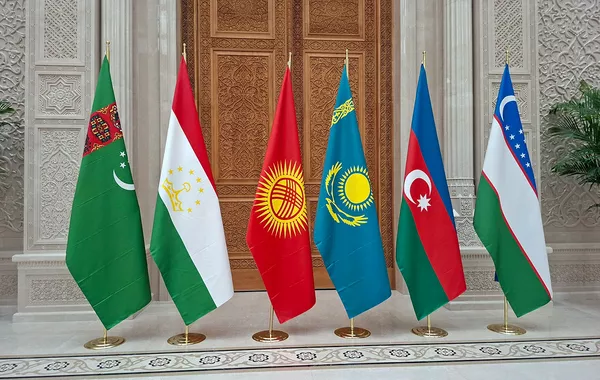
Central Asia is as close as can be to mineral abundance. Across its five countries-Kazakhstan, Kyrgyzstan, Tajikistan, Turkmenistan, and Uzbekistan-the region accounts for 39 percent of the world’s manganese, 31 percent of chromium, and 40 percent of uranium, with Kazakhstan as the leader. Tajikistan alone supplies 15 percent of the world’s antimony, which is also used in semiconductors, military ordnance, and soldering.
It should thus be no surprise that the United States wants to get in on Central Asia’s mineral riches. At present, it only accounts for 2.1 percent of mineral exports from the region, a figure that US officials want to increase dramatically.
“Our economic security depends on our ability to diversify our access to critical minerals,” remarked Sergio Gor, the US Special Envoy for South and Central Asian Affairs, in Astana on June 11, where he convened the C5+1 Dialogue between the United States and Central Asia’s countries. “President Trump understands the importance of Central Asia to global commerce, connectivity, and critical minerals,” Gor noted.
America’s activity on critical minerals in Central Asia has been burgeoning since 2025. The biggest move so far was in November, when Cove Capital signed a deal with Kazakhstan for a $1.1 billion tungsten mine in the country. Other projects are forthcoming, since “Interest in Kazakhstan from American investors is high,” said Nicole Rodgers, of the Alliance for Mineral Security, in Astana. US Secretary of State Marco Rubio has said he will travel to Central Asia for a C5+1 meeting this year.
Eyeing American investment money, Central Asian governments have been positioning themselves as brokers of deals in the country. “[We are] uniquely positioned to serve as a strategic partner for the United States,” remarked Yerzhan Kazykhan, Kazakhstan’s presidential envoy for US negotiations. Uzbekistan, meanwhile, signed a critical minerals deal with the United States in February, allowing the US government to finance exploration projects for mineral deposits in the country.
The Obstructive Legacy of the Jackson-Vanik Amendment
There are some hurdles to America’s investment in critical minerals in Central Asia. The most immediate one is self-inflicted by the US Congress, due to a Cold War statute that has barred full trade with the region. Specifically, the Jackson-Vanik Amendment to the Trade Act of 1974 bars permanent normal trade relations (PNTR) between the United States and all Central Asian republics (except Kyrgyzstan) due to their then-membership in the Soviet Union. PNTR is a regulatory cornerstone for American private-sector engagement in any country, ensuring a stable trading framework for long-term investments.
For the critical minerals industry, where extraction projects can take 30-year timelines, a grant of PNTR would be a major step toward reducing political risk for American investors in Central Asia-currently, all four countries covered by the Jackson-Vanik amendment trade with the United States on temporary permits. There has been bipartisan support for repealing these restrictions on Central Asian republics since 2006, and more recently from the Biden and Trump administrations, though Congress has not yet repealed it. A repeal effort is underway in the Senate but may not pass (and thus will lapse) before the 119th Congress dissolves at the end of this year. If America wants a bigger share of Central Asia’s mineral wealth, Congress must quickly enact this repeal.
China’s Critical Mineral Challenge in Central Asia
A bigger challenge to US entry into Central Asia’s critical minerals market, predictably, is China, which has become the biggest foreign player in Central Asia’s economy. Through its geographic proximity and massive capital investments, China now accounts for about half of all Central Asian mineral exports in a short time. In some countries, such as Kyrgyzstan and Tajikistan, Chinese companies-many of them public-sector firms-hold most of the authorized mining permits.
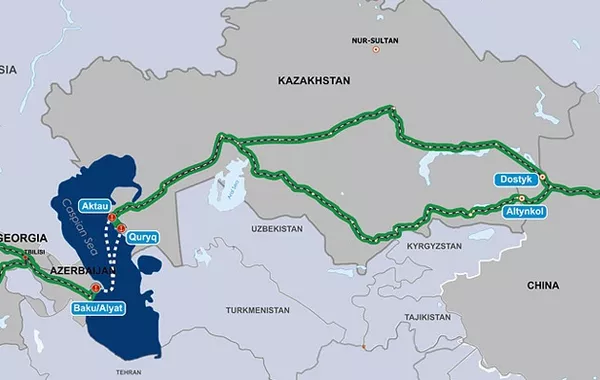
China is clearly less risk-averse to investing in Central Asia than American companies, with a greater appetite for long-term projects. It’s also willing to invest more widely in infrastructure and other industries that will aid extraction. The Belt and Road Initiative has transformed Central Asia’s railroad networks, all of which link to China’s contiguous Western provinces. Minerals extracted from Central Asia are ferried east into China, where they are refined, processed, and used in other manufacturing supply chains.
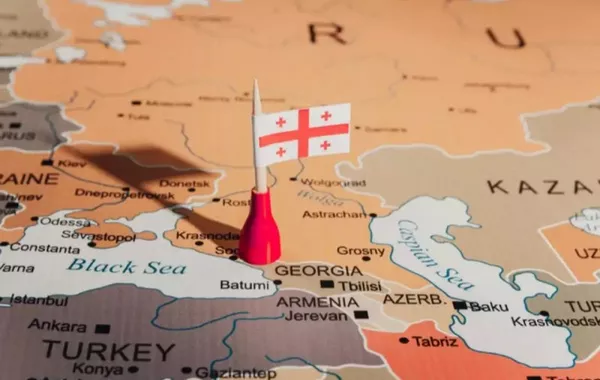
By contrast, the United States, at a distance, must rely on complex logistical routes through Eastern Europe and the Middle East, which entail security risks, to access Central Asia’s critical minerals trade. China will always have this cost advantage and, thus, a willingness to spend more.
It is unlikely that American companies, at least in the short term, will offer Chinese levels of financing for critical minerals projects, meaning that America’s investments will remain dwarfed by China’s market share. Indeed, it’s not only China that’s interested. Other large countries have shown interest, with Saudi Arabia signing a memorandum with Kazakhstan on June 11 to lay the groundwork for future mining deals. Interest in the region is growing, and many powers covet its mineral riches, which, though large, are limited.
Given the high demand for critical minerals, America’s deficit in Central Asia’s mineral markets will be to China’s gain, enabling its geopolitical competitiveness over the United States-in electric vehicles, artificial intelligence, and nanotechnology, to name but a few industries where these minerals are essential. The United States will need to pick up the pace. While its interest in Central Asia is growing fast, it cannot get fast enough. Otherwise, for this new gold rush, it will be too late.
Find the original article here