For several years, the Middle Corridor was viewed in European capitals primarily as a geopolitical alternative to traditional trade routes between Asia and Europe.
That perception is now changing.
Europe is increasingly looking at the Trans-Caspian International Transport Route, commonly known as the Middle Corridor, not simply as a politically attractive alternative, but as a potential part of its own long-term trade and economic infrastructure.
This is an important shift.
The question in Europe is gradually moving from “Can the Middle Corridor become an alternative route?” to a much more practical one: “What needs to be done to make it work as a major international trade corridor?”
And the numbers show why the question has become increasingly important.
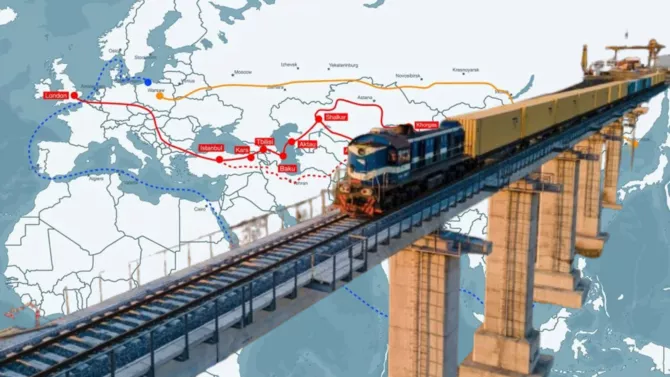
photo: getty images
The Numbers Behind the Middle Corridor
The potential scale of the transformation is becoming difficult to ignore.
According to a recent World Bank assessment, with the right combination of infrastructure investment and reforms, trade volumes along the Middle Corridor could quadruple by 2040, while transit times could fall by two-thirds compared with 2023.
The corridor could also generate around 2 million additional jobs across the countries it connects.
For Azerbaijan, the potential economic impact is significant as well. The World Bank estimates that fully realizing the corridor's potential could add around $1.3 billion to Azerbaijan's GDP, equivalent to an additional 1.84 percent, while employment could increase by approximately 1.5 percent.
The growth is already visible.
During the first eight months of 2026, container traffic along the Trans-Caspian route reached 53,574 TEU, compared with 48,326 TEU during the same period in 2025.
But there is another revealing number.
Around 80 percent of the containers are moving westward, highlighting one of the corridor's emerging challenges: it needs stronger eastbound cargo flows if it is to become a truly balanced Eurasian trade network.
These figures help explain why Europe's attitude is changing.
The Middle Corridor is no longer simply a geopolitical concept. It is increasingly being assessed as a major infrastructure and economic project.
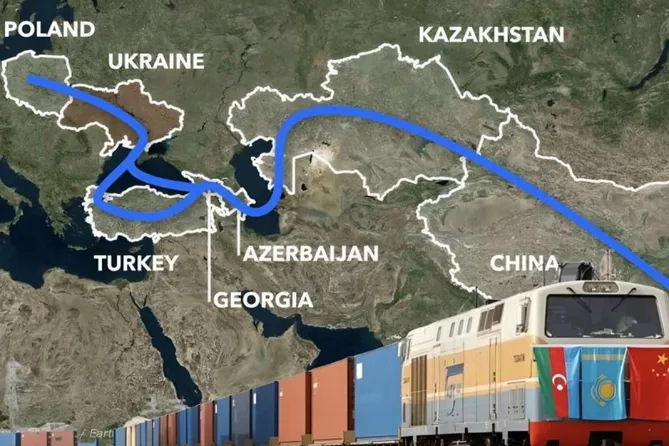
photo: getty images
From Geopolitics to Economics
The war in Ukraine forced Europe to reconsider many of its existing trade, transport and energy dependencies.
For European businesses, this has made diversification of supply chains and transportation routes increasingly important.
The Middle Corridor offers exactly that possibility.
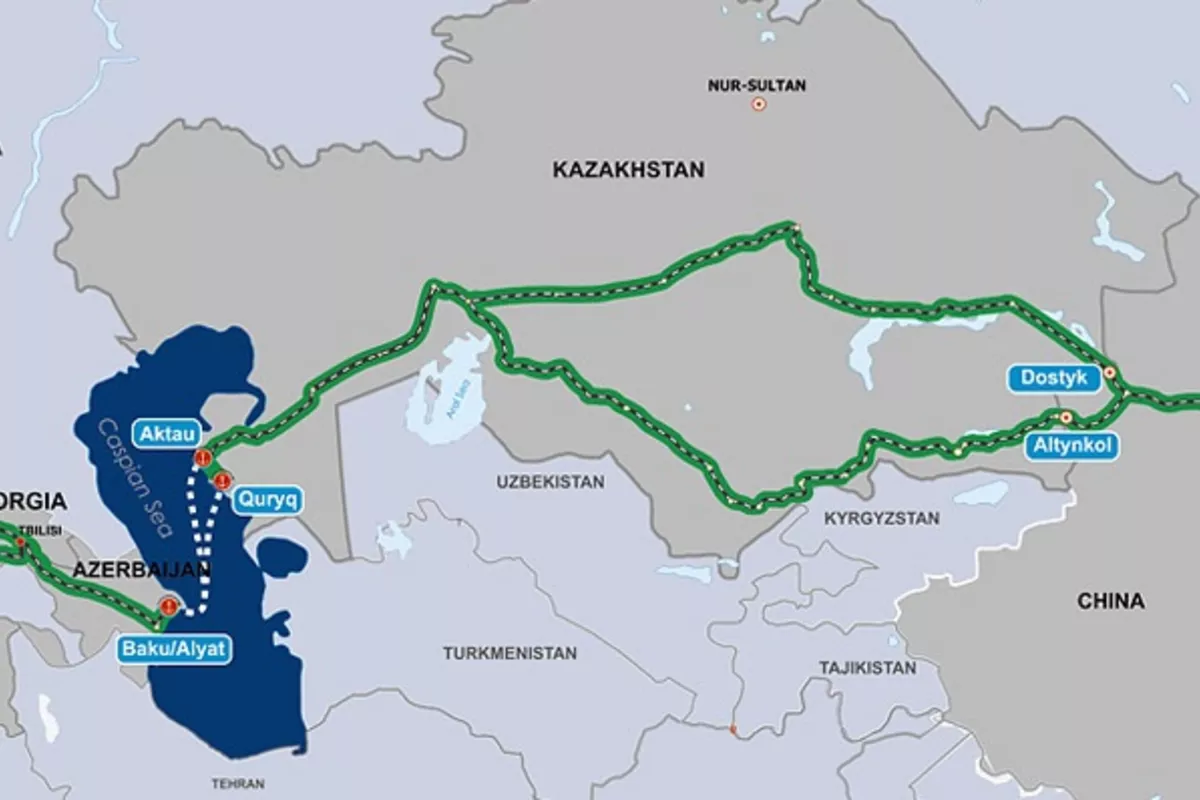
The route connects China and Central Asia with the Caspian Sea, Azerbaijan, Georgia, Türkiye and European markets.
The European Union has identified the Trans-Caspian Transport Corridor as an important alternative connection between Europe and Central Asia and has emphasized the need to make the route more efficient, competitive and reliable.
The objective is no longer simply to have another route on the map.
The objective is to build a route that businesses can actually depend on.
Europe is Beginning to Look at the Corridor Differently
For a long time, discussions about the Middle Corridor focused heavily on geopolitics.
Could it provide an alternative to routes passing through Russia?
Could it reduce Europe's dependence on traditional Eurasian transportation networks?
Could it strengthen links between Europe and Central Asia?
Those questions remain relevant.
But the European discussion is becoming more commercial.
European companies are ultimately interested in predictable delivery times, competitive prices and reliable infrastructure.
A route can have enormous geopolitical importance and still struggle to attract cargo if transportation costs are too high or if shipments face unpredictable delays.
That is why infrastructure is becoming central to the European approach.
The Real Challenge is Reliability
The Middle Corridor has an obvious geographical advantage.
But geography alone does not create a competitive trade route.
The corridor still faces challenges involving railway capacity, port infrastructure, Caspian Sea crossings, border procedures, customs systems and coordination between several countries.
This is why the European approach is becoming increasingly pragmatic.
Political declarations are no longer enough.
For international companies, the critical questions are much more practical:
How long will the shipment take?
How much will it cost?
Where could delays occur?
How predictable are border procedures?
And who is responsible for the cargo at each stage of the journey?
This explains the growing European emphasis on digital transport documents, streamlined border procedures, interoperability between transport systems and greater private-sector involvement.
The Middle Corridor needs to become predictable for business.
Azerbaijan is Moving Closer to the Center of the Picture
The changing European approach has particular significance for Azerbaijan.
The country occupies a strategically important position between Central Asia and the South Caucasus and connects the Caspian region with Georgia, Türkiye and, ultimately, European markets.
For decades, European interest in Azerbaijan was heavily associated with energy.
Oil and natural gas were at the center of the relationship.
Today, however, transportation, logistics, digital connectivity and trade infrastructure are becoming increasingly important alongside energy.
That represents a broader transformation in Azerbaijan's role.
The country is no longer being viewed solely as an energy supplier.
Its geographical position gives it the potential to become an important connectivity hub linking several economic regions.
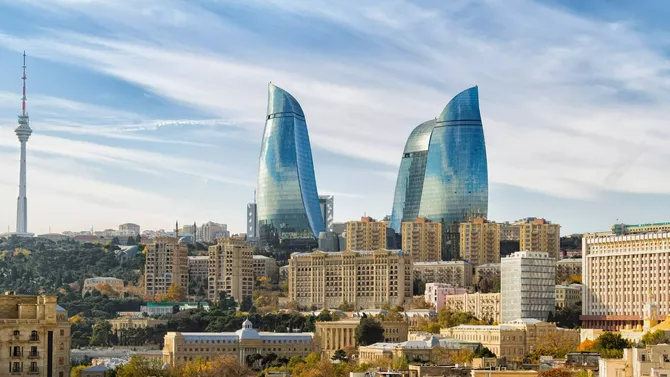
Baku's role is particularly important because the city sits at the intersection of the Caspian Sea, the South Caucasus and the wider Middle Corridor network.
The expansion of the Port of Baku, railway connectivity and logistics infrastructure is therefore not simply a national infrastructure story. It is part of a much wider Eurasian transportation system.
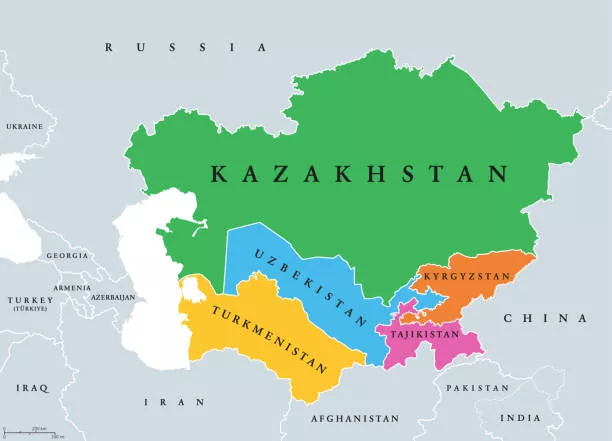
photo: iStock
Central Asia is Becoming Part of Europe's Wider Strategy
Another reason for Europe's growing interest in the Middle Corridor is the changing European approach to Central Asia.
Kazakhstan, Uzbekistan, Turkmenistan, Kyrgyzstan and Tajikistan are increasingly viewed by the EU not simply through the lens of their post-Soviet history, but as potential partners in trade, energy, critical raw materials and connectivity.
This has direct implications for the Middle Corridor.
The more Europe develops economic ties with Central Asia, the greater the need for reliable transportation links between the two regions.
Recent EU discussions with Central Asian countries have increasingly focused on specific infrastructure investments, railway connections, digitalization, border procedures and opportunities for private investors.
The corridor is therefore being developed not as one giant project, but as a network of interconnected national and regional projects.

Yaorusheng | Moment | Getty Images
The China Factor
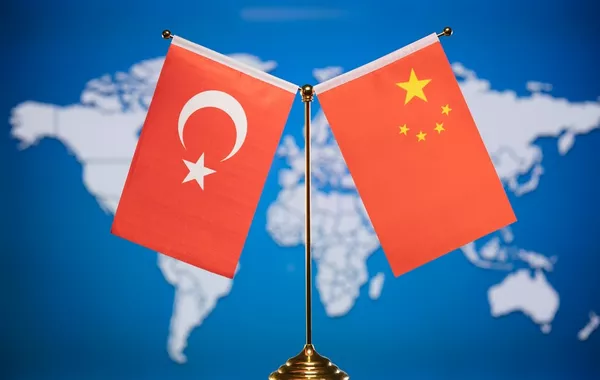
There is another reason Europe is taking the Middle Corridor more seriously: China.
The scale of China-Europe trade makes transportation diversification economically significant.
The Middle Corridor provides an additional connection between Chinese production centers and European markets through Central Asia and the South Caucasus.
That does not necessarily mean that the route must completely replace existing corridors.
A more realistic scenario is diversification.
The existence of several reliable routes gives exporters and importers more options and reduces dependence on a single transportation system.
This makes the Middle Corridor economically relevant even if it does not replace other routes entirely.
For China, the corridor provides another connection to European markets.
For Europe, it creates another potential channel for trade with China and Central Asia.
For the countries along the route, it creates an opportunity to capture more of the value generated by Eurasian trade.
The Corridor is Becoming More Than a Railway
One of the most important changes in the way the Middle Corridor is discussed is that it is increasingly being understood as more than a transportation route.
Its future will depend on the development of ports, railways, highways, logistics centers, customs systems, digital platforms, warehouses and industrial zones.
In other words, the Middle Corridor can become an economic ecosystem.
A container arriving at the Port of Baku, for example, is only one part of a much larger chain.
The real economic benefit comes when cargo movement creates demand for logistics services, warehousing, manufacturing, finance, insurance and other businesses.
This is where the corridor's potential becomes much larger than the value of transit fees alone.
Europe is Not Declaring Victory Yet
It is important not to exaggerate the transformation.
The Middle Corridor has not yet become a full substitute for all existing Asia-Europe trade routes.
Its biggest challenge is competitiveness.
If transportation remains too expensive, too slow or too unpredictable, geopolitical support alone will not be enough to attract large volumes of commercial cargo.
That is why the next stage of the Middle Corridor's development will be measured less by political statements and more by concrete indicators:
transport costs, delivery times, cargo volumes, railway and port capacity, border-crossing efficiency and reliability.
The imbalance in cargo flows is another issue that needs attention.
The fact that around 80 percent of containers currently move westward demonstrates strong demand in one direction, but it also raises questions about the availability of return cargo.
A successful international corridor cannot depend indefinitely on one-way trade flows.
The more balanced the traffic becomes, the more economically attractive the route will be for logistics companies.
From an Alternative Route to an Economic System
This is perhaps the most important change in how the Middle Corridor is being perceived.
For years, the route was often described primarily as a way to transport goods between Asia and Europe while bypassing Russia.
Today, the concept is broader.
The Middle Corridor is increasingly being discussed as an independent economic corridor connecting China, Central Asia, the Caspian Sea, the South Caucasus, Türkiye and Europe.
That is a much more ambitious idea.
If the necessary investments are made and the countries along the route can improve coordination on tariffs, customs procedures, digital systems, ports and railways, the Middle Corridor could evolve from a transit route into a broader economic ecosystem.
Its importance would then no longer be measured simply by the number of containers moving through ports such as Baku or Aktau.
It would also be measured by new investments, industrial projects, logistics centers, trade flows and jobs created along the route.
For Europe, this would provide another instrument for economic and supply-chain diversification.
For Central Asia, it would offer more direct access to European markets.
For the South Caucasus, it could strengthen the region's role in Eurasian trade.
And for Azerbaijan, it could reinforce the country's position as one of the key links between Central Asia, the Caspian region, Türkiye and Europe.
That is why Europe's approach to the Middle Corridor is changing.
Europe is no longer looking at the corridor simply as a geopolitical alternative.
It is increasingly asking a much more practical question:
Can the Middle Corridor become a reliable, competitive and commercially viable trade route connecting Asia and Europe?
The answer will depend not on political declarations, but on infrastructure, investment, coordination - and the ability of the countries along the route to make the corridor work in practice.
By Emil Samedov