For years, the Middle Corridor was discussed mostly as a promising infrastructure project - an alternative route connecting China and Europe through Central Asia and the South Caucasus.
That is beginning to change.
A transport network running through Kazakhstan, across the Caspian Sea, through Azerbaijan and Georgia and onward to Türkiye is gradually becoming a more important part of the Eurasian trade map.
It would be premature to describe the route as a replacement for the established transport links between China and Europe. The Middle Corridor still faces infrastructure and logistical challenges, and its volumes remain well below those of the major northern and maritime routes.
But its strategic importance is no longer theoretical.
In September, the World Bank said that with the right combination of investment and reforms, trade volumes along the Trans-Caspian Transport Corridor could more than triple by 2040, while travel times could be cut roughly in half. With deeper reforms, volumes could potentially quadruple and travel times fall by two-thirds.
That puts the Middle Corridor in a different category.
It is no longer simply a regional transit project. It is becoming part of a broader effort to diversify the way goods move across Eurasia.
Why the Middle Corridor is Gaining Momentum
The logic behind the route is straightforward.
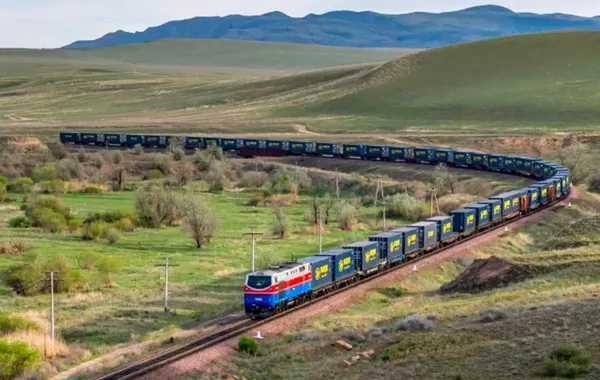
A container leaving China can travel west through Kazakhstan, cross the Caspian Sea to Azerbaijan, continue by rail through Georgia and Türkiye and eventually reach European markets.
The route avoids Russia entirely.
That does not mean China or Europe is abandoning Russian transport routes. Far from it. The northern corridor still has an extensive infrastructure network and remains an important part of Eurasian logistics.
But major trading economies have increasingly recognised the value of having more than one option.
For companies moving billions of dollars worth of goods across continents, route diversification can itself be a strategic asset.
The Middle Corridor offers precisely that.
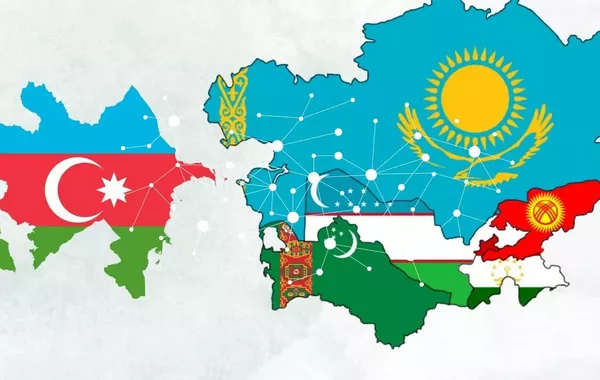
It also gives Central Asian countries something they have long needed: another route to international markets that does not depend on a single northern direction.
Kazakhstan is the Eastern Gateway
No country is more important to the eastern part of the Middle Corridor than Kazakhstan.
The country sits directly between China and the Caspian Sea and has become a major logistics platform for Chinese-European trade.
According to Kazakhstan's government, around 85% of land-based rail freight between China and Europe passes through Kazakhstan.
During the first half of 2026, trade-related freight traffic between Kazakhstan and China reached 18.7 million tonnes, an increase of 9% from a year earlier.
The country is also investing heavily in its own transport infrastructure, including railways, border terminals, dry ports and logistics centres.
The Trans-Caspian route has expanded rapidly in recent years.
According to Kazakh authorities, cargo volumes along the Trans-Caspian International Transport Route increased from around 0.8 million tonnes seven years ago to 4.5 million tonnes. Container traffic reached approximately 77,000 TEU in 2025, with a target of 300,000 TEU by 2029.
Those numbers remain modest compared with the largest Eurasian trade routes.
But the direction is clear.
Kazakhstan is trying to turn its geography into a long-term economic advantage.
The Caspian is Where the Real Test Begins
Once cargo reaches Kazakhstan's western transport network, it has to cross the Caspian Sea.
This is one of the defining characteristics of the Middle Corridor.
Unlike a conventional rail route, a container cannot simply travel from China to Europe on the same train. It has to change modes of transport.
That means ships, ports, ferries, railways and terminals all have to work together.
A delay in one part of the chain can affect the entire journey.
This is why the development of the ports of Aktau and Kuryk in Kazakhstan and Alat in Azerbaijan is so important.
The objective is not simply to increase the capacity of individual ports.
It is to make the Caspian crossing predictable enough to function as part of a large-scale international supply chain.
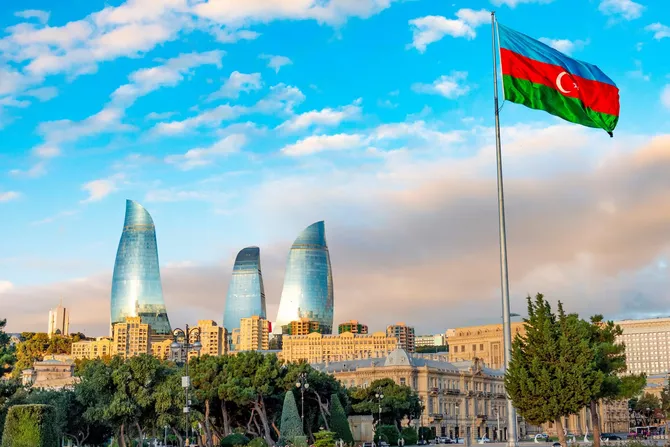
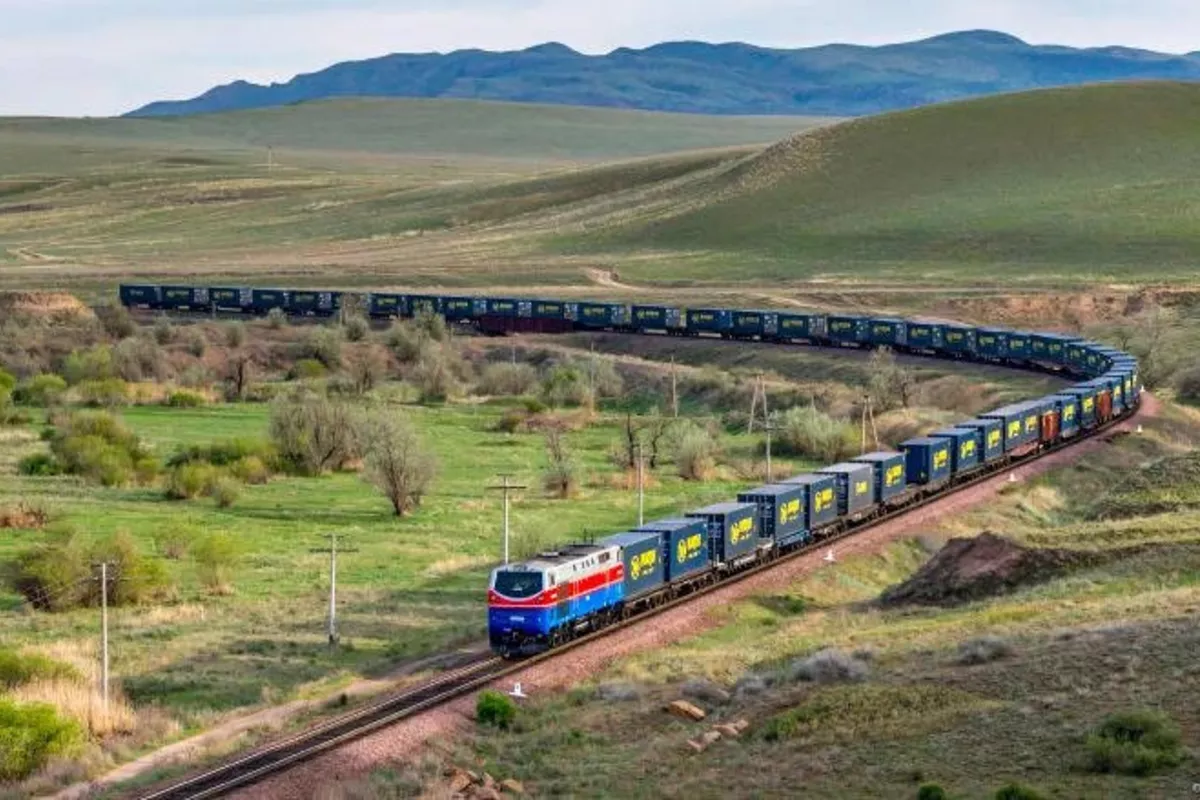
Photo credit: caspiannews.com
Azerbaijan is Becoming the Central Link
Azerbaijan occupies a particularly important position in the emerging system.
It is the western gateway to the Caspian and the point where cargo from Central Asia enters the South Caucasus.
The country has invested heavily in the Port of Alat, rail infrastructure and logistics facilities, while the Baku-Tbilisi-Kars railway provides the crucial connection toward Georgia and Türkiye.
The numbers are growing.
Kazakhstan says cargo volumes on the Trans-Caspian route reached around 4.1 million tonnes in 2025. Container traffic stood at approximately 77,000 TEU, including around 40,000 TEU on the China-Europe route.
The existing capacity of the corridor is estimated at roughly 6 million tonnes and 80,000 containers a year.
The participating countries want to raise that capacity to around 10 million tonnes and 300,000 TEU by removing infrastructure bottlenecks and improving coordination.
There is also an important energy component.
Since 2023, Kazakhstan has been shipping crude oil through the Aktau-Baku-Tbilisi-Ceyhan route.
Around 1.3 million tonnes of Kazakh oil were transported along the route in 2025.
That demonstrates that the Middle Corridor is already becoming more than a container route.
It is gradually turning into a broader infrastructure network for trade and energy diversification.

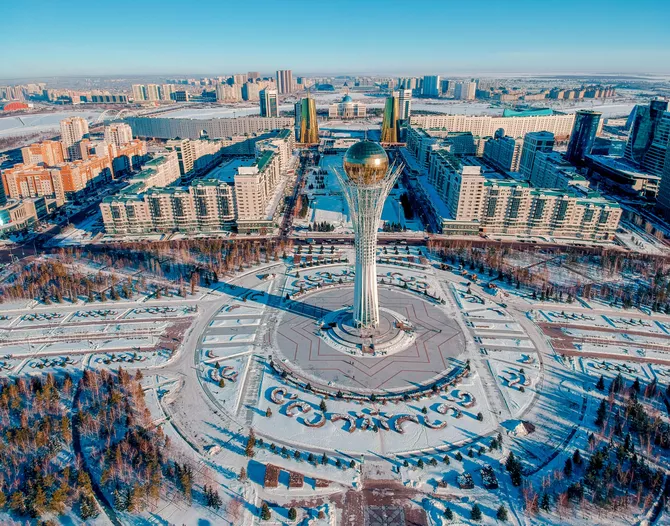
Photo credit: srdefenders.org
Georgia Wants to Be More Than a Transit Country
The next critical part of the route is Georgia.
The country's position between Azerbaijan and the Black Sea gives it a natural role as the western gateway of the Middle Corridor.
But Tbilisi increasingly wants to go beyond simply allowing cargo to pass through.
Georgia is investing heavily in ports, railways, roads and logistics infrastructure.
During the first eight months of 2026, Georgian ports and maritime terminals handled 13.7 million tonnes of cargo, 24% more than during the same period of 2025.
Container traffic reached 554,174 TEU, up 9% year on year and the highest January-August figure recorded in the past decade.
Georgia's railway system handled 9.7 million tonnes of freight during the same period, an increase of 11%.
The country's biggest infrastructure bet is the Anaklia Deep Sea Port.
The first phase is planned to have a capacity of around 600,000 TEU a year, with the second phase potentially increasing capacity to at least 1 million TEU by 2035.
For Georgia, Anaklia is about more than another port.
It is an attempt to create a large-scale maritime gateway connecting the Caspian transport system with Black Sea shipping and European markets.
The Middle Corridor Needs More Than New Railways
One of the biggest misconceptions about the Middle Corridor is that its success depends mainly on building more railway lines.
Infrastructure is important, but it is only part of the equation.
A container crossing the corridor may encounter several customs administrations, different railway companies, multiple terminals and at least one maritime crossing.
The result is a logistics chain with several potential bottlenecks.
That is why digitalisation and coordination have become increasingly important.
The World Bank is supporting projects designed to improve customs procedures, transport data exchange and digital systems along the corridor.
The goal is relatively simple: make several national transport systems behave more like one.
For international companies, predictability can be just as important as speed.
A route that takes slightly longer but delivers cargo reliably may be more attractive than a theoretically faster route where delivery times are uncertain.

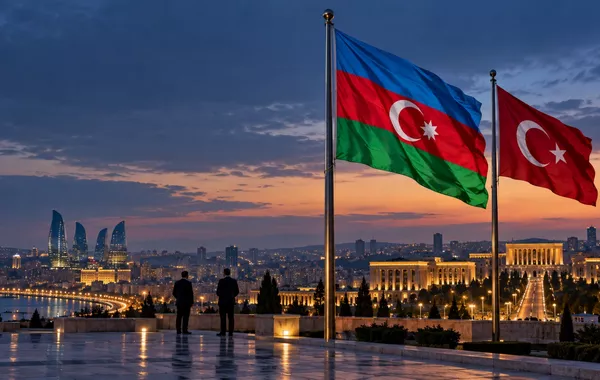
photo: The Business Banks
The Price of Building a New Corridor
The transformation will not be cheap.
The World Bank estimates that the Trans-Caspian corridor will require at least $25 billion in investment through 2040 to address infrastructure constraints.
A further roughly $30 billion could be needed for related roads, railway connections, logistics centres and other supporting infrastructure.
This is where the Middle Corridor starts to look less like a collection of national projects and more like a genuinely international infrastructure programme.
Kazakhstan is investing.
Azerbaijan is investing.
Georgia is investing.
Türkiye is strengthening its connections with the Caucasus and Europe.
China has an interest in improving western land connections.
And European institutions increasingly view Central Asia as a region where connectivity and trade links need to be expanded.
The interests are beginning to overlap.
Why Europe is Paying Attention
For Europe, the Middle Corridor offers something that goes beyond the transport of Chinese goods.
It creates stronger links with Central Asia.
Kazakhstan and other regional states possess large reserves of oil, uranium, critical minerals and other commodities that European economies increasingly want to diversify their supply chains around.
The corridor could also support exports from Central Asia to Europe while creating new opportunities for European companies in logistics, infrastructure, energy and manufacturing.
That is why the European interest in the route is broader than simply finding a faster way to move containers from China.
The Middle Corridor is gradually becoming part of a wider connectivity strategy between Europe, the Caucasus and Central Asia.
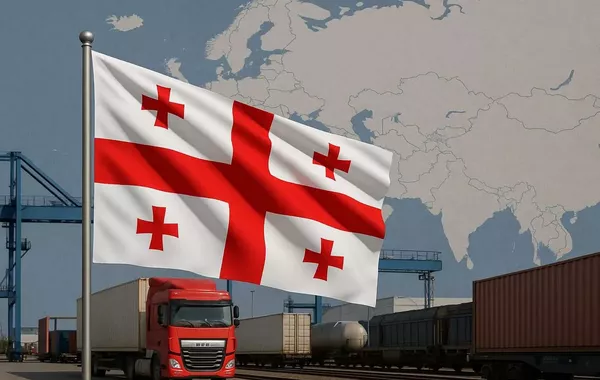
Photo: Vecteezy
China Does Not Need to Abandon the North
The rise of the Middle Corridor should not be interpreted as China turning its back on routes through Russia.
That would be an oversimplification.
China has enormous economic interests across Eurasia and is unlikely to depend on a single transport route.
The strategic value of the Middle Corridor lies precisely in giving Beijing another option.
If one route faces political, security, infrastructure or commercial problems, alternative routes become more valuable.
In that sense, the Middle Corridor is partly a form of insurance.
It makes the Eurasian supply chain more diversified.
And diversification matters even when the alternative route does not immediately carry the largest volume of cargo.
The Biggest Challenge is Commercial, not Political
There is a danger of looking at the Middle Corridor entirely through a geopolitical lens.
The route may have clear strategic advantages, but shipping companies ultimately make decisions based on cost, reliability and delivery times.
That is where the corridor still has work to do.
The Caspian crossing adds another logistical step.
Cargo has to be transferred between ships and trains.
Several border crossings are involved.
Different countries use different tariff and customs systems.
And the route still needs more predictable schedules and greater capacity at some points.
This is why the next stage of development will probably be less about announcing new corridors and more about improving the way the existing one operates.
The World Bank's projections reflect that reality.
Infrastructure alone will not deliver the potential three- or four-fold increase in trade.
The countries involved will also have to simplify procedures, improve coordination and reduce the amount of time cargo spends waiting.
From Transit Route to Economic Corridor
Perhaps the most important question is what happens if the Middle Corridor succeeds.
The answer may have little to do with transit fees.
A successful corridor tends to attract businesses around it.
Warehouses appear.
Distribution centres are built.
Logistics companies expand.
Manufacturing moves closer to transport hubs.
Financial, insurance and digital services develop around the trade flows.
That is the opportunity for Kazakhstan, Azerbaijan and Georgia.
They do not simply want trains to pass through their territories.
They want more of the economic value created by those trains to remain in their economies.
That is also why infrastructure projects such as the Port of Alat, Anaklia and Kazakhstan's logistics centres matter beyond their immediate transport functions.
They are potential foundations for wider economic ecosystems.
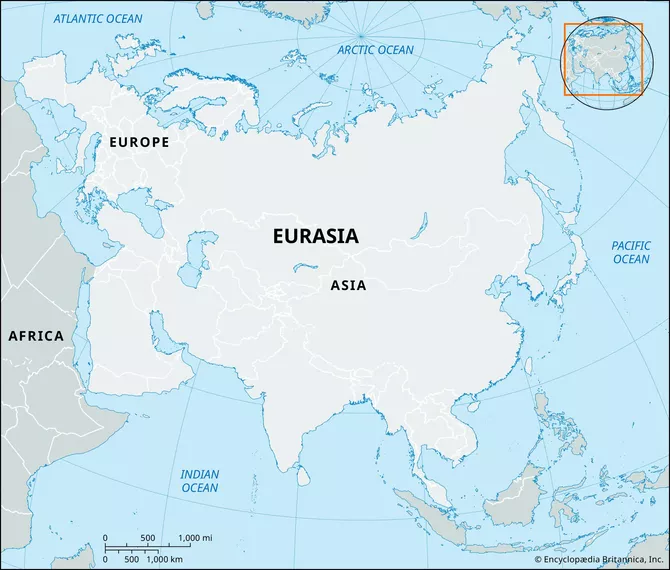
photo: getty images
A Different Map of Eurasia
It is still too early to say that the Middle Corridor has become a full-scale competitor to all established routes between China and Europe.
It has not.
Its volumes are smaller, its logistics are more complicated and its infrastructure still needs substantial investment.
But the question is no longer whether the route has potential.
The question is how large that potential can become.
China is looking for resilient supply chains.
Europe is strengthening its economic links with Central Asia.
Kazakhstan is investing in its role as a Eurasian transit hub.
Azerbaijan is developing its position as the Caspian gateway.
Georgia is expanding its Black Sea infrastructure.
Türkiye provides the bridge into Europe.
These interests are converging along one route.
That is why the Middle Corridor deserves to be viewed as more than an alternative railway or a geopolitical project.
It is becoming part of a new economic geography of Eurasia.
The route from China to Europe through Central Asia, the Caspian Sea and the South Caucasus may never replace the traditional northern corridor.
It does not have to.
Its significance may ultimately lie elsewhere: in giving global trade another functioning option.
And if the countries involved can solve the remaining problems - capacity, tariffs, customs, digitalisation and coordination - the Middle Corridor could move from being an alternative route on a map to becoming a normal part of global trade.
That would be a much bigger change than simply building another railway.
It would mean that the way goods move between Asia and Europe is being redrawn.