Kazakhstan and Germany Expand Agricultural Cooperation as Trade Grows
Kazakhstan and Germany have agreed to deepen cooperation in agriculture, with a focus on trade, investment, technology transfer and the localization of production.
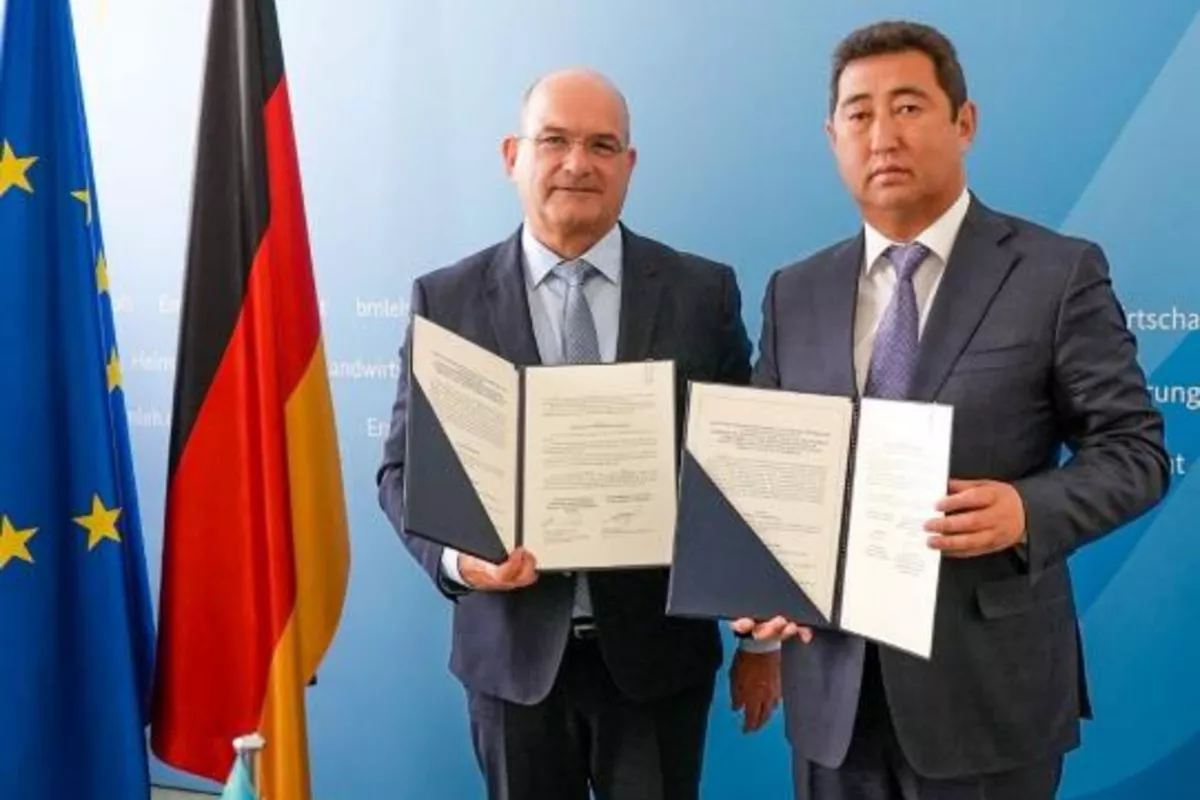
The discussions took place during Kazakh President Kassym-Jomart Tokayev’s official visit to Germany. Agriculture Minister Aidarbek Saparov met with Markus Schick, State Secretary at Germany’s Federal Ministry of Agriculture, Food and Regional Identity, according to Kazakhstan’s Ministry of Agriculture.
“We highly value our partnership with Germany. Agricultural cooperation is particularly important for Kazakhstan and has a strong practical focus. We see significant potential to further increase bilateral trade, expand investment cooperation, and introduce modern German technologies into Kazakhstan’s agricultural sector,” Saparov said.
Agricultural trade between Kazakhstan and Germany increased by 23% in 2025, while Kazakhstan’s agricultural exports to Germany rose by 38%. The growth continued in the first seven months of 2026, when bilateral agricultural trade increased by another 8.8% year-on-year.
The two countries agreed to work on expanding trade, attracting investment, localizing production and developing high-value-added projects. They also discussed increasing the presence of Kazakh agricultural products in European markets, including the possibility of exporting horsemeat to the European Union.
The German-Kazakh Agricultural Policy Dialogue, established in 2009, remains a key platform for cooperation. Its sixth phase began in September 2026, with Kazakhstan taking on a broader role as a regional platform for exchanging agricultural expertise with other Central Asian countries.
Dairy farming is another area of growing cooperation. Since 2019, Germany has provided Kazakh companies with consulting and expert support through a joint sustainable milk production project. More than 400 specialists have received training, and the initiative has been extended through 2027.
German agricultural machinery manufacturer CLAAS is also involved in production localization in Kazakhstan. Around 2,100 units of machinery worth approximately 270 billion tenge have been produced since the project began.
The two sides identified several additional areas with potential for cooperation, including seed production and breeding, organic farming, digitalization, precision agriculture, scientific research and technology transfer.
Following the talks, Kazakhstan and Germany signed a Declaration of Intent covering agricultural policy, trade in agricultural and food products, digitalization and precision farming, organic production, phytosanitary and veterinary cooperation, among other areas.
The agreement calls for expanded exchanges of expertise and technology, stronger links between research and educational institutions, industry associations and businesses, as well as joint research, investment and pilot projects.
Saparov said the declaration would create a stronger foundation for attracting investment, transferring technology and launching new joint projects. He also proposed establishing a working group to address issues arising in bilateral agricultural cooperation.
The Kazakh minister separately met with German Agribusiness Alliance Managing Director Per Brodersen. The platform brings together German agricultural and food-sector associations and companies and promotes cooperation with countries in Eastern Europe and Central Asia.
The sides discussed further cooperation in agriculture and the food industry, including the introduction of German expertise and modern technologies and support for joint projects.