Deepfakes, online fraud and extremist propaganda are emerging as challenges for the region. Are Central Asian countries ready to confront these threats while protecting civil rights and preserving opportunities for technological development?
Not long ago, creating a convincing fake video or audio recording required considerable technical resources. Today, imitating someone’s voice or appearance is becoming easier and cheaper. Alongside its opportunities, artificial intelligence brings new risks - from fraudulent phone calls to the spread of disinformation and extremist propaganda.
For Central Asia, these questions go beyond a discussion about technology. They concern public safety, trust in information and the ability of the region’s governments to respond jointly to threats that do not recognise borders.
On November 6, Astana hosted an Aqaba Process summit on security in the field of artificial intelligence. The meeting brought together the presidents of Kazakhstan, Uzbekistan, Tajikistan and Turkmenistan, King Abdullah II of Jordan, Kyrgyzstan’s foreign minister, the speaker of Azerbaijan’s parliament and other officials.
Launched by the King of Jordan in 2015, the Aqaba Process is an international initiative aimed at countering terrorism and violent extremism. The Astana meeting demonstrated that digital security is becoming an increasingly important part of the regional agenda. (www.akorda.kz)

photo: getty images
When Voices and Images Can No Longer Be Trusted
One of the most visible threats comes from deepfakes: audio recordings, photographs and videos created or altered with artificial intelligence to imitate real people.
Such technologies can be used to spread fake statements by politicians, provoke ethnic or religious tensions, and manipulate public opinion. A fabricated recording can be particularly dangerous during a crisis, when people seek information quickly and may not have time to verify its source.
A fake video showing a senior official making a statement, or a fabricated recording from the scene of an incident, could cause alarm and spread rapidly through social media and messaging platforms. Even if it is later exposed as false, the original post may already have reached a large audience.
There is another side to the problem: as deepfakes become more common, it may also become easier to cast doubt on authentic recordings. People may find it increasingly difficult to trust what they see and hear.
Fraud Becomes More Convincing
Artificial intelligence is also changing the nature of online fraud. Criminals can imitate the voice of a relative, a bank employee or a company executive to persuade someone to transfer money or disclose confidential information.
Generative tools can also produce more convincing messages in different languages, fake websites and images of documents. Suspicious messages were once often identifiable by spelling mistakes or unnatural wording. Now, some fraudulent communications can appear entirely credible.
For banks, mobile operators and law enforcement agencies, this creates a need to share information about new schemes more quickly. Everyday caution remains equally important: a request for an urgent money transfer should be verified through another channel, even if the caller’s voice sounds familiar.
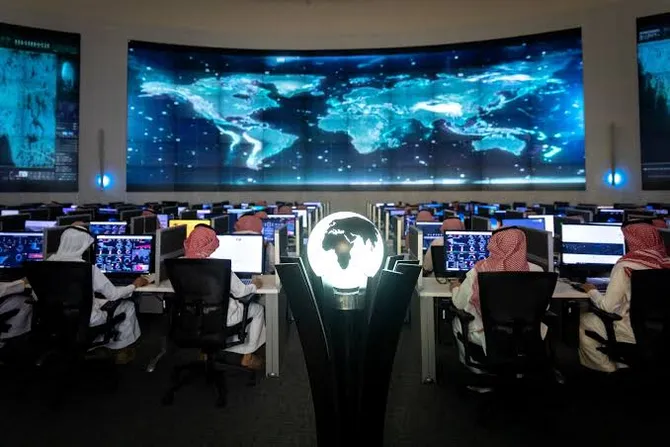
photo: getty images
Extremist Propaganda in the Digital Age
The use of artificial intelligence for terrorist and extremist purposes was among the main subjects discussed in Astana. Participants also addressed threats including disinformation, cyberattacks and deepfakes. (en.kabar.kg)
AI can make it easier to produce propaganda, translate it into different languages and adapt it for different audiences. This may allow groups to distribute more content at a lower cost, while potentially making the work of specialists monitoring harmful material more difficult.
Technology alone, however, does not explain why people become radicalised. Social isolation, a lack of opportunity, distrust in institutions and exposure to propaganda can create conditions that make recruitment easier. Technical measures are therefore unlikely to be sufficient without education, prevention and engagement with young people.
In Astana, Uzbek President Shavkat Mirziyoyev stressed the importance of quality education and opportunities for people to realise their potential. He also expressed Uzbekistan’s readiness to host a regional office of the United Nations Office of Counter-Terrorism, which could support Central Asian countries in training specialists and addressing terrorist content. The office remains a proposal; it has not yet been established. (gov.uz)
How Central Asian Countries Are Responding to Deepfakes
Countries in the region are already confronting the use of artificial intelligence to create fake videos and commit fraud. Their approaches differ: some are developing legislation and cybercrime prevention systems, while others are warning the public and investigating individual cases.
Kazakhstan is building a legal framework for artificial intelligence. Its AI law, which entered into force in January 2026, defines synthetic content as images, video, audio, text or combinations of these created or altered by an AI system to imitate individuals or events. (www.loc.gov)
The authorities are also developing measures against cyber fraud. Kazakhstan’s government has warned that criminals use fake images and voices of bank employees, law enforcement officers, company executives and relatives. Fraudsters also conduct fake video calls and promote fraudulent investment platforms.
Combating such schemes requires cooperation among law enforcement, banks and financial regulators. The effectiveness of that response also depends on how quickly information about new scams reaches the public. (primeminister.kz)
Uzbekistan introduced administrative liability in January 2026 for the unlawful processing of personal data using artificial intelligence and the unlawful dissemination of such data. These provisions concern the protection of personal information more broadly; they do not mean that creating any deepfake is automatically an offence. (gov.uz)
For Uzbekistan, as for other countries in the region, an important question is how the legislation will work in practice: can victims quickly report a suspected fake, have it assessed and defend their rights if their image or personal data have been used unlawfully?
Kyrgyzstan has placed emphasis on warning the public. In February 2026, the Interior Ministry reported the circulation of fake videos impersonating the president, created with deepfake technology to deceive citizens. The ministry urged people to verify such messages through official sources. (ru.kabar.kg)
The ministry later issued further warnings about fraudulent AI-generated videos. The country is also investigating high-tech fraud cases in which criminals impersonate representatives of state institutions. (egov.kg)
Tajikistan and Turkmenistan took part in discussions on AI-related threats at the Astana summit. The meeting addressed regional cooperation, the exchange of expertise and the misuse of digital technologies for terrorist and extremist purposes. However, the available information about the summit does not establish what specific measures against deepfakes have already been introduced in each of the two countries. (gov.uz)
The region has begun responding to the problem, but laws and public warnings alone will not resolve it. An effective response will require investigations, information sharing, specialist training and efforts to help citizens verify digital content.
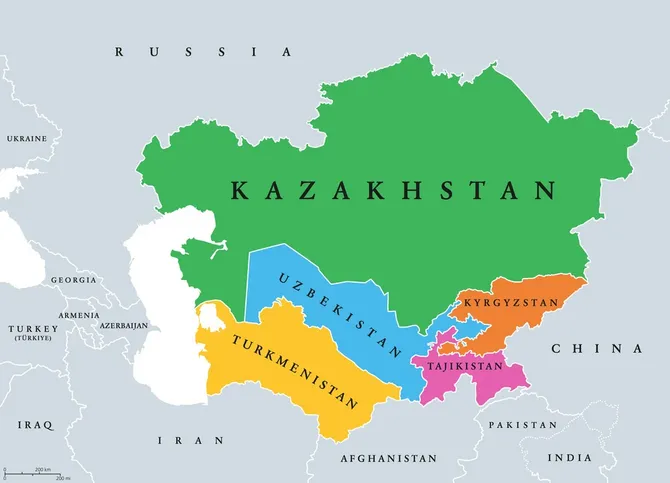
photo: getty images
Is the Region Ready for the New Risks?
The Astana meeting suggests that governments in the region recognise the problem. Recognition, however, is only a first step. Readiness will depend on whether countries develop trained specialists, effective mechanisms for sharing information and clear procedures for responding to incidents.
Central Asian states need stronger cooperation among government agencies, banks, technology companies, media organisations and research centres. A fraudulent scheme or fabricated post can spread across several countries at once, meaning that a response confined to one national system may not be enough.
It is also important to develop tools that work in the region’s languages. Technologies that detect harmful or manipulated content effectively in English or Russian may not perform as well in Kazakh, Kyrgyz, Uzbek, Tajik or Turkmen.
Digital literacy is another priority. People need accessible ways to verify suspicious messages and report fraud. Journalists and newsrooms, meanwhile, increasingly need to check the origin of video and audio before publishing it.
Security and Civil Rights
The response to digital threats also requires public oversight. Automated detection systems can make mistakes: legitimate debate, investigative journalism and criticism of the authorities should not automatically be treated as dangerous content.
Security measures should therefore be accompanied by clear rules, personal data protections and ways to challenge mistaken decisions. Without these safeguards, technologies intended to protect society could weaken trust in digital institutions.
Artificial intelligence can help Central Asian countries improve education, healthcare, economic development and public administration. It can also be used for deception, manipulation and the spread of violence. Which of these outcomes prevails will depend in large part on how effectively the region combines technological development, cooperation and the protection of civil rights.
The Astana meeting created an opportunity to begin that conversation at a high level. The next question is what concrete decisions will follow.