Russia’s reported demand that NATO countries refrain from military activity in Central Asia and the South Caucasus has brought two regions far beyond the Ukrainian battlefield into the debate over a possible settlement of the war.
According to The New York Times, a Russian negotiating paper circulated during talks in Abu Dhabi in November 2026 called for an end to NATO enlargement and military activity in several regions, including Central Asia and the South Caucasus. The reported proposals also sought a rollback of NATO forces and bases to their 1997 positions. The existence of a negotiating proposal does not mean that its terms have been accepted.
For Moscow, the reported demand appears to be part of a broader effort to reshape the security order around Russia. For the countries concerned, however, it raises a different question: to what extent can their defence partnerships become the subject of negotiations in which they are not directly represented?
The answer has implications that extend beyond NATO. It touches on the ability of Central Asian and South Caucasus states to pursue independent foreign policies, diversify their security relationships and resist a return to a system in which major powers define the limits of their neighbours’ choices.
An Old Demand in a New Context
The reported Russian proposal is not entirely new. In December 2021, shortly before its full-scale invasion of Ukraine, Moscow presented draft security agreements that included a call for NATO members to refrain from military activity in Ukraine, the South Caucasus and Central Asia.
The reappearance of a similar demand during the Abu Dhabi talks suggests that Moscow continues to view the war in Ukraine as part of a wider dispute over the post-Soviet security order. From the Kremlin’s perspective, restrictions on Western military activity near Russia’s borders are linked to its long-standing concerns about NATO’s role and influence.
Yet the inclusion of Central Asia is striking. None of the region’s five states is a NATO member, and membership is not on their political agenda. Their cooperation with the alliance has largely focused on practical areas such as military education, defence reform, peacekeeping, logistics and emergency response.
Moscow’s concern therefore appears to go beyond the immediate prospect of NATO enlargement. It is also about the development of security relationships that could, over time, give countries in the region more options and reduce their reliance on Russia.
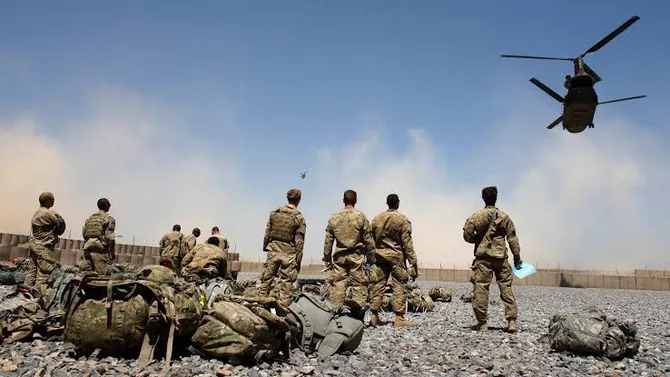
photo: getty images
Partnership Without Membership
NATO’s engagement with Central Asia began after the collapse of the Soviet Union and developed through the Partnership for Peace programme, launched in 1994. The alliance maintains partnerships with all five Central Asian countries, although the scale and focus of cooperation differ from one state to another.
The relationship gained additional importance after the 11 September attacks, when the US-led operation in Afghanistan increased Western interest in regional transit routes and logistics. Central Asian countries provided varying degrees of support, while seeking to preserve room for manoeuvre between Russia, China, the United States and other partners.
For regional governments, cooperation with NATO has generally been one component of a broader multi-vector foreign policy. That approach allows them to work with different powers on selected issues without necessarily accepting the political obligations of a formal military alliance.
Kazakhstan illustrates this balance. As a member of the Russian-led Collective Security Treaty Organization, or CSTO, Astana maintains close defence ties with Moscow. At the same time, it cooperates with NATO on military education, defence capabilities and peacekeeping.
Kazakhstan has hosted exercises in the Steppe Eagle series and is home to KAZCENT, a training centre accredited by NATO. These activities demonstrate that membership of a Russian-led security organisation has not prevented all forms of practical cooperation with Western partners.
Uzbekistan, which is not a CSTO member, has also maintained a pragmatic relationship with NATO. During the Afghanistan operation, it provided transit support for international forces. Cooperation has included defence education, security sector reform and emergency preparedness.
Kyrgyzstan offers another example of the distinction between formal alliances and practical cooperation. In September 2026, Kyrgyz military personnel and civilian emergency teams participated in the Ak-Shumkar II exercise alongside US forces and the Montana National Guard. The drills focused on disaster response, emergency medicine and rescue operations.
The exercise was a bilateral US-Kyrgyz activity rather than a NATO operation. That distinction matters when assessing what Moscow’s reported proposal might cover.
The Türkiye Factor
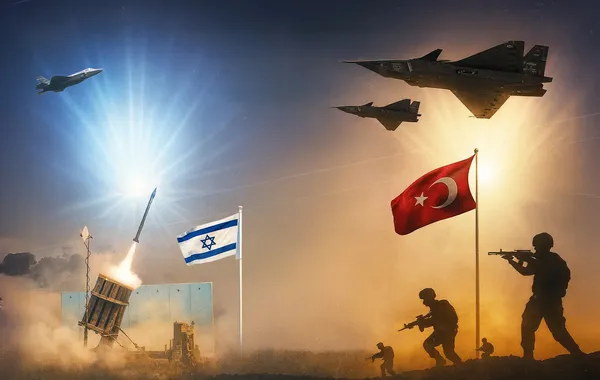
Türkiye’s role makes the issue more complicated. Ankara is a NATO member, but its defence relationships with Central Asian countries are generally developed through bilateral agreements, rather than through the alliance itself.
These ties include military training, defence industry cooperation and arms sales. In 2022, Kazakhstan Engineering and Turkish Aerospace signed an agreement providing for cooperation on the production and maintenance of ANKA drones in Kazakhstan. In January 2026, Uzbekistan and Türkiye signed a military cooperation plan covering joint exercises, personnel training and technical cooperation.
For Moscow, Türkiye’s expanding influence may represent a longer-term strategic challenge, particularly as Ankara combines defence cooperation with cultural, economic and political ties across the Turkic world.
However, Turkish bilateral activity should not automatically be described as NATO activity. The publicly available reporting on the November proposal does not establish precisely how all such partnerships would be treated under any future arrangement. Much would depend on the wording of an agreement, the parties involved and how its provisions were interpreted.
This distinction is consequential. A narrow restriction on NATO-led exercises would have different implications from a broader commitment affecting military cooperation between individual NATO members and Central Asian states.
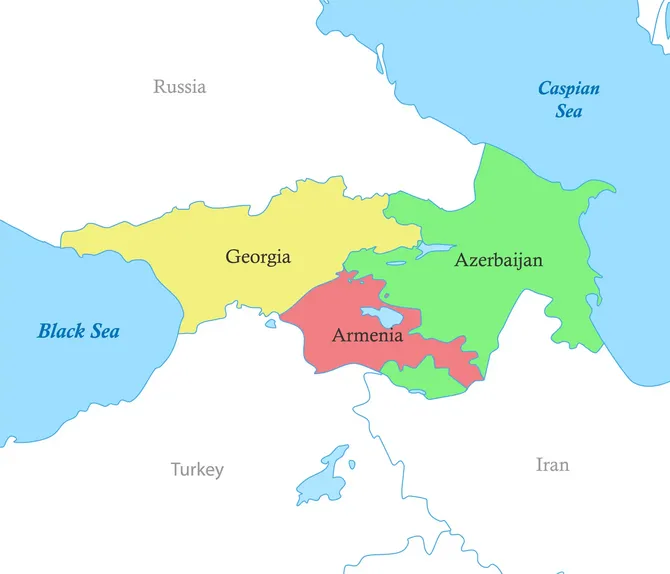
photo: getty images
Different Calculations in the South Caucasus
The situation in the South Caucasus is distinct from that in Central Asia. The three countries have different security relationships and different histories of cooperation with NATO and Russia.
Azerbaijan has pursued cooperation with NATO while maintaining a balanced foreign policy and has not sought membership of the alliance. Its partnerships are shaped by its own security priorities and its desire to preserve freedom of action in a region where the interests of Russia, Türkiye, Iran and Western countries intersect.
Georgia has a longer history of seeking NATO membership. At the alliance’s Bucharest summit in 2008, NATO leaders agreed that Georgia and Ukraine would become members in the future, although neither country has since joined.
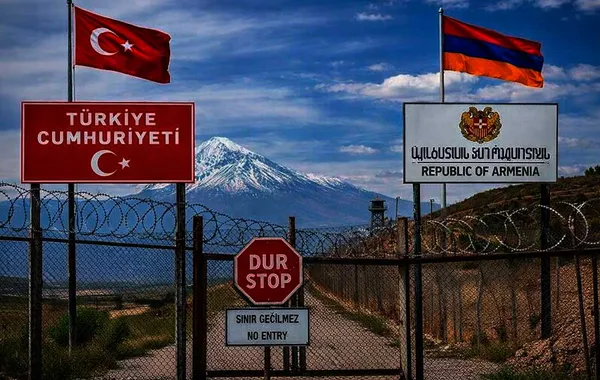
Armenia, meanwhile, remains formally within the CSTO but has frozen its participation amid a serious deterioration in relations with the organisation. In November 2026, the CSTO suspended Armenia’s voting rights over unpaid membership fees.
These differences make a single regional approach difficult. Any broad restriction on Western military activity would affect countries with very different alliances, interests and views of their security needs.
Russia’s Influence and the Rise of Alternatives
Moscow retains substantial influence in Central Asia through security institutions, military facilities, economic ties, labour migration and longstanding political relationships. Its position should not be underestimated.
At the same time, the war in Ukraine has placed new demands on Russian resources and contributed to uncertainty among neighbouring states. Governments in Central Asia have continued to expand relationships with other partners, including China, Türkiye, the European Union and the United States.
China’s role is particularly significant. Its influence is visible in trade, investment, infrastructure and transport projects, as well as in security cooperation. Türkiye has strengthened its presence through defence ties and broader political and economic engagement.
A November 2026 assessment by the Finnish Institute of International Affairs concluded that Russia remained a central security partner in the region, even as China, Türkiye and other actors expanded their roles.
For Central Asian governments, this diversification is not necessarily an attempt to replace Russia with another power. It is also a way to reduce dependence on any single partner and preserve flexibility in a more competitive international environment.
photo: getty images
Whose Security is Being Negotiated?
The practical consequences of Moscow’s reported proposal remain uncertain. A demand made in negotiations is not an agreement, and any future commitment would depend on its text and on which governments accepted it.
An arrangement between Russia and Western governments would not automatically create legal obligations for Central Asian or South Caucasus states that were not parties to it. Even so, a decision by NATO or individual Western countries to limit cooperation could affect the choices available to those states in practice. Diplomatic pressure and voluntary restraint could also influence future partnerships before any formal agreement is reached.
The central issue is therefore not simply whether NATO has plans to expand in these regions. It is whether the security interests of independent states can be discussed without their participation, and whether their relationships with outside partners can be restricted as part of a wider settlement.
For Russia, limitations on Western activity may be presented as a security guarantee. For countries in Central Asia and the South Caucasus, the same limitations could be viewed as a constraint on their sovereignty.
As negotiations over Ukraine continue, the challenge for regional governments will be to maintain constructive relations with major powers while ensuring that decisions affecting their security are not made without them.