S&P Global Ratings has upgraded KDB Bank Uzbekistan's long-term credit rating from BB to BB+ and revised the outlook on Uzpromstroybank from Negative to Stable, the agency announced.
The rating actions were announced on November 25, 2026. KDB Bank Uzbekistan's outlook remains Stable, while its short-term issuer credit rating has been affirmed at B, The Caspian Post reports, citing UzDaily.
Uzpromstroybank's long- and short-term credit ratings were affirmed at BB-/B, respectively.
Annette Ess is the lead credit analyst responsible for both banks.
Both rating decisions follow Uzbekistan's sovereign credit rating upgrade. On November 20, 2026, S&P raised the country's long-term sovereign credit ratings on foreign- and local-currency obligations from BB to BB+, maintaining a Stable outlook.
Factors behind the sovereign rating upgrade
S&P said Uzbekistan’s economic policy continued to improve amid reforms in the energy sector and state-owned enterprises. The agency also cited moderate net government debt and improving external indicators.
These developments have been supported by high gold prices in 2026, substantial tourist arrivals and resilient remittance inflows.
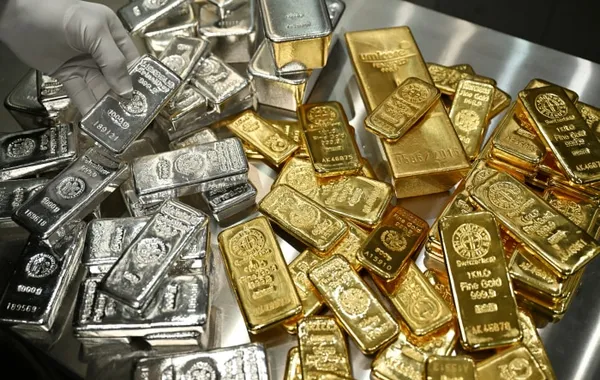
International reserves more than doubled from 2023 levels, reaching approximately US$64 billion, or 32% of GDP, at the end of October 2026. S&P said record gold prices had benefited Uzbekistan as a commodity exporter.
Gold accounts for 30-40% of the country’s merchandise exports and 85-90% of its international reserves.
However, the agency said Uzbekistan’s external indicators remained structurally vulnerable. S&P continues to consider balance-of-payments risks elevated because of geopolitical instability, disruptions to global trade and the high share of gold in exports and reserves.
These risks are partly offset by resilient exports of non-gold goods, remittances and services income, particularly from logistics and tourism.
The government continues to implement the structural reform programme launched in 2017. Recent measures have focused on reducing the risks associated with contingent liabilities of state-owned enterprises and improving budget transparency.
These include legislation governing external borrowing by state-owned enterprises, potential limits on the nominal primary deficit excluding mineral extraction revenues, restrictions on annual public-private partnership commitments and higher corporate governance standards for state-owned companies.
S&P expects these measures, together with energy subsidy reforms, to reduce the need for government guarantees and capital injections into state-owned enterprises.
The agency forecasts that these developments will help keep the budget deficit stable at around 3% of GDP in 2026-2029.
Banking sector outlook
S&P expects Uzbekistan’s banking sector to remain resilient. The agency identifies favourable economic prospects, rising disposable incomes and low financial services penetration as the main drivers of growth.
Household debt stands at less than 10% of GDP, which S&P expects to support credit demand in the coming years.
The largest state-owned and private banks have stable and diversified funding profiles. They rely on long-term funding from the government and international financial institutions, as well as domestic deposits.
However, S&P believes that the growing deposit base is insufficient to cover banks’ funding needs, particularly for long-term financing. The domestic capital market also remains underdeveloped and lacks depth.
The agency continues to view banking regulation as more reactive than preventative. Regulatory actions are not always predictable or transparent, although S&P acknowledges gradual improvements in regulatory effectiveness.
State-owned banks dominate the sector. As of 1 October 2026, they accounted for 61% of total banking assets.
Together with preferential state lending programmes, this reduces the effectiveness of monetary policy transmission, according to S&P.
The privatisation of state-owned banks is taking longer than the government initially expected. Following the sale of Ipoteka Bank in 2023, the authorities plan to privatise four or five state-owned banks by 2030, including Asakabank and Uzpromstroybank.
S&P expects further progress to take time. It will depend on transforming the banks to improve their efficiency and profitability, engaging with the market under the government’s modernisation plan and reaching agreement on asset valuations.
KDB Bank Uzbekistan
The bank’s rating was raised by one notch following the inclusion of potential extraordinary support from its parent group. This was added to the bank’s stand-alone credit profile (SACP), which is assessed at bb.
The anchor rating is bb-. In the rating component table, group support contributes three notches, while the additional factors assessment improved from -3 to -2.
The other rating components remained unchanged. The bank’s business position is moderate (-1), capitalisation and profitability are very strong (2), risk position is adequate (0), and funding and liquidity are adequate (0).
S&P considers KDB Bank Uzbekistan a strategically important subsidiary of its majority owner, Korea Development Bank (AA/Stable/A-1+).
The Uzbek bank plays an important role in its parent’s long-term strategy and in maintaining economic ties between the governments of Uzbekistan and South Korea. This is linked to Korea Development Bank’s status as a government-related entity.
The bank’s rating could be three notches above its SACP. However, S&P caps it at Uzbekistan’s long-term foreign-currency sovereign rating.
Although the bank’s assets are geographically diversified, its main risks are associated with its operations in Uzbekistan. Its funding sources are predominantly denominated in foreign currencies.
In a stress scenario likely to accompany a sovereign default, S&P believes the bank would face significant asset impairment and a reduction in capital.
If capital controls and restrictions on foreign currency transactions were introduced, the bank would be unable to meet its obligations fully and on time. S&P does not expect the parent institution to fully offset the consequences of a hypothetical sovereign default.
The agency expects the bank’s operating performance to benefit from substantial capital buffers, a diversified asset structure and corporate governance standards above the sector average. Operational and financial support from Korea Development Bank will also provide support.
Negative factors include a narrow customer base, limited market share and high concentration among large counterparties.
As of mid-2026, customer loans accounted for only 26% of the bank’s assets, while its 20 largest borrowers represented almost the entire loan portfolio. The bank is seeking to expand its presence, but S&P does not expect a significant change in concentration.
S&P expects the bank’s capitalisation to remain very strong over the next 12 months. Its risk-adjusted capital (RAC) ratio stood at 24.2% at the end of 2025.
The agency forecasts that the ratio will rise to 25-26% by the end of 2027, supported by targeted lending growth and stable profits.
S&P expects the bank’s asset quality to remain stronger than that of comparable institutions. This reflects its high corporate governance standards, conservative risk appetite and underwriting standards set by its parent organisation.
The share of non-performing loans is expected to remain significantly below the sector average. If such loans emerge, they are forecast to account for no more than 1% of the portfolio by the end of 2027. The bank currently has no non-performing loans.
The Stable outlook mirrors the outlook on Uzbekistan’s sovereign ratings. It reflects S&P’s expectation that the bank will maintain its business model and conservative risk appetite over the next 12 months, alongside high profitability and very strong capitalisation.
A negative rating action could follow a similar action on Uzbekistan’s sovereign ratings. A positive action would depend on an equivalent upgrade for the country.
Korea Development Bank would also need to remain willing to provide extraordinary support, while KDB Bank Uzbekistan’s own creditworthiness would have to remain unchanged.
Uzpromstroybank
The outlook revision reflects S&P’s expectation that the Uzbek government’s capacity and willingness to provide extraordinary support to the bank will increase.
The agency considers Uzpromstroybank a government-related entity with a moderately high likelihood of receiving timely and sufficient support. This assessment reflects the bank’s important role and close ties with the government.
The bank is among the state-owned entities scheduled for privatisation. S&P describes the process as a complex task that will take time to complete.
The agency believes the bank will remain important to the government until a substantial stake is sold. A significant part of its business will continue to be linked to the state, including lending to and providing cash management services for large government-related organisations, strategic sectors and projects.
The government also helps the bank improve asset quality by supporting state-owned companies and providing subsidies and state guarantees.
The outlook revision also reflects S&P’s expectation that measures taken by the bank in 2026 will likely stabilise asset quality and strengthen profitability.
The share of Stage 3 loans and other repossessed real estate collateral could rise to 11.0% of total loans over the next 12 months, compared with 9.1% at the end of 2025.
Nevertheless, the agency believes the bank’s efforts will produce results in the coming years.
In 2026, the bank focused on retail and small and medium-sized enterprise lending, ended directed lending and slightly reduced its corporate loan portfolio.
The value of real estate and repossessed collateral on its balance sheet fell to 2.6 trillion soums on 30 October 2026, from 3.9 trillion soums on 31 August.
The bank sold assets and transferred others to the State Assets Management Agency.
Cash interest income, according to the bank’s reports, increased to 87% of accrued interest income in the first half of 2026, compared with 75% in 2025.
S&P sees this as evidence of stricter underwriting standards and effective debt recovery. The agency understands that the increase in Stage 2 and Stage 3 loans and provisioning levels mainly reflects more conservative recognition of problem loans.
The bank is taking this approach to strengthen credit risk management and improve transparency ahead of privatisation.
The bank’s SACP assessment incorporates current government support in the form of funding and guarantees. Around 19% of its loans are extended to state and municipal organisations, and 45% of these loans were backed by state guarantees at the end of 2025.
S&P expects the bank to continue serving a substantial number of state-owned enterprises for several more years.
Following privatisation, the share of state-related lending and funding is likely to decline. The rating does not include additional notches for potential government support because the bank’s SACP is already very close to the sovereign rating level.
In the SACP component table, the bank’s SACP is bb-, while its anchor rating is b+.
Its business position is adequate (0), capitalisation and profitability are adequate (+1), risk position is adequate (0), and funding and liquidity are adequate (0).
Support adjustments are zero across all categories. The rating on the bank’s senior unsecured debt was affirmed at BB-.
The Stable outlook reflects S&P’s expectation that the bank’s measures will halt the deterioration in asset quality recorded in 2024-2025 over the next 12 months.
It also assumes that the government remains willing and able to provide ongoing support, including additional capital injections if needed.
A negative rating action could be taken over the next 12 months if the bank makes no progress in resolving legacy problem loans through debt recovery and asset sales.
An exception would be if timely and sufficient government support, through capital or other measures, offset the lack of progress. A positive rating action over the next 12 months is considered unlikely.