As the end of Emmanuel Macron’s presidential mandate approaches, relations between France and Azerbaijan remain locked in what French political analyst Emmanuel Dupuy calls a “cold stabilisation”: minimal diplomatic contact and a modest economic partnership. Dupuy argues that the way forward lies in pragmatic engagement built on corridor diplomacy, energy and trade, a reconsideration by Baku of its rhetoric on French overseas territories, and a multilateral framework for the South Caucasus in place of transactional diplomacy.
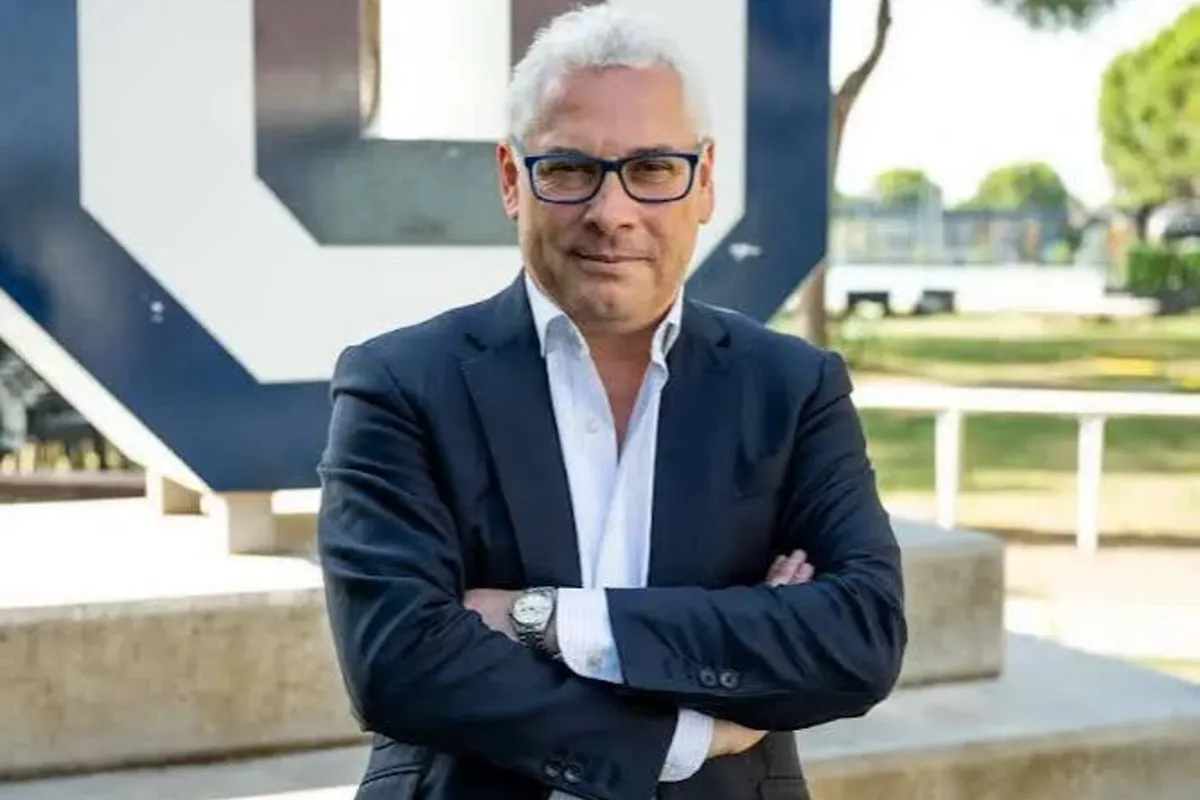
In an interview with The Caspian Post, Emmanuel Dupuy, French political analyst and President of the Institute for Prospective and Security in Europe (IPSE), said that, given the strategic importance of the South Caucasus for European security and connectivity, the greatest potential for renewed cooperation between France and Azerbaijan lies in interconnectivity.
“Corridor diplomacy, and the rise and the legitimacy of the Middle Corridor, oblige us to take into consideration the need to liaise between the Caspian Sea and the Black Sea,” he said.
According to him, it is also necessary to compensate for the crisis in the northern part of the Black Sea and to build a deeper economic relationship between Paris and Baku.
“We need to elaborate more in-depth economic cooperation when it comes to gas, the transit of gas, the transit of oil, but also the transit of goods,” Dupuy noted.
The analyst stressed that France should be more proactive in this direction. In his words, the Middle Corridor opens a wide range of partnerships and cooperation, and offers a new perspective for free trade, liberty of commerce and liberty of trade.
Dupuy added that this reality obliges Paris to be more pragmatic and, on a number of issues, less ideological. He believes that pragmatic engagement can help overcome existing political differences, because it builds shared interests that do not depend on agreement on everything.
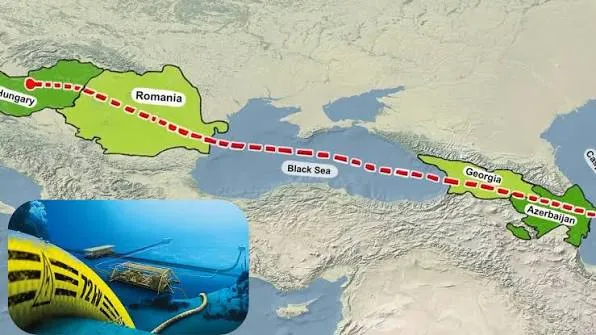
photo: getty images
In his view, such an approach would allow France to move beyond purely ideological positions and concentrate on concrete projects that connect the Caspian and the Black Sea, from energy supplies to the movement of goods.
At the same time, the expert emphasised that Azerbaijan must also do its part. He pointed to a significant crisis linked to a number of policies that Baku has promoted through the Baku Initiative Group.
“When a country, namely Azerbaijan, accuses another country of being neo-colonialist, and denounces what we consider the legitimate conduct of our policy in our faraway, overseas territories, namely in the Indian Ocean or in the Pacific Islands, this puts in jeopardy the normal course of international relations,” he said.
Dupuy stated that France does not accept what it regards as foreign interference in its national policy, and called on Baku to reconsider its position.
“This must be overcome, and the Azerbaijani position must be rapidly reconsidered. Otherwise, there will not be any amelioration in our relations,” he said.
The analyst warned that without such a step, the current stalemate will continue. “We will still have a blockade of our diplomatic ties, the economic partnership will be minor, and we will not come out of a cold stabilisation process, that is to say, minimal diplomatic relations between France and Azerbaijan,” he added.
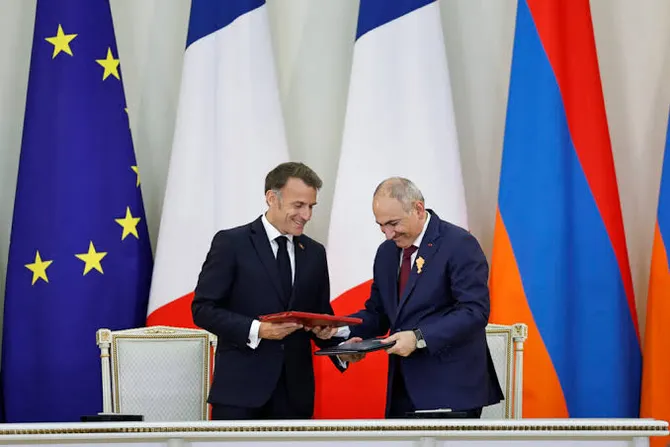
photo: getty images
Touching on France’s expanding defence cooperation with Armenia and the need to keep balanced relations with Baku, Dupuy said that Paris does not want to be implicated in conflicts involving its economic partners, whether Georgia, Armenia or Azerbaijan.
“France will be very clear on the need to have a non-aligned policy, therefore to listen to everyone and to facilitate the position of each party, and of course not to choose one against the other, not to arm one against the other,” he said.
Dupuy also noted that the end of President Emmanuel Macron’s mandate will open a new diplomatic perspective. He recalled that the president elected in 2017 has pursued a very distinctive personal diplomacy over the last decade.
“By next year, 2027, the next occupant of the Élysée Palace will definitely have another posture. Whether it is an extreme right candidate, an extreme left candidate or an extreme centre candidate, the situation will be the same,” he said.
The expert underlined that this is a structural feature of French diplomacy rather than a matter of personalities: whoever enters the Élysée Palace, Paris will not wish to be drawn into disputes between its partners.
Speaking about the role of external powers, the analyst said that the position of the United States, which in his view clearly favours Türkiye and Azerbaijan, is not acceptable to Paris.
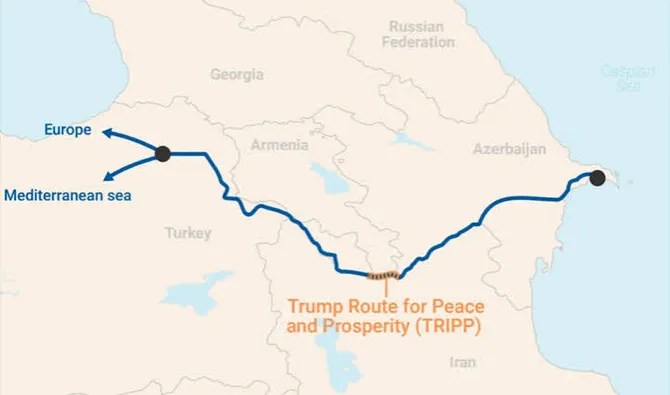
photo: getty images
“We do not think that this solution should be a transactional, personality-driven diplomacy, but a multilateral diplomacy,” Dupuy stated.
According to him, besides the TRIPP initiative launched under the auspices of Donald Trump, and besides the ceasefire agreed under the auspices of both Türkiye and Russia in November 2020, an overall multilateral process is needed.
“The United Nations would of course be the best place to obtain that,” he said.
In his opinion, a lasting settlement in the South Caucasus cannot rest on a single initiative or a single mediator, and a process in which every party is heard would give it greater legitimacy.
The analyst added that the step-by-step diplomacy of the European Political Community (EPC) could provide another layer of legitimacy and help to find better ways to connect both parties.
“It would help to have a balanced foreign diplomacy, both from Paris to Yerevan and from Paris to Baku,” Dupuy concluded.