China’s leadership is tightening its oversight of Communist Party and government officials. Beijing is focusing on corruption, bureaucratic inertia and failures to implement central government decisions. With the Communist Party congress approaching in 2027, the campaign could bring further changes to the country’s political and military elite.
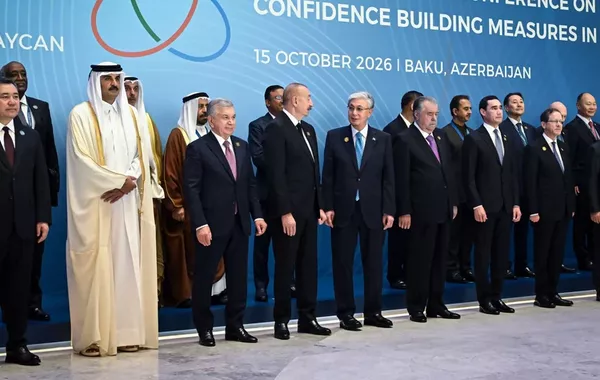
The fifth plenary session of the Central Committee of the Communist Party of China opened in Beijing on October 26. Strengthening party discipline and improving internal oversight were among the main issues on the agenda of the four-day meeting.
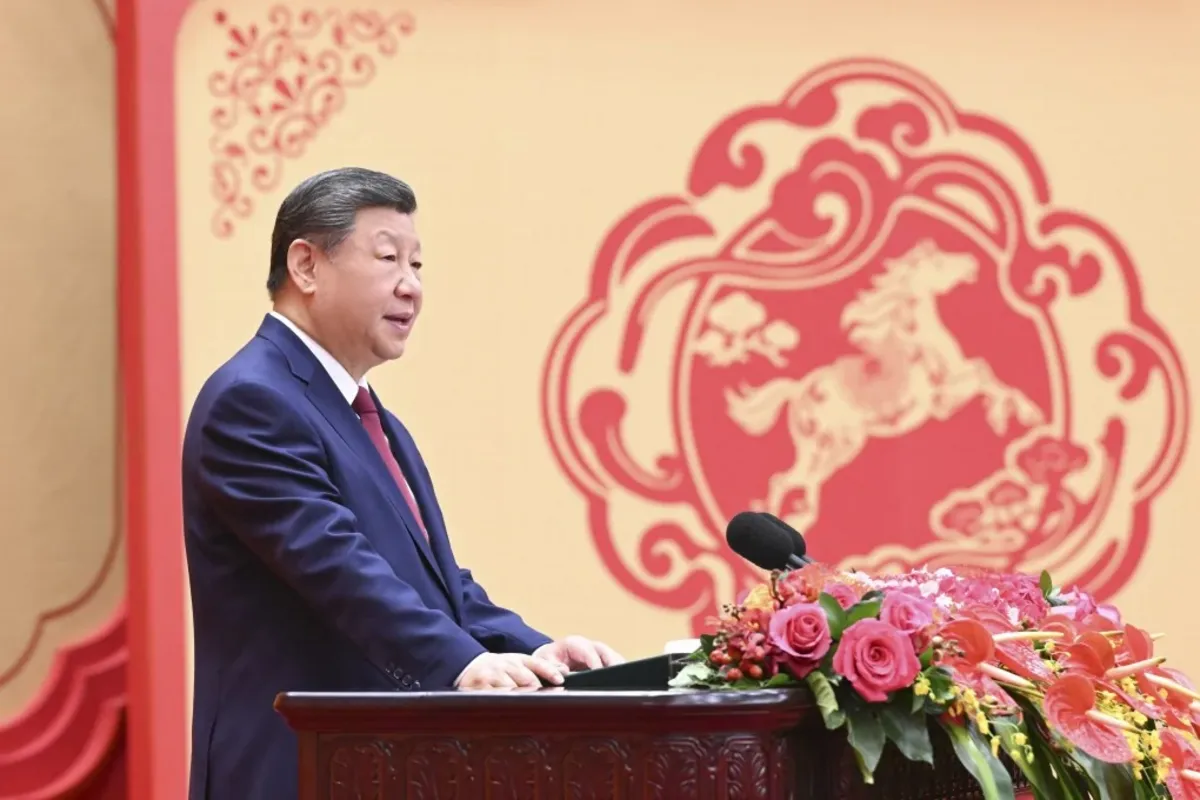
According to Reuters, Communist Party General Secretary Xi Jinping presented the Central Committee with a draft document on stricter party governance. It addresses the party’s governing capacity, the need to guard against complacency and the continuing fight against corruption. (theprint.in)
The plenum takes place roughly a year before the next Communist Party congress, when changes are expected in the party’s leadership bodies. Many observers consider it likely that Xi will remain general secretary for a fourth term. The congress, however, has yet to make its decisions. (apnews.com)
For the Chinese leader, personnel decisions are crucial. The officials who occupy key positions in the party, government, provinces and armed forces will shape not only the implementation of Beijing’s current policies but also its ability to respond to economic difficulties and growing international competition.
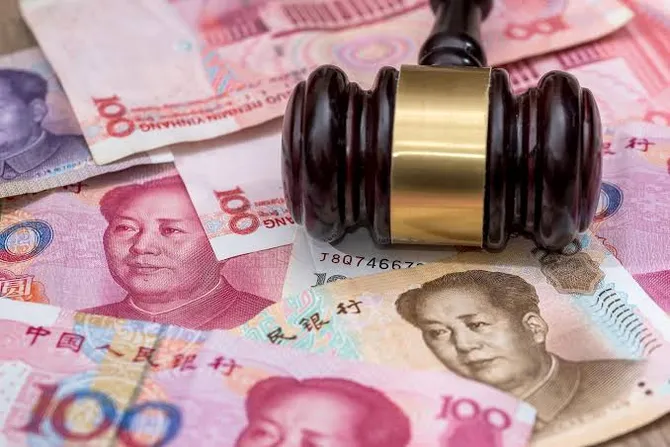
photo: getty images
From Corruption to Bureaucratic Inertia
The anti-corruption campaign has been one of the defining features of Xi Jinping’s rule since he became Communist Party leader in 2012. Over the years, investigations have reached lower-ranking officials, regional leaders, executives at state-owned companies and senior military commanders.
China’s leadership views corruption as a threat to both the economy and the stability of the political system. Abuse of power undermines public trust, weakens party discipline and obstructs the implementation of central government decisions.
Today, however, the demands placed on officials are becoming broader. Beijing is also paying closer attention to bureaucratic inertia, superficial implementation of instructions, inaction and decisions that hinder regional development.
According to the Associated Press, the number of officials punished for such conduct has risen in recent years. For Beijing, the concern is that some officials may publicly demonstrate loyalty while selectively implementing instructions or delaying decisions. (apnews.com)
Xi has also warned about “two-faced” officials who profess loyalty to the party while acting in their own interests or disregarding leadership directives.
For the central government, this is a question of effective governance. Beijing can adopt ambitious development programmes, but their success depends on implementation in provinces, cities and counties. If local leaders rely on formal reports or hesitate to act, central government decisions lose their effectiveness.
Why Misleading Reports Are Dangerous for Beijing
Another problem is the reliability of the information local authorities send to the central leadership. When regional officials are expected to demonstrate economic success, they may be tempted to present conditions as better than they really are.
Inflated growth figures, overstated investment, concealed debts and undisclosed problems at state-owned enterprises can prevent Beijing from identifying weaknesses in the economy in time.
If decisions on budget support, lending and investment are based on distorted data, local problems can accumulate for years. The central government may then discover them only when they have become much more costly and difficult to resolve.
Public reporting on the opening of the current plenum, however, does not establish that Xi announced a separate new campaign specifically targeting inflated economic figures or set particular prison terms for falsifying data. The final measures will have to be assessed against official Chinese documents.
Beijing faces a difficult task. On one hand, officials must be held accountable for falsification. On the other, excessive pressure to deliver strong figures may encourage them to conceal problems more deeply.
Effective oversight will depend not only on the severity of punishment but also on whether local leaders can report unwelcome facts to the centre without fearing that acknowledging difficulties will itself cost them their jobs.
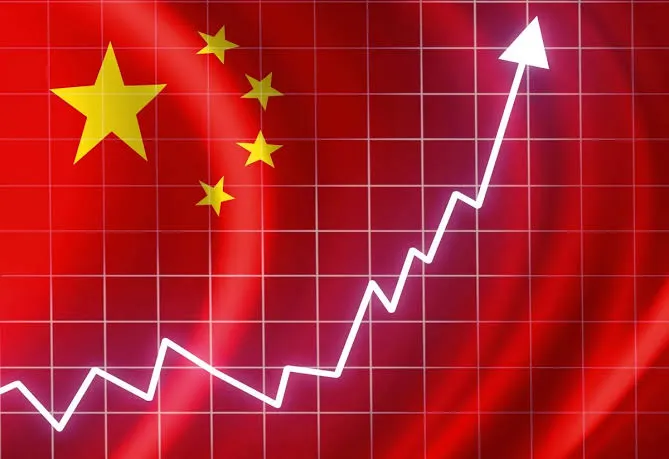
photo: getty images
A Crackdown Amid Economic Challenges
The push for tighter discipline comes as China’s economy faces serious structural challenges, including weak domestic demand, a prolonged property sector crisis and pressure from local government debt.
Provincial and city administrations play a central role in China’s economic model. They attract investment, carry out infrastructure projects and implement many of the central government’s decisions.
However, the financial capacity of many regions has weakened amid problems in the property market. That makes responsible use of public funds and the quality of local administration more important.
Beijing needs officials capable of making difficult decisions: abandoning unprofitable projects, acknowledging debt problems and finding new sources of economic growth.
The anti-corruption campaign may help reduce abuse and increase accountability. But it also carries a possible risk: officials who fear punishment for every mistake may choose inaction over initiative.
For an economy that requires structural change, such caution could become an additional obstacle. Xi’s challenge is therefore not only to punish wrongdoing but also to preserve officials’ willingness to take responsibility.
Who Has Lost Their Posts?
The scale of the personnel shake-up becomes clearer when viewed through the cases of officials and military commanders who have lost their positions in recent years. The most prominent cases have reached the highest levels of China’s military leadership.
One of the most significant is Zhang Youxia, who served as vice chairman of the Central Military Commission. He was considered one of China’s most influential military figures and a long-standing associate of Xi Jinping.
Authorities announced an investigation into Zhang in January 2026. He was removed from his position on the state Central Military Commission in August and expelled from the Communist Party and military service in September. (eng.mod.gov.cn)
Zhang’s downfall attracted particular attention because of his senior military position and perceived closeness to the Chinese leader. His case showed that the campaign has reached people who until recently belonged to the leadership’s inner circle.
Liu Zhenli, who served as chief of the Central Military Commission’s Joint Staff Department, was investigated alongside him. Liu was also removed from the commission in August 2026 and expelled from the party and military in September.
Chinese authorities cited serious violations of discipline and law. Reuters also reported allegations of corruption and disloyalty. (www.reuters.com)
Another high-profile case was Li Shangfu, who was removed as defence minister in October 2023, only months after his appointment. In June 2024, he was expelled from the Communist Party and his case was transferred to military prosecutors.
According to Chinese authorities, Li was suspected of taking and offering bribes, as well as using his position improperly in personnel appointments. These allegations should not be treated as a court conviction. (eng.mod.gov.cn)
An anti-corruption investigation also reached Li’s predecessor, Wei Fenghe, who served as defence minister from 2018 to 2023. He had already left the ministerial post when the investigation was announced. In 2024, Wei was expelled from the party, stripped of his military rank and discharged from military service. (www.scmp.com)
Among other senior military figures who lost their positions during the campaign, the US-based Center for Strategic and International Studies names He Weidong, a former vice chairman of the Central Military Commission, and Miao Hua, the former head of the commission’s Political Work Department.
The researchers include them among five members of the top military body removed during the personnel shake-up. (www.csis.org)
These cases demonstrate the scale of the upheaval within China’s military leadership, although the circumstances of individual cases and any connections between them have not always been made public.
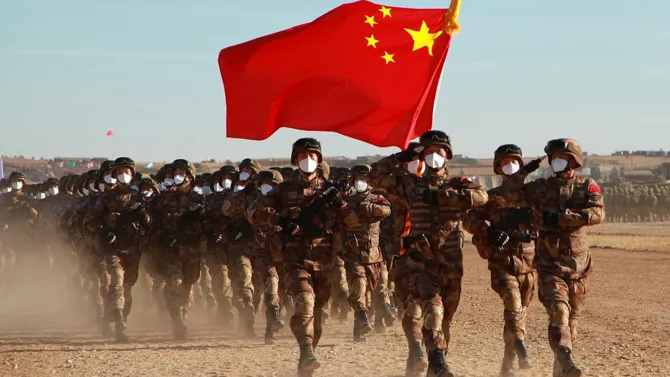
photo: getty images
Why the Military Purges Matter
Control over the armed forces is strategically important to Xi Jinping. China is investing substantial resources in military modernisation, missile technology and naval capabilities.
Corruption in defence procurement and personnel appointments can undermine those efforts. If funds are spent inefficiently and promotions go to people with the right connections rather than the necessary professional skills, the consequences can affect both military readiness and command.
At the same time, the scale of the investigations raises a difficult question for China’s leadership: if allegations reach people appointed during Xi’s own tenure, how effective was the previous system for selecting and supervising senior officials?
The tighter scrutiny may be intended both to uncover misconduct and to ensure the political reliability of military leaders. Amid international tensions, Beijing wants confidence that the armed forces can carry out their assigned tasks and maintain unity of command.
Yet frequent leadership changes can also disrupt continuity, slow decision-making and create mistrust within the military establishment.
Preparing for the 2027 Party Congress
The current plenum is politically important because it comes ahead of the next Communist Party congress. The congress will determine the composition of the Central Committee and the shape of the party’s top leadership for the years ahead.
Xi Jinping simultaneously serves as general secretary of the Communist Party, president of China and chairman of the Central Military Commission. The position of general secretary is central to the country’s political leadership.
Many foreign observers expect Xi to retain that post for a fourth term. Equally important, however, will be who joins his future leadership team and what criteria guide personnel decisions.
On one hand, investigations may remove officials involved in corruption or unable to perform their duties. On the other, critics argue that the campaign also helps concentrate power and weaken potential political rivals.
These explanations are not necessarily mutually exclusive. An anti-corruption campaign can address governance problems while also strengthening the leadership’s political position. The closed nature of China’s political system, however, makes it difficult to independently assess the motives behind each individual case.
Not all foreign analysts see the current phase primarily as a struggle against rivals. Some believe Beijing is seeking to build a more disciplined system capable of carrying out Xi’s priorities over the long term. (apnews.com)
photo: getty images
Loyalty and Competence
The central question for China is whether strict discipline can be combined with effective governance.
Political loyalty matters to a system in which central authorities seek to maintain a unified course. But loyalty alone does not guarantee professional competence. An official may be devoted to the leadership while lacking the knowledge needed to solve complex economic problems.
The opposite situation can also create difficulties: competent administrators may avoid difficult decisions if they fear that honestly acknowledging problems could be interpreted as political disloyalty.
Personnel policy ahead of the congress will therefore test the Chinese leadership’s ability to balance control with initiative. The outcome will affect not only the stability of the party apparatus but also how quickly the world’s second-largest economy can respond to domestic and external challenges.
The current plenum indicates that Xi Jinping has no intention of easing pressure on the party, government and military establishments. But the campaign’s results will be measured by more than the number of investigations and dismissals. The question is whether officials will implement decisions more effectively, provide leaders with reliable information and address the country’s real problems.
By Anar Musayev