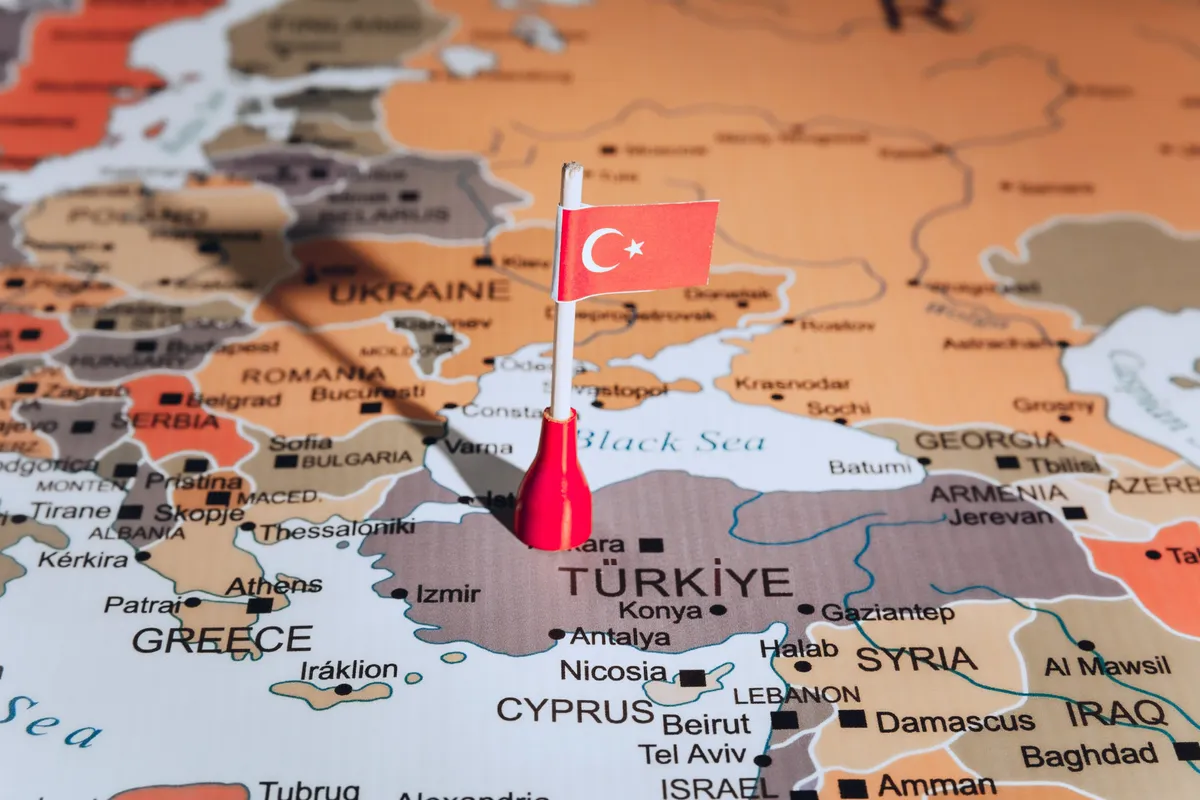
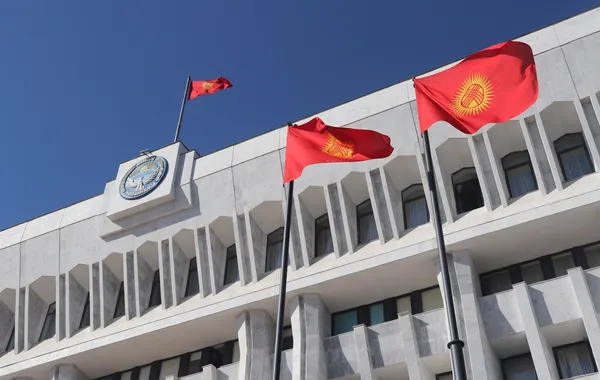
Türkiye faces an increasingly complex geopolitical environment as security developments in the South Caucasus, the Black Sea and the Middle East become more closely connected. Its partnership with Azerbaijan remains a central pillar of its regional policy, while the prospects for lasting peace also depend on dialogue with Armenia, cooperation with Georgia and respect for the sovereignty of all regional states.
Ankara has an opportunity to help build a more stable South Caucasus by combining its strategic alliances with diplomacy, economic connectivity and efforts to address the security concerns of communities affected by conflict.
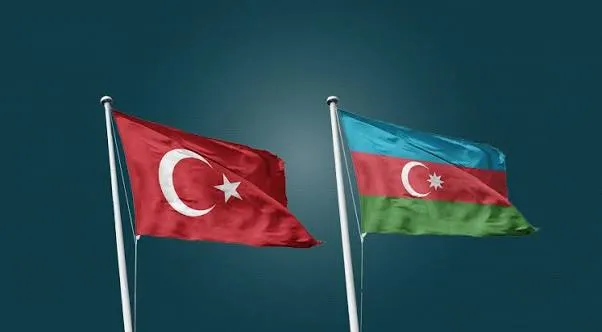
photo: getty images
Türkiye's Interconnected Challenges
Türkiye is experiencing one of the most complex periods of geopolitical transformation since the end of the Cold War. Conflicts and security developments in neighbouring regions can no longer be treated as separate issues.
One of Ankara’s main challenges is the changing balance of power in the South Caucasus. Azerbaijan’s restoration of sovereignty over Karabakh transformed the regional landscape, but the end of military confrontation does not automatically guarantee lasting peace.
The region needs to move beyond what conflict-resolution scholars describe as “negative peace” - the absence of armed conflict - towards a more durable peace supported by cooperation, confidence-building and economic development.
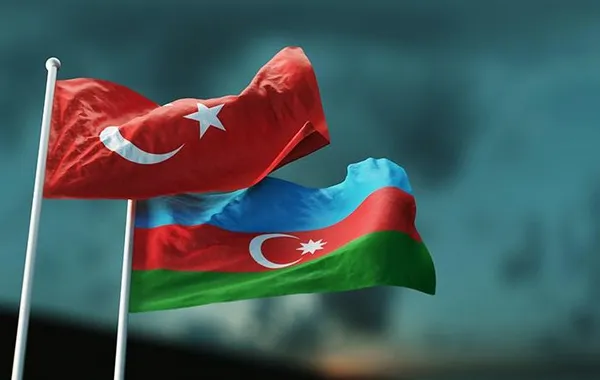
Türkiye must maintain its strategic alliance and brotherhood with Azerbaijan while also advancing normalisation with Armenia and developing cooperation with Georgia. Balancing these priorities will remain a significant challenge for Ankara.
The Middle East presents another major challenge. The future of Syria, tensions involving Iran, Israel and the United States, the Palestinian issue, energy security and the activities of non-state armed groups all affect Türkiye’s strategic environment. Military tensions involving Iran can also have consequences for the South Caucasus.
Developments in the Middle East, particularly the Israeli-Palestinian conflict, may also expose differences in Türkiye and Azerbaijan’s approaches to regional affairs. Such differences require careful diplomatic management within the broader framework of their strategic partnership.
The Russia-Ukraine war and security in the Black Sea are equally consequential for Ankara. Russia’s occupation of Crimea affects not only Ukraine, but also the balance of power in the Black Sea, maritime trade, energy security and Türkiye’s own strategic interests.
Türkiye’s support for Ukraine’s territorial integrity and the rights of the Crimean Tatars is important. At the same time, Ankara’s continuing economic and diplomatic relations with Moscow create a difficult balancing act. Managing relations with Russia should not lead to the normalisation of expansionism or the violation of international law.
Türkiye’s position within NATO, its relations with Europe and its pursuit of strategic autonomy represent another challenge. A multi-vector foreign policy is understandable, but strategic autonomy should not weaken relationships with allies. Türkiye’s role in NATO and its leadership in the Turkic world can complement one another.
Energy, technology and climate security form a further dimension of geopolitical competition. Critical infrastructure, transport corridors, the defence industry, artificial intelligence, cybersecurity and economic resilience are becoming increasingly significant sources of national power.
Türkiye’s long-term success will depend not only on strengthening its military and diplomatic capabilities, but also on its ability to manage conflicts in its neighbourhood, develop economic interdependence and contribute to a regional order based on international law.
The Potential of the Turkic World
The 13th summit of the Organization of Turkic States (OTS), held in Ankara on 30 October 2026, represented an important stage in the organisation’s institutional development.
The summit’s emphasis on “unity in language, thought and action” - a historic motto associated with Ismail Gasprinsky - highlighted the shared cultural and historical foundations of the Turkic world. The challenge now is to translate those ties into practical cooperation.
The Ankara Declaration highlighted strategic planning for 2027-2031 and cooperation in trade, transport, energy, digital transformation and the defence industry.
Whether the OTS can become an independent geopolitical centre depends on how geopolitical power is defined. If it means a military alliance comparable to NATO, the organisation in its current form remains far from that model.
However, if geopolitical power is understood as the ability to influence trade routes, contribute to energy security, develop common diplomatic positions and respond to regional challenges, the OTS has considerable potential.
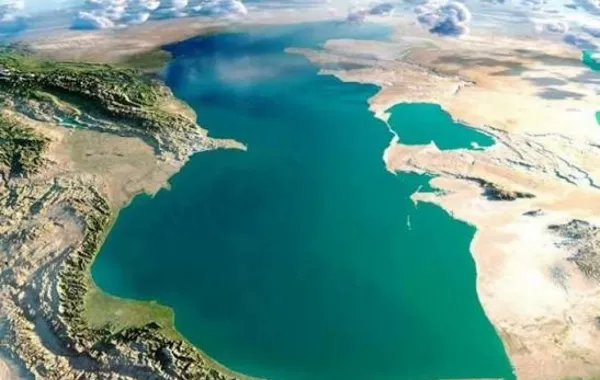
Türkiye and Azerbaijan have complementary roles in that process. Türkiye is a NATO member with an established defence industry, extensive diplomatic relations and a strategic location between Europe and the Middle East. Azerbaijan connects the Caspian Basin with Anatolia through energy and transport infrastructure.
The Baku-Tbilisi-Ceyhan pipeline, the Trans-Anatolian Natural Gas Pipeline (TANAP) and the Baku-Tbilisi-Kars railway provide an economic and geopolitical foundation for this cooperation.
At the same time, the organisation’s members have different foreign policy priorities. Kazakhstan, Uzbekistan and Kyrgyzstan maintain longstanding ties with Russia and China. It would therefore be unrealistic to expect every Turkic state to adopt identical positions on all international questions.
The Turkic world also extends beyond the organisation’s independent member states. Greater attention should be given to the cultural heritage, language rights and human rights of Turkic communities elsewhere, including the Crimean Tatars.
The OTS can strengthen its influence by developing as a platform that supports its members’ sovereignty and economic development while maintaining engagement with the wider international community. Its success will require institutions based on the equal sovereignty and common interests of all member states.
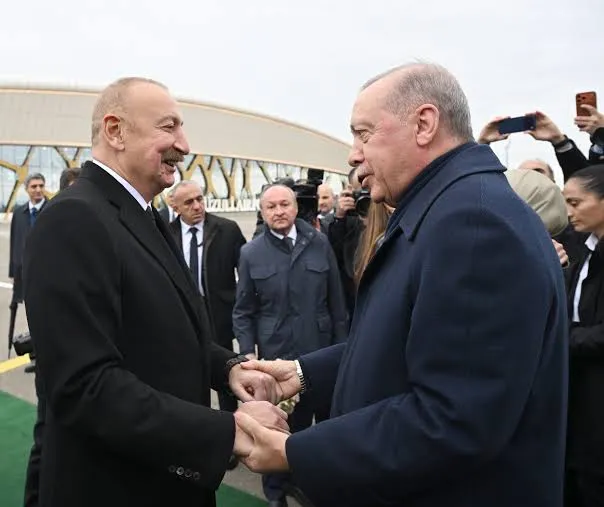
Photo: AZERTAC
Shusha and the Message of Strategic Partnership
Turkish President Recep Tayyip Erdoğan’s 8 November visit to Azerbaijan carried historical, symbolic and strategic significance. Its timing on Victory Day and his meeting with President Ilham Aliyev in Shusha gave it particular weight.
Shusha occupies a central place in Azerbaijan’s historical memory and national identity. The meeting demonstrated that relations between Türkiye and Azerbaijan are rooted in a strategic brotherhood that extends beyond conventional cooperation between states.
The visit reaffirmed that the countries’ partnership rests on institutional and historical foundations that go beyond temporary political circumstances.
Questions had been raised about bilateral relations following differences over certain regional issues and President Aliyev’s absence from the Ankara OTS summit. However, such developments should not be interpreted as evidence that the strategic alliance is coming to an end.
Close allies can experience disagreements. What matters is how they manage them and whether they remain committed to their shared interests.
The Shusha meeting conveyed that military, political and economic cooperation between Türkiye and Azerbaijan will continue; that Azerbaijan’s security will remain closely connected to Türkiye’s regional interests; and that the post-conflict situation should be supported by peace, reconstruction and economic integration.
The development of the Middle Corridor can strengthen the Turkic world’s position in international trade. The route connecting Asia and Europe also offers Central Asian countries more options for access to international markets.
Military victory and sustainable peace, however, are distinct achievements. A military victory can change the balance of power on the ground, but lasting peace requires the implementation of diplomatic agreements, confidence-building measures, economic relations and efforts to reduce societies’ fears about the future.
Reconstruction, mine clearance, the rights of displaced people, the preservation of cultural heritage and economic development are therefore important priorities.
The Shusha visit should be understood not only as a commemoration of a past victory, but also as a message about the regional order Türkiye and Azerbaijan seek to build.
Normalisation with Armenia
Türkiye has the sovereign authority to make its own decisions regarding relations with Armenia. Nevertheless, Ankara’s security perceptions, historical experience and alliance with Baku mean that the normalisation process cannot be considered entirely separate from Azerbaijan’s interests.
At the same time, the Türkiye-Azerbaijan partnership should not permanently obstruct dialogue between Ankara and Yerevan.
The failure to implement the 2009 Zurich Protocols demonstrated the importance of coordination with Azerbaijan. At the time, the unresolved Karabakh conflict was a major political obstacle to normalisation between Türkiye and Armenia.
Regional circumstances have since changed. Azerbaijan has restored sovereignty over its internationally recognised territory, while the text of a peace agreement between Azerbaijan and Armenia was initialled in Washington on 8 August 2025. Questions remain, however, about its final signing and implementation.
Continued diplomatic contacts and Turkish arrangements concerning direct trade with Armenia demonstrate that the normalisation process has not come to a complete standstill, although regular crossings along the land border have yet to open.
Türkiye should not treat normalisation with Armenia as a choice made at the expense of Azerbaijan’s security. Properly managed, it could contribute to Azerbaijan’s security and greater regional stability.
This requires continued consultations between Ankara and Baku, open diplomatic channels with Yerevan and confidence-building projects involving trade, transport, the environment, cultural heritage and humanitarian relations.
Armenia’s sovereignty and security concerns must also be considered. Lasting peace cannot be built on permanent insecurity for either side.
Economic engagement with its neighbours could give Armenia more foreign policy options and reduce its structural dependence on Russia. For that to happen, Armenian society would need to see tangible benefits from normalisation.
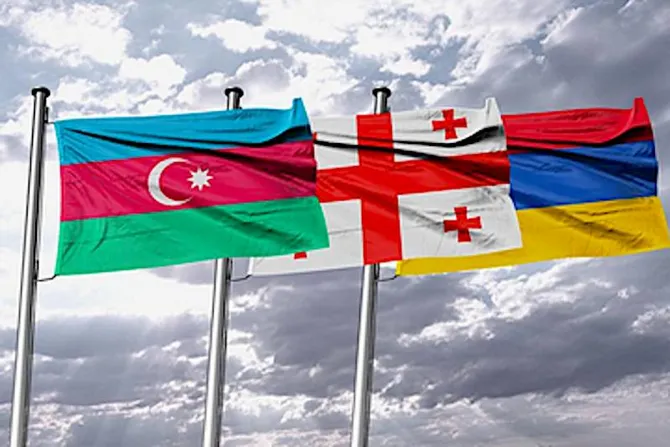
photo: getty images
A New Security Architecture
The sovereignty, security needs and economic interests of Azerbaijan, Armenia and Georgia must be central to any sustainable security framework for the South Caucasus.
Türkiye’s approach combines regional cooperation, economic connectivity, security partnerships and diplomatic efforts to manage conflicts.
The Türkiye-Azerbaijan alliance, strengthened by the Shusha Declaration, remains a key element. But regional security cannot rely solely on a bilateral military partnership.
Cooperation among Türkiye, Azerbaijan and Georgia is another important component, particularly for energy, transport and Black Sea security. Georgia’s role must be considered alongside the unresolved questions of Abkhazia and South Ossetia and Tbilisi’s relationship with Moscow.
The completion of the Armenia-Azerbaijan peace process is equally important. Beyond signing a final agreement, the sides face challenges including border delimitation and the establishment of secure transport links.
Projects connecting mainland Azerbaijan with Nakhchivan, the Middle Corridor and the planned Trump Route for International Peace and Prosperity (TRIPP) through Armenia could have significant economic and geopolitical consequences.
Transport corridors, however, should not create new sovereignty disputes or security crises. Arrangements for routes through Armenian territory should respect Armenia’s sovereignty and jurisdiction while addressing Azerbaijan’s expectations for secure and uninterrupted transport.
The 3+3 regional cooperation platform can provide a forum for dialogue, although it has limitations. Georgia has declined to participate because of its disputes with Russia, raising questions about the platform’s inclusiveness.
Türkiye should keep channels open with both Russia and Iran while respecting the sovereignty of Azerbaijan, Armenia and Georgia and avoiding the recognition of exclusive spheres of influence.
From Conflict Resolution to Peacebuilding
A durable security framework must address more than military capabilities and borders. It must also consider the experiences of people affected by war and displacement.
The historical memories of Azerbaijanis and Armenians include war, loss, displacement and security fears. Political agreements alone cannot resolve the social and psychological consequences of conflict.
Collective memories of trauma and victory shape how societies perceive one another. Trust must therefore be developed at a societal level alongside formal diplomacy.
International legal principles must also be applied consistently across conflicts. Karabakh is part of Azerbaijan’s internationally recognised territory, just as Crimea is part of Ukraine’s internationally recognised territory. Respect for sovereignty and territorial integrity should not depend on political convenience.
Türkiye can maintain its alliance with Azerbaijan while developing dialogue with Armenia, strengthening inclusive regional cooperation and supporting economic connectivity.
The aim should be to prevent the South Caucasus from becoming a new frontline in a broader confrontation among major powers and to create conditions in which the region’s peoples can live in security and prosperity.
The future of the South Caucasus will be determined not only by states that win wars, but also by societies and institutions capable of making peace sustainable.