Russia is moving to strengthen its economic, technological and strategic position in the Arctic, placing the region at the centre of its long-term national development and security agenda. Russian President Vladimir Putin’s approval of a new strategy for developing the country’s Arctic zone signals Moscow’s intention to transform its northern territories into a high-tech industrial hub, expand energy production and reinforce its influence over emerging Arctic transport routes.
The strategy, which establishes a long-term development vision extending to 2054, combines economic modernisation with national security priorities and reflects the growing importance of the Arctic in international geopolitical competition. It also comes at a time when cooperation between Russia and Western Arctic states has become increasingly constrained by broader political tensions.
Beyond its economic objectives, the document highlights a fundamental shift in how Moscow approaches the Arctic: no longer simply as a resource-rich frontier, but as a strategic space connecting energy security, technological sovereignty, international trade and national defence.
The Arctic as a cornerstone of Russia’s national interests
The new strategy places considerable emphasis on Russia’s geographical advantages and historical presence in the Arctic. According to the document, nearly half of the territory and waters within the Arctic Circle belong to Russia, alongside at least 80% of the continental shelf surrounding the Arctic Basin.
Moscow uses these geographical realities to underline its argument that Russia is indispensable to addressing the region’s economic, environmental and security challenges.
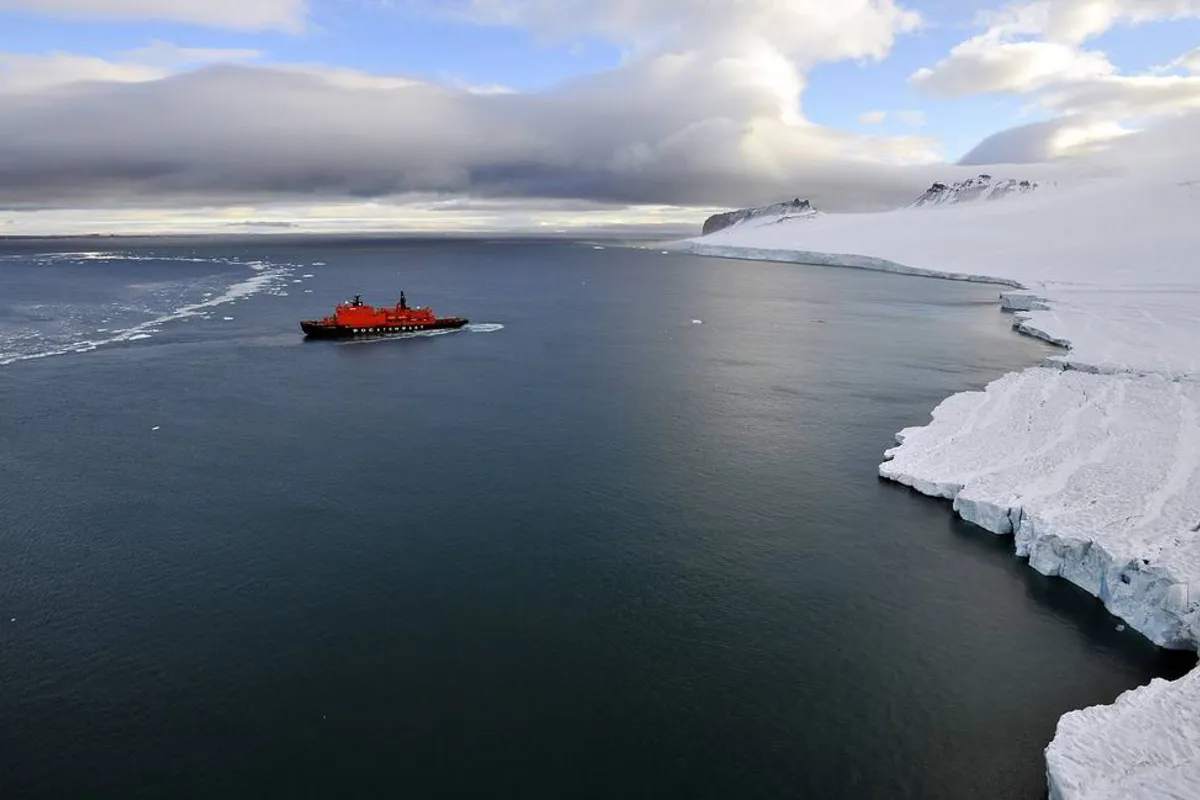
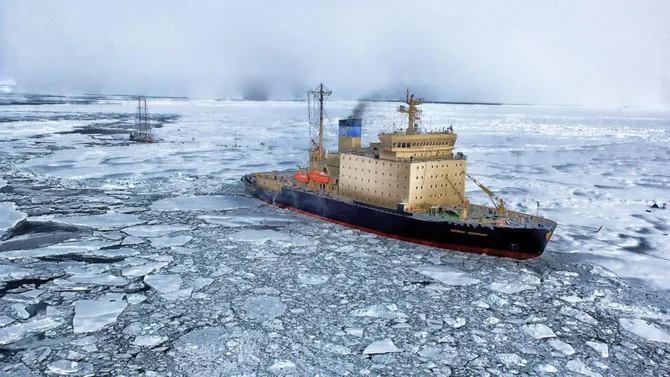
The strategy also highlights Russia’s scientific expertise, accumulated experience in Arctic development and nuclear-powered icebreaker fleet as major sources of strategic advantage. These capabilities are particularly important for maintaining navigation through Arctic waters, where severe climatic conditions and seasonal ice coverage make maritime transport technically demanding.
For the Kremlin, the Arctic represents several interconnected opportunities. It offers access to substantial reserves of hydrocarbons and mineral resources, provides potential alternative trade routes between major economic regions and creates opportunities for scientific research and technological development.
This explains why the strategy treats Arctic development as a national priority rather than a regional economic programme. The success of its implementation could influence Russia’s energy exports, industrial capabilities, transport infrastructure and broader international economic position.
The emphasis on coordination among government institutions, civil society organisations and other stakeholders also suggests an effort to consolidate decision-making and ensure that economic and security objectives are pursued within a unified policy framework.
Source: Reuters
From resource extraction to a high-tech industrial region
One of the most significant elements of the new strategy is Russia’s ambition to transform its Arctic zone into a high-tech industrial region by 2054.
The proposed economic model goes beyond the traditional extraction and export of raw materials. Moscow intends to establish integrated industrial clusters specialising in liquefied natural gas (LNG), gas chemicals, metallurgy and rare earth metals.
This approach reflects an attempt to increase the domestic processing of natural resources and generate greater added value within Russia.
The strategy also envisages the introduction of advanced Russian-made equipment, autonomous systems, robotics, digital technologies and climate-adapted industrial solutions. These technologies are expected to improve operational efficiency, reduce the risks associated with working in extreme environments and limit environmental pressures.
The emphasis on domestically manufactured equipment is particularly noteworthy. It connects Arctic industrial development with Russia’s broader objective of strengthening technological sovereignty and reducing dependence on foreign suppliers.
However, achieving this ambition will require substantial investment, advanced engineering capabilities and reliable supply chains. Operating industrial facilities in the Arctic involves considerably higher logistical and infrastructure costs than in more accessible regions. Equipment must withstand extreme temperatures, while facilities require dependable energy supplies, transport connections and specialised maintenance systems.
Consequently, the transition towards a technologically advanced Arctic economy will depend not only on the availability of natural resources but also on Russia’s ability to overcome industrial, financial and technological constraints.
LNG expansion and the challenge of energy ambitions
The development of LNG production is expected to remain one of the main economic drivers of Russia’s Arctic strategy.
The country's energy planning envisages the expansion of operational LNG projects to seven by 2030, with a combined annual production capacity of approximately 100 million metric tons.
The planned projects include Arctic LNG 1 and Arctic LNG 2, Yamal LNG, Sakhalin-2, the Ust-Luga LNG project, Ob LNG and Murmansk LNG.
Depending on the development scenario, Russia's LNG production is projected to reach 90-105 million metric tons in 2030, 110-130 million metric tons in 2036 and potentially 110-175 million metric tons by 2050.
These targets illustrate the importance Moscow attaches to strengthening its position in the global LNG market. Expanding production would provide opportunities to diversify export destinations, increase the contribution of energy exports to national revenues and develop industrial infrastructure across the Arctic.
Nevertheless, the scale of these ambitions should be considered alongside the practical difficulties facing the Russian energy sector.
Western sanctions have complicated access to certain technologies, equipment, financing and international partnerships required for large-scale LNG development. Reuters reported in December 2025 that Russia had already delayed its earlier ambition of producing 100 million metric tons of LNG annually, with sanctions identified as a major contributing factor.
This demonstrates the difference between planned production capacity and commercially achievable output.
The development of Arctic LNG facilities requires specialised liquefaction technology, ice-class vessels, reliable shipping arrangements and sophisticated logistical networks. Delays in any of these areas can affect the entire production and export chain.
Therefore, Russia's ability to achieve its LNG targets will depend on whether it can secure the necessary technological capabilities, mobilise investment and establish sustainable export markets despite external restrictions.
The Trans-Arctic Transport Corridor: Turning geography into economic leverage
Another central pillar of the strategy is the development of the Trans-Arctic Transport Corridor.
The corridor is intended to integrate maritime routes along Russia's northern coastline with ports, railways, inland waterways and other transport infrastructure. Its development is closely connected with the expansion of the Northern Sea Route, which Moscow sees as an increasingly important component of international trade.
The geographical appeal of Arctic shipping lies in the possibility of reducing distances between certain European and Asian destinations compared with traditional routes through the Suez Canal.
For Russia, developing this infrastructure would have several potential benefits.
First, it could facilitate the transportation of Arctic-produced oil, gas and other commodities to international markets. Second, it could improve connectivity between remote northern settlements and the country's main industrial centres. Third, it could strengthen Russia's role in managing maritime infrastructure and providing services along northern shipping routes.
The corridor also has strategic significance because it could offer additional options for international supply chains at a time when conventional maritime routes face geopolitical and logistical uncertainties.
However, the commercial viability of Arctic shipping should not be overstated. Harsh weather conditions, ice navigation requirements, limited port infrastructure, seasonal operating constraints and high insurance and transport costs remain important challenges.
Even with nuclear-powered icebreakers, year-round navigation requires a comprehensive support system involving specialised vessels, rescue services, satellite communications, navigation infrastructure and modern ports.
The strategy's requirement that the government prepare a comprehensive development plan within six months is therefore particularly important. It will provide a clearer indication of how Moscow intends to translate its long-term transport ambitions into specific projects, responsibilities and implementation schedules.
Geopolitical competition and the weakening of Arctic cooperation
The strategy also reflects the deteriorating international environment surrounding Arctic affairs.
The document describes the Arctic as an increasingly contested geopolitical space and directly criticises the European Union, NATO and their member states for pursuing a policy of containing Russia in the region.
According to Moscow's interpretation, Western countries have restricted economic relations and reduced cooperation in science, education, culture and environmental protection as part of their broader confrontation with Russia.
The document also expresses concern about the limited possibilities for comprehensive engagement within the Arctic Council, the principal intergovernmental forum for cooperation among the eight Arctic states.
These statements illustrate the extent to which Russia views regional development through the lens of national security and international competition.
Nevertheless, the Russian strategy's interpretation of Western policy should be understood as Moscow's official position rather than an independent assessment of the motivations of NATO and EU member states.
The broader geopolitical context is important. Russia's full-scale invasion of Ukraine in 2022 significantly altered relations between Moscow and Western Arctic countries. Cooperation within regional institutions became increasingly difficult, while security considerations gained greater prominence in Arctic policymaking.
The Congressional Research Service's October 2026 assessment of Russia's Arctic military posture similarly identifies sovereignty, resource development, maritime transport and military capabilities as interconnected elements of Moscow's Arctic policy.
The result is a more complicated regional environment in which economic cooperation, environmental protection and security interests increasingly overlap.
For Russia, this creates a strategic dilemma: it wants to expand its economic activities and international transport links while facing a more restricted environment for cooperation with many technologically advanced Arctic countries.
National security and economic development as interconnected priorities
The integration of economic development and national security is one of the defining characteristics of the new strategy.
Russia's Arctic infrastructure is not exclusively intended to support commercial activities. Ports, transport corridors, communications systems, icebreakers and energy facilities also have broader strategic importance.
Maintaining a permanent presence across the Arctic requires substantial infrastructure and logistical capabilities. Economic activity can help sustain settlements, support employment and create the industrial base necessary for a long-term Russian presence in the region.
At the same time, improved transport and communications infrastructure can strengthen the state's ability to monitor and manage its northern territories.
This dual-purpose approach explains why the strategy combines industrial modernisation, transport development, scientific research and national security within a single policy framework.
It also highlights the importance of technological independence. In an environment characterised by geopolitical restrictions, Russia's ability to manufacture specialised equipment domestically becomes a strategic issue rather than merely an industrial preference.
Environmental and social challenges remain critical
Despite the emphasis on industrial expansion, the strategy also recognises the need to reduce environmental pressures through modern technologies and more efficient resource development.
This is an important consideration because the Arctic is particularly vulnerable to environmental disruption. Industrial accidents, hydrocarbon spills, infrastructure failures and disturbances to fragile ecosystems can have long-lasting consequences.
The region's harsh climate and permafrost conditions further complicate industrial operations. Changes in permafrost stability can affect buildings, pipelines, roads and other infrastructure, increasing maintenance costs and operational risks.
The challenge is therefore not simply to expand industrial production but to ensure that economic development remains sustainable under increasingly difficult environmental conditions.
Social development is equally important. Arctic settlements face challenges related to transport accessibility, housing, healthcare, education and the availability of qualified personnel.
The strategy's emphasis on coordination between government authorities and civil society institutions reflects the need to address these issues alongside industrial development.
The long-term success of the programme will ultimately depend on whether the benefits of economic expansion translate into improved living conditions for people residing in Russia's northern territories.
Source: Pixabay
Implementation will determine the strategy's credibility
The presidential decree gives the Russian government six months to prepare a comprehensive plan covering the development of the Arctic zone and the Trans-Arctic Transport Corridor and submit it to the Presidential Council for Strategic Development and National Projects.
This requirement represents an important transition from strategic objectives to practical implementation.
The new document establishes an ambitious long-term vision, but its objectives will need to be supported by financing mechanisms, infrastructure investment, industrial capacity and clearly defined institutional responsibilities.
Several factors will be particularly important in determining the outcome:
- Technological capacity: Whether Russian companies can develop and manufacture the specialised equipment required for Arctic industrial and transport projects.
- Investment and financing: Whether sufficient financial resources can be mobilised to support capital-intensive projects over several decades.
- Export markets: Whether Russia can secure reliable demand and commercially viable routes for its expanding energy production.
- Transport infrastructure: Whether ports, icebreakers, railways, communications systems and supporting services can develop at the required pace.
- Environmental protection: Whether industrial expansion can be reconciled with the vulnerability of Arctic ecosystems and the needs of local communities. These factors will determine whether the strategy becomes an operational development programme or remains primarily a statement of long-term national ambitions.
- Conclusion: The Arctic as a long-term test of Russia's economic and strategic capabilities
Putin's approval of the new Arctic development strategy underlines the growing importance of the Far North in Russia's national economic and security planning.
The document outlines an ambitious vision: transforming the Arctic into a technologically advanced industrial region, expanding LNG production, developing new transport corridors and strengthening Russia's position as a major Arctic power.
At the same time, it reflects the changing geopolitical environment in which Arctic development is increasingly shaped by tensions between Russia and Western countries.
The central challenge for Moscow will be translating its geographical advantages and natural resource potential into sustainable economic and technological capabilities. Extensive energy reserves and a substantial icebreaker fleet provide important foundations, but they do not automatically guarantee the successful implementation of complex industrial and transport projects.
The strategy's significance therefore extends beyond the Arctic itself. Its implementation will provide an indication of Russia's ability to sustain large-scale infrastructure development, strengthen technological independence and adapt its international economic relationships under conditions of geopolitical pressure.
Ultimately, the Arctic is becoming an increasingly important arena in which economic interests, technological competition, environmental considerations and national security intersect. Russia's new strategy demonstrates that Moscow intends to maintain a central role in shaping the region's future, although the extent to which its ambitions can be realised will depend on the resources, technologies and international economic conditions available in the coming decades.