Uzbekistan reports a shift in the geography of labour migration. What do these changes mean for families dependent on remittances, and how could they affect the economies of the region? The Caspian Post spoke to three experts from Central Asia to find out what opportunities and challenges the changing migration flows bring.
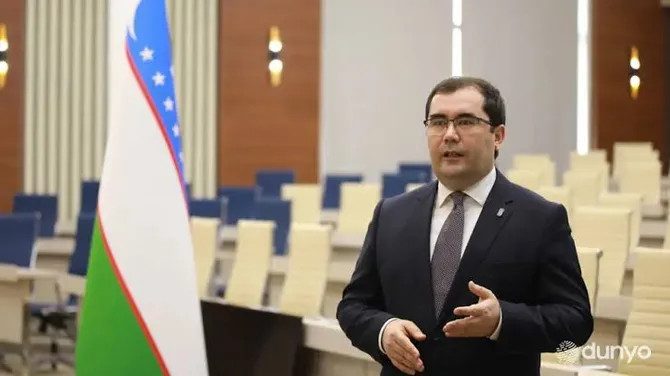
photo: The Caspian Post
Eldor Tulyakov, Uzbek expert and Executive Director of the Development Strategy Centre:
“For many families in Uzbekistan, travelling to Russia for work was a familiar choice for a long time. Today, those seeking employment abroad have more opportunities, including in the United Kingdom and European Union countries. The conditions for finding employment are also changing. To qualify for higher pay, people increasingly need to acquire professional skills and learn the language of their destination country before they leave.
“The expansion of labour migration to new destinations is allowing Uzbekistan to gradually reduce its dependence on a single labour market. According to the updated Uzbekistan 2030 Strategy, by 2030, the volume of remittances should increase by 30% compared with 2025 as a result of citizens finding better-paid jobs. Over the same period, the share of organised labour migration is expected to rise from 10.8% to above 15%.
“The Migration Agency estimates that around 1.4 million of our citizens work abroad. Of these, 834,200 work in Russia and another 258,000 in European countries. Russia remains the main destination for labour migration. However, according to the Central Bank, its share of total remittances to Uzbekistan fell from 77.6% to 72.4% over the course of a year. In the first half of 2026, the volume of remittances from the United Kingdom grew by 62%, while those from EU countries rose by 27%.
“During the first nine months of 2026, the Migration Agency concluded 132 new agreements with foreign employers and recruitment organisations. During this period, 171,200 Uzbek citizens found employment abroad, while 33,300 candidates were enrolled in training.
“For families, higher wages abroad provide an opportunity to increase their income and build up savings. For Uzbekistan’s economy, where remittances amount to approximately 14% of GDP, expanding employment to new destinations helps maintain the inflow of foreign currency and strengthen ties with overseas employers. At the same time, the growth rate of remittances slowed to 2.9% in the third quarter of 2026.
“In the long term, the success of this policy can also be judged by the opportunities available to people after they return home. Will they be able to find work in Uzbekistan in the profession they learned abroad, share their experience with colleagues or invest their savings in a business of their own? The benefits that labour migration brings to the country’s economy will depend to a large extent on the answers to these questions.”
photo: The Caspian Post
Farhad Kassenov, Kazakh political analyst and head of the A+Analytics research centre:
“Each Central Asian country has its own history of labour migration. For Uzbekistan, Kyrgyzstan and Tajikistan, Russia was a familiar destination for people seeking work for a long time. Workers from these countries established professional connections and occupied certain niches in the Russian labour market. In Kyrgyzstan and Tajikistan, remittances from Russia accounted for a significant share of many families’ incomes. Kazakhstan’s situation historically developed differently because its standard of living was comparable to Russia’s.
“Today, I would point to two reasons why Central Asians are increasingly looking for work outside Russia. The first is economic. The weakening of the rouble affects how much migrants’ families receive when the money is converted into local currency. In addition, against the backdrop of the deteriorating economic situation in Russia, demand for workers is falling in a number of sectors that previously readily hired people from Central Asia.
“The second reason is related to tighter migration legislation and changing attitudes towards migrants. A campaign unfolded in Russia’s media and information space in which participants blamed newcomers for a wide range of domestic problems. Nationalist circles spoke of ‘Kyrgyz settlements’ in the Moscow region and of Uzbek communities. Even the opening of teahouses or the large number of Central Asians working as couriers was presented as a threat. Such rhetoric fuelled prejudice, while new restrictions made it more difficult for people to work in Russia.
“Under these conditions, more and more people are considering other destinations. Uzbekistan, for example, has long helped its citizens find work in countries farther afield. This effort has intensified in recent years. Attractive destinations include the United Kingdom, other European countries, the United States and South Korea. Workers are drawn by higher pay and the opportunity to sign a formal employment contract. When wages and employment conditions are set out in a contract, it is easier for a person to defend their rights. Workers’ reputations also matter. Those who have proved themselves are invited back by employers.
“Russia remains one of the most important labour migration destinations for citizens of Uzbekistan, Kyrgyzstan and Tajikistan. However, people now have a choice. I would say that competition is gradually emerging among countries interested in attracting migrant workers. For employers, this is an opportunity to attract people on pay terms acceptable to them. For workers themselves, the level of pay, contractual guarantees and the way they are treated in the host country are becoming increasingly important.
“As for Kazakhstan, the number of our citizens travelling to Russia for work has always been relatively small. Kazakhstanis more often went there to study. Today, we also see movement in the opposite direction: Russian citizens are coming to Kazakhstan to live and work. Therefore, the need to find alternatives to the Russian labour market is much less pressing for Kazakhstan than for its neighbours in the region.”
photo: The Caspian Post
Marat Musuraliev, Kyrgyz economist, financier and analyst:
“When we discuss why labour migrants from Central Asia are increasingly looking for work outside Russia, we must also take the war into account. February 2027 will mark five years since the start of Russia’s full-scale invasion of Ukraine. As early as 2 March 2022, the UN General Assembly adopted the resolution ‘Aggression against Ukraine’, in which it condemned the actions of the Russian Federation.
“To make up for losses on the front, the Russian authorities announced a partial mobilisation in September 2022. According to official figures, around 300,000 people were called up. The Kremlin subsequently placed its emphasis on contract military service, offering large one-off payments. According to the Russian authorities, hundreds of thousands of new service members signed contracts each year. Prisoners and foreign nationals, including people from Central Asia, were also recruited to take part in the fighting.
“For someone who has come to Russia to earn a living, the risk of ending up on the front is very real. Human rights advocates and international observers have documented cases in which migrants were deceived or pressured into signing military contracts. Some were promised payments and a simplified path to Russian citizenship; others were offered the cancellation of a deportation order in exchange for agreeing to serve.
“In my view, the risk of recruitment, pressure from the security forces and hostility from nationalist groups largely explain why families in Central Asia are reconsidering their familiar choice of destination for work. Governments in the region are also looking for other employment opportunities for their citizens - in Türkiye, South Korea, the United Arab Emirates, Germany and the United Kingdom. The treatment of migrants has also become a diplomatic issue. In recent years, Azerbaijan and a number of Central Asian states have raised concerns with Moscow over the way the Russian authorities treated their citizens. Such incidents also affect public attitudes towards Russia.
“Türkiye occupies a special place among the possible destinations. For people from Azerbaijan, Kazakhstan, Kyrgyzstan, Turkmenistan and Uzbekistan, linguistic and cultural proximity and the attitude of employers are important, while for some, so is the warmer climate. In October 2025, Ankara clarified the procedure for allowing foreigners of Turkic origin to enter a number of professions generally available to Turkish citizens. There is an important legal detail here. To benefit from this procedure, an applicant must meet the established criteria and obtain a work permit. Citizenship of a Turkic state alone is not sufficient.
“Our governments have yet to agree on many practical issues. Before leaving, a person should understand who is employing them, what salary they will receive after deductions, who will pay their insurance contributions and what medical care they can expect. The worker is required to know and comply with the laws of the host country; the employer must properly formalise the employment relationship and fulfil their obligations to the employee.
“Differences in the demographic situations of Turkic countries create opportunities for cooperation. Where the number of young people entering the labour market is growing, new jobs are particularly needed. Where there are labour shortages, there is an interest in attracting workers. The alignment of national alphabets based on the Latin script, which is being discussed within the Organisation of Turkic States, could eventually make it easier to read job advertisements, undergo professional training and communicate in the workplace. Countries are moving in this direction at different speeds. But clear hiring rules and protection for people who are already travelling abroad for work can be agreed upon now.”