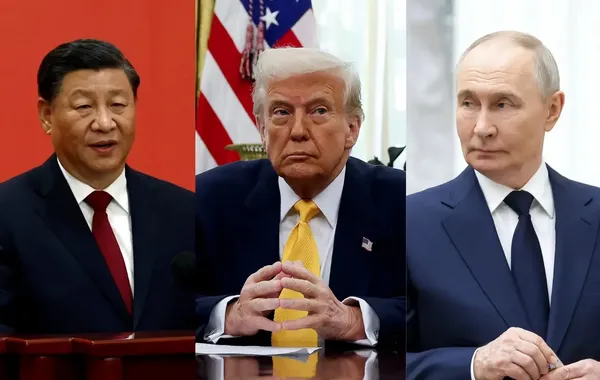
Putin and Xi met for over two hours in Shenzhen, focused on further economic cooperation, followed by a working lunch. Putin said their relations are stable and positive and that they are committed to shaping a fairer multipolar world order. The message is clear: Moscow and Beijing coordinated first, and Trump is coming to set terms.
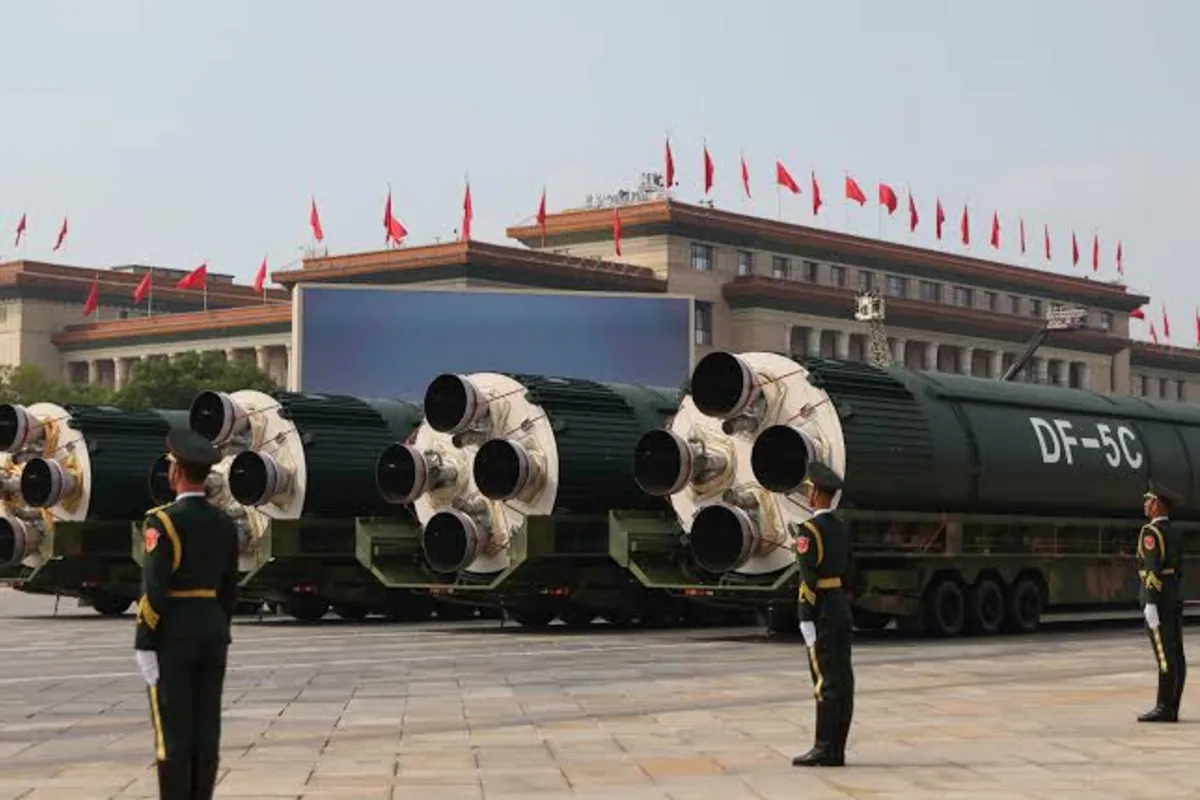
On November 19, President Xi Jinping will hold the China-Russia-U.S. Summit with President Vladimir Putin and President Donald Trump in Shenzhen. The White House has framed it as a first-ever trilateral sit-down, focused on nuclear non-proliferation, a topic Trump has said he believes could yield a new agreement between the world’s biggest nuclear-armed states. I believe it is correct that no deal is expected. Officials called it the entry point, the first conversation, and said plainly, “We do not expect to get to any kind of agreement.” A bad deal is worse than no deal. The last U.S.-Russia nuclear treaty expired in February, and China is rapidly building its arsenal. So the real test is not the photo; it is whether Xi and Putin stop helping Iran.
On the eve of the summit, the sides already gave early trade signals: Xi agreed to pause new restrictions on exports of some rare earth metals, and Trump eased restrictions on the sale of some AI-related chips to China. Trump also met Putin separately on Wednesday; according to Russian media, Ukraine was the main topic. In other words, the major powers are opening bilateral channels in parallel, while the trilateral format itself is being tested for the first time.
But the outcome of this great-power game does not stay in Shenzhen. It is felt in the Caspian and the South Caucasus, where Washington has already offered a concrete model: TRIPP. It is the Trump peace model: American business instead of Russian mediation, and American presence without American troops. History was made at the White House on August 8, 2025, when President Trump hosted Armenian Prime Minister Nikol Pashinyan and Azerbaijani President Ilham Aliyev, who signed a joint declaration committing to a final peace treaty. On November 6, 2026, Azerbaijan, the United States, and Armenia launched Trilateral Technical Planning Groups to advance TRIPP, a multimodal transit route, to work on long-term stability, economic vitality, regional connectivity, and commercial prosperity.
TRIPP is a 43-kilometer corridor through Armenia’s Syunik province linking mainland Azerbaijan to its Nakhchivan exclave and onward to Türkiye. It is a U.S.-led initiative to facilitate a secure transit corridor while preserving Armenia’s sovereignty. Under the deal, the U.S. holds 74 percent and Armenia 26 percent in TRIPP Development, for an initial 49-year term. For decades Russia used this conflict for leverage. Now Washington brokered it, not Moscow, Paris, or Brussels. The risks flagged by the Hudson Institute remain real: funding, disinformation from Russia and Iran, and Pashinyan’s political stability. Republicans argue only Trump’s direct oversight keeps it from dying in bureaucracy.
The logic of TRIPP becomes fully visible when it connects to the Middle Corridor. This route creates a Russia-free, Iran-free path from China to Europe through Central Asia, the Caspian, Azerbaijan, Georgia, and Türkiye. The Trans-Caspian route carried 53,574 TEU of container traffic in January through August 2026, with approximately 80 percent moving westward, and cargo volume rose 22 percent. On energy, the Southern Gas Corridor runs 3,500 km from the Shah Deniz field. Azerbaijan has been a stable supplier since 2020, delivering 11.4 bcm in 2025, supplying 14 countries, and starting exports to Germany and Austria in January 2026. From 2032, two new green energy corridors are planned, with the Caspian-Black Sea-Europe corridor at 3,900 MW capacity.
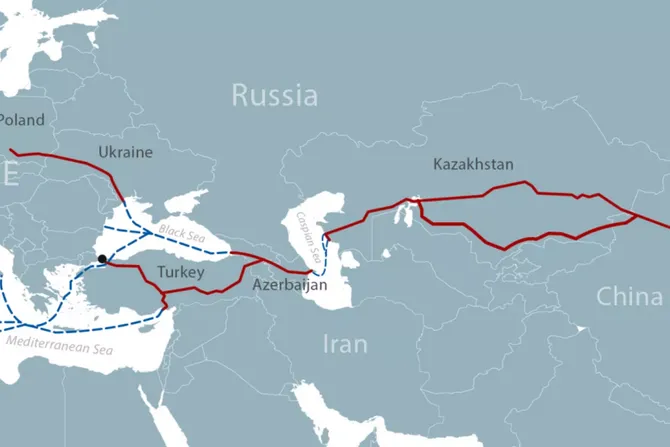
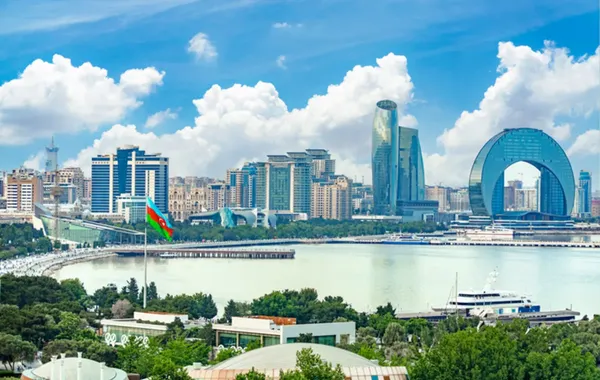
photo: getty images
This is energy dominance and supply-chain independence, not climate ideology. True, the corridor is still small compared to sea freight, and the 80/20 westbound imbalance means many containers return empty. That is why Republicans want private capital and commercial viability, not just summits. If it works, Europe buys less Russian gas and America gains a partner that does not need U.S. aid.
This is exactly where Shenzhen and the South Caucasus connect, because the most uneasy part of this order is Iran. Tehran sees TRIPP and U.S.-Azerbaijan ties as a threat to its northern border, and it has responded with threats and a direct attack. On February 4, 2025, Trump issued National Security Presidential Memorandum 2 (NSPM-2) for renewed maximum pressure, including a campaign to drive Iran’s oil exports to zero, including exports to China. Armenia’s parliament approved TRIPP on October 28. Since then, an adviser to Iran’s supreme leader has threatened Yerevan, and state media have urged Tehran to stop the project. Ali Akbar Velayati warned: “If Trump and his allies seek to cross this red line of Iran, we will break their legs.”
On March 5, drones launched from Iran struck facilities in Nakhchivan, prompting Baku to accuse Tehran of violating its sovereignty. The strike signaled a calculated Iranian effort to escalate its confrontation with Israel and the United States by targeting an Azerbaijani enclave. The two countries share a roughly 428-mile (about 690 km) border, and Iran hosts 15 million to 20 million ethnic Azerbaijanis.
Meanwhile, JINSA notes that while Washington intensified pressure on Iran, it has granted sanctions relief to Russia and refrained from targeting major Chinese financial institutions facilitating Iran’s oil trade. China bought about 90 percent of Iran’s crude exports, accounting for an estimated 45 percent of Iran’s government budget. The logic is simple: you cannot have maximum pressure on Iran and minimum pressure on its bankers and arms suppliers. The Caspian is the new risk. If hostilities resume, the Caspian Sea, which links Russia and Iran directly, could provide a route for Russian military transfers to Tehran. That is why, at Shenzhen, Washington should demand verifiable commitments, condition any sanctions relief on compliance, and enforce sanctions fully for non-compliance.
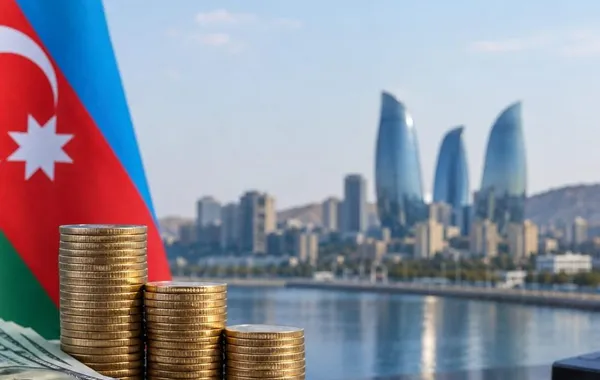
In this picture, Azerbaijan’s place deserves particular attention. Baku follows partnership without alignment: it pays its own way, deals with everyone, and joins no camp. The Aliyev Doctrine is built on the premise that a state is genuinely independent only when it relies on its own resources for its security and development, engages every center of power without subordinating itself to any, and neither accepts nor practices interference in internal affairs. Its pillars are self-reliance in security, economic sovereignty, and partnership without alignment. External debt stands at 5.6 percent of GDP, and foreign exchange reserves have reached 90 billion dollars, roughly 20 times external debt. Azerbaijan has strategic partnership formats with ten EU member states, a comprehensive strategic partnership with China, and a Strategic Charter with the United States.
The U.S.-Azerbaijan Charter was signed in Baku on February 10 by President Ilham Aliyev and Vice President JD Vance. At the same time, China said it is ready to strengthen cooperation with Azerbaijan on the Middle Corridor and continue to serve as a reliable long-term strategic partner. This is exactly what America First rewards: a partner that buys its own weapons at world prices, does not ask for U.S. aid, and says the same thing in every capital. Washington should compete for Baku with better investment, energy, and connectivity deals, not lectures. If America offers a real deal, Baku will choose America. If it only criticizes, Beijing will fill the gap.