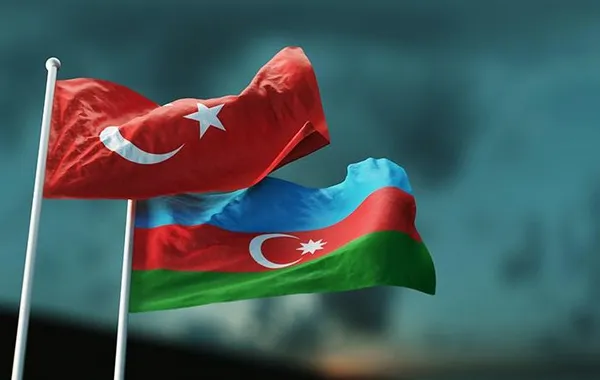
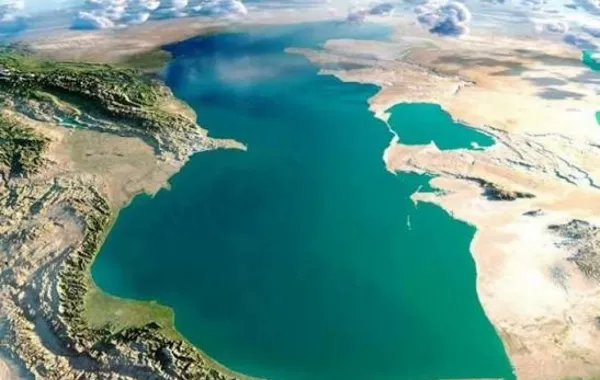
Azerbaijan is one of Georgia’s most important strategic partners. Its role extends far beyond that of a neighbour or trading partner: relations between our countries have a significant impact on the stability and resilience of the entire South Caucasus.
Our partnership is rooted in long-term shared interests, including energy security, transport connectivity, regional stability, access to international markets and the diversification of trade routes.
The Baku-Tbilisi-Ceyhan and Baku-Tbilisi-Erzurum pipelines, together with the Baku-Tbilisi-Kars railway, demonstrate that Georgia and Azerbaijan can implement projects that serve both countries’ national interests while enhancing the strategic importance of the wider region. Azerbaijan is a vital supplier of natural gas to Georgia, while Georgia is one of Azerbaijan’s key partners in accessing international markets.
This interdependence is especially important as global supply chains change and countries seek alternative transport and energy routes. Cooperation between Georgia and Azerbaijan offers a practical way to strengthen our economic, political and security capabilities. Yet bilateral relations still have considerable untapped potential.

photo: getty images
A New Stage of Partnership
The partnership needs to enter a new stage of development. Alongside traditional energy and transport projects, greater attention should be paid to electricity transmission, logistics services, digital connectivity and joint investment. In this regard, the agreements reached in 2026 on gas, electricity and the Baku-Tbilisi-Kars railway are noteworthy.
Georgia and Azerbaijan should also deepen cooperation in defence and security. The South Caucasus faces numerous shared threats, and strategic cooperation between our countries can help reduce those risks and contribute to regional peace and security.
Relations between Georgia and Azerbaijan should be viewed as a long-term strategic partnership that enables both countries to play a more active role in shaping the regional order and economic agenda.
Our partnership is already one of the pillars of economic stability in the South Caucasus, and its importance is likely to grow. When countries are linked through energy infrastructure, railways, investment and trade, they develop a stronger shared interest in peace, security and a predictable political environment.
Together, Georgia and Azerbaijan connect the Caspian region and Central Asia with the Black Sea. Strengthening these links increases the South Caucasus’s geopolitical significance for European, Asian and other international partners.
Closer cooperation can also create opportunities for new enterprises and joint ventures, jobs, logistics and digital hubs, investment and the expansion of local businesses.
The Case for Regional Cooperation
Economic interdependence alone cannot replace security policy. Lasting peace in the South Caucasus requires respect for sovereignty and territorial integrity, the peaceful resolution of conflicts and adherence to international law. Regional cooperation must also be inclusive.
If the process of normalising relations between Armenia and Azerbaijan succeeds, it could open new opportunities across the South Caucasus. Georgia can contribute by supporting dialogue, economic ties and practical regional initiatives.
Over the longer term, the countries of the region could consider creating a more integrated economic space, including additional free trade mechanisms. Naturally, this would depend on agreements between the countries concerned and compatibility with their international obligations.
The establishment of a South Caucasus Development Bank could also be considered in the future. Such an institution could create additional opportunities for Azerbaijan, Georgia and Armenia.
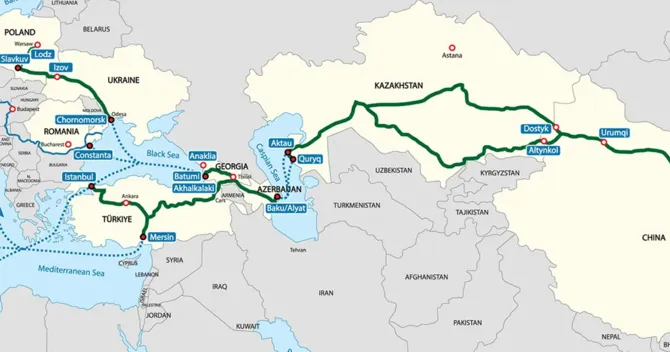
photo: getty images
Making the Middle Corridor Competitive
The Middle Corridor has a key role in raising the international importance of the South Caucasus. It allows countries in the region to participate more actively in developing trade, transport and economic ties between Europe and Asia.
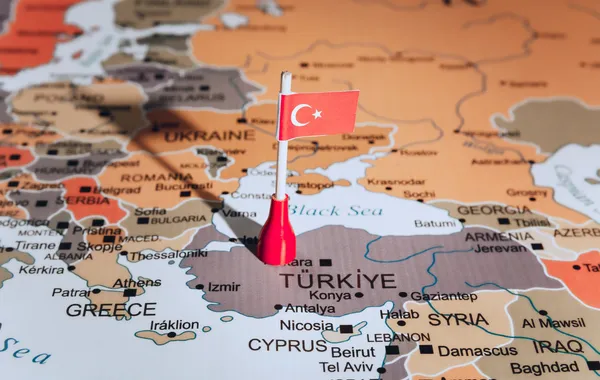
A major section of the route connects Central Asia with Azerbaijan across the Caspian Sea. It then continues through Georgia, either towards the Black Sea or towards Europe via Türkiye. The route has gained particular significance since Russia’s invasion of Ukraine, as countries and businesses have sought to diversify international trade routes.
But the corridor’s success depends on more than geography. To make it competitive, the participating countries need to reduce freight transit times and costs, develop railway and port infrastructure, simplify customs procedures and improve coordination.
According to a 2026 World Bank assessment, targeted investment could allow trade flows through the Middle Corridor to triple and shipping times to be halved by 2040. Realising that potential will require the right investments, political will and reforms.
For Georgia, the corridor must become a source of broader economic development. That means investing in logistics centres, warehouses, processing facilities, digital services and local businesses, supported by a flexible tax system. The more value Georgia creates within its own economy, the greater the benefits for its citizens.
New routes are also emerging across the region. Work on the planned TRIPP project through Armenia is entering an active phase. Such initiatives could both compete with and complement existing routes. Georgia’s task is to strengthen its own route by improving its reliability, efficiency and quality of service.
In the medium term, the development of the deep-water port of Anaklia could also play a key role, potentially reshaping regional transport links and significantly increasing Georgia’s transit capacity.
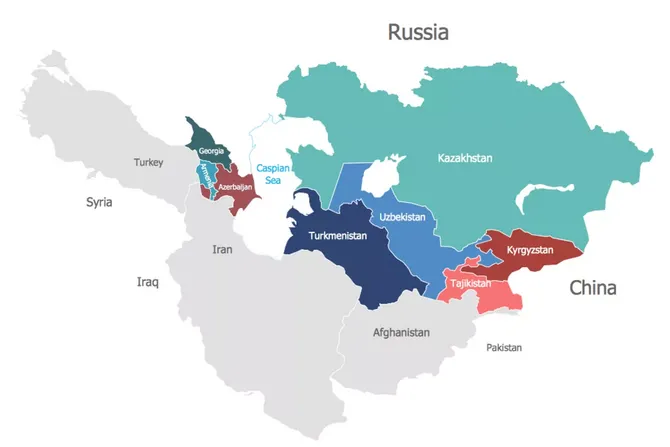
photo: getty images
Connecting with Central Asia
Cooperation between Georgia, Azerbaijan and the countries of Central Asia has enormous potential because their interests align in many areas. All seek more reliable access to international markets, a wider range of trading partners and diversified transport routes.
For Central Asian countries, access to European markets through the Caspian and Black Sea regions creates additional economic opportunities. Georgia and Azerbaijan, in turn, can serve as a link, helping move products and cargo to international markets.
Cooperation with Kazakhstan is particularly important in transport and energy. Expanding the transportation of Kazakh oil through the Baku-Tbilisi-Ceyhan route could benefit Kazakhstan by diversifying its export options while also creating opportunities for Azerbaijan and Georgia.
It is equally important to deepen cooperation with Uzbekistan, Turkmenistan, Kyrgyzstan and other countries in the region. This includes improving infrastructure connecting them to the Caspian Sea, linking ports and railway networks, establishing joint logistics centres and expanding access to regional markets.
Success will depend on practical decisions: agreeing on tariffs, ensuring reliable shipping across the Caspian Sea, reducing border barriers and providing integrated digital services. Businesses need to know how much it will cost to transport their cargo and how long it will take to reach its destination.
Energy and digital connectivity should also be priorities. Artificial intelligence is one area with considerable potential for future cooperation.
Georgia’s Foreign Policy at a Crossroads
Unfortunately, Georgia’s foreign policy is currently a fiasco. It is very difficult to describe the present situation as a successful balancing act.
Relations with our Western partners are in deep crisis. According to the European Commission, Georgia’s EU accession process remains de facto suspended, while concerns about democracy, the rule of law and fundamental rights are undermining the country’s European prospects.
The consequences extend beyond diplomacy. The erosion of trust between Georgia and the West affects our investment climate, security, international reputation and opportunities in the region. International confidence is especially important for a country seeking to perform a major transport and economic role.
Russia also remains one of the main challenges for Georgian foreign policy. Russia continues to occupy Georgian territories, which clearly defines the security dimension of our relationship.
Managing risks and pursuing pragmatic diplomacy are essential. But neither can justify abandoning Georgia’s sovereignty, dignity, territorial integrity or chosen foreign policy course.
Our main task should be to protect national interests in a rapidly changing international environment. This requires flexible, multilateral diplomacy that takes account of both global developments and changes in our immediate neighbourhood.
Georgia should develop relations with Azerbaijan, Armenia, Türkiye, the countries of Central Asia, China and other important partners. At the same time, our European and Euro-Atlantic aspirations should remain fundamental foreign policy priorities. Strong regional ties and close cooperation with the West are both essential to an effective policy.
Today, Georgia needs a consistent approach that restores and strengthens Western partnerships, develops regional cooperation and makes use of economic opportunities in the East. Its success should be measured by concrete results: stronger security, greater economic resilience and increased international influence.
If Georgia fails to restore its ties with the West, the negative consequences could be felt across the Caucasus, including in the effective operation of the Middle Corridor.
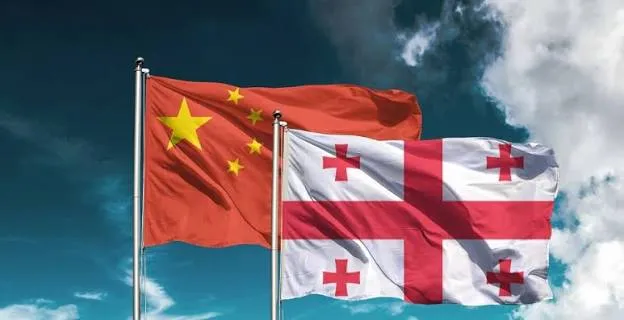
photo: getty images
Opportunities and Safeguards in Relations with China
China’s growing role is part of the global transformation that Georgia must take into account in its foreign and economic policy. As one of the world’s largest economies, China plays an important role in developing trade between Europe and Asia.
Cooperation with Beijing creates opportunities in trade, investment, transport infrastructure, logistics, tourism and exports of Georgian products. A free trade agreement is in force, and bilateral relations were elevated to the level of a comprehensive strategic partnership in 2026.
China’s interest in the Middle Corridor could help attract cargo and support infrastructure development. But Georgia’s benefits should extend beyond transit. Cooperation should also help expand local production, services, exports and employment.
At the same time, every major international partnership must be based on Georgia’s national interests, transparent agreements and clear standards of economic security. Where strategic infrastructure is concerned, particular attention must be paid to contractual terms, financial obligations, data security and the state’s ability to protect its long-term interests.
Georgia must also diversify its partners and markets. It should deepen cooperation with China while developing relations with the European Union, the United States and other Western partners. This will give the country more options and reduce the risk of excessive dependence on any single partner.
Ultimately, Georgia must use its relationships with a wide range of countries to strengthen its competitiveness, economic resilience and security. Achieving that goal requires a clear strategy, strong institutions and decisions grounded in the country’s long-term national interests.