Kazakhstan Secures $1.2 Billion in Green Energy and Gas Projects at COP31
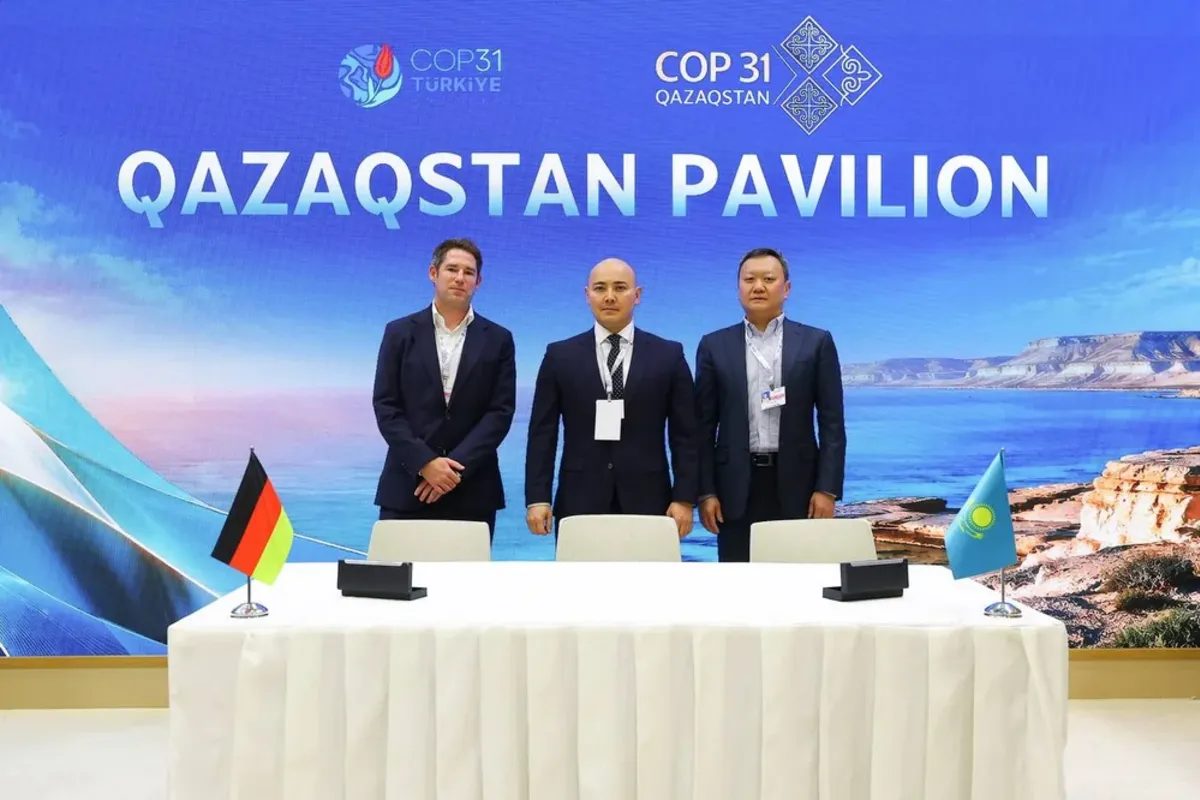
Kazakhstan has signed agreements worth approximately $1.2 billion to develop renewable energy and modernize gas infrastructure during the 31st United Nations Climate Change Conference (COP31) in Antalya, Türkiye.
The agreements include plans to build two major wind power plants: a 150-megawatt (MW) facility in the Turkistan region and a 1-gigawatt (GW) wind farm in the Kostanay region, according to primeminister.kz.
The package also covers the Aqyl Energy project, which envisages the installation of 1.35 million smart gas meters equipped with remote data transmission technology. Kazakhstan also signed agreements to expand international cooperation in environmental protection.
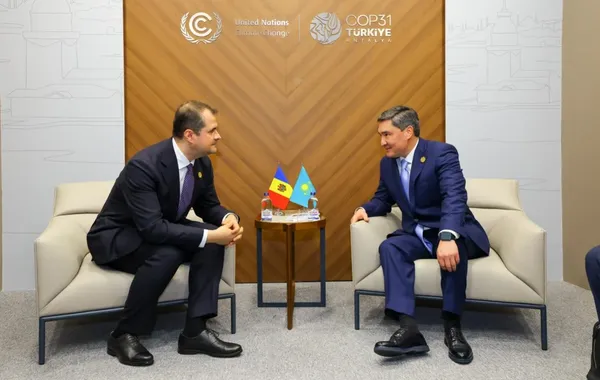
Prime Minister Olzhas Bektenov attended the summit on the instructions of President Kassym-Jomart Tokayev. This year's COP brought together heads of state and government from more than 70 countries, alongside representatives of major international organizations and financial institutions.
Addressing the conference, Bektenov highlighted the growing role of the Taza Qazaqstan initiative, launched by President Tokayev, which has developed into a nationwide environmental movement and been enshrined in the Constitution.
More than six million people across Kazakhstan are now involved in environmental protection activities. Over the past five years, approximately 1.7 billion trees have been planted nationwide.
The country plans to plant another 270 million seedlings in 2027, bringing the total number of trees planted to the president's target of two billion.
Bektenov also welcomed the United Nations' recognition of Kazakhstan's initiative and its decision to designate April 22 as the International Day of Greening the Planet.
He stressed that tackling environmental challenges requires stronger international cooperation. In April 2026, Astana hosted the first Regional Ecological Summit, which resulted in the adoption of the Declaration on Environmental Solidarity of Central Asia, laying the groundwork for coordinated regional action.
Water security remains another major priority. In this regard, Tokayev has proposed establishing an International Water Organization under the auspices of the United Nations.
"We invite all interested partners to join this process," Bektenov said.
Kazakhstan has quadrupled the share of renewable energy in its electricity mix over the past six years, reaching 8% in 2026. The country aims to increase this figure to 15% by 2030.
Alongside wind and solar power, Kazakhstan is advancing nuclear energy development and exploring opportunities in green hydrogen production.
Bektenov also highlighted a joint initiative by Kazakhstan, Azerbaijan, and Uzbekistan to establish a Green Energy Corridor. The project is expected to facilitate the export of renewable electricity to international markets.
Another promising investment opportunity is Alatau City, a planned low-carbon urban development project designed to incorporate sustainable technologies.
Kazakhstan is also introducing artificial intelligence and satellite monitoring to forecast natural hazards, strengthen emergency preparedness, and improve disaster response.
On the sidelines of the conference, Bektenov visited Kazakhstan's national pavilion, which showcases the country's natural heritage, environmental initiatives, and technological ambitions.
One of the pavilion's main attractions is a pair of interactive artificial intelligence guides, Umit and Amur, represented as Turanian tigers.
The exhibition highlights projects focused on reforestation, methane emission reduction, and the development of a green energy corridor across the Caspian Sea to Europe.
Visitors can also learn about technologies for recycling lithium-ion batteries, plastics, and automotive tires, converting waste into energy, and reducing industrial emissions.
Other key themes include the restoration of the North Aral Sea, protection of the Caspian Sea ecosystem, acceleration of the energy transition, development of carbon markets, and attraction of green investment.
The pavilion also presents digital initiatives, including a regional AI-powered carbon platform, satellite-based climate monitoring, and the proposed intergovernmental Caspian Climate Shield adaptation system.
Bektenov concluded by reaffirming Kazakhstan's commitment to strengthening international partnerships and advancing joint solutions to global climate challenges.