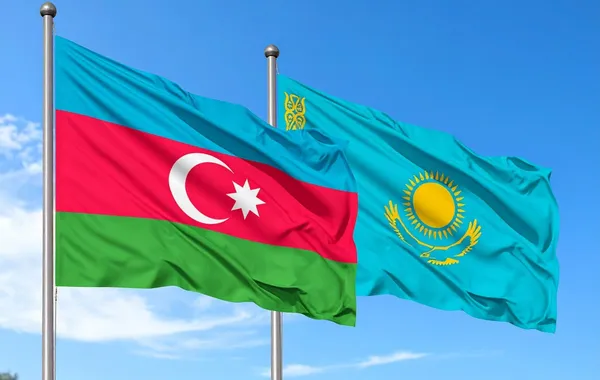
The Caspian Sea’s water level continues to fall, threatening ecosystems, coastal cities, fishing and transport routes. Azerbaijan has raised the issue at COP31, while the five Caspian littoral states have agreed to establish a joint commission. But the central question remains: can political initiatives be translated into concrete action?
The future of the Caspian Sea has become one of Azerbaijan’s priority issues at the United Nations climate conference COP31, which opened in Antalya, Türkiye. The country’s national pavilion presents information about the sea’s environmental condition, the declining populations of sturgeon and Caspian seals, and efforts to preserve biodiversity.
International attention to the Caspian comes amid growing concern among its five littoral states - Azerbaijan, Kazakhstan, Russia, Iran and Turkmenistan. The sea is economically and strategically important to all of them, but the consequences of its declining water level extend well beyond shipping and fishing.
Changes to the coastline affect natural habitats, infrastructure and the lives of coastal communities. They also raise a question that no country can answer alone: how can a shared body of water be managed in a changing climate?
Why Is the Caspian Sea Shrinking?
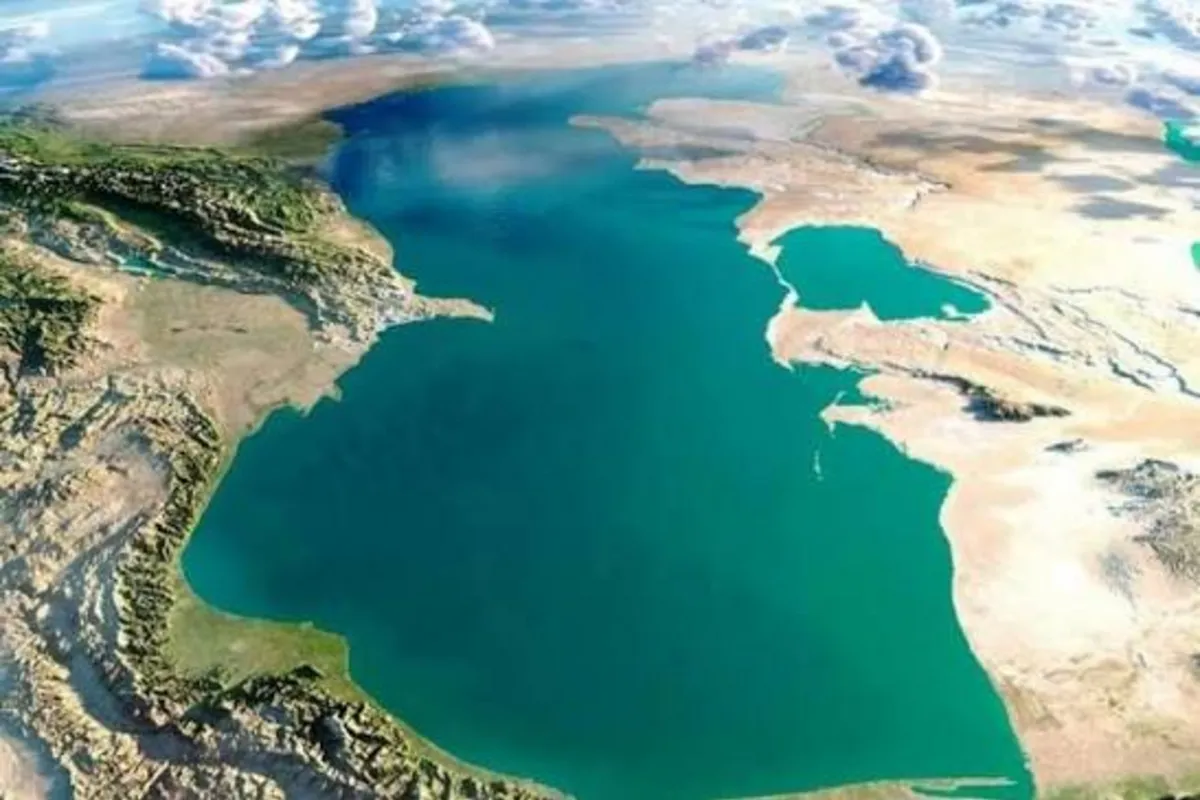
The Caspian Sea has no natural outlet to the world’s oceans. Its water level depends on the balance between water flowing in from rivers and precipitation, and water evaporating from its surface.
According to a study published in Earth’s Future, the sea’s level has fallen by approximately two metres since the mid-1990s. The rate of decline has varied over different periods.
Scientists identify several factors affecting the Caspian’s water balance, including rising temperatures and evaporation, changes in river inflows, and the use of water resources across the basin. The Volga is the largest source of river inflow, making changes in its flow particularly significant.
Researchers stress that the causes of the decline are complex and cannot be reduced to a single factor. To develop effective responses, the countries of the region need joint monitoring and a clearer assessment of the role played by each factor.
Azerbaijan: From Warning to a Joint Commission
For several years, Azerbaijan has urged the Caspian states to combine their efforts to study the causes of the declining water level and develop a response.
In 2022, President Ilham Aliyev proposed establishing joint expert groups involving specialists from all five countries. Azerbaijan subsequently put forward the initiative to create an intergovernmental commission to address the decline.
An important step came on October 9, 2026, at the first Caspian Environmental Summit in Awaza, where the five countries’ leaders decided to establish the commission. Its mandate is to identify the causes of the falling water level and ensure the development and implementation of coordinated measures to address the consequences.
The commission is expected to create specialised working groups involving government representatives, scientists and experts. Its first meeting is scheduled to take place in Azerbaijan in the first half of 2027. The commission has therefore been agreed at the political level, but its practical work still lies ahead.
At the same time, Baku is developing bilateral cooperation. According to the Azerbaijani side, working groups have been established with Kazakhstan, Russia and Turkmenistan to study the causes of the decline and develop appropriate measures.
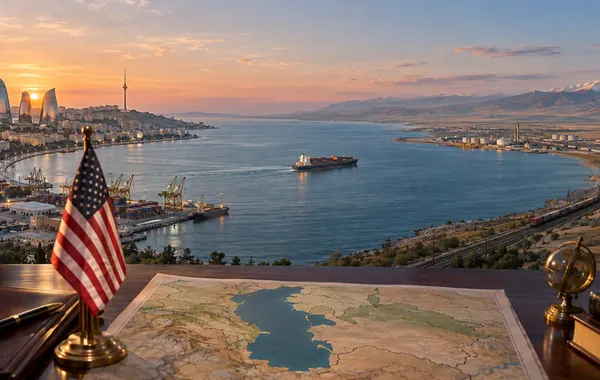
The issue also has a clear economic dimension for Azerbaijan. The condition of the Caspian affects ports, shipping, energy infrastructure and the prospects of the Middle Corridor, which connects Central Asia, the South Caucasus and Europe. As water depths change, new conditions will need to be considered when maintaining ports and planning future projects.
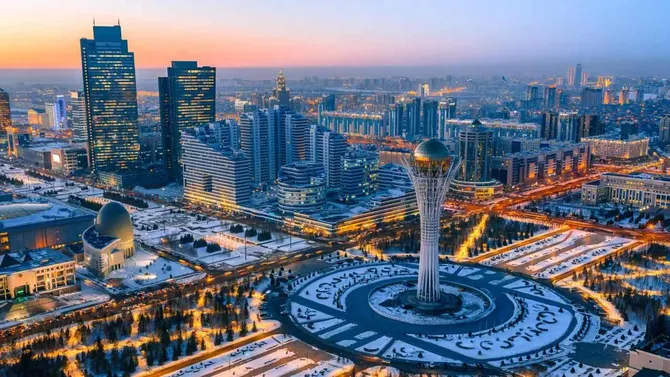
photo: getty images
Kazakhstan: A Joint Programme and Digital Platform
Kazakhstan, which has a long coastline and borders the shallow northern part of the Caspian, is calling for stronger scientific and practical cooperation.
At the Awaza summit, President Kassym-Jomart Tokayev said the littoral states had endorsed Kazakhstan’s proposal to develop an Interstate Programme for the Conservation of the Caspian Sea’s Water Resources. Kazakhstan also supported Azerbaijan’s initiative to establish an intergovernmental commission.
Astana’s proposals include a shared digital platform to process data on water levels, shoreline changes, river flows, pollution and biodiversity. Satellite technology and advanced forecasting systems could help scientists and government agencies identify risks more quickly.
Kazakhstan also proposes closer cooperation among research centres, restoration of river deltas and wetlands, protection of spawning grounds and stronger joint action against poaching. Particular attention is being given to the Caspian seal and the protection of its natural habitat.
Tokayev has also called for grants, concessional lending and other forms of climate finance to support projects covering both the sea and the river basins that feed it.
Kazakhstan points to its experience with the Northern Aral Sea, where restoration measures have helped improve conditions in part of the water body. The Caspian, however, differs greatly in size and natural conditions, so that experience may offer useful ideas rather than a ready-made solution.
Russia: Monitoring the Volga and Modelling the Caspian
Russia’s role in discussions about the Caspian’s future is particularly significant: the Volga, which provides most of the sea’s river inflow, flows through Russian territory.
Understanding the river’s condition and how water is managed across its basin therefore matters to all the littoral states.
At the Awaza summit, President Vladimir Putin proposed developing a special protocol on Caspian Sea monitoring under the Tehran Convention. According to the Russian proposal, it would help organise the exchange of information about the falling water level and other environmental risks.
Russia also suggested creating a climate working group within the Caspian Hydrometeorology Committee. One possible task would be to develop long-term forecasts of the sea’s water level over a 50-year horizon.
Another Russian proposal is to create a digital twin of the Caspian: a virtual model using data on evaporation, precipitation and river flows to calculate different scenarios. Such a model could assist not only environmental forecasting but also the planning of shipping routes.
The Russian side has announced that it is preparing a national programme through 2030 to study changes in the sea’s level and minimise their consequences. Areas proposed for cooperation also include reducing water losses, modernising irrigation systems and improving water management. These remain proposals or measures under preparation; their impact will depend on implementation and on whether the results are made available to all countries in the region.
Assessing possible solutions will also require a transparent exchange of data on river flows and water use. Without a shared understanding of how much water reaches the Caspian and how that volume is changing, it will be difficult to determine which measures could have the greatest effect.
photo: getty images
Iran: A Long-Term Regional Plan
For Iran, the Caspian is important as a source of biological resources, a transport route and a foundation of the economy in its coastal provinces. Falling water levels and pollution could affect fishing, agriculture, tourism and local communities.
At the Caspian Environmental Summit, President Masoud Pezeshkian called for a long-term regional plan based on scientific evidence and cooperation under the Tehran Convention.
The proposed areas include joint scientific monitoring, coordinated environmental action, support for local communities and fisheries, and the mobilisation of funding and technology for adaptation. These are Iranian proposals: agreement on a specific plan and its financing will require further work by all five countries.
For Tehran, as for the other capitals in the region, the challenge goes beyond the water level alone. Even if countries adapt successfully to the decline, the Caspian will remain vulnerable unless pollution is reduced, fish stocks are protected and coastal ecosystems are preserved.
Turkmenistan: A Permanent Platform for Dialogue
Turkmenistan initiated the first Caspian Environmental Summit and has proposed making it a permanent platform for cooperation.
President Serdar Berdimuhamedov supported the creation of a commission on the declining water level and proposed establishing specialised working groups involving scientists, experts and government representatives.
Ashgabat also supported the proposed interstate programme for conserving the Caspian’s water resources and the idea of holding the commission’s first meeting in Azerbaijan in the first half of 2027.
For Turkmenistan, as for Kazakhstan and Azerbaijan, the condition of the sea is connected to the future of trans-Caspian transport. Protecting the ecosystem and adapting port infrastructure will therefore become increasingly important to regional trade.
photo: getty images
What Has Been Agreed - and What Comes Next?
The Caspian states already have a framework for cooperation. The Framework Convention for the Protection of the Marine Environment of the Caspian Sea, known as the Tehran Convention, was signed by all five countries and has been in force since 2006. At COP29 in Baku, the countries also adopted a declaration on strengthening cooperation in response to the declining water level.
Another step came in 2025, when a protocol requiring assessments of the transboundary environmental impact of major projects entered into force. This is significant in a region where the development of ports, industry and transport infrastructure requires consideration of possible effects on neighbouring countries.
A proposed 2026-2036 action plan on Caspian Sea level fluctuations is also under discussion. The UN Environment Programme has called on the countries to finalise the plan and identify mechanisms for putting it into operation. A draft plan, therefore, should not be confused with measures that have already been implemented.
The new commission, Kazakhstan’s proposed interstate programme, Russia’s idea of a digital model and Iran’s call for a long-term plan could complement one another. To make that happen, the countries will need to agree on responsibilities, sources of funding, data sharing and implementation deadlines.
Can the Decline Be Stopped?
The Caspian’s water level depends on processes across a vast area as well as on global climate change. It would therefore be unrealistic to promise a rapid return to its previous level.
Nevertheless, governments can work to reduce the damage: improve water management, protect deltas and spawning grounds, combat pollution and poaching, and adapt ports and coastal infrastructure.
A shared scientific assessment will be particularly important. It should help establish which changes are linked to climate, what role river flows and water use play, and which practical measures can make a difference.
Discussion of the Caspian at COP31 is helping draw international attention to a problem that has often been viewed primarily as a regional concern. But the sea’s future will depend on more than speeches at international forums.
The commission’s planned first meeting in Azerbaijan in 2027 could provide an important test of whether the five states are ready to move from political statements to a shared programme of action - with scientifically grounded priorities, funding and a clear system for monitoring implementation.