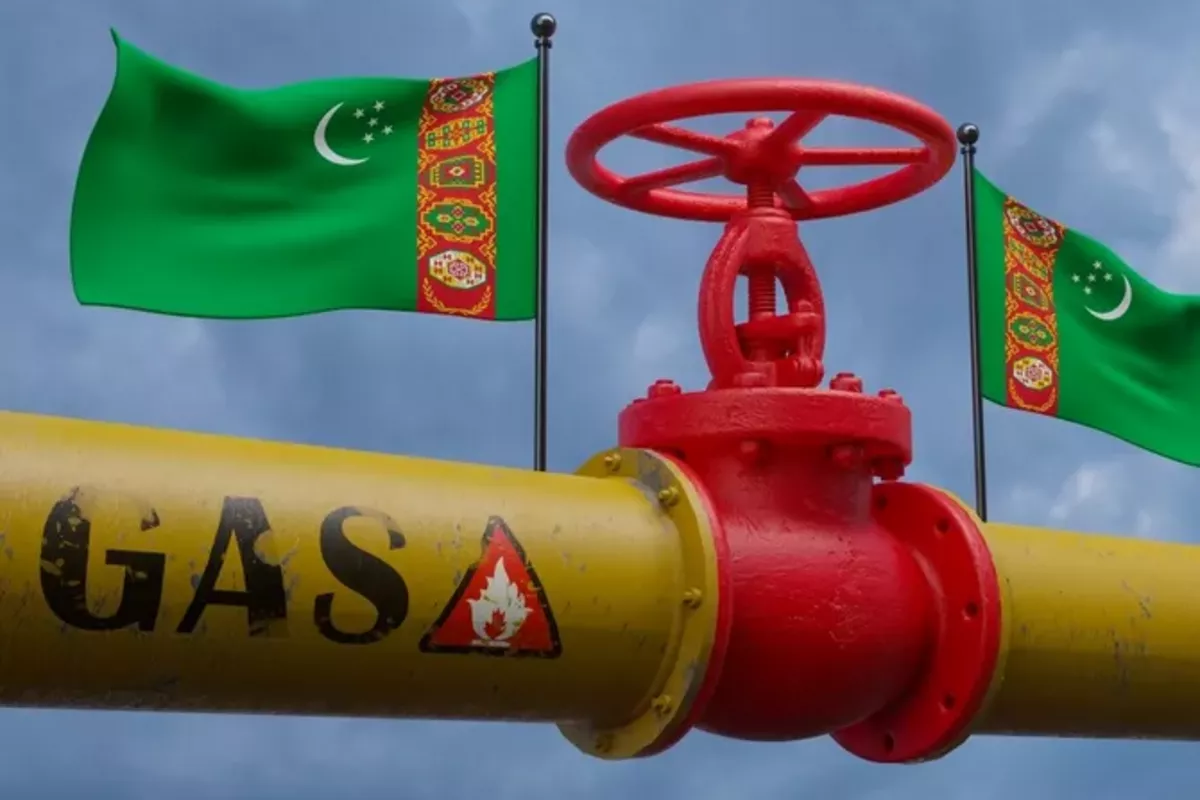
The latest commercial gas flows reported at Turkmenistan’s Yylan and Chemmerli fields are modest when measured against the enormous scale of the country’s resource base. Together, the two wells could produce roughly 850,000-900,000 cubic meters of natural gas per day, equivalent to approximately 310-330 million cubic meters annually if current flow rates are sustained. For a country that possesses the world’s fourth-largest natural gas reserves and produces tens of billions of cubic meters every year, these volumes will not transform the national balance sheet.
Yet focusing only on the size of the new flows would miss their real significance.
The developments at Yylan and Chemmerli are taking place at a moment when Turkmenistan is simultaneously expanding upstream production, committing billions of dollars to the next phase of the giant Galkynysh field, strengthening its long-established gas relationship with China, pursuing the TAPI route toward South Asia, testing deliveries to Türkiye through Iran and reviving discussions about eventually sending gas westward across the Caspian Sea through Azerbaijan.
What is emerging is not simply an increase in production. It is an attempt to solve the central structural problem that has constrained Turkmenistan’s energy sector for decades: the country possesses considerably more gas than it has commercially diversified routes through which to export it.
The success or failure of that strategy could ultimately determine whether Turkmenistan remains primarily a large supplier tied to the Chinese market or evolves into one of the most strategically important pipeline gas hubs connecting Central Asia with East Asia, South Asia, the Caspian region, Türkiye and potentially Europe.
The New Wells Matter Less for Their Volume Than for What They Reveal
At the Yylan field in the Mary region, appraisal and production well No. 04 produced more than 700,000 cubic meters of natural gas per day after drilling reached 2,916 meters. Turkmen industry sources have also emphasized that the gas is sulfur-free, reducing treatment requirements and increasing its commercial attractiveness. Yylan is located close to the Galkynysh production area and existing gas infrastructure, which should make integration of additional output considerably easier than at a remote greenfield discovery. (oilgas.gov.tm)
The result is also not an isolated success. Earlier wells at Yylan had already demonstrated significant production potential, including well No. 01, which produced around 991,600 cubic meters per day. This suggests that Yylan is gradually moving from appraisal toward systematic commercial development rather than representing a one-off geological discovery. (oilgas.gov.tm)
At Chemmerli in the Central Karakum gas-bearing region, well No. 265 produced another 150,000-200,000 cubic meters per day from a relatively shallow horizon at around 1,110 meters. Taken together, the latest results indicate that Turkmengaz is attempting to broaden the geography of commercially viable production rather than relying exclusively on a handful of giant fields. (Trend)
That distinction matters. A gas producer with a highly concentrated production base is more vulnerable to maintenance problems, infrastructure bottlenecks and declining output from individual wells. Expanding smaller and medium-sized fields around established transmission networks creates additional flexibility, even when each project is relatively limited in scale.
There is also a broader Caspian dimension. Recent production activity at the offshore Magtymguly field reportedly produced more than 1.3 million cubic meters of gas per day from a new well, while additional offshore blocks are being considered for further exploration. In other words, the current expansion is not confined to Turkmenistan’s eastern gas provinces; it extends toward the Caspian as well. (Новости Туркменистана от Arzuw.news)
But these developments remain secondary to the project that will define Turkmenistan’s production capacity for years to come: Galkynysh.
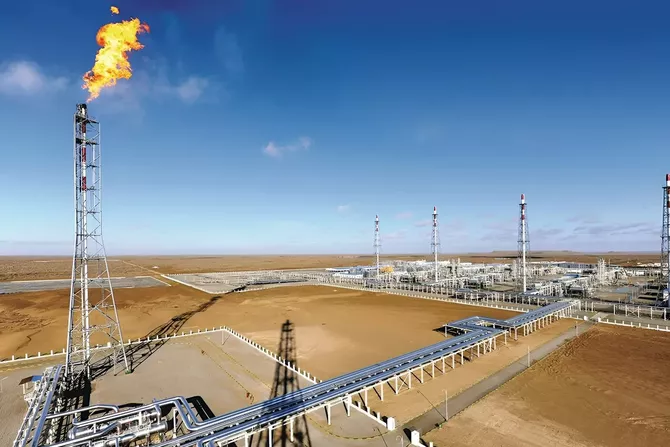
photo: getty images
Galkynysh Shows Where the Real Scale Lies
In April 2026, Turkmenistan and China signed an agreement under which the CNPC will participate in the fourth phase of the Galkynysh gas field. The project includes new wells and gas-processing facilities capable of handling an additional 10 billion cubic meters annually. Its cost is estimated at about $5.1 billion, with Turkmenistan expected to finance the project. (Reuters)
The comparison puts the Yylan and Chemmerli discoveries into perspective. Their combined annual potential is slightly above 0.3 bcm, whereas the fourth phase of Galkynysh alone is designed to add capacity on the scale of 10 bcm annually.
The strategic value of the smaller discoveries therefore lies not in their ability to compete with Galkynysh but in their contribution to a more diversified upstream portfolio.
Galkynysh also illustrates another important feature of Turkmenistan’s energy policy: production growth remains deeply connected to China.
Turkmenistan has been supplying China through the Central Asia-China pipeline since 2009. According to official Turkmen figures, approximately 460 bcm of gas had been delivered to China by March 1, 2026, while Ashgabat says cooperation is aimed at eventually increasing annual export potential to as much as 65 bcm. Reuters, meanwhile, has put current annual Turkmen exports to China at around 30 bcm. (Türkmenistanyň Hökümeti)
The precise annual figure varies depending on whether contractual capacity or actual flows are being discussed, but the strategic reality does not: China overwhelmingly dominates Turkmenistan’s gas-export geography.
That relationship has been extremely valuable for Ashgabat. China provided a large, predictable market at a time when Turkmenistan’s traditional relationship with Russia had weakened. It also financed and built infrastructure that fundamentally redirected Central Asian gas flows eastward.
Yet the same success created a new problem. Turkmenistan moved away from dependence on one export direction only to become heavily dependent on another.
This is why Gurbanguly Berdimuhamedov publicly described diversification of gas export routes as a “primary goal” earlier this year. (Reuters)
The issue is therefore not whether Turkmenistan wants to reduce cooperation with China. The latest Galkynysh agreement demonstrates the opposite. Ashgabat wants to sell more gas to China - but it also wants enough alternative outlets to prevent Beijing from becoming the only commercially meaningful destination for future production growth.
The First Western Route Is Already Operating - Through Iran
For almost three decades, Turkmen gas exports to Türkiye remained a political aspiration rather than a functioning commercial route. That changed in 2025, when BOTAŞ and Turkmengaz agreed to deliver Turkmen gas to Türkiye through Iran using a swap mechanism.
Türkiye initially expected to receive around 1.3 bcm under the arrangement, with deliveries beginning on March 1, 2025. Ankara explicitly described the agreement as a first step rather than the final model. Turkish Energy Minister Alparslan Bayraktar stated that the longer-term objective remained a direct route across the Caspian Sea. (enerji.gov.tr)
This point deserves more attention than the relatively small initial volume might suggest.
The Iranian swap route demonstrated that Turkmen gas could finally move westward commercially. It therefore broke a psychological as well as an infrastructural barrier that had existed since negotiations first began in the late 1990s.
But the Iranian route has obvious limitations. Transit depends on relations with Tehran, Iranian infrastructure, sanctions exposure and regional political conditions. The Middle East conflict of 2026 has further demonstrated how quickly energy infrastructure and trade routes in the region can become exposed to geopolitical risk.
For Turkmenistan, therefore, Iran offers useful optionality but not complete diversification.
A genuine westward strategy would require direct access to the Caspian system - and that inevitably brings Azerbaijan into the equation.
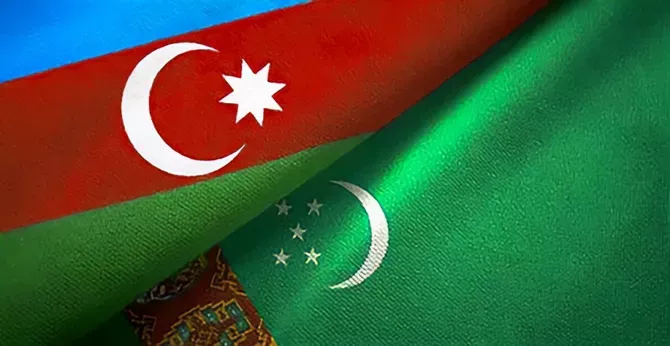
photo: getty images
Azerbaijan Is the Missing Bridge in Turkmenistan’s Western Strategy
The logic of a western route is geographically straightforward: Turkmenistan → Caspian Sea → Azerbaijan → Georgia → Türkiye → Europe.
Azerbaijan already possesses the infrastructure that Turkmenistan lacks. The Southern Gas Corridor stretches roughly 3,500 kilometers from Azerbaijan through Georgia and Türkiye into southeastern Europe, combining the South Caucasus Pipeline, TANAP and TAP. (Energy)
What is missing is a commercially viable connection between the Turkmen and Azerbaijani sides of the Caspian.
The traditional Trans-Caspian Gas Pipeline concept envisaged an offshore link of approximately 300 kilometers. Earlier European infrastructure planning contemplated eventual capacity of more than 30 bcm annually, although any contemporary project would likely need to be reassessed according to actual demand, financing and available capacity further downstream. (Energy)
The political environment has become noticeably more favorable in 2026.
During Turkmen President Serdar Berdimuhamedov’s state visit to Baku on June 22, Azerbaijan and Turkmenistan signed a formal intergovernmental agreement on energy cooperation. Their presidents also identified energy and East-West transport connectivity as priority areas. In July, the bilateral intergovernmental commission again discussed joint energy projects and the Caspian’s potential for international infrastructure development. (Prezident.az)
These developments do not mean that a Trans-Caspian pipeline is about to be built. They do, however, demonstrate that the political relationship between Baku and Ashgabat has moved far beyond the disputes that once made major cross-Caspian energy projects considerably harder to contemplate.
Azerbaijan’s importance is therefore structural rather than merely diplomatic. It is the only realistic westward bridge capable of connecting large Turkmen gas volumes with the existing Southern Gas Corridor.
For Baku, the benefits would also be substantial. Azerbaijan would strengthen its position from being a major producer and transit state into becoming the principal gateway through which Central Asian gas could enter the Turkish and European systems. This would reinforce Azerbaijan’s broader role as the physical link between Central Asia and the South Caucasus.
Europe Wants Diversification - But That Does Not Automatically Make a Pipeline Commercially Viable
It is tempting to assume that Europe’s efforts to move away from Russian gas automatically create an ideal market for Turkmenistan. The reality is more complicated.
The European Union has committed to phasing out Russian natural gas imports by late 2027, potentially creating additional space for alternative suppliers. At the same time, however, European gas consumption is structurally declining as renewable generation expands and energy efficiency improves. The IEA currently expects European gas demand to fall by more than 2% in 2026. (IEA)
This creates a fundamental commercial tension for any Trans-Caspian project.
Europe has a strategic interest in diversification but may not necessarily need very large additional pipeline volumes for several decades. A new offshore pipeline therefore cannot be justified purely by the political objective of replacing Russian gas. Investors would need long-term commitments from buyers, clarity on transportation tariffs, sufficient spare or expanded capacity through Azerbaijan and Türkiye, and confidence that the delivered price would remain competitive with LNG.
The events of 2026 have nevertheless strengthened the strategic argument for diversified pipeline supply.
The disruption of LNG flows through the Strait of Hormuz cut off a route that had previously carried nearly 20% of global LNG supply, triggering renewed volatility in gas markets. The International Energy Agency (IEA) estimates that the Middle East crisis has significantly tightened global supply and altered the medium-term outlook. (IEA)
For European and Turkish buyers, this highlights an old lesson: pipeline gas from geographically diversified suppliers can retain strategic value even in an increasingly LNG-driven market.
Turkmen gas would not replace LNG or Azerbaijani gas. Its potential value lies in adding another source to the portfolio.
That makes the Trans-Caspian concept strategically stronger than it was several years ago - but it does not remove the need for a commercially credible business model.
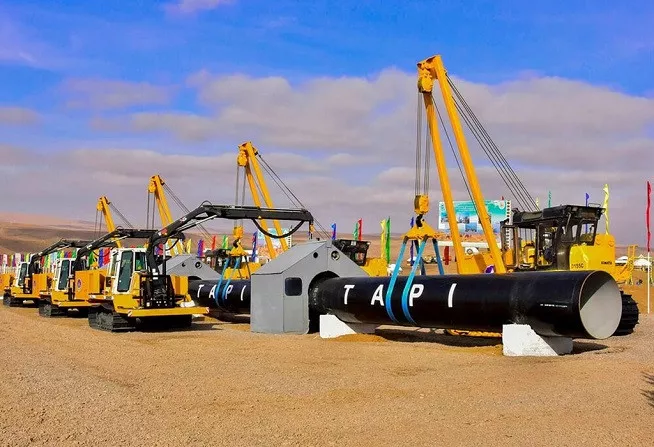
photo: trend
TAPI Gives Ashgabat Another Direction, but Also Another Set of Risks
Turkmenistan’s diversification strategy is not exclusively westward.
The TAPI pipeline - Turkmenistan-Afghanistan-Pakistan-India - remains another central element of Ashgabat’s long-term planning. In August 2026, Turkmen and Afghan officials again emphasized progress on the project and the importance of the Serhetabat-Herat section. Afghanistan has described TAPI as a project of historic importance for regional economic integration. (Түркменистан)
If fully realized, TAPI could open access to some of the world’s most important prospective gas markets in South Asia.
Yet its commercial and political risks remain much greater than those associated with the China route. Security conditions in Afghanistan, financing requirements, Pakistan’s economic situation and the continuing geopolitical rivalry between India and Pakistan all complicate the prospect of completing the entire system.
The western and southern routes should therefore not be viewed as competing concepts. For Turkmenistan, their value lies precisely in having several options.
China provides scale and predictability.
TAPI offers potentially enormous South Asian demand.
Iran provides an immediate bridge to Türkiye.
A Trans-Caspian connection would provide direct access to Azerbaijan, Türkiye and southeastern Europe.
A producer with all four options would have substantially greater bargaining power than one dependent overwhelmingly on a single buyer.
Turkmenistan’s Real Objective Is Not Maximum Production - It Is Maximum Optionality
This is the broader context in which the new Yylan and Chemmerli wells should be understood.
Turkmenistan does not suffer from a shortage of gas resources. Nor is the country’s primary problem an inability to raise production. The $5.1 billion Galkynysh expansion demonstrates that additional output can be developed at scale when a commercial destination exists.
The structural challenge is matching production growth with export infrastructure.
For many resource producers, the ability to produce more hydrocarbons automatically translates into greater export earnings because they have access to the global maritime market. Turkmenistan is different. It is landlocked, and natural gas is considerably less flexible than oil unless expensive liquefaction infrastructure is available. Every major increase in production therefore requires a pipeline destination or a swap arrangement.
This makes export geography almost as important as geology.
From that perspective, the 850,000-900,000 cubic meters per day reported from Yylan and Chemmerli represent only one small piece of a much larger strategic transformation.
The more important numbers are the additional 10 bcm planned from the fourth phase of Galkynysh, the tens of billions of cubic meters already moving to China, the first westward volumes entering Türkiye through Iran, and the potential future capacity of routes toward South Asia and across the Caspian.
The question confronting Ashgabat is how to combine those elements into a balanced portfolio.
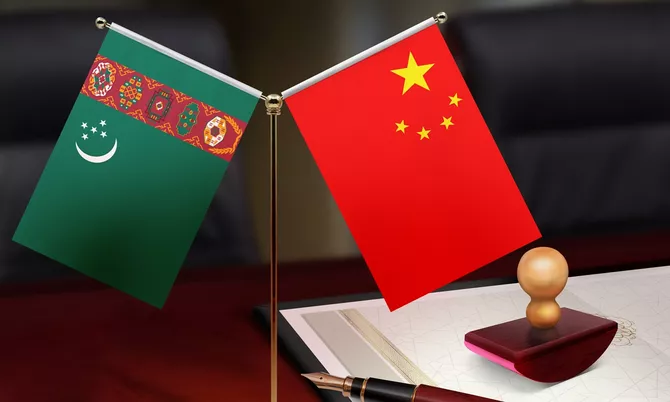
photo: getty images
From a Chinese Supplier to a Eurasian Gas Hub?
The most plausible future is not one in which Turkmenistan turns away from China and suddenly redirects its gas toward Europe.
China is too important, Galkynysh is too closely linked to Chinese demand, and Beijing remains one of the most reliable large-scale buyers available to Ashgabat.
Instead, Turkmenistan appears to be pursuing something more sophisticated: maintaining China as the anchor market while gradually building alternative outlets around it.
If that strategy succeeds, its geopolitical consequences will extend far beyond Turkmenistan.
China would remain the largest buyer but would have to negotiate with a supplier possessing greater optionality.
Türkiye would gain access to another major source of pipeline gas and strengthen its ambition to become a regional energy hub.
Azerbaijan would become an even more important transit bridge between Central Asia and Europe.
European states would obtain an additional non-Russian, non-LNG supply option at a time when energy security remains deeply intertwined with geopolitical risk.
And Turkmenistan itself would finally begin converting one of the world’s largest gas endowments into something it has historically lacked: strategic freedom in choosing where its gas goes.
That is why the latest discoveries at Yylan and Chemmerli should not be judged by whether 310 or 330 million cubic meters of additional gas per year can move global prices. They cannot.
Their importance is that they form part of a broader expansion of Turkmenistan’s production base at precisely the moment when Ashgabat is trying to redesign its export architecture.
The real transformation will occur only if production growth at Yylan, Chemmerli, Galkynysh and Turkmenistan’s offshore fields is matched by new export capacity. If China remains essentially the only destination capable of absorbing large incremental volumes, Turkmenistan’s enormous reserves will continue to translate into limited geopolitical flexibility.
If, however, Ashgabat succeeds in combining the Chinese route with sustainable flows toward Türkiye, meaningful progress on TAPI and eventually a commercially viable Caspian connection through Azerbaijan, the outcome would be very different.
Turkmenistan would no longer be simply a Central Asian country with vast gas reserves.
It would become one of the pivotal states in a new Eurasian energy architecture stretching from China and South Asia to the Caspian, Türkiye and Europe.
By Tural Samedov