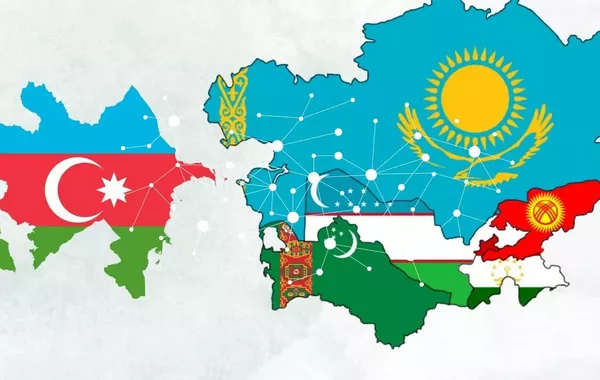
A figure announced in Baku this week may look, at first glance, like another ambitious economic target. But the plan to increase trade between Azerbaijan and the countries of Central Asia to $20 billion points to something much larger than a simple increase in exports and imports.
It reflects an attempt to reshape the economic relationship between the South Caucasus and Central Asia by moving beyond traditional bilateral trade and developing joint production, investment, logistics, digital connectivity and regional value chains.
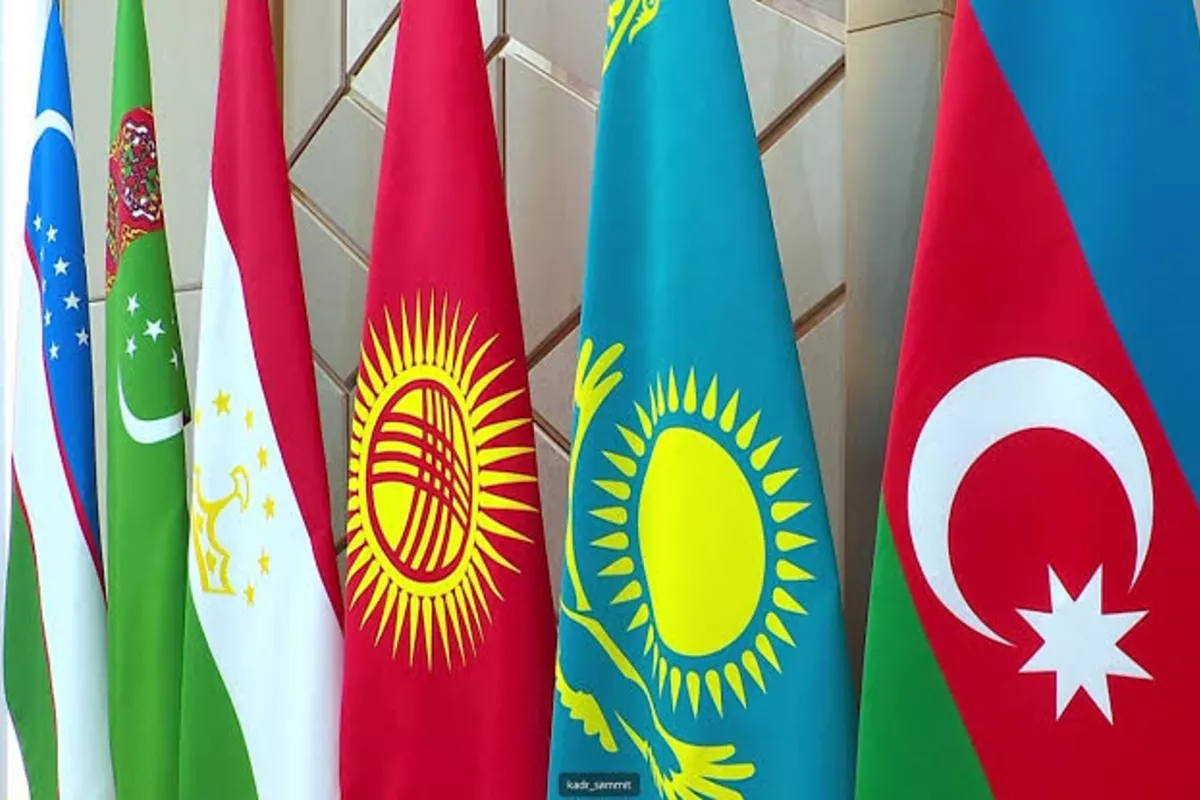
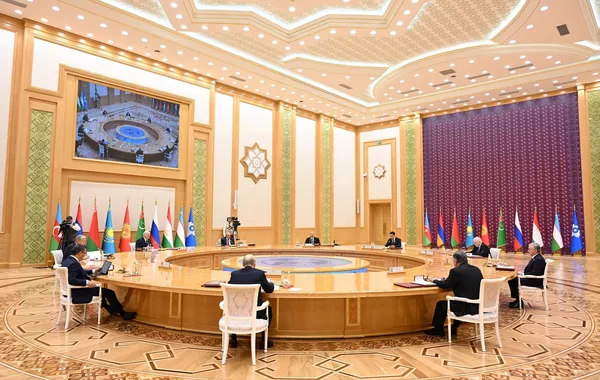
The target was outlined by Azerbaijan's Economy Minister Mikayil Jabbarov at the CAMCA Regional Forum 2026 in Baku, where he said Azerbaijan and the Central Asian countries should work toward increasing regional trade to $20 billion and developing joint production under the “Made in Central Asia” concept.
The significance of the figure lies not simply in its size.
The more important question is what kind of economic activity could generate it.
If the target is achieved mainly through larger volumes of commodities crossing borders, its impact will be relatively limited. If, however, the increase is driven by joint manufacturing, processing, investment and regional supply chains, it could mark the emergence of a new economic space linking Central Asia with the South Caucasus, Türkiye and European markets.
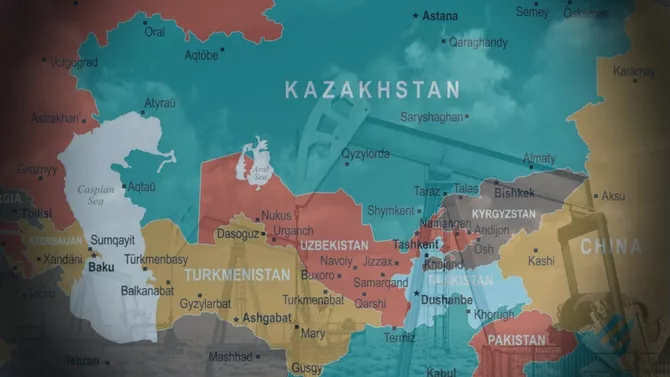
photo: getty images
$20 Billion is a Target, not Today's Trade Volume
There is an important distinction to make at the outset.
The $20 billion figure is a target, not the current level of trade between Azerbaijan and Central Asia.
A look at existing trade statistics shows how ambitious the objective is.
Azerbaijan's total foreign trade turnover reached $48.9 billion in 2025, including $24.53 billion in exports and $24.38 billion in imports.
Trade with individual Central Asian countries remains considerably smaller.
In 2025, Azerbaijan's trade turnover with Kazakhstan reached $670.6 million, an increase of 42.6 percent from the previous year. Trade with Uzbekistan reached $795.2 million, more than tripling year on year, while trade with Kyrgyzstan reached $77.2 million, an increase of 93 percent.
The numbers demonstrate two things at the same time.
First, economic ties are growing rapidly.
Second, there is still a very large gap between today's trade flows and the $20 billion target.
That gap is precisely why the strategy cannot simply be about selling more of the same products.
It requires a change in the structure of economic relations.
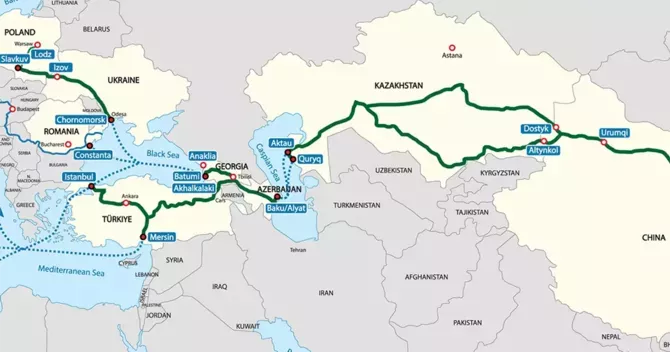
photo: getty images
Why the Timing Matters
The emergence of the $20 billion target comes at a time when the economic geography of Eurasia is changing rapidly.
The disruption of traditional trade routes, the search for alternative supply chains, the growing importance of Central Asia, the development of the Trans-Caspian International Transport Route and Europe's increasing interest in connectivity between Europe and Asia have all increased the strategic value of Azerbaijan's geographical position.
For years, relations between Azerbaijan and Central Asia were largely discussed in terms of political and diplomatic cooperation.
That is changing.
Economic cooperation is becoming more concrete, with investment funds, industrial projects, transport infrastructure and digital connectivity increasingly becoming part of the same regional agenda.
Azerbaijan's growing institutional role is also significant. In November 2025, it became the first country outside Central Asia to join the Consultative Meetings of the Heads of State of Central Asia.
In Baku, the region's economic agenda is now increasingly being discussed in terms of practical cooperation rather than political declarations alone.
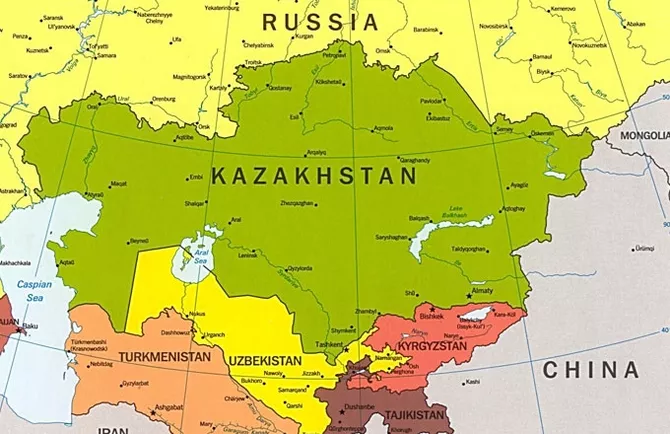
photo: Asia Society
Central Asia is No Longer a Distant Economic Periphery
For Azerbaijan, the importance of Central Asia goes far beyond the possibility of gaining access to several additional export markets.
The region itself is undergoing a major economic transformation.
Kazakhstan combines enormous natural resources with agricultural potential, industrial capacity and a strategic position on the Middle Corridor. Its foreign trade turnover reached approximately $143.9 billion in 2025, including about $79 billion in exports and $64.8 billion in imports.
Uzbekistan represents a different but equally important opportunity, with a large population, an expanding industrial base and a growing domestic market.
Other Central Asian economies bring their own advantages, ranging from energy and raw materials to agriculture, textiles, manufacturing and logistics.
The important point is that these economies can complement each other.
That makes joint production potentially much more valuable than simply increasing bilateral trade.
From Trade to Regional Value Chains
One of the most important ideas behind the new approach is the development of regional value chains.
This changes the basic logic of economic cooperation.
Imagine, for example, that raw materials are supplied by Kazakhstan, components are manufactured in Uzbekistan, processing or assembly takes place in Azerbaijan, and the finished product is then exported through Türkiye to European markets.
Official trade statistics would record several separate transactions between different countries.
Economically, however, it would represent one integrated regional production chain.
This model allows countries to specialize in different stages of production instead of attempting to manufacture an entire product within one national economy.
It can also increase the value generated within the region.
The more raw materials are processed locally and transformed into higher-value products, the greater the economic benefit for the countries involved.
This is particularly important for economies seeking to reduce their dependence on the export of unprocessed commodities.
Investment Funds Provide the Financial Infrastructure
Another important element of the emerging model is the creation of joint investment mechanisms.
Azerbaijan has already established joint investment funds with Kazakhstan, Uzbekistan and Kyrgyzstan. According to Jabbarov, Azerbaijan holds at least a 50 percent stake in each of these funds.
Their importance goes beyond the amount of capital they can mobilize.
The funds can potentially help overcome one of the structural problems facing relatively small and medium-sized economies: fragmented markets.
An industrial project designed only for one relatively small domestic market may have limited commercial potential.
But the calculation changes if a company can produce for several Central Asian markets, Azerbaijan, Türkiye and eventually European consumers.
The potential market becomes much larger.
This is where investment and connectivity begin to reinforce each other.
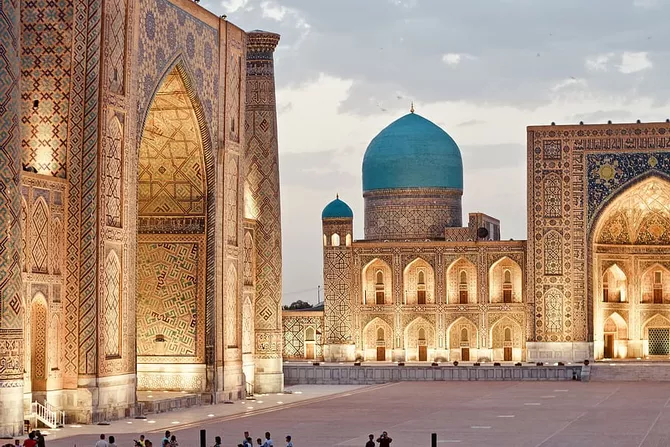
Photo credit: wallpaperflare.com
Uzbekistan Could Become One of the Key Engines
Uzbekistan is likely to occupy an important position in this emerging economic system.
Its large domestic market, industrial capacity and growing manufacturing sector make it one of Central Asia's most important economic centers.
In July 2026, Azerbaijan and Uzbekistan signed documents aimed at developing new production and value chains between Central Asia and the South Caucasus, expanding transport and logistics cooperation within the Middle Corridor and strengthening investment ties.
Among the agreements was a Heads of Terms document on establishing a tripartite joint venture involving AzerGold, Uzbekgeologorazvedka and Azerbaijan-Uzbekistan Investment Company for geological exploration.
This is an important example of how political cooperation can gradually be translated into specific economic projects.
Instead of simply exporting goods from one country to another, companies can participate in different stages of production and investment.
That is the kind of economic relationship capable of generating substantially larger trade flows over time.
Kazakhstan Brings Resources, Scale and Logistics
Kazakhstan plays a different but equally important role.
It combines a large resource base, agricultural potential, industrial capacity and geographical scale with a central position on the Middle Corridor.
Its relationship with Azerbaijan therefore has two dimensions.
The first is bilateral trade.
The second is logistics.
Goods moving from Central Asia toward European markets can travel through Kazakhstan, cross the Caspian Sea, enter Azerbaijan and continue through the South Caucasus and Türkiye.
This means that the economic importance of Azerbaijan-Kazakhstan relations cannot be measured solely by their bilateral trade statistics.
The two countries are also becoming parts of a wider transportation system connecting Central Asia with western markets.

photo: getty images
The Caspian Sea is Becoming an Economic Bridge
For decades, the Caspian Sea was often viewed primarily as a geographical divide separating Central Asia from the Caucasus.
That perception is changing.
The Caspian is increasingly becoming an economic bridge.
The development of ports, railways, ferry connections and container routes is creating the physical infrastructure needed to expand trade.
But a second layer of connectivity is now emerging: digital connectivity.
At the CAMCA forum, Jabbarov said the Trans-Caspian Fiber Optic Cable between Azerbaijan and Kazakhstan is expected to become operational in less than a month.
The approximately 380-kilometer submarine cable connecting Sumgayit and Aktau is expected to provide capacity of more than 400 Tbps and forms part of the broader Digital Silk Way initiative.
This is an important detail because a modern economic corridor is no longer simply about railways, highways and ports.
It is also about the movement of data, capital and information.
Physical trade and digital connectivity are increasingly developing as parts of the same economic infrastructure.
$20 Billion Cannot Come from Transit Alone
This leads to the central question: where could the additional billions of dollars in trade actually come from?
Transit alone cannot generate the target.
Reaching $20 billion will require an increase in trade in goods and services, as well as the emergence of new regional production chains.
Agriculture and food processing are obvious areas of opportunity.
Azerbaijan and Central Asian countries have different agricultural specializations and complementary production structures, creating opportunities not only to trade agricultural commodities but also to process and package them within the region.
Chemicals and petrochemicals represent another potential area.
Central Asia has significant energy and raw-material resources, while Azerbaijan has industrial, energy and logistics infrastructure that can support processing and export operations.
Manufacturing could become even more important.
Machinery, equipment, textiles, construction materials, food products, fertilizers and other manufactured goods can potentially be produced through cross-border supply chains rather than within a single country.
The key concept is therefore not simply more trade.
It is more value-added trade.
The Middle Corridor Gives the Strategy an Economic Backbone
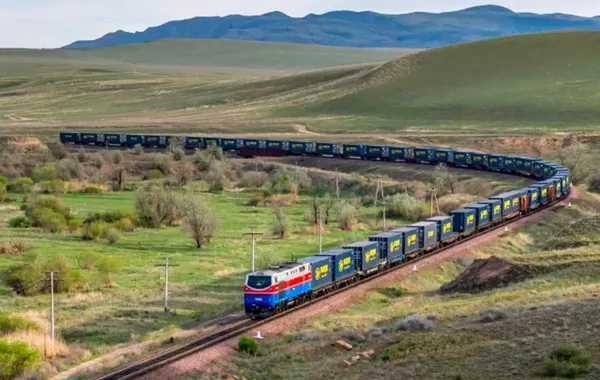
The Middle Corridor is becoming the physical backbone of this emerging economic model.
Its importance is not limited to moving containers between East and West.
It provides a potential connection between Central Asian production, Azerbaijani infrastructure, the Turkish economy and European markets.
If transport becomes faster, more predictable and more competitive, companies can increasingly divide production stages between different countries.
A company could source raw materials in Central Asia, manufacture components in one country, carry out final processing in Azerbaijan and then export the finished product through Türkiye to Europe.
This type of distributed production is already common in other parts of the world.
A similar model could gradually emerge across the Caspian and South Caucasus.
The Changing Geography of the South Caucasus
The development of Azerbaijan's economic relationship with Central Asia is also taking place alongside changes in the transportation architecture of the South Caucasus.
Azerbaijan has linked the development of new transport connections to the broader peace process and the possible development of the Zangezur route, which could connect mainland Azerbaijan with Nakhchivan and eventually integrate with the wider Middle Corridor network.
If implemented, such connections could provide Central Asian countries with additional access toward Türkiye and European markets.
For Azerbaijan, that would strengthen its position as a regional logistics hub.
For Central Asia, it would provide another potential export direction.
For European businesses, it could create another channel for accessing Asian goods and resources.
The $20 Billion Target is Also a Test
The $20 billion objective should therefore not be viewed simply as a number to celebrate.
It is also a test of whether political cooperation can be translated into commercial integration.
Can Azerbaijan and Central Asian countries create enough joint industrial projects?
Can investment funds identify commercially viable regional ventures?
Can customs procedures become faster and more predictable?
Can transportation costs be reduced sufficiently to make cross-border production competitive?
And can the countries along the Middle Corridor create enough cargo in both directions to ensure that transportation remains economically sustainable?
The last question is particularly important.
A transportation corridor cannot depend indefinitely on large cargo volumes moving in only one direction.
If trains, ships and containers travel westward but return empty or underloaded, the cost of logistics rises.
For the Middle Corridor to become commercially sustainable, stronger two-way trade flows will be necessary.
The Deeper Transformation is Already Underway
Seen together, these developments suggest that the $20 billion target is only one indicator of a much broader transformation.
Azerbaijan has created joint investment mechanisms with Kazakhstan, Uzbekistan and Kyrgyzstan.
The countries are discussing joint production.
The Middle Corridor is being expanded.
Ports and railways are receiving investment.
Digital links are being developed across the Caspian.
Türkiye is becoming an increasingly important western bridge.
At the same time, European interest in Central Asia and the Trans-Caspian route is growing.
These developments once existed largely as separate initiatives.
They are now beginning to converge.
That convergence is what creates the possibility of a new economic space.
From Bilateral Trade to an Integrated Production System
Ultimately, the most important question is not whether the $20 billion target will be reached at a particular date.
The more important question is how that number will be reached.
If the increase comes primarily from larger volumes of raw materials and conventional commodity trade, the economic impact will remain limited.
If it is driven by joint manufacturing, processing, investment, logistics, technology and regional value chains, the consequences could be much greater.
In that case, every additional billion dollars in trade could represent new factories, new investment, new jobs, new logistics services and additional tax revenues.
This is the economic logic behind the idea of Made in Central Asia.
A product does not necessarily have to be manufactured entirely in one country.
Capital can come from one economy, raw materials from another, technology from a third, logistics can pass through a fourth, while the final consumer may be thousands of kilometers away in Europe.
National borders remain important, but they become less restrictive to the organization of production.
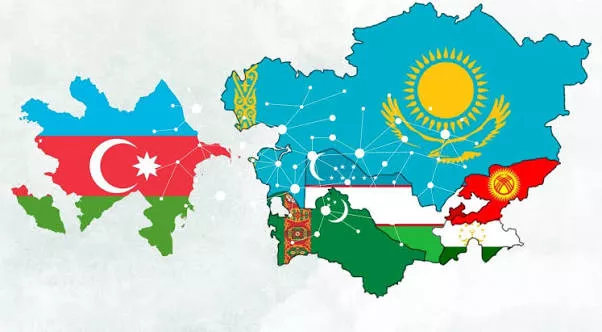
photo: getty images
A New Eurasian Economic Geography
This is why Azerbaijan's Central Asian strategy needs to be viewed in a broader context.
To the east lies China, one of the world's largest manufacturing and trading powers.
To the west lie Türkiye and the European market.
Between them are Central Asia, the Caspian Sea, Azerbaijan and the South Caucasus.
If transport, financial and production links continue developing simultaneously, the region could gradually move from being primarily a source of raw materials and a transit space toward a more sophisticated economic model in which manufacturing and processing are distributed across several countries.
That is why the $20 billion figure matters.
It is not simply another trade target.
It is a test of whether Azerbaijan and Central Asia can convert geographical proximity, political cooperation and transport infrastructure into deeper economic integration.
If they succeed, the result will be more than an increase in trade.
A new economic chain could emerge:
Central Asia → Caspian Sea → Azerbaijan → Türkiye → Europe.
Within that chain, Azerbaijan's role could increasingly extend beyond energy exports to include logistics, manufacturing, investment, digital connectivity and the movement of goods between some of Eurasia's most important economic regions.
In that sense, the $20 billion target may ultimately prove to be not the destination, but one of the first measurable signs that a new economic space is taking shape between Central Asia and the South Caucasus.