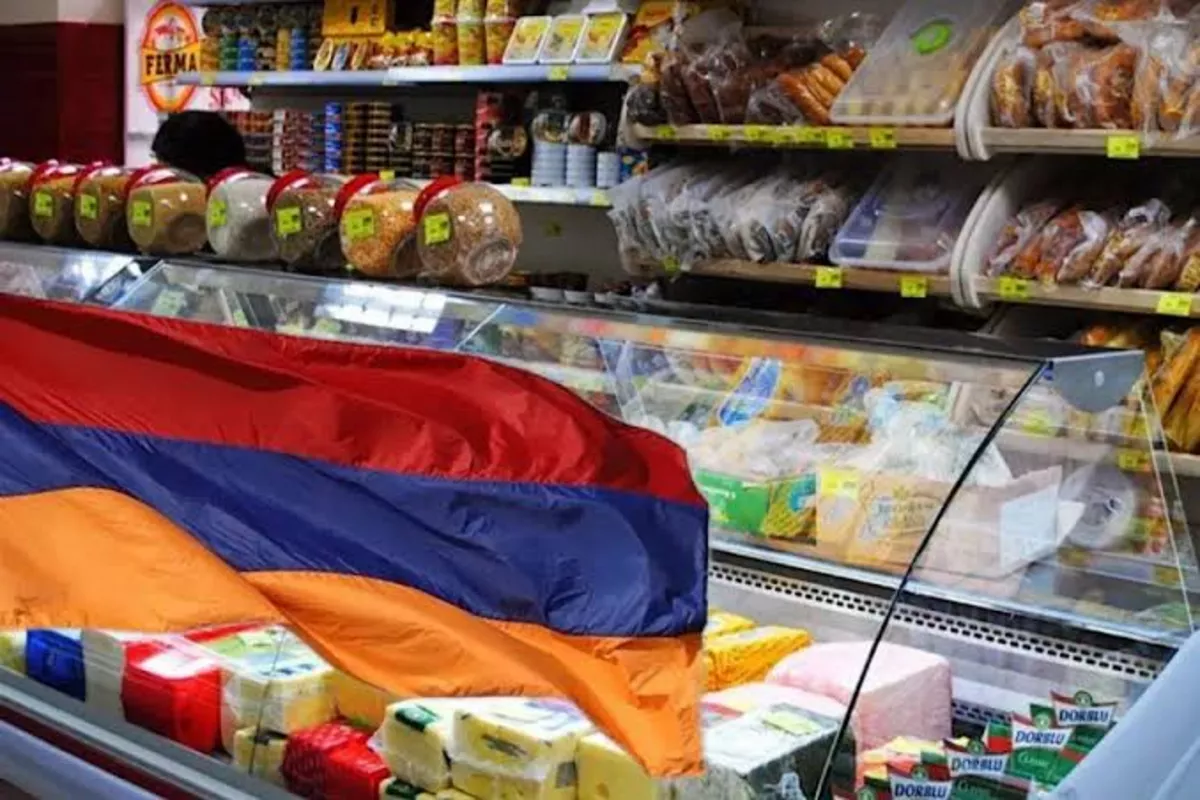
Armenian Prime Minister Nikol Pashinyan has said that the first transaction has already taken place and that details will be announced soon. An Azerbaijani company has purchased Armenian-made goods, which are expected to appear on store shelves in Azerbaijan shortly.
Just a year ago, such a development would have been unimaginable. Economic cooperation was expected to be the final stage of normalisation, coming only after a peace treaty had been signed and border delimitation completed. Baku, however, chose a different approach, making an astute move that surprised many by first opening transit routes and then beginning exports to its neighbour. In our case, normalisation cannot be simple or predictable. This is an entirely new situation that departs from established patterns of post-conflict relations - a path no one has travelled before.
Whether consumers in Azerbaijan will buy Armenian products is another question, particularly when it comes to food. Experts believe such products should undergo rigorous inspections. The reason hardly needs explaining. Azerbaijan has some negative experiences in this regard dating back to the Soviet era. At the time, there were no market-based trade relations: the two Soviet republics exchanged goods rather than buying and selling them. Unfortunately, the Armenian side often failed to act in the spirit of fraternity. In this context, one cannot overlook the scandal involving supplies of donkey meat from Armenia to the Azerbaijan SSR. Planning in the Soviet Union was centralised, and Armenian influence within the Council of Ministers made itself felt when dietary provisions were drawn up for the country’s various peoples. A book published in 1963, Types and Prices of Food Products in the USSR, presented Azerbaijanis as the only people who supposedly consumed donkey meat. This cast doubt on all meat products supplied by the Armenian SSR to Azerbaijan.
Let us hope that our neighbours will now make every effort to avoid repeating past mistakes. Our countries are no longer part of a single state that favours Armenia, and any similar provocation could result in cooperation being severed, projects being scaled back and Armenia finding itself isolated once again. That is precisely what its current government wants to avoid.
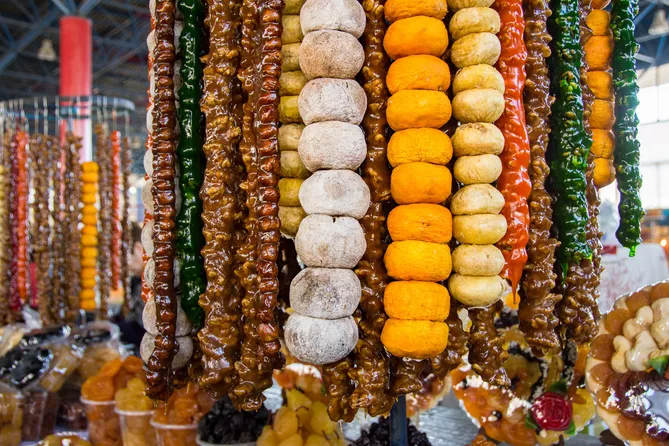
photo: getty images
Armenia could supply fish, cheese, brandy, meat products, fruit, juices, mineral water, confectionery and similar goods. Given the history of relations, it might be wiser not to begin with these products, especially since the Azerbaijani market has no particular need for them.
Broadly speaking, Azerbaijan’s market does not need anything Armenia can offer in terms of food imports. According to experts, however, the neighbouring country does have some industrial export potential, particularly in chemicals and metallurgy.
During the Soviet era, the Armenian SSR manufactured metal-cutting machine tools, presses, electric motors, cables, various instruments, rubber, tyres and polymer materials, which it supplied to other Soviet republics, including Azerbaijan. It also supplied knitwear, footwear, wine and canned goods. Azerbaijan was the main consumer of Armenian bentonite - a type of clay derived from volcanic ash used in drilling fluids and the purification of petroleum products. The bentonite mine and processing plant are located in Ijevan, near the border with Azerbaijan’s Gazakh district.
It should be stressed that all supplies between the Armenian SSR and the Azerbaijan SSR were regulated by Gosplan, the Soviet Union’s State Planning Committee, as part of a single integrated economy. These exchanges therefore did not constitute imports and exports in the conventional sense.
Today, Armenia exports copper and molybdenum ores, jewellery, unwrought or worked gold and diamonds, alcoholic beverages, tobacco, mineral water, chocolate and agricultural products to international markets. These are its principal export categories. Azerbaijan may need something else. Rather than speculate further, however, we should soon have an answer.
Azerbaijani experts believe the first shipment will most likely consist of agricultural produce, cheese, other food products or mineral water. These Armenian goods are in demand in Türkiye’s border regions. Why should Azerbaijan not buy them too? Leather goods could also feature among exports, though in limited quantities, since Armenia itself imports most of them from Türkiye. The neighbouring country could also sell us metals and aluminium products, particularly foil. Armenia already exports chocolate and confectionery, canned goods, fruit juices, wine, and fresh and dried fruit and vegetables to overseas markets. It also has some industrial export potential. Chemicals, plastic and rubber products, metal and metallurgical products, and other manufactured goods could eventually find their way onto the Azerbaijani market.
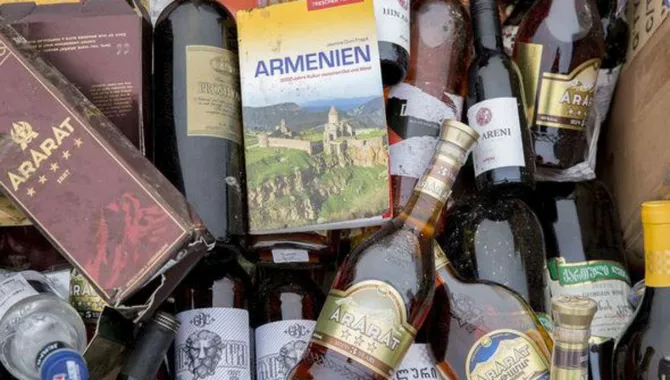
photo: civilnet.am
Earlier this year, when Azerbaijani fuel exports to Armenia began, Armenia’s Ministry of Economy published a list of products the country could export to Azerbaijan. It included aluminium foil, ferromolybdenum, live animals, fruit, vegetables, certain beverages and a range of textile products.
Armenian experts analysing the situation doubt that Armenia can become a major exporter to Azerbaijan. They argue, however, that it could supply Nakhchivan, which is separated from the rest of the country and depends on imports from Iran and Türkiye. Why should Armenia not take their place?
Supplies of certain goods to Nakhchivan could certainly be discussed. But Armenian analysts should bear in mind that Baku’s objective is to reduce the autonomous republic’s dependence on imports, and it will not seek to deepen that dependence. This is the primary reason Azerbaijan is promoting the Zangezur corridor, or TRIPP.
Most Armenian experts believe the first export transaction announced by the authorities is driven entirely by political considerations, since Azerbaijan does not actually need anything from Armenia.
There is merit in that assessment. Turning one-way trade into two-way commerce is, above all, a political step made possible by Yerevan’s constructive conduct. Pashinyan’s election victory and the pragmatic policies he has pursued have enabled the next move forward. Given the state of relations between the two countries after 35 years of conflict and Armenian occupation, every economic step necessarily rests on a political decision. That will remain the case for a long time to come.