The Georgian Dream government’s bid to ban five opposition parties has brought the country’s political confrontation into a new and uncertain phase. The Constitutional Court is being asked to decide whether these parties pose a threat to Georgia’s constitutional order. Yet whatever the legal outcome, the case also has consequences for political competition, future elections and Georgia’s relations with its Western partners.
The parties facing a possible ban are the United National Movement (UNM), Coalition for Change, Lelo - Strong Georgia, the Federalists, and Gakharia - For Georgia. Georgian Dream argues that their activities threaten the constitutional order. The parties reject the accusations, and their lawyers will have the opportunity to contest them before the court.
I am not a lawyer, and the final legal judgment belongs to the Constitutional Court. From a political perspective, however, I do not believe the ruling party’s concerns can be dismissed altogether. In my view, opposition forces have participated to varying degrees in several attempts to replace the elected government through unconstitutional means. Nevertheless, a decision as serious as banning political parties requires substantial and convincing evidence. I would therefore like to hear stronger arguments from the authorities during the hearings.
Different Parties, Different Cases
The government’s lawsuit relies heavily on the findings of a parliamentary commission that investigated the UNM’s conduct when it governed Georgia from 2003 to 2012. In my view, the authorities could also have submitted additional documents concerning the alleged unlawful and unconstitutional activities of the UNM and its leadership.
There are, however, important differences between the parties named in the case. While the government’s case against the UNM and parties that emerged from it may be more readily understood in light of their political history, the arguments against Lelo - Strong Georgia and Gakharia - For Georgia require considerably stronger justification.
These parties were established during Georgian Dream’s rule and have no political or organisational ties to the UNM. They have nevertheless cooperated with it in efforts to remove Georgian Dream from power, including by refusing to recognise the legitimacy of institutions such as parliament and the government.
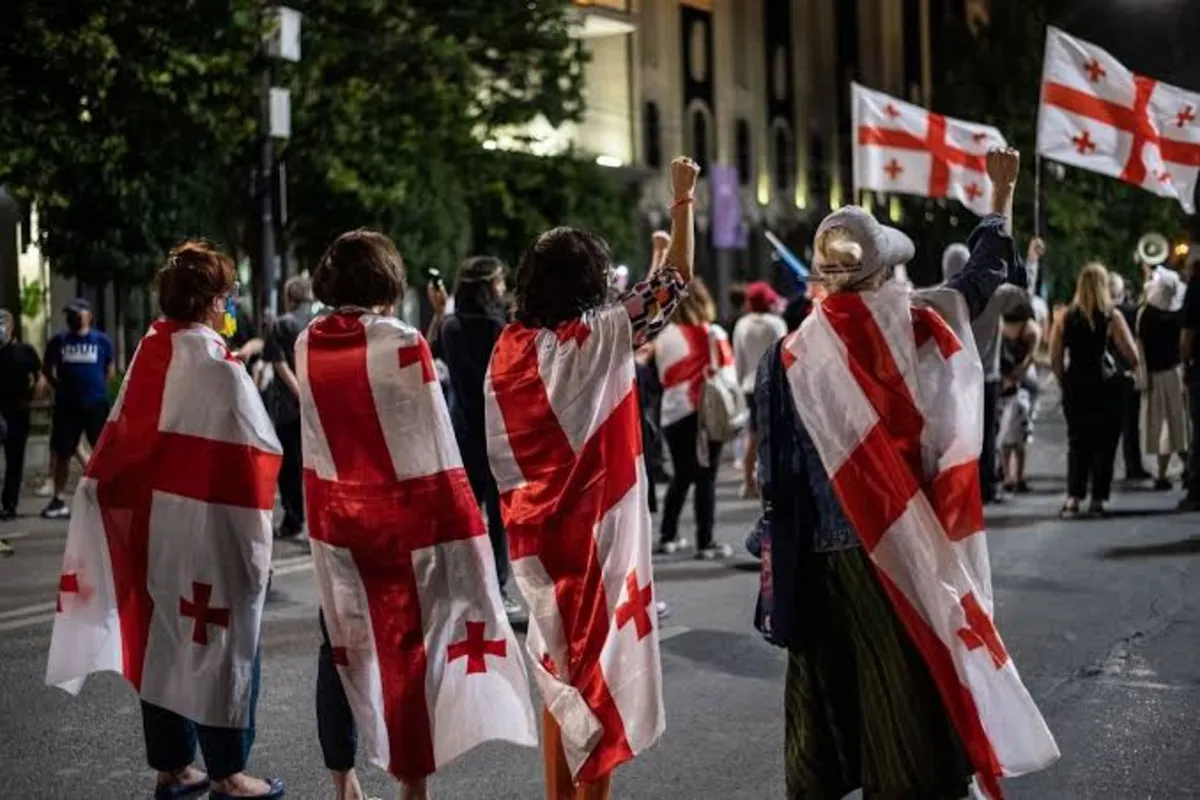
That conduct may raise political concerns for the authorities. But any assessment must also consider how serious and immediate the alleged threat really is. In my judgment, it is limited. Opposition protests have not produced a government crisis or weakened state institutions to the point where a change of power or fresh elections appear inevitable.
It is also necessary to distinguish between political opposition and conduct that can legally justify a ban. The court must examine the evidence against each party on its merits.
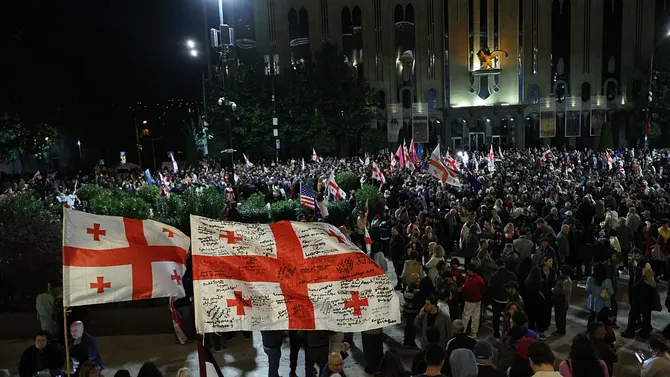
photo: getty images
Reshaping the Political Landscape
The political dimension of the case is difficult to overlook. Georgian Dream’s leaders have repeatedly spoken about the need to “cleanse” the political landscape and create conditions for a “healthy opposition”. As I understand it, they envisage opposition parties that pursue their goals through peaceful political methods rather than what the government describes as radical action.
At the same time, new political forces are seeking space in the country’s political life. United Neutral Georgia, for example, is working to strengthen its position.
The timing of the court proceedings may also reflect Georgian Dream’s desire to prepare a more favourable political environment ahead of the next parliamentary elections, or even possible early elections, which the opposition has demanded. The threat of a ban itself places pressure on the parties concerned and makes it harder for them to operate with certainty about their future.
The case has also developed over an extended period. The original lawsuit concerned three major opposition forces, before Georgian Dream added two more parties in September. Procedural issues and the expansion of the case have prolonged the process.
The court reportedly has nine months from the start of substantive consideration to issue a final ruling, suggesting a decision could come by the end of June 2027. Much could change in Georgia’s domestic and foreign policy during that time.
A Possible Compromise
My expectation, although it remains only an assumption, is that the Constitutional Court could reach a compromise by banning some parties while allowing others to continue operating. It might, for instance, rule against the UNM and certain parties associated with it while leaving the remaining parties untouched.
Such a decision would allow the court to present itself as having assessed the cases individually. Georgian Dream could also point to a partial ruling as evidence of judicial independence, including in response to criticism from abroad. A narrower decision might reduce opposition protests compared with a ban on all five parties, although that is far from certain.
Even a partial ban, however, would have substantial political effects. Removing two major opposition forces would change the balance of competition. Other parties would seek to attract their voters, while Georgian Dream would face fewer established rivals and gain more room to manoeuvre.
That would not necessarily mean the end of political competition. New parties and figures could emerge before the 2028 parliamentary elections. Georgian politics has seen such developments before: few expected Bidzina Ivanishvili’s entry into national politics in 2011 to transform the political landscape as it did.
The parties concerned may also seek to challenge an adverse ruling before the European Court of Human Rights. It is therefore premature to assume that a Constitutional Court decision would settle their political future once and for all.
If all five parties were eventually banned and any appeal failed, Georgia could face a substantially different political configuration. Such an outcome would likely benefit Georgian Dream, although it would not necessarily mean that the party would govern alone. It could also work with allied parties or with forces it considers part of a “healthy opposition”.
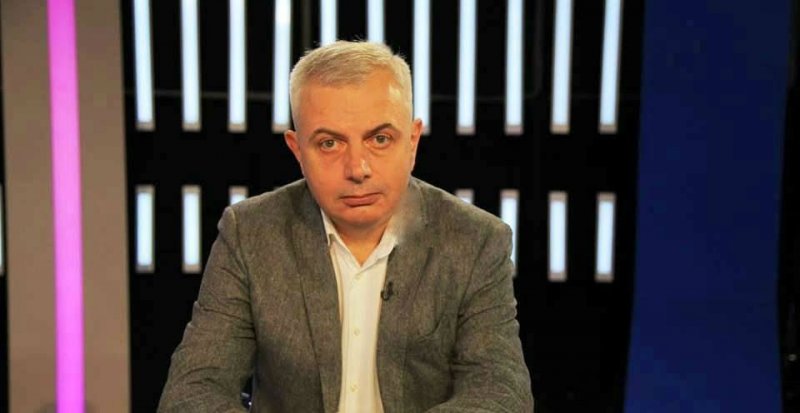
photo: eurasianet
Georgia and the West
A ban would add further strain to Georgia’s already difficult relationships with the European Union and the United States. Western partners have strongly criticised the initiative, and a decision to prohibit major opposition forces would raise further questions about political pluralism in the country.
Georgian Dream appears to believe that Georgia’s strategic importance gives it room to resist some of that pressure. The country remains relevant to Europe as a link between regions and as part of wider geopolitical and economic connectivity. The ruling party may calculate that Western governments will ultimately place those interests alongside their concerns over democratic standards.
The response may not be uniform. In recent years, the European Parliament has called for tough measures against Georgia, while other European institutions have at times taken a more restrained approach. Much will depend on the political climate and the priorities of decision-makers in Brussels and Washington when the court reaches its verdict.
Georgia’s partners may not want to sever ties with the country. Equally, the government should not assume that strategic interests will erase the political costs of a ban.
For the Constitutional Court, the immediate task is to determine whether the evidence justifies the action requested against each party. For Georgia, the longer-term question is how to preserve a political system in which disputes over power can be resolved peacefully and credibly.