Armenia’s draft Constitution has opened a debate that extends far beyond the country’s domestic politics. Its proposed changes raise questions about Yerevan’s relations with Azerbaijan and Türkiye, the role of the Armenian diaspora and the prospects for lasting peace in the South Caucasus.
The debate comes at a decisive moment. While Armenia is considering a new constitutional framework, preparations have begun for the Trump Route for International Peace and Prosperity (TRIPP), a transport project intended to connect mainland Azerbaijan with Nakhchivan through Armenian territory. Together, these developments could create an opportunity to replace decades of confrontation with practical cooperation.
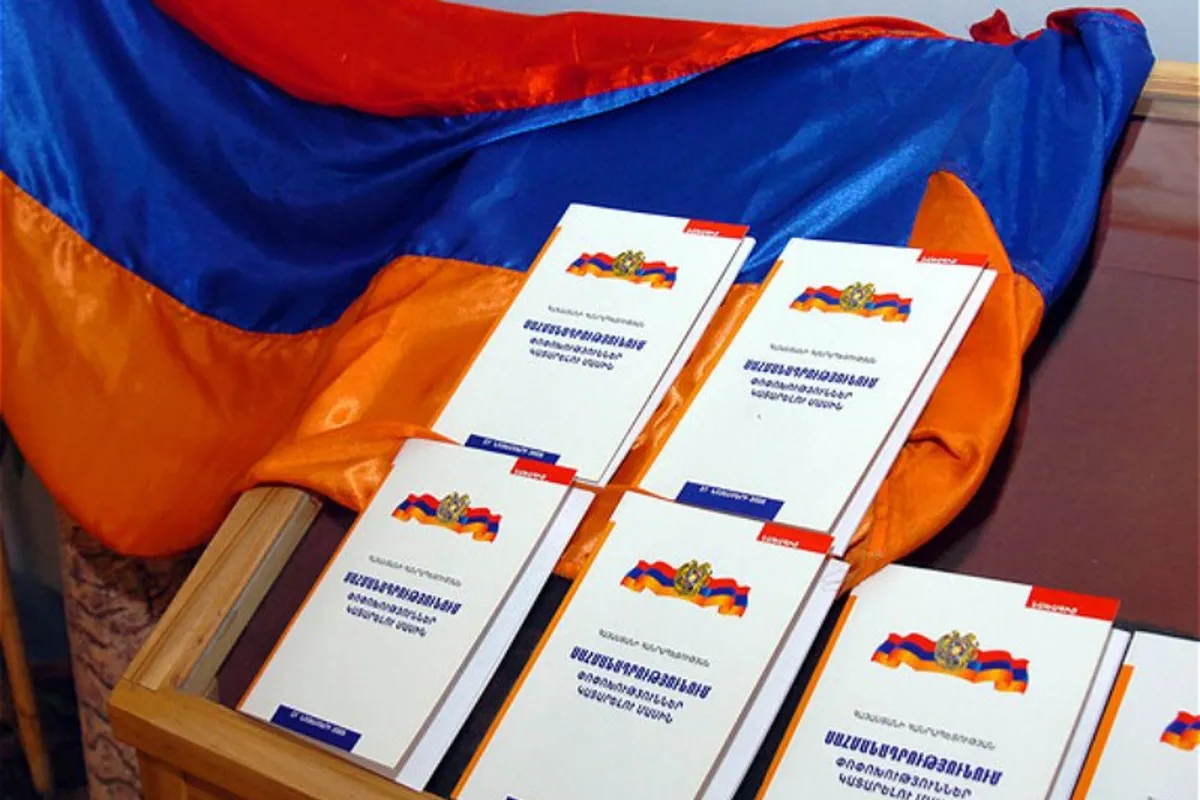
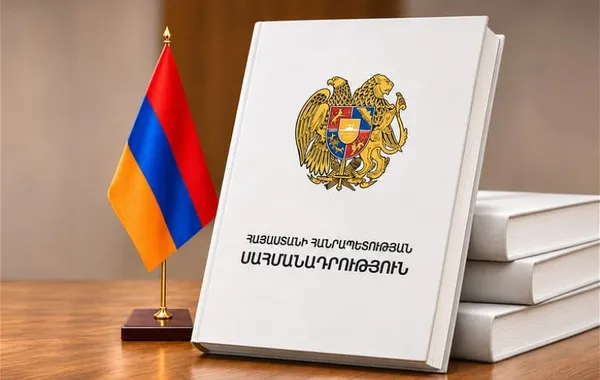
One of the most significant provisions of the draft is the removal of the reference to Armenia’s 1990 Declaration of Independence from the constitutional preamble. The declaration will remain a historical document, but it would no longer be invoked through the Constitution’s preamble in the same way.
The declaration refers to an earlier decision on the unification of Soviet Armenia and Nagorno-Karabakh, and also supports the international recognition of the Armenian genocide. For Azerbaijan, the constitutional reference to the declaration has long been a source of concern because Baku considers it to contain a territorial claim.
Removing the reference would make it more difficult for a future Armenian government or the Constitutional Court to use the declaration as a constitutional argument for departing from agreements reached with Azerbaijan. Nevertheless, a constitutional amendment alone cannot eliminate every political risk. The wording and implementation of a peace treaty remain essential.
The text initialled by Armenia and Azerbaijan in August 2025 already includes a mutual commitment to respect each other’s sovereignty and territorial integrity and confirms that neither side has territorial claims against the other. The challenge is to ensure that these commitments are signed, ratified and implemented in a way that gives both countries lasting confidence.
It would also be important to ensure that any interpretation of the agreement by Armenia’s Constitutional Court is consistent with the principle of respect for internationally recognised borders. Legal guarantees will carry more weight if they are supported by practical steps, including the opening of borders and the development of trade.
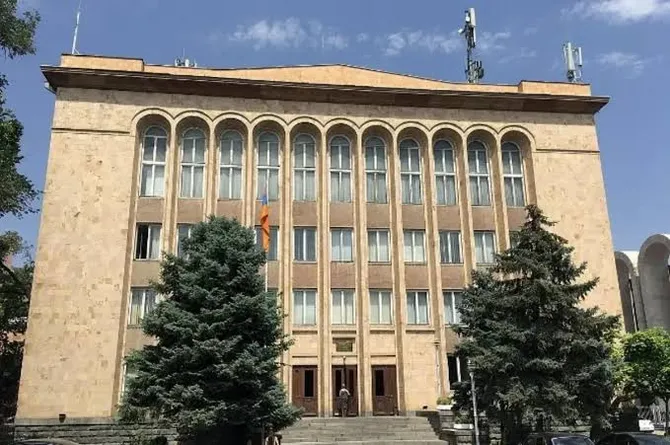
photo: getty images
When people can see that peace makes travel easier, creates jobs and opens new markets, agreements between governments are more likely to gain public support.
The proposed Constitution also changes the treatment of Armenia’s state symbols. The current Constitution describes the coat of arms, including its depiction of Mount Ararat. The draft leaves the description of state symbols to be established by law.
This change could be seen as a symbolic gesture in the context of relations with Türkiye. At the same time, removing the description from the Constitution would not in itself remove Mount Ararat from the coat of arms.
The experience of the 2009 Zurich Protocols demonstrates why both legal interpretation and political confidence matter. Armenia’s Constitutional Court found the protocols constitutional, but its reasoning referred to the Constitution’s preamble and the Declaration of Independence. Ankara viewed parts of that reasoning as restrictive and inconsistent with the purpose of the agreements. The normalisation process subsequently stalled.
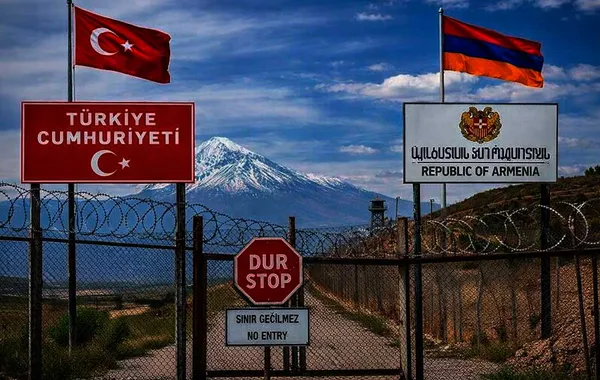
While Armenia’s new draft remains under discussion, Türkiye could take practical steps that demonstrate the benefits of improved relations. These might include accelerating technical preparations at border crossings and developing modest joint initiatives in trade and tourism.
Such measures should be based on reciprocity and offer clear benefits to communities on both sides of the border. They could help demonstrate the economic value of normalisation without unnecessarily intensifying Armenia’s domestic debate over external pressure.
The lesson of Zurich is that reciprocal commitments, whose implementation can be assessed by both sides, are more likely to produce sustainable results than major unilateral gestures.

photo: getty images
Another symbolically important change concerns the language used to describe the people in whose name the Constitution is adopted. The current preamble refers to “the Armenian people”, while the proposed text uses “the people of the Republic of Armenia”.
This shift places greater emphasis on citizenship as the basis of political decision-making. It could give Yerevan a stronger foundation for prioritising the will of the republic’s citizens when defining foreign policy and negotiating with its neighbours.
At the same time, it may limit the ability of diaspora organisations to invoke the Constitution when advocating particular policies in the name of broader national goals. This does not mean that ties with the diaspora would disappear. Cultural links, shared identity and the diaspora’s ability to support Armenia abroad would remain important.
The distinction is about decision-making. The final responsibility for Armenia’s foreign policy should rest with the country’s citizens and institutions. The diaspora can continue to contribute through advice, advocacy and cultural engagement, while Yerevan retains the autonomy needed to pursue normalisation with Azerbaijan and Türkiye.
The launch of the practical phase of TRIPP adds an economic dimension to this process. The project envisages a transport link through Armenia’s Syunik province connecting mainland Azerbaijan with Nakhchivan, while preserving Armenia’s sovereignty and jurisdiction over its territory.
Plans also provide for the development of railway and road infrastructure, as well as energy and communications links. Under the agreed framework, an American entity is to hold 74 per cent of the development company, while Armenia is to hold 26 per cent.
The fact that work on the route is moving forward while constitutional questions remain under discussion is significant. Joint economic projects can help build trust and give societies a tangible reason to support peace.
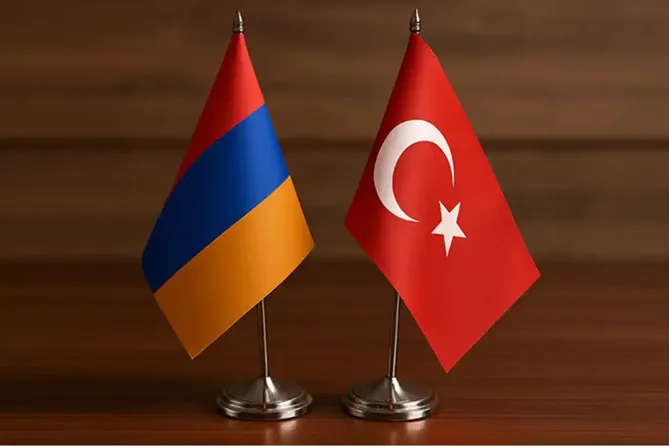
photo: getty images
If Armenia begins to benefit from transit between Türkiye and Central Asia, it could gradually reduce its regional isolation. Transit revenues, investment, new logistics opportunities and the possibility of diversifying energy supplies could also help Yerevan broaden its economic options.
This process, however, will take time. Russian gas supplies, labour migration and Armenia’s participation in the Eurasian Economic Union remain significant factors in the country’s economy. TRIPP is unlikely to transform these relationships overnight.
Over the medium and long term, however, the development of TRIPP and wider regional transport links could encourage a more pragmatic approach to peace. As economic benefits become more visible, domestic opposition to cooperation with neighbouring countries may weaken.
The constitutional process nevertheless faces political uncertainty. Prime Minister Nikol Pashinyan’s ruling party needs six additional parliamentary votes to put the draft to a referendum. Pashinyan has said he will resign if voters reject the Constitution and will not run for prime minister in the next parliamentary elections if it is approved.
By linking his political future to the referendum, Pashinyan has given voters several issues to consider at once: the proposed Constitution, confidence in his leadership and the future of the peace process.
Publishing the draft offers an opportunity for public discussion. Opinion research can help identify which provisions enjoy support and which face resistance before any vote is held. This could give the authorities a clearer understanding of public concerns and help them determine their next steps.
I welcome the publication of a concrete draft as an opportunity to advance this discussion. At the same time, a referendum could produce a negative result for different reasons. Some voters might object to particular constitutional provisions; others might wish to express dissatisfaction with the prime minister, while others might oppose the proposed terms of peace.
For Baku and Ankara, distinguishing between these motivations would require careful analysis, including surveys before the vote, research afterwards and attention to regional and social differences in the results.
Diplomatic dialogue should therefore continue even if the outcome is unfavourable. A vote against a draft Constitution would not, by itself, prove that the people of Armenia have rejected peace.
A lasting settlement will require more than constitutional language. It will depend on credible legal commitments, reciprocal diplomacy and economic cooperation that allows people across the region to experience the benefits of peace.