Turkish Foreign Minister Hakan Fidan’s warning about a possible Israeli military operation on Syrian territory has once again drawn attention to the province of Sweida. According to Türkiye’s top diplomat, the activities of a separatist group within the Druze minority could provide a pretext for intervention.
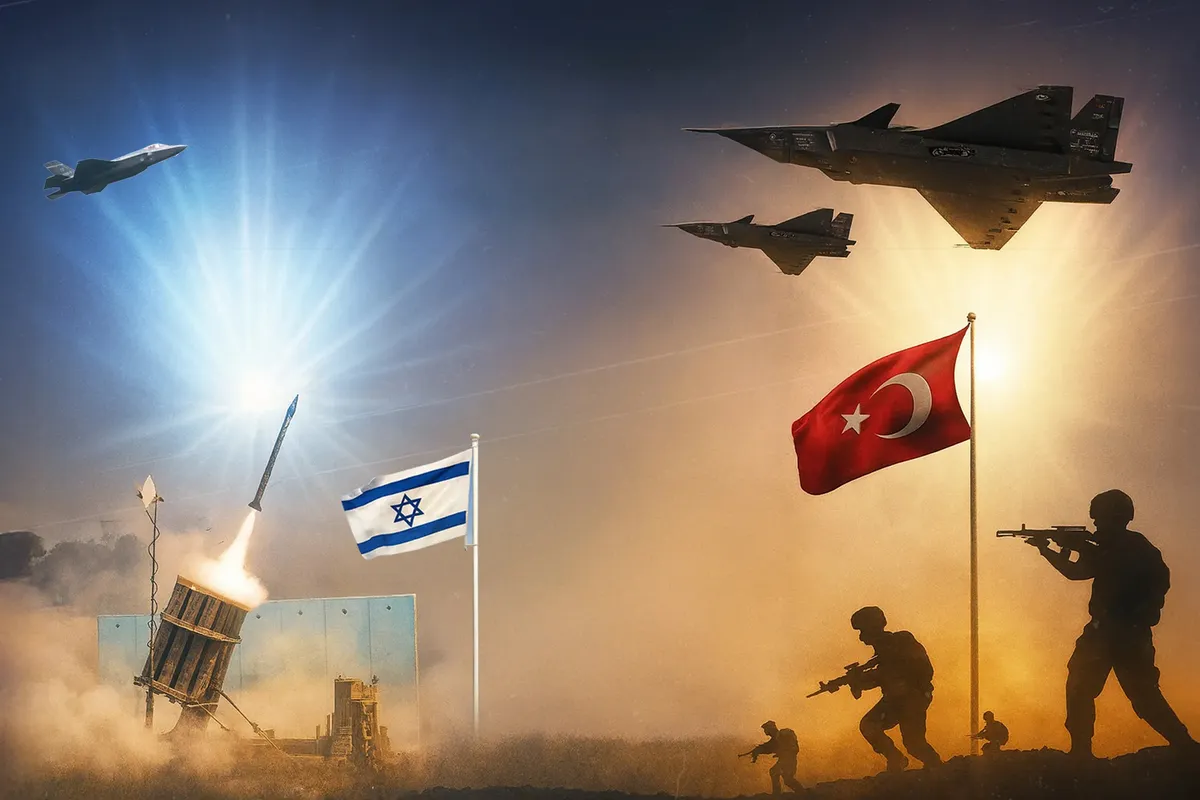
The significance of developments in southern Syria, however, extends far beyond a local conflict. Behind the tensions in Sweida lies a broader geopolitical challenge involving Syria’s territorial integrity, the strategic interests of Türkiye and Israel, and the ability of the United States to reconcile the positions of two important regional partners.
Following Hamas’s attack on Israel on October 7, 2023, the Israeli leadership adopted an increasingly hardline approach to security and regional strategy. The consequences of this policy are being felt both within the immediate conflict zone and beyond it, in parts of the Middle East that Israel considers important to its security and influence.
The situation in Syria, including in Sweida, is part of this wider process. Local tensions are further complicated by demographic, geographic, religious and sectarian factors.
In my view, this is a matter of strategic importance. An escalation of tensions in southern Syria could once again threaten the country’s territorial integrity and create conditions for the expansion of external influence.
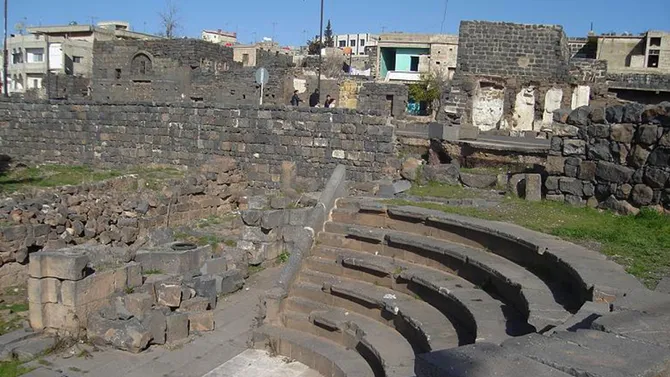
photo: Nawafir Tours
Sweida in Israel's Strategy
The issue of Sweida extends beyond the security of the Druze population and Israel’s relationship with the Druze community. Equally important is the possibility that a new security zone and sphere of Israeli influence could emerge in southern Syria.
To understand the significance of the province, it must be viewed in the context of Israel’s broader strategy in Syria.
Following the fall of Bashar al-Assad’s regime, Israel established control over additional territory in the Mount Hermon area, also known as Jabal al-Sheikh, and deployed troops there. The mountain is strategically important because of its location and the opportunities it provides for monitoring adjacent areas of Syria and Lebanon.
Another key area is the Golan Heights-Quneitra line, where Israel maintains a military presence and pursues a policy of establishing buffer zones. The southwestern Syrian province of Daraa is also important to Israel’s strategy.
Against this backdrop, Sweida occupies a particular place as an area where the interests of the Druze community, local armed groups and the central government in Damascus, which seeks to restore state sovereignty, intersect.
The broader equation also includes Israel’s relations with various ethnic, armed and political groups operating in Syria, including the Syrian Democratic Forces (SDF), which Türkiye links to the Kurdistan Workers’ Party (PKK). Israel’s engagement with the Syrian leadership and its political representatives through US mediation is another important factor.
Within this framework, Sweida’s internal divisions could provide Israel with grounds for intervention.
A Divided Druze Community
Sweida is located in southern Syria, near the border with Jordan, and has a significant Druze population.
It would, however, be a mistake to regard the Druze community as a unified political or military force. It includes supporters of rapprochement with Damascus and the preservation of Syria’s territorial integrity, advocates of autonomy, and groups seeking closer cooperation with Israel.
One of the most prominent figures is Sheikh Hikmat al-Hijri, one of the three influential religious leaders of Sweida’s Druze community. He remains cautious about the prospects of a compromise with the government in Damascus and is regarded as one of the most visible advocates of closer ties with Israel.
Another important actor is the National Guard, an armed formation established in 2025 through the unification of various Druze groups. Forces aligned with al-Hijri hold considerable influence within the organisation.
At the same time, the community includes influential figures who support a compromise with Damascus, the restoration of Syrian state authority and constructive relations with the central government.
Developments in Sweida therefore cannot be reduced to a confrontation between the Druze and the Syrian government. Political divisions within the community itself, as well as differing approaches to security and the province’s future, are also important parts of the crisis.
Particular attention should be paid to Fidan’s claim that Israel supplies the groups it supports with weapons, ammunition and other resources, as well as logistical assistance. Reports have also circulated publicly about regular deliveries by helicopter.
If this assessment is accurate, Israel’s involvement goes beyond political, humanitarian or economic support. It would also mean strengthening the military capabilities of local armed groups through external resources.
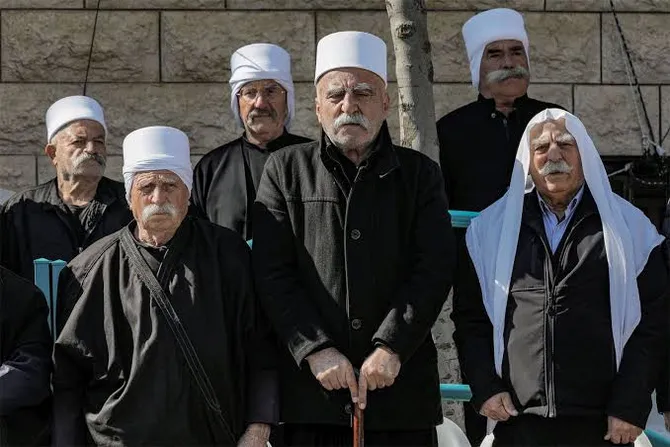
photo: getty images
How the Crisis Could Unfold
One possible scenario is a gradual escalation of tensions.
The first stage could be an armed clash or provocation involving Syrian security forces and groups in Sweida that favour closer ties with Israel. Israel could then intervene, citing the need to protect the Druze community.
In that case, an internal Syrian security issue could become grounds for external military intervention. The consequences might include air strikes, a limited ground operation, the creation of new buffer zones or an expansion of Israel’s existing military presence.
In recent years, various forms of Israeli intervention have been seen in Syria and Lebanon, as well as in the Palestinian territories, including the West Bank, the Gaza Strip and Jerusalem.
This remains only one possible scenario. Its potential consequences, however, are too serious to ignore.
A Threat to Syria's Territorial Integrity
The emergence of a new de facto autonomous territory in southern Syria could set a precedent for other separate armed structures operating in the north and east of the country.
If such processes continue, instability could deepen and the risk of Syria breaking apart could increase.
In the northeast, SDF structures, which Ankara links to the PKK, retain their organisational cohesion, command system and armed capabilities. Religious and sectarian tensions, widespread poverty and deep public disillusionment add to the challenge.
Together, these factors leave Syria particularly vulnerable to further internal conflict and external intervention.
For Türkiye, the territorial integrity of its neighbour is a matter of direct importance. Ankara has an interest in the emergence of a stable Syrian state and the restoration of effective central government control throughout the country.
The fragmentation of Syria could create new threats along Türkiye’s southern border. At the same time, an expansion of Israeli military influence on Syrian territory could significantly restrict Ankara’s room for strategic manoeuvre.
photo: The Guardian
The US Role and the Risk of Confrontation
In this complex situation, the position of the United States takes on particular significance.
On the one hand, Washington takes Israel’s security concerns into account. On the other, it has an interest in restoring stability in Syria. In practice, these objectives may come into conflict.
Türkiye is also strategically important to the United States. This is one of the most sensitive aspects of the Syrian crisis: Washington must take into account the interests of two partners whose approaches to Syria’s future may increasingly diverge.
The danger lies not only in the possibility of another armed clash on Syrian territory. The gradual escalation of geopolitical tensions between Türkiye and Israel is an equally serious risk.
The future of Sweida is therefore tied to a much broader question: what principles will shape a new regional order, and can stability in Syria be achieved without further weakening its sovereignty?
The answer will determine not only the fate of one Syrian province, but also the nature of relations among the Middle East’s key powers in the years ahead.