So, the US congressional midterm elections have ended with the expected result. A date repeatedly mentioned by President Donald Trump - 3 November 2026 - has now become part of history.
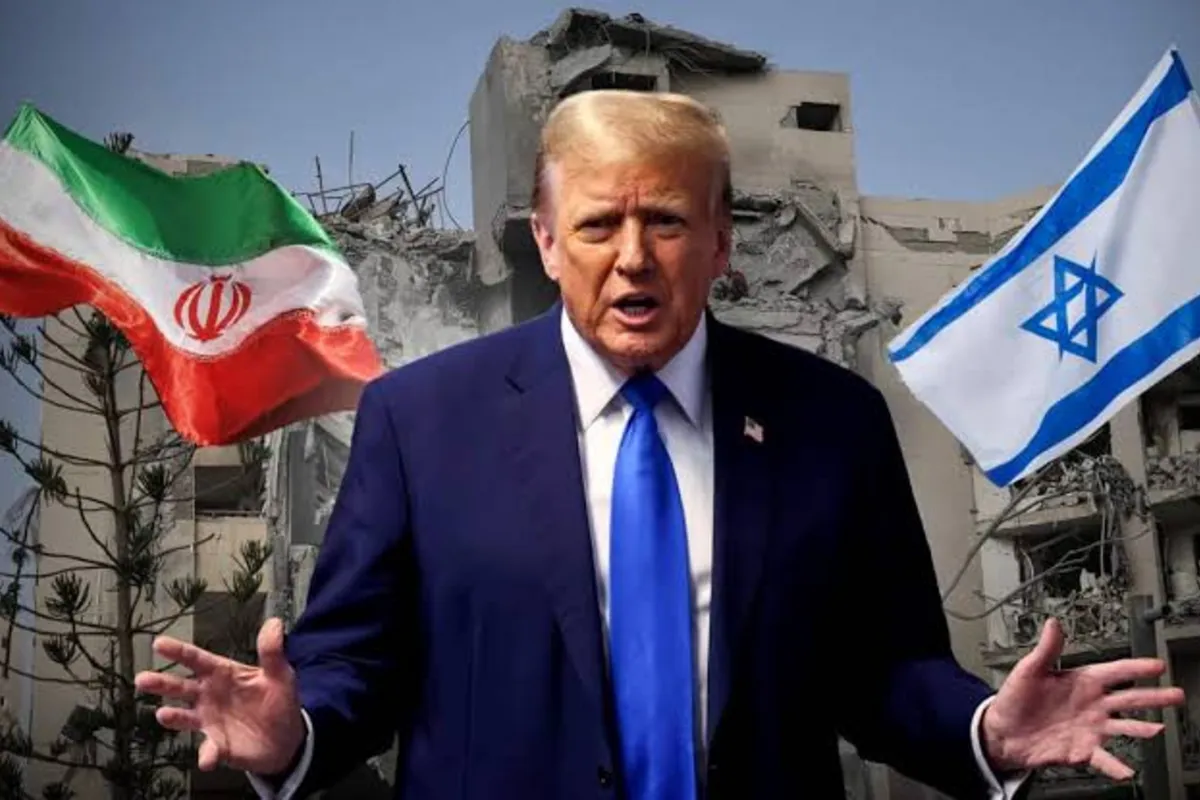
Nevertheless, the Iran issue remains unresolved. The leadership in the White House is once again weighing whether to ighten the sanctions regime and impose a strict blockade or launch military operations jointly with Israel to deliver a knockout blow to the ayatollahs' regime.
However, as experience shows, economic measures do not have the desired effect on totalitarian regimes. It is usually ordinary people who go hungry, while the elite continue to live as before. Expecting a conspiracy within the army or among the officer corps of the Islamic Revolutionary Guard Corps (IRGC) is also highly problematic.
In this regard, particular attention should be paid to the visit to Israel by Admiral Brad Cooper, who heads US Central Command (CENTCOM) in the Middle East. In Tel Aviv, the CENTCOM commander met with the Chief of the General Staff of the Israel Defense Forces, Lieutenant General Eyal Zamir, and other senior military officials. According to The Times of Israel, the visit was intended to strengthen cooperation and coordination between the armed forces of the two countries. In addition, the IDF command had an opportunity to discuss further actions, particularly in light of the escalating situation surrounding Iran.
Israeli media report that the US administration is carefully examining intelligence data on the basis of which a decision will be made regarding new attacks on Iran. Against this backdrop, Mossad Director Roman Gofman visited the United States. There, he held talks with CIA Director John Ratcliffe and subsequently met with US presidential special envoy Steve Witkoff. On 15 November, it became known that Mossad had provided the CIA with information about Iran's intention to organise an assassination attempt against Donald Trump and several other senior officials in his administration.
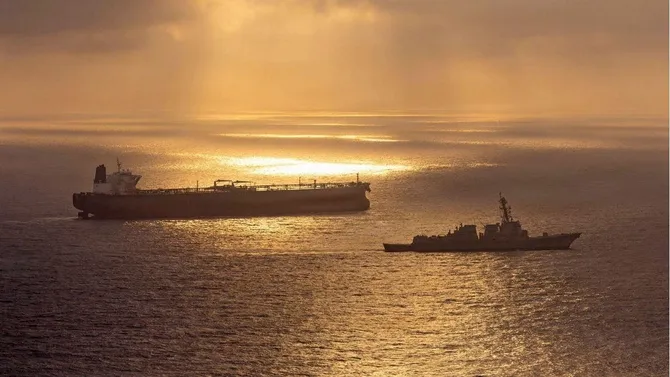
In addition, reports emerged about the Iranian leadership's intention to break through the naval blockade using a convoy of oil tankers. Apparently, the Islamic Republic's numerous and supposedly invincible surface and submarine fleet is no longer capable of confronting the US Navy. As Ynet commentator Ron Ben-Yishai wrote on Sunday, 22 November, Western intelligence agencies have gathered information in recent days about Iranian preparations for such a breakthrough. According to the European television channel Euronews, more than 14 tankers, together with their crews, have gathered near Iran's main oil terminal on Kharg Island.
Source: Reuters
The vessels are loaded with oil, and Iranian flags have been raised on them, indicating an intention to send the convoy through the Strait of Hormuz into the Indian Ocean. If the Americans stop the tankers, Iran threatens to respond with strikes against energy facilities in Persian Gulf countries, primarily Saudi Arabia, the UAE and Qatar. In other words, innocent neighbouring countries will once again be the ones to suffer. According to reports by Fars News Agency and other Iranian media outlets, the proposed operation is called "Fereydoun" (Operation Fereydoun). The tankers are expected to sail under Iranian flags, and their destination in China may even be announced in advance.
There have even been proposals to activate AIS identification systems openly, contrary to the usual practices of the "shadow fleet". Apparently, confusion and panic among the Iranian leadership have reached their limit.
There is a strong possibility that Tehran will attempt to circumvent the blockade by transferring oil to foreign tankers, which the US Navy generally does not stop. In this regard, on 18 November, US Central Command (CENTCOM) announced an expansion of the blockade to include tankers receiving Iranian oil on the high seas. It should be noted that American sanctions and the naval blockade are already causing severe disruptions to energy supplies, which have had a devastating impact on industrial production and the population's quality of life.
Furthermore, Iran is losing control over passage through the Strait of Hormuz, its main instrument of pressure on the United States and global energy prices. Evidence of the country's dire situation can be found in the words of Mohsen Rezaei, Secretary of the Supreme National Security Council and a former commander of the IRGC. In a speech in November, he stated that he had received instructions from Supreme Leader Mojtaba Khamenei to bring the state of "neither peace nor war" to an end quickly. Foreign Minister Abbas Araghchi echoed his words and explicitly stated that Iran intends to break through the blockade.
Initially, Tehran will attempt to break through the blockade using a convoy of tankers bound for China. If the US fleet attempts to stop or attack these vessels, Iran threatens to strike the oil and gas facilities of its neighbours. In this way, it seeks both to force the Arab countries of the Persian Gulf to put pressure on Washington and to trigger a surge in global oil and gas prices. According to Iranian calculations, this would derail a US-Israeli strike and bring US President Donald Trump to the negotiating table from a position of weakness. The Islamic Republic intends to break through the economic blockade, at least partially and for a short period, in order to replenish its foreign currency reserves, which will soon be completely depleted.
According to Kpler, an international data company, Iran's revenues from exports of crude oil and gas condensate could fall to zero by mid-December. Clearly, CENTCOM has numerous options for stopping the tanker convoy in response to the ayatollahs' reckless plans. For example, it could disable at least some of the vessels by launching strikes that would set them on fire.
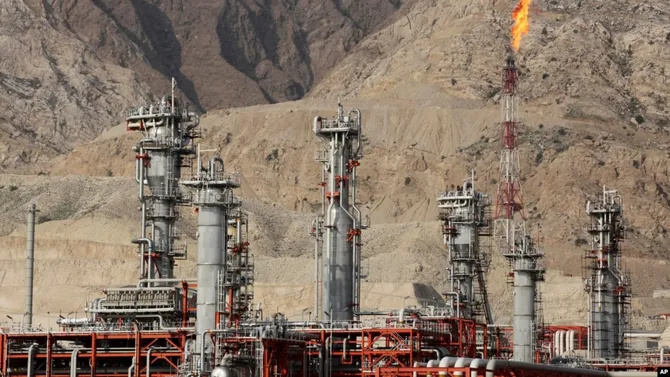
Source: voanews
The Americans could also paralyse the movement of the tankers with precision missile strikes against their engine rooms. Another option would be to use Marines to seize them. In any case, President Trump will finally have to decide whether to launch a joint strike against Iran with Israel.
Meanwhile, several Persian Gulf states have been quite successful in using the current situation to their advantage. According to The Wall Street Journal, the UAE's state oil company, ADNOC, has "quietly become the driving force" behind oil shipments through the Strait of Hormuz. It has launched a "risky operation" to ensure uninterrupted supplies while circumventing Iranian restrictions. Using its own tanker fleet and US support, Abu Dhabi is effectively assuming the role of a "shuttle operator" in the Persian Gulf. Amid increasingly frequent Iranian drone and missile attacks, ADNOC has introduced a system of nighttime convoys.
The company's tankers load oil, including Iraqi oil purchased at substantial discounts, in the Persian Gulf, cross the Strait of Hormuz under US military protection and transfer their cargo to other vessels on the high seas. The strategy has already yielded results, the WSJ notes: in October, UAE oil exports reached 3.74 million barrels per day, exceeding pre-war levels of 3 million barrels.
ADNOC's net profit from tanker operations during the first nine months of the year increased to $1.42 billion, compared with $122 million a year earlier. So not everyone is losing. There are also countries that are making substantial profits from the war and the blockade. The experience of the US-Iranian war has once again confirmed the need for Gulf countries to have additional options and alternative routes for the safe delivery of hydrocarbons to global markets.