As competition between the United States and China reshapes global politics, Vietnam faces the challenge of protecting its strategic autonomy while maintaining constructive relations with both powers. Its response has been to diversify partnerships, strengthen economic resilience and develop new connections beyond its immediate neighbourhood.
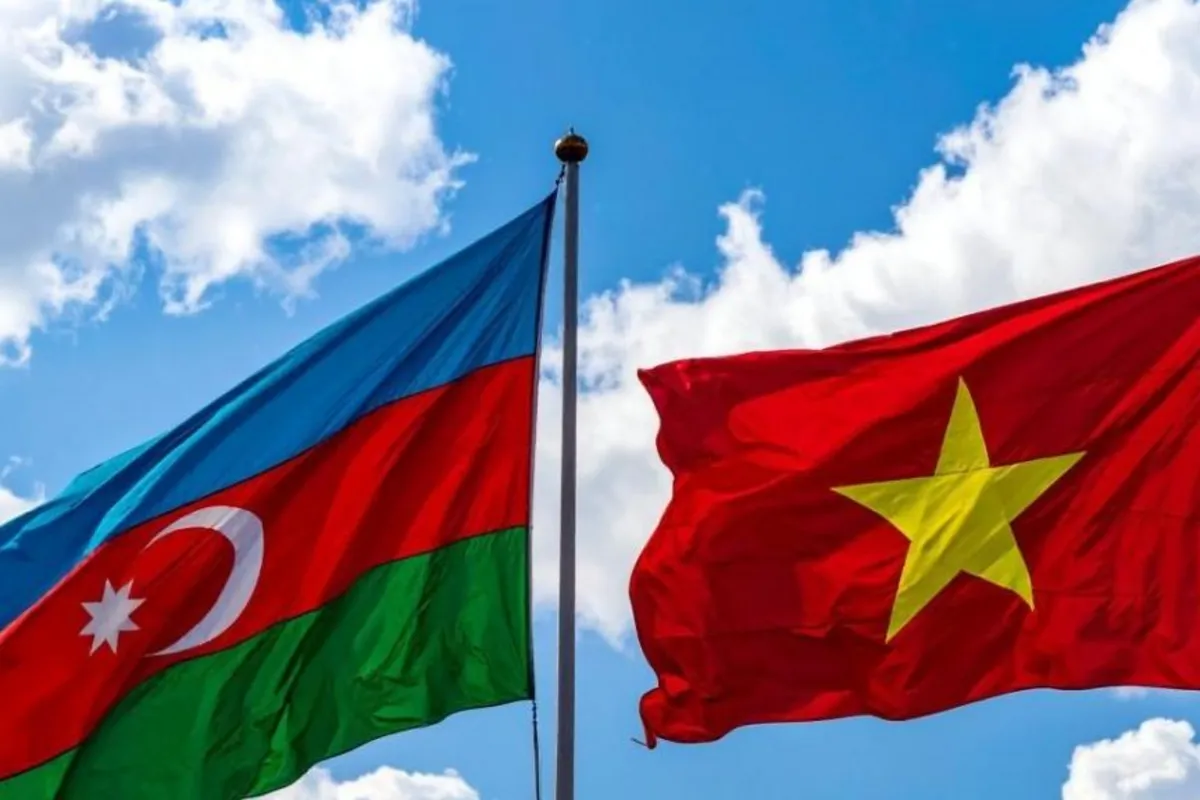
In this context, Azerbaijan is becoming an increasingly relevant partner for Vietnam. The two countries’ strategic partnership offers opportunities in energy, trade and transport, while giving Hanoi another point of access to the South Caucasus and the wider Eurasian region.
Vietnam’s foreign policy has long rested on a careful balance between major powers. China is its largest trading partner, a giant neighbour and a fellow claimant in the South China Sea disputes. The United States is Vietnam’s largest export market and an important strategic counterweight.
Choosing one side at the expense of the other would come at a considerable cost. For Vietnam, maintaining relations with both is therefore a strategic necessity.
Hanoi has reinforced this approach by building a broad network of partnerships. It has established comprehensive strategic partnerships with all five permanent members of the UN Security Council, as well as with most of Asia’s major economies. This diversification gives Vietnam more diplomatic options and reduces the risk of excessive dependence on any single power.
Yet the nature of the challenge is changing. Balancing relations between Washington and Beijing is no longer primarily a question of avoiding military entanglements. It increasingly involves managing supply chains, navigating competing technology standards and protecting access to markets.
US tariffs and Washington’s scrutiny of Chinese goods allegedly being rerouted through Vietnam illustrate how geopolitical rivalry can affect the country’s economic model. Preserving strategic autonomy will require diplomatic skill, but it will also depend on the strength of Vietnam’s own economy and its value to international partners.
Vietnam’s regional role is equally important. As an influential ASEAN member and a claimant in the South China Sea, it has a direct interest in maintaining stability and preventing maritime disputes from escalating.
Its position has been grounded in the United Nations Convention on the Law of the Sea. Vietnam has also expressed support in principle for the 2016 arbitral ruling while seeking to avoid open confrontation with China.
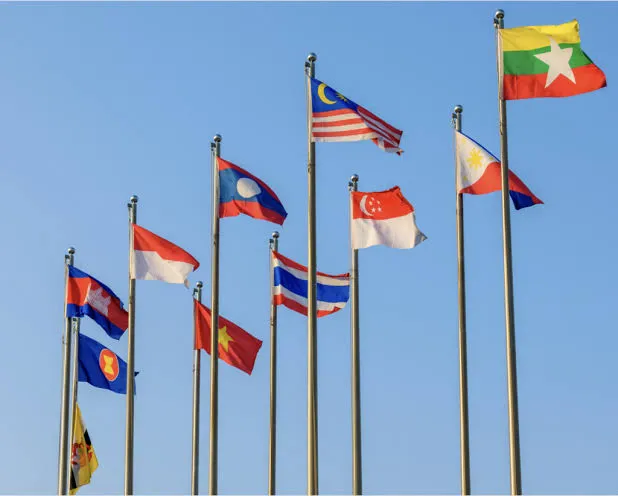
photo: getty images
Within ASEAN, Hanoi can continue to advocate an effective and substantive Code of Conduct in the South China Sea and work to maintain unity among member states. Its ability to hold dialogue with Washington, Beijing, Moscow, Tokyo and New Delhi gives it a useful role in supporting regional stability.
At the same time, Vietnam’s search for greater strategic flexibility extends beyond the Indo-Pacific. Strengthening relations with countries in the South Caucasus and Central Asia can help Hanoi diversify its markets, energy supplies, transport routes and diplomatic partnerships.
The elevation of Vietnam-Azerbaijan relations to a strategic partnership in May 2025 reflects this wider approach. The relationship combines established historical ties with economic opportunities that are becoming more important in a changing international environment.
Energy is one of the strongest foundations for cooperation. Azerbaijan has supplied crude oil to Vietnamese refineries for more than a decade. Disruptions affecting the Strait of Hormuz have highlighted the vulnerability of energy routes, making reliable suppliers outside the Gulf region increasingly valuable.
Azerbaijan also occupies a geographical position of interest to Vietnam. Located at the intersection of Europe and Asia, it offers connections to the Caspian region, Türkiye and European markets. Stronger ties with Baku can therefore support Hanoi’s efforts to broaden its economic presence across Eurasia.
The partnership builds on a long history. Relations between Vietnam and Azerbaijan date back to the Soviet period, when personal, educational and institutional connections were established. Azerbaijan’s national leader Heydar Aliyev was also a prominent figure in the history of Vietnam’s relations with the Soviet Union and its constituent republics.
Today, those historical links can support a more forward-looking partnership focused on practical cooperation.
One of the most promising areas is transport. Most Vietnamese exports to Europe travel by sea, but disruptions in the Red Sea and the Gulf have demonstrated the risks of relying heavily on established maritime routes.
The Middle Corridor could provide an additional option. It runs through China and Kazakhstan, crosses the Caspian Sea to Azerbaijan and continues through Georgia and Türkiye towards Europe. It also offers a route that bypasses Russia, a relevant consideration in the context of Western sanctions on Moscow.
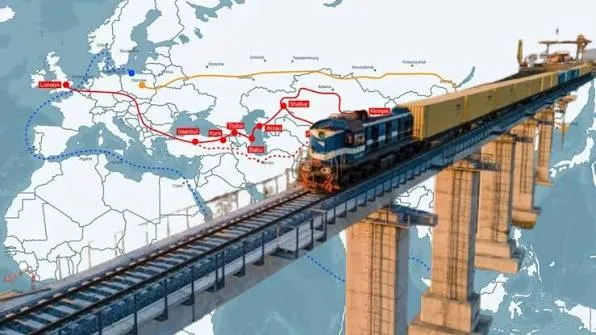
photo: Eurasianet
The corridor is unlikely to replace maritime shipping. Sea freight remains considerably cheaper for bulk cargo, and the overland route faces challenges, including differences in railway gauges, limited ferry capacity across the Caspian Sea and the need to transit through China.
Its greatest potential lies in providing an alternative for time-sensitive, higher-value goods such as electronics, components and certain agricultural products. Rail transport can be considerably faster than maritime routes that require ships to travel around Africa.
Azerbaijani figures point to rising interest in this connection: transit volumes involving Vietnam and passing through Azerbaijan increased by more than 200 per cent in 2025 and approximately 600 per cent in the first nine months of 2026. Although the increases came from a relatively low base, they suggest that businesses are beginning to explore the route.
To sustain this growth, the countries along the corridor will need to improve customs coordination, simplify documentation and establish reliable scheduled rail services. Logistics hubs in Azerbaijan or Kazakhstan could also make the route more accessible to Vietnamese companies.
Vietnam’s interest in the South Caucasus and Central Asia is part of its wider engagement with the Global South. Hanoi sees opportunities for cooperation among developing economies without treating the Global South as a bloc opposed to the West.
These relationships can create new markets and support cooperation on food, energy, international law and development finance. They can also give developing countries a stronger voice in discussions about the rules and institutions that shape the global economy.
Central Asia and the South Caucasus have advantages in this regard. Azerbaijan and Kazakhstan are energy producers, while Kazakhstan’s position as the world’s largest uranium producer could become relevant as Vietnam revives its nuclear power plans. Both regions also offer markets for Vietnamese food products, consumer goods and electronics.
For Vietnam and Azerbaijan, the task now is to translate political goodwill and shared interests into projects that produce measurable results. More reliable transport links, deeper energy cooperation and stronger business connections would give substance to their strategic partnership.
As the international order becomes more competitive, partnerships of this kind can help countries expand their options, strengthen economic resilience and pursue their interests with greater independence.