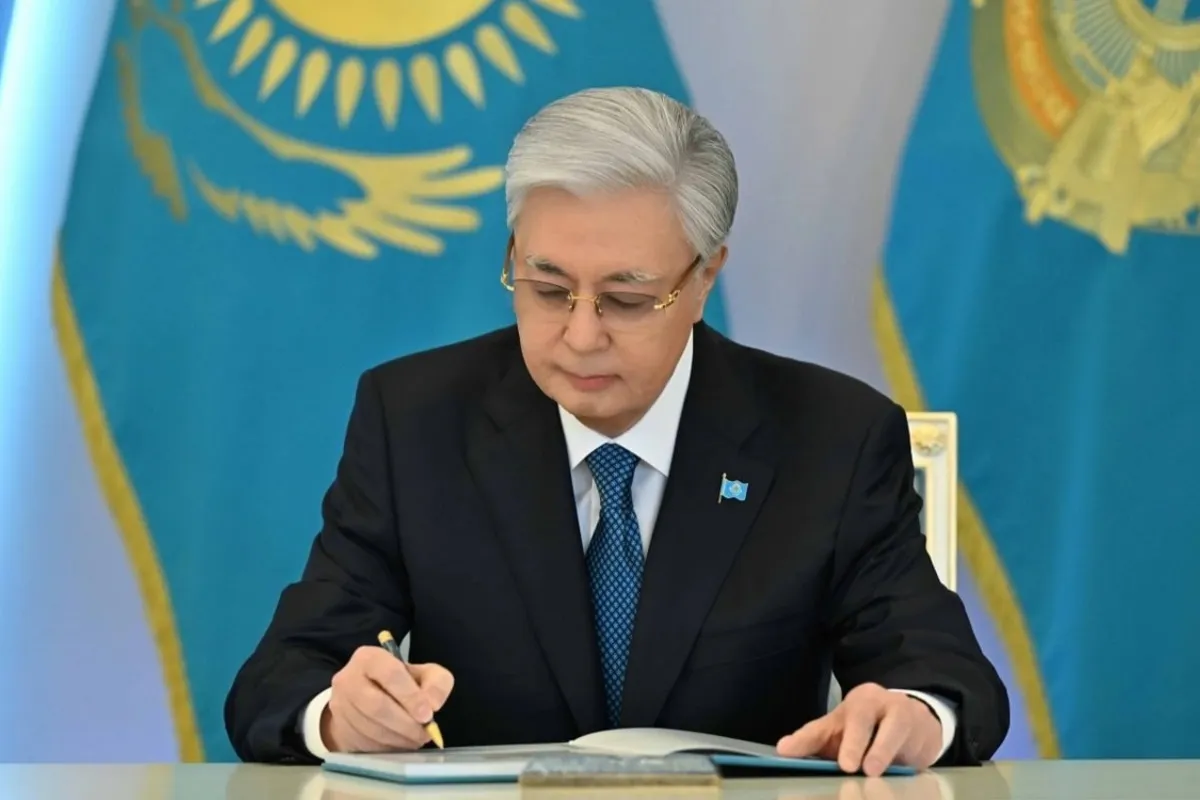
Kazakhstan is taking another step toward defining its long-term development priorities. President Kassym-Jomart Tokayev’s decision to establish an expert group on strategic development reflects a recognition that the country needs a clear vision of its future amid political, economic and technological change.
The new advisory body, headed by Vice President Erlan Karin, brings together representatives of government, parliament, business, academia and research institutions. Its task is to help shape strategic approaches and assess analytical, sociological and foresight studies.
The group’s creation is a timely initiative. But its ultimate value will depend on whether expert analysis can help turn ambitious national priorities into practical, measurable results.

photo: DKNews.kz
Learning from past strategies
Long-term planning is not new to Kazakhstan. The country adopted its Kazakhstan 2030 strategy in 1997, followed by Kazakhstan 2050 in 2012. Both set out ambitious goals for economic development, stronger institutions and a higher standard of living.
These strategies helped establish a sense of direction. At the same time, experience has shown that ambitious targets are easier to announce than to achieve. Economic diversification, reducing dependence on raw material exports and strengthening the effectiveness of state institutions remain long-term challenges.
The lesson is clear: a strategy cannot succeed through vision alone. It also needs realistic priorities, effective institutions and regular assessment of what has and has not worked.
For the new expert group, this creates an opportunity to examine previous development programmes honestly and identify the obstacles that have slowed progress. Such an assessment could help ensure that the next strategic document builds on experience rather than simply repeating familiar objectives.
From national projects to a long-term vision
In recent years, Kazakhstan has placed considerable emphasis on concrete national projects, including the modernisation of energy and utilities infrastructure.
The People’s Construction initiative is another example of this practical approach. The programme envisages investment in infrastructure across the country, including roads, schools, hospitals and other facilities, with 2027 designated as a year of nationwide construction.
These projects have the potential to deliver benefits that citizens can see in their everyday lives. Better roads can connect regions and businesses, while modern schools, hospitals and utility networks can improve access to essential services.
Yet their impact will depend on more than the number of facilities built. The quality of construction, the efficient use of public funds and the long-term maintenance of infrastructure will be just as important.
The challenge for Kazakhstan is to connect individual projects to a broader development vision. Infrastructure investment should support economic diversification, create opportunities for businesses and help reduce disparities between regions.

photo: getty images
The importance of independent expertise
The new group’s composition brings together a range of professional perspectives. Sociologists, political analysts, business representatives and researchers can each contribute a different understanding of the challenges facing the country.
That diversity will matter most if it encourages open discussion. Strategic planning benefits from experts who can identify difficult problems, question assumptions and offer policymakers different options.
Sociological research has a particularly important role to play. National development priorities should reflect not only economic indicators, but also the concerns and expectations of citizens in different parts of the country.
For that reason, public consultation and a willingness to listen to independent views could strengthen the group’s work. A strategy is more likely to earn public confidence when people understand its objectives and see how it responds to their needs.
A test for Kazakhstan’s institutions
The new body also recalls Kazakhstan’s National Council of Public Trust, which operated from 2019 to 2022. Discussions within that platform contributed to proposals for political reforms, including direct elections of rural akims and a lower parliamentary threshold for political parties.
That experience shows that expert and public discussions can influence policy when there is a mechanism for turning proposals into decisions.
The same principle applies to the new strategic development group. Clear recommendations, measurable targets and regular public reporting would help demonstrate how its work contributes to government policy.
Kazakhstan’s new constitutional framework and changing economic priorities make long-term thinking especially important. The opportunity now is to combine that vision with practical implementation-and to ensure that the country’s strategic ambitions lead to improvements that citizens can see and feel.