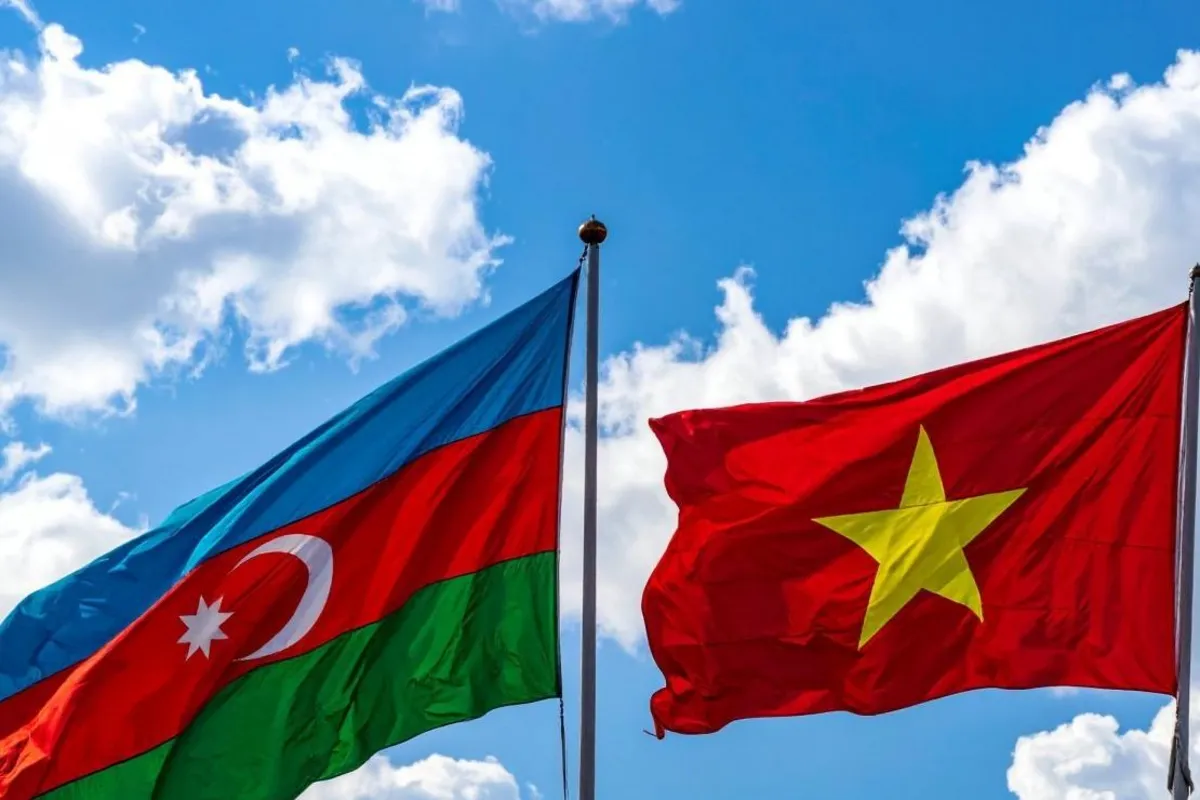
Azerbaijan’s expanding engagement with Vietnam reflects a broader shift in the geography of its economic diplomacy. As global supply chains evolve and trade routes come under growing pressure, Baku is strengthening ties with economies that can offer new markets, investment and transport opportunities.
President Ilham Aliyev’s official visit to Vietnam on November 20-21 brought this strategy into focus. His talks in Hanoi built on the strategic partnership established during Vietnamese leader To Lam’s visit to Baku in May 2025. The latest joint statement identified energy, trade, investment, industrial cooperation, transport and education among the priorities for the next stage of relations.
The choice of Vietnam is significant. For Azerbaijan, the Southeast Asian nation represents a consumer market of more than 100 million people, a major manufacturing economy and a potential source of cargo for the Middle Corridor. For Vietnam, Azerbaijan offers an energy partner, investment opportunities and a connection to the South Caucasus and wider Eurasia.
The central question is how the two countries can turn political trust and historical ties into projects that produce sustained commercial results.
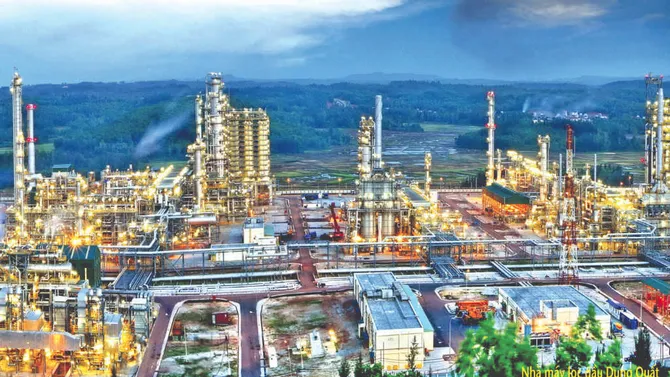
photo: getty images
From historical friendship to strategic partnership
The relationship between Azerbaijan and Vietnam has a foundation that few partnerships between geographically distant countries can claim.
During the Soviet period, Azerbaijan played an important role in training Vietnamese specialists, particularly in oil and gas. Generations of Vietnamese students studied in Baku, while Azerbaijani expertise contributed to the development of Vietnam’s energy sector.
These ties left a legacy of professional connections and personal relationships. According to President Aliyev, around 5,000 Vietnamese citizens studied in Azerbaijan during the Soviet era. For both countries, that history remains a source of goodwill and a platform for renewed educational and technical cooperation.
Today, however, the relationship is acquiring a different economic dimension. Azerbaijan has developed its position as an energy producer and transport hub at the crossroads of Europe and Asia. Vietnam has emerged as one of Southeast Asia’s leading export-oriented manufacturing economies.
The strategic partnership established in 2025 provides a political framework for bringing these strengths together. The November 2026 talks in Hanoi gave that framework a more detailed agenda, including cooperation in oil and gas, renewable energy, mining, aluminium, agriculture and transport.
The challenge now is to ensure that the relationship produces a steady flow of investment, trade and business partnerships.
Why Vietnam matters to Azerbaijan
Vietnam’s appeal begins with the scale of its economy.
Its average population reached approximately 102.3 million in 2025. More importantly for foreign partners, it has become deeply integrated into international production networks. Vietnam’s total foreign trade reached approximately $930 billion in 2025, including about $475 billion in exports. Electronics, machinery, phones, garments and footwear were among its major export categories.
These figures show why Baku sees Vietnam as more than a distant consumer market. It is also a gateway to industrial supply chains that connect Southeast Asia with China, Europe, North America and other regions.
For Azerbaijani businesses, access to Vietnam could create opportunities in several directions: selling raw materials and food products, supplying energy, attracting Vietnamese capital and providing logistics services for Vietnamese goods.
Vietnam’s development model is also relevant to Azerbaijan’s own economic priorities. The country has combined an export-oriented industrial strategy with foreign investment, manufacturing infrastructure and participation in global supply chains.
This does not mean that Vietnam’s experience can simply be replicated in Azerbaijan. The two economies differ in size, location and industrial structure. But Vietnamese experience in industrial zones, attracting manufacturers and developing export networks could offer useful lessons for Azerbaijan as it seeks to expand its non-oil economy.
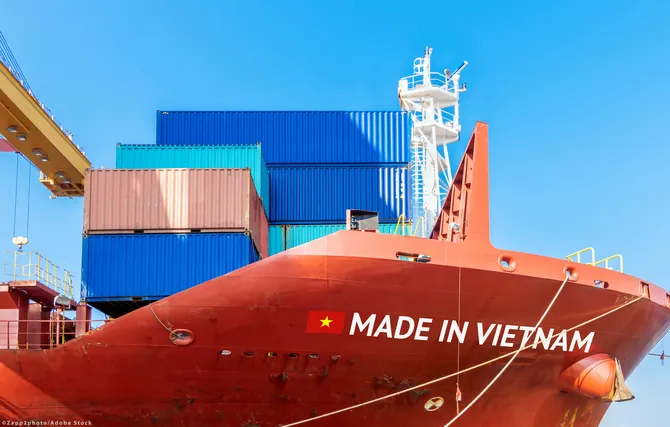
photo: getty images
Trade remains far below the potential
Despite the positive political relationship, the current scale of bilateral trade reveals how much work remains.
According to figures cited from Azerbaijan’s State Customs Committee, trade turnover with Vietnam stood at approximately $153.4 million in 2025. This was lower than the approximately $223.9 million recorded in 2024, reflecting the volatility that has long characterised bilateral trade.
The latest available figures also reveal a substantial imbalance. According to Azerbaijan’s Ministry of Economy, bilateral trade reached $136.2 million in January-September 2026. Of that amount, approximately $134.9 million represented Azerbaijani imports from Vietnam, while Azerbaijani exports to Vietnam accounted for around $1.3 million.
These figures suggest that Vietnamese products already have an established presence in the Azerbaijani market. By contrast, Azerbaijani exporters have yet to build a similarly strong position in Vietnam.
The value of trade has also been affected by fluctuations in oil sales. In 2025, President Aliyev observed that bilateral turnover tended to rise when Azerbaijani oil sales to Vietnam increased and fall when they declined. He called for a more balanced relationship that would be less dependent on a single sector.
A long-term ambition of bringing bilateral trade to $1 billion has been discussed in the past. Reaching that level would require trade to grow more than sixfold from its 2025 level. It would also require sustained sales across several sectors, rather than relying on a small number of large energy transactions. The November 2026 joint statement did not establish a specific deadline for such a target.
Oil and gas: an established foundation
Energy remains the most established pillar of Azerbaijani-Vietnamese economic relations.
In October 2026, Azerbaijan’s Ministry of Energy reported that more than 1.1 million tonnes of crude oil had been supplied to Vietnam since 2023. The two sides have discussed further supplies to Vietnamese refineries, as well as cooperation between SOCAR and PetroVietnam in exploration, production, refining, petrochemicals and technical services.
For Vietnam, Azerbaijan is a potential source of supply diversification at a time when energy security remains important to its industrial growth. For Baku, Vietnam offers access to a large refining market and an opportunity to deepen commercial relations with one of Southeast Asia’s major economies.
The November joint statement called for the two sides to continue considering long-term arrangements for crude oil and liquefied natural gas supplies. This represents an area for further negotiation; it should not be understood as a concluded long-term supply contract.
A broader energy partnership could also extend beyond buying and selling crude. Joint work on oilfield services, professional training, digital technologies and more efficient production would allow both countries to draw on their existing expertise.
There is an important statistical distinction, however. The multi-year oil supply figure, annual customs trade data and transit freight figures refer to different periods and types of activity. They should therefore be assessed separately rather than combined into a single measure of bilateral trade.
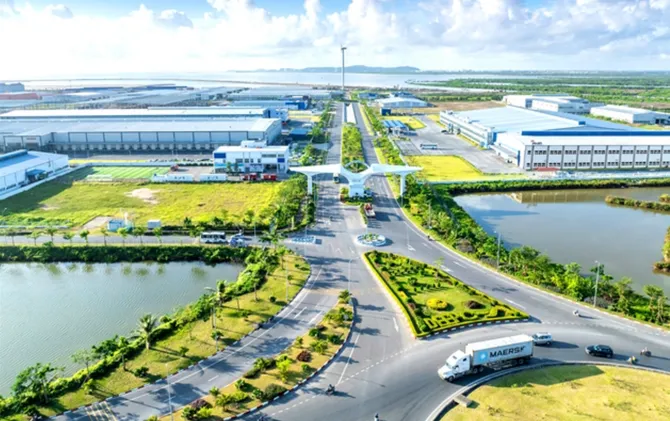
photo: getty images
The search for non-oil exports
For Azerbaijan, the most important economic question is whether the relationship can support a lasting increase in non-oil exports.
Vietnam’s industrial base creates potential demand for chemical products, polymers, fertilisers and other industrial inputs. Azerbaijani producers could explore opportunities to supply products such as polyethylene, polypropylene, urea and methanol to Vietnamese buyers in packaging, manufacturing and agriculture.
But the existence of demand does not automatically guarantee access. Azerbaijani producers would need to compete on price, transport costs, product specifications and the reliability of supply. Vietnamese buyers may already have established regional suppliers, making commercial relationships and distribution networks particularly important.
Industrial cooperation could also develop in mining and aluminium. The joint statement adopted in Hanoi specifically identified these sectors as areas of mutual interest.
Rather than assuming a fixed value for future exports, the more practical approach would be to identify individual projects: exchanges of technical expertise, processing opportunities, equipment supply or investment partnerships. Their viability would depend on costs, energy availability, environmental standards and access to customers.
Agricultural and processed food products offer another possible avenue. Azerbaijani hazelnuts, pomegranate juice, fruit concentrates, dried fruit and mineral water could be introduced to Vietnamese importers and retailers, particularly in major urban markets.
Success would require more than simply presenting products at trade fairs. Producers would need to understand Vietnamese consumer preferences, meet food safety and labelling requirements, and work with local distributors.
For some products, the most realistic first step may be a modest premium market rather than large-volume sales. Establishing a presence and maintaining consistent quality could then create the conditions for gradual expansion.
What Vietnam can gain from Azerbaijan
Vietnam’s interest in Azerbaijan is equally practical.
Vietnamese-made electronics, household appliances, footwear, textiles, coffee and food products already have a place in the Azerbaijani market. Many products manufactured in Vietnam are sold under international brands, making the country an important part of the supply chains serving Azerbaijani consumers.
Closer cooperation could help Azerbaijani importers establish more direct relationships with Vietnamese manufacturers and distributors. Depending on contracts, volumes and transport costs, this could improve supply reliability and create more competitive purchasing options.
Lower prices, however, cannot be assumed. Much will depend on the structure of global brands’ distribution networks, customs costs, logistics and the scale of orders.
Vietnamese businesses may also see opportunities in construction, renewable energy, manufacturing and logistics in Azerbaijan. A presence in the country could give companies greater familiarity with markets across the South Caucasus and the Caspian region.
The Alat Free Economic Zone is one possible location for exploring such projects. Its potential attraction lies in combining industrial and logistics facilities with access to regional transport routes. Any decision to establish a production or distribution operation there would nevertheless depend on actual market demand, the applicable legal framework and the commercial terms available to investors.
Azerbaijan’s domestic market is smaller than Vietnam’s, so the strongest case for a Vietnamese investor may rest on a combination of Azerbaijani demand and access to neighbouring markets.
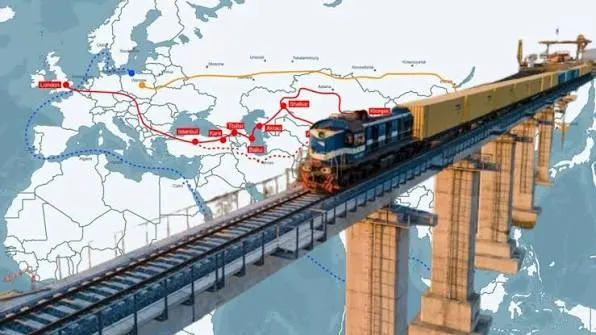
photo: getty images
The Middle Corridor: a strategic opportunity with practical limits
Transport is one of the most strategically significant dimensions of the partnership.
The Middle Corridor connects China and Central Asia with Azerbaijan across the Caspian Sea, continuing through Georgia towards Türkiye and European markets. For Vietnamese exporters, it could offer an additional route to Eurasian customers, subject to suitable connections through China and the availability of reliable services.
Azerbaijan has invested in ports, railways and logistics infrastructure to strengthen its role along this route. Greater Vietnamese participation could bring new cargo flows to the corridor while giving Vietnamese companies another option for reaching markets in Central Asia, the South Caucasus and Europe.
There are early signs of interest. President Aliyev said that Vietnam-related transit freight through Azerbaijan exceeded 8,000 tonnes in the first nine months of 2026, nearly six times the volume recorded in the same period of 2025. The increase is notable, although it comes from a relatively low base.
The corridor’s commercial appeal will depend on more than geography. Cargo owners need predictable delivery times, competitive prices, available rail and ferry capacity, coordinated border procedures and clear responsibility for shipments across several countries.
For many Vietnamese exporters, maritime shipping will remain the most practical choice, particularly for large volumes of goods where transport cost is more important than speed. The Middle Corridor may be especially relevant for selected cargoes whose owners value route diversification, delivery reliability or faster movement.
A World Bank assessment published in 2026 highlighted both the corridor’s potential and its constraints. It estimated that countries along the route would need substantial investment in infrastructure and associated logistics systems through 2040, alongside better cross-border coordination. These are regional requirements, not costs for Azerbaijan alone.
For Baku, the opportunity is therefore not simply to encourage more freight to cross its territory. It is to develop services around that freight: warehousing, customs support, cargo handling, insurance, distribution and industrial processing. These activities would allow Azerbaijan to capture a larger share of the economic value created by the route.
Renewable energy: a new direction for investment
The partnership’s renewable energy agenda provides one of the clearest examples of how cooperation is beginning to move beyond traditional oil and gas ties.
During the Hanoi visit, Azerbaijan’s Ministry of Energy and Vietnam’s ROX Group exchanged an implementation agreement covering the assessment, development and implementation of a solar power project and a wind power project in Azerbaijan.
The agreement followed a memorandum signed in September 2026 to examine a potential 600-megawatt onshore wind project in Azerbaijan and a 200-megawatt solar project in the Nakhchivan Autonomous Republic.
According to the Energy Ministry, the earlier memorandum envisaged feasibility studies and assessments of grid capacity and electricity integration. The projects remain subject to further development; the agreements should not be interpreted as proof that construction has started or that all financing has been secured.
For Azerbaijan, the attraction is clear: foreign investment can support the expansion of renewable generation, diversify the energy mix and contribute to longer-term electricity export ambitions.
For Vietnamese investors, the projects offer an opportunity to enter a market with substantial renewable resources and to develop a presence in a region where demand for energy infrastructure is growing.
The eventual outcome will depend on technical studies, financing, grid connections, commercial terms and access to customers. Progress on those issues will be a stronger measure of success than the value of announcements alone.
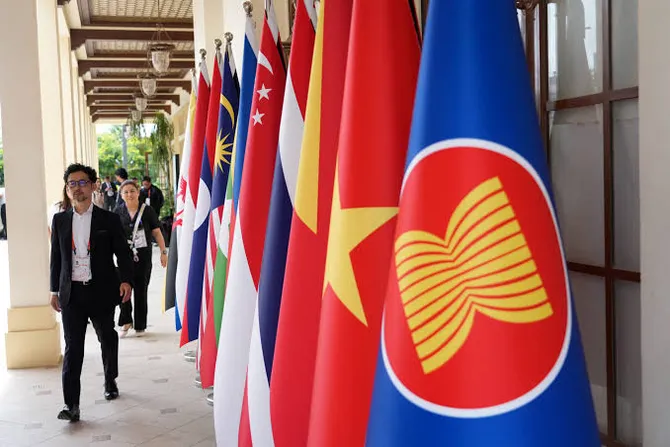
photo: Atlantic Council
Vietnam as a bridge to Southeast Asia
Baku’s interest in Vietnam also has a wider diplomatic dimension.
Vietnam is an influential member of the Association of Southeast Asian Nations, or ASEAN. Stronger relations with Hanoi can help Azerbaijan improve its understanding of the region and develop contacts with businesses and governments across Southeast Asia.
The joint statement adopted in Hanoi explicitly referred to expanding engagement between Azerbaijan, ASEAN and its member states. This does not mean that a partnership with Vietnam automatically opens every ASEAN market, where each country has its own regulations and commercial conditions. It does, however, provide Azerbaijan with an experienced regional partner and a stronger platform for dialogue.
The relationship also fits Azerbaijan’s wider approach to foreign policy, which seeks to maintain working ties with partners across different regions. Expanding cooperation with Southeast Asia adds another dimension to Baku’s established relations with European, Central Asian and Middle Eastern partners.
Vietnam has its own reasons to value diversified partnerships. Its economy relies heavily on international trade and investment, giving Hanoi an interest in stable access to markets, energy supplies and transport routes.
This creates room for practical cooperation between two countries that operate in different regions but share an interest in economic connectivity and broader international engagement.
Flights, education and business contacts
Physical distance remains a significant obstacle to closer Azerbaijani-Vietnamese relations.
Travel usually requires connections through third countries, while limited familiarity with each other’s markets can make it harder for companies to identify partners. Direct contacts between businesses, universities and professional organisations are therefore essential.
In their joint statement, the two sides agreed to encourage aviation authorities and airlines to accelerate work on direct flights. Such services could support tourism, business travel and people-to-people contacts, although their launch would depend on demand and commercial decisions by carriers.
There is also an opportunity to build on the history of Vietnamese students in Azerbaijan. Joint training programmes in energy, engineering, logistics and information technology could create a new generation of specialists familiar with both countries.
During talks with President Aliyev, Vietnamese Prime Minister Le Minh Hung said that Vietnam planned to open an embassy in Azerbaijan. If implemented, this would provide another institutional channel for supporting diplomatic, cultural and business contacts.
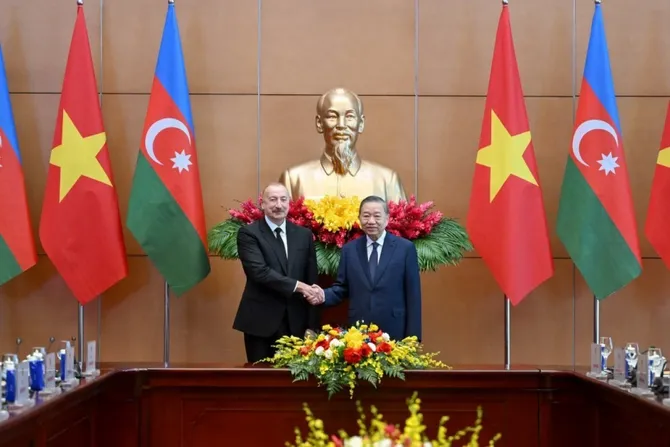
Photo: AZERTAC
The test: turning political will into measurable results
Azerbaijan and Vietnam already have many of the elements needed for a stronger partnership: political dialogue, historical goodwill, experience in energy cooperation and complementary economic interests.
What remains is to connect these advantages to the needs of businesses.
That means identifying Vietnamese buyers for Azerbaijani products, helping exporters understand regulations, developing reliable logistics services and giving investors clear information about commercial opportunities.
It also means assessing projects individually. Not every proposed export product will be competitive, and not every transport route will suit every shipment. Renewable energy projects will require financing and technical work before their contribution can be measured.
Over the coming years, the relationship can be judged by a series of practical indicators: growth in Azerbaijani non-oil exports to Vietnam, the number and value of operating investment projects, the volume and reliability of transit shipments, and the expansion of direct contacts between companies and institutions.
President Aliyev’s visit to Hanoi has given renewed political momentum to this agenda. If that momentum is translated into contracts, investment and sustained commercial links, Vietnam could become an increasingly important partner in Azerbaijan’s engagement with Asia.
For Hanoi, a stronger relationship with Baku offers an established energy connection and a potential foothold in a strategically located Eurasian market. For Azerbaijan, it offers access to a major Southeast Asian economy and new possibilities for trade, investment and connectivity.
The next stage will determine how much of that potential can be turned into durable economic cooperation.