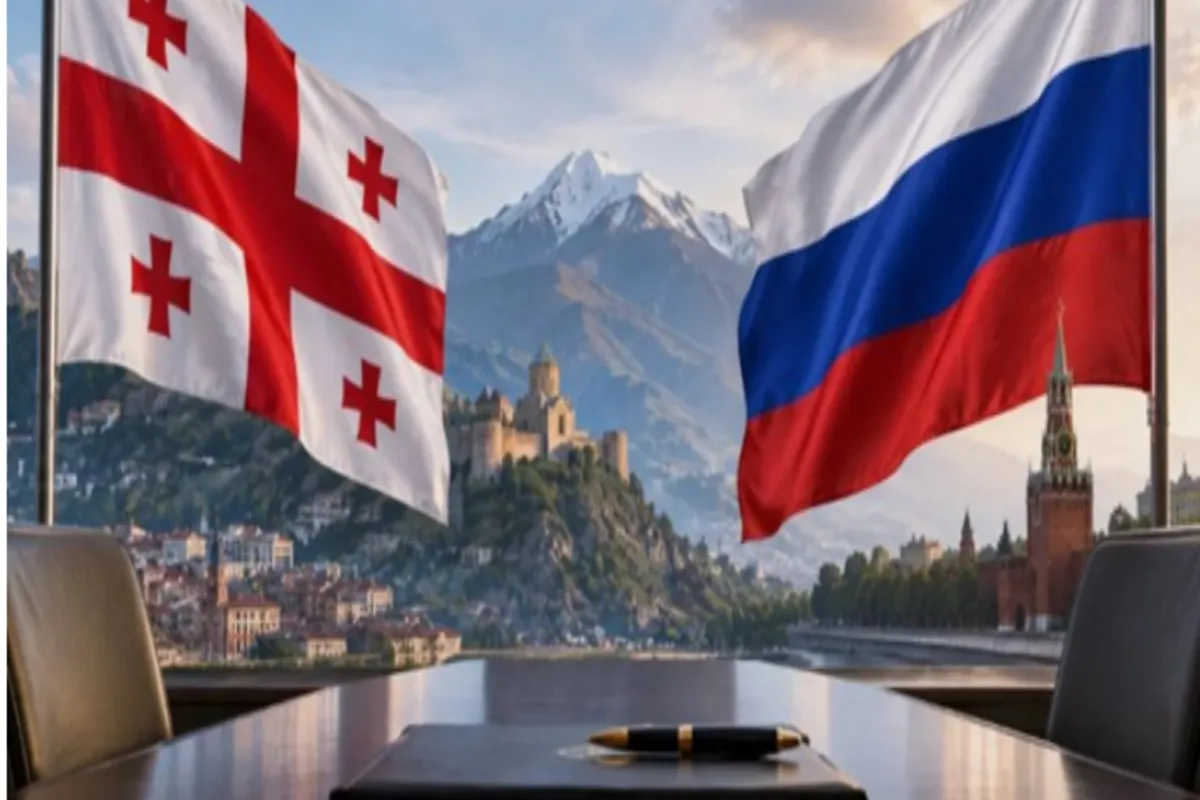
The resumption of direct dialogue between Georgia and Russia has raised questions about the prospects for normalizing bilateral relations and its potential implications for the South Caucasus. Representatives of the two countries met in Minsk on November 19, despite the absence of diplomatic relations since 2008.
On November 25, Georgia’s new representative for relations with Russia addressed the renewed dialogue, including security issues. While trade, tourism and economic cooperation remain important components of bilateral engagement, the unresolved status of Abkhazia and South Ossetia continues to complicate relations. The question remains whether this dialogue represents crisis management or a broader political rapprochement.
Russian political scientist and expert on interethnic conflicts and security affairs Yevgeny Mikhailov, speaking in an interview with The Caspian Post, said Moscow had long been interested in restoring direct dialogue with Tbilisi.
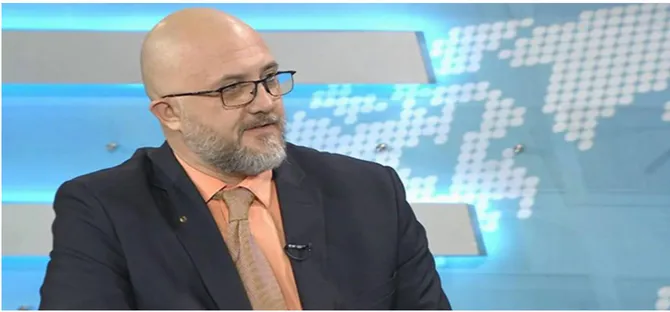
photo: Oxu.az
According to the political scientist, the current intensification of dialogue should be viewed in the context of increasing pressure from the European Union and NATO, as well as Russia’s desire to preserve its strategic influence in the South Caucasus. “Undoubtedly, Moscow has long been interested in resuming direct dialogue with Tbilisi. What we are witnessing now is, of course, increasing pressure from the EU and NATO on various fronts, while Moscow is interested in preserving its strategic influence in the South Caucasus. It is precisely within this context that dialogue with Tbilisi is being developed,” Mikhailov said.
The expert believes that the Georgian authorities have demonstrated a considerable degree of independence in their foreign policy decisions, particularly regarding Western pressure to join anti-Russian sanctions.
“In my opinion, Tbilisi is relatively independent in its decision-making. For a long time, it has resisted, and continues to resist, Western pressure aimed at bringing Georgia into the anti-Russian sanctions regime and turning it against Moscow. Russia views this position very positively, and it creates opportunities for developing dialogue,” he explained.
Mikhailov also emphasized that economic cooperation between the two countries had continued to develop despite the absence of formal diplomatic relations.
“Trade has continued despite the lack of diplomatic relations and is expanding relatively rapidly. Russian tourists travel to Georgia without visas, while Georgian citizens can now also visit Russia without visas. I believe this is the right approach,” the political scientist noted.
Security and Economic Cooperation as Priorities
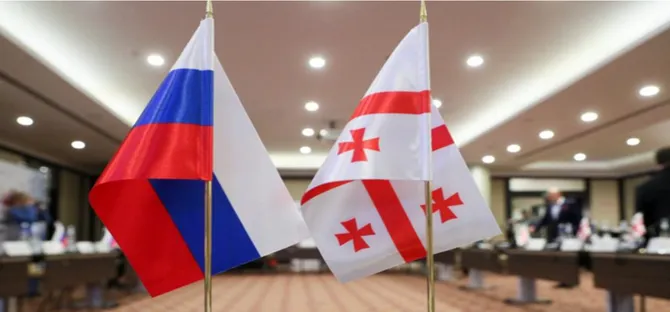
Photo: Georgia.ge
According to Mikhailov, mutual security and economic cooperation constitute the principal priorities for both Moscow and Tbilisi.
The Russian expert suggested that Georgia could potentially obtain certain assurances from Moscow and that Russia might support the Georgian leadership on specific issues.
“In fact, judging by the position of the Georgian authorities, Russia already supports that position. We are also accommodating Georgia through the expansion of trade dialogue and economic cooperation,” he said.
Mikhailov argued that Georgia had derived considerable benefits from its decision not to align itself with countries pursuing policies that he described as anti-Russian.
“We have a shared historical past, and I believe we have a good future in this respect. Regional security is also extremely important. However, there are numerous difficult issues between the two countries, particularly given that Georgia considers South Ossetia and Abkhazia part of its territory, while these regions have long pursued their own priorities,” he stated.
The political scientist also referred to previous remarks by a Georgian prime minister concerning the circumstances surrounding the 2008 conflict.
According to Mikhailov, such statements demonstrate a willingness among Georgian authorities to acknowledge what he considers mistakes made by the administration of former Georgian President Mikheil Saakashvili.
Is the Restoration of Diplomatic Relations Possible?
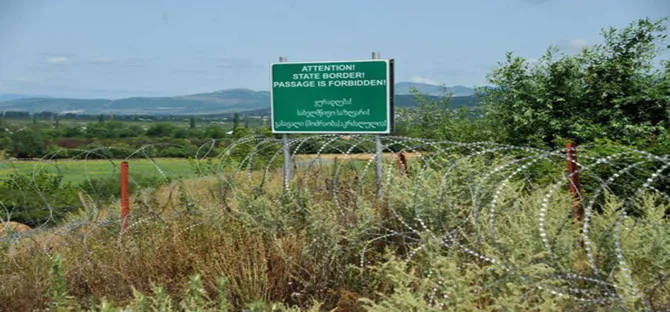
Photo: Georgia.ge
Assessing the prospects for comprehensive normalization, Mikhailov expressed confidence that Moscow was prepared to restore full-fledged relations with Tbilisi, including diplomatic ties.
However, he identified the status of Abkhazia and South Ossetia as the principal obstacle to achieving that objective.
“I am convinced that Moscow is ready to normalize full-fledged relations with Tbilisi, including, of course, the restoration of diplomatic relations. The main obstacle is South Ossetia and Abkhazia. If Moscow’s positions and proposals on these issues become more acceptable to Tbilisi and dialogue is established, this will certainly bring the restoration of diplomatic relations closer,” he said.
The expert did not rule out the possibility of economic cooperation between Georgia and the two regions as an intermediate mechanism for addressing existing disagreements.
According to him, potential economic partnerships could create opportunities for further engagement and contribute to the development of relations in the longer term.
Mikhailov believes that the continuation of meetings between Russian and Georgian representatives in third countries indicates that both sides are interested in maintaining communication.
“Otherwise, there would be no meetings between representatives of Moscow and Georgia on neutral territory, and there would be no dialogue. As this process continues and gradually intensifies, both Georgia and Russia understand the destructive consequences of current global developments. Through dialogue based on the previously established norms of international law, it is always possible to reach an agreement and find consensus,” he emphasized.
The Russian political scientist noted that even countries with long histories of direct hostility had eventually entered peace negotiations.
He characterized the 2008 Russian-Georgian war as a relatively limited conflict and placed responsibility for the confrontation on Saakashvili, whom he described as a US-backed political figure.
Mikhailov also drew parallels between Saakashvili and Ukrainian President Volodymyr Zelenskyy, arguing that the former Georgian president had made a number of decisions with tragic consequences for the Georgian people.
According to the expert, Georgia’s current leadership is attempting to address the consequences of those decisions, including through renewed engagement with Moscow.
Implications for the South Caucasus and the 3+3 Format
Mikhailov believes that closer Russian-Georgian relations could also have implications for regional cooperation mechanisms, particularly the 3+3 platform.
The format envisages cooperation between Azerbaijan, Armenia and Georgia, alongside Russia, Türkiye and Iran.
“The 3+3 format was proposed a long time ago, with Georgia envisaged as a full-fledged participant in dialogue among the South Caucasus countries and their regional neighbors. I believe that strengthening Russian-Georgian dialogue could potentially bring this format closer to becoming fully operational,” he said.
According to the political scientist, establishing good-neighborly relations with South Caucasus countries is a matter of national security for Russia.
Mikhailov contrasted Georgia’s current foreign policy with Armenia’s growing engagement with Western countries.
“In my view, Georgia, which at one point was effectively a NATO outpost, has become a relatively self-reliant republic pursuing its own national interests and skillfully maneuvering between the interests of global powers,” he stated.
By contrast, the expert argued that Armenia had become increasingly dependent on Western countries, which, in his assessment, seek to use the country as a platform for destabilizing the region.
Mikhailov believes that Azerbaijan and Türkiye are important factors limiting the risks of regional destabilization, although he acknowledged that external pressure on Ankara could influence future developments.
The political scientist also highlighted Azerbaijan’s commitment to maintaining stable relations with Russia.
“Azerbaijan has long demonstrated its commitment to stable relations with the Russian Federation. Yes, there was a brief period of cooler relations, but dialogue has now been fully restored,” he noted.
According to Mikhailov, Baku seeks to protect its national interests without undermining Russia’s interests, while Moscow pursues a similar approach toward Azerbaijan.
He added that Azerbaijan’s cooperation with Georgia, Russia’s engagement with Tbilisi and the emergence of new transport and energy flows could provide a foundation for broader regional understanding.
“Against this background, I believe we can always reach an agreement. It is precisely in this context that Russian-Georgian dialogue is of considerable importance to Moscow’s policy in the South Caucasus,” Mikhailov concluded.
A Renewed Dialogue Rather Than an Entirely New Process
Georgian political scientist Gela Vasadze offered a different assessment of the renewed engagement between Tbilisi and Moscow in an interview with The Caspian Post.
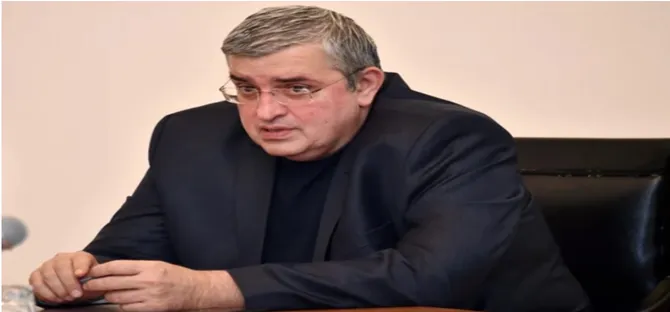
photo: The Caspian Post
According to Vasadze, the dialogue itself is not new, as the Abashidze-Karasin format has operated since 2012, with its previous round taking place in December 2025.
However, the political scientist emphasized that the institutional level of engagement and the scope of the agenda had changed.
“What is new is the level and designation of the dialogue. Giorgi Zurabashvili is no longer simply the prime minister’s special representative. He is the first deputy minister of foreign affairs, meaning that a serving diplomat has taken a seat at the negotiating table. The meeting took place in Minsk, and security issues appeared on the agenda alongside trade and culture. As a result, an informal channel has effectively become official,” Vasadze explained.
Assessing the reasons behind the timing of the renewed engagement, the Georgian expert pointed to Tbilisi’s deteriorating relations with Western partners and the government’s desire to demonstrate that it retains room for diplomatic maneuver.
He also highlighted the economic factors influencing the Georgian government’s calculations.
“The Russian market, tourists, remittances and the Upper Lars border crossing are not abstract concepts for Georgian Dream. They are part of its electoral base,” he said.
However, Vasadze identified security concerns as another significant motivation behind Tbilisi’s willingness to maintain direct communication with Moscow.
“There is another motive that is rarely discussed openly - fear. Moscow today is aggressive and unpredictable, and Tbilisi understands perfectly well that Georgia, having distanced itself from its Western partners, is a much easier target for the Kremlin than it was previously,” the political scientist argued.
According to him, Georgian authorities are concerned that the country’s weakened relations with Western partners have reduced its ability to withstand potential Russian pressure.
Vasadze suggested that Moscow might be preparing tougher scenarios regarding Georgia, creating additional incentives for Tbilisi to maintain an open communication channel while opportunities for negotiation remain.
He also noted that the renewed dialogue complements the Georgian government’s domestic political narrative centered on preserving peace.
What Does Moscow Seek to Achieve?
From Vasadze’s perspective, Russia’s interests in maintaining direct communication with Georgia are closely connected to the ongoing war in Ukraine and Moscow’s broader geopolitical objectives.
“The war with Ukraine continues, and Russia needs a stable southern flank and functioning logistics. But the main objective lies elsewhere: the Kremlin wants to consolidate Georgia’s drift away from the West and make it irreversible,” he said.
The Georgian political scientist argued that each meeting contributes incrementally to legitimizing the existing political situation.
He also drew attention to Minsk as the venue for the renewed dialogue.
“We should not forget that Moscow has long wanted to relocate the Geneva International Discussions to Minsk. The choice of venue for the first meeting is a fairly transparent signal,” Vasadze noted.
Regarding the official agenda, the expert identified trade, tourism, transport and humanitarian relations as relatively predictable areas of cooperation.
Both sides, he said, are interested in expanding bilateral trade, while direct flights and visa-free travel for Georgian citizens already provide mechanisms for maintaining economic and societal contacts.
Security issues, however, remain substantially more complicated.
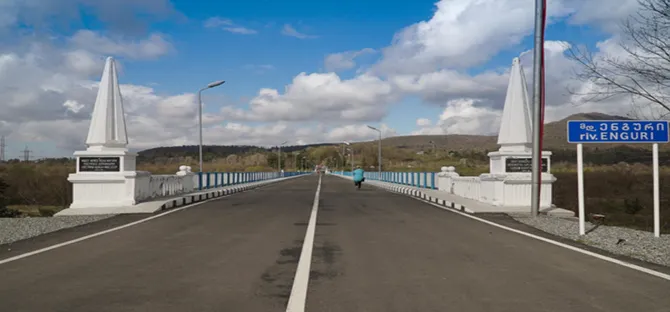
Photo: Georgia.ge
According to Vasadze, Moscow’s principal security-related demands have been known for years.
They include a legally binding agreement on the non-use of force between Georgia, on the one hand, and Abkhazia and South Ossetia, on the other, alongside proposals concerning border delimitation.
“For Tbilisi, this would amount to the de facto recognition of the occupied territories as parties to an international agreement,” he explained.
The Georgian political scientist emphasized that Tbilisi has its own set of priorities, including the occupation of its territories, the gradual process of what Georgia describes as borderization, detentions along the administrative boundary lines and the return of displaced persons.
Vasadze also highlighted the agreement on deepening allied cooperation signed between Russia and South Ossetia on May 9, 2026, as an additional source of tension.
“Officially, Tbilisi insists that Geneva remains the principal platform. We will see how long that position holds,” he said.
Assessing whether the Minsk meeting represents a crisis management mechanism or the beginning of comprehensive normalization, Vasadze argued that neither interpretation fully captures the current situation.
“Full normalization, with embassies and flags, is impossible as long as Russia recognizes the independence of Abkhazia and South Ossetia. No Georgian government would be able to cross that line and remain in power. This is understood both in Tbilisi and Moscow,” he stressed.
De Facto Normalization Without Diplomatic Recognition
Vasadze considers gradual practical normalization without the formal restoration of diplomatic relations to be the most realistic scenario.
“Trade grows, airplanes fly, officials meet, while the fundamental issues are postponed until later. It is, in effect, a friendship without embassies,” he said.
According to the Georgian expert, such an arrangement would be particularly advantageous for Moscow, as Russia could preserve the existing territorial situation while facing increasingly limited political costs.
Georgia, meanwhile, would benefit from tourism, access to the Russian market for its wine and mineral water, and the expectation that Moscow would refrain from exerting further pressure.
“Georgia receives tourists, a market for wine and mineral water, and the hope that the Kremlin will leave it alone for the time being. That is not much, considering that Moscow determines the agenda and the venue, while Tbilisi no longer has Western partners behind it on whom it can rely in negotiations,” Vasadze argued.
The political scientist emphasized that maintaining communication with neighboring countries is necessary, but the circumstances under which such negotiations are conducted are equally important.
“Dialogue with a neighbor is necessary. The question is from what position that dialogue is conducted. Today, Georgia’s position is weak,” he added.
How Could Brussels and Washington Respond?
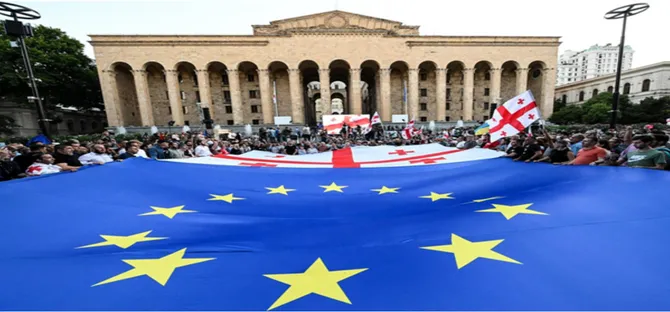
Photo: Georgia.ge
Vasadze believes that the renewed Russian-Georgian dialogue could further complicate Tbilisi’s relations with the European Union.
According to the expert, Brussels is likely to interpret the Minsk meeting as another indication of Georgia’s changing geopolitical orientation.
“For Brussels, this is another argument suggesting that Tbilisi is moving in a different direction, and Minsk as the venue speaks louder than any official statements,” he said.
The Georgian political scientist noted that the Association of Georgian Diplomats had already described the process as normalization on Russian terms.
He also argued that Georgia’s European integration course, enshrined in the country’s Constitution, was increasingly becoming declarative rather than substantive.
However, Vasadze suggested that Washington’s response could be more nuanced.
“The current US administration takes a pragmatic view of the world. For Washington, what Georgia does regarding transit routes and who ultimately controls its ports and communications infrastructure may be more important than whom Georgian officials are talking to,” he explained.
Nevertheless, the political scientist warned that American and Russian interests could intersect over regional transportation infrastructure.
According to Vasadze, Washington would not remain indifferent if closer Russian-Georgian relations began to affect strategically important transit corridors.
Azerbaijan, Armenia and the Future Regional Balance
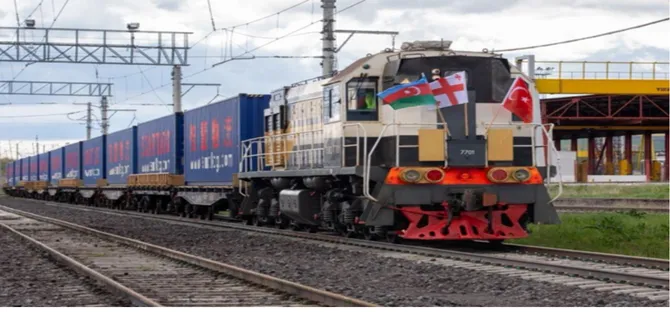
Photo: Georgia.ge
The broader regional implications of renewed Russian-Georgian engagement could extend beyond bilateral relations, particularly given Georgia’s strategic geographical position and its importance to international transport and energy corridors.
Vasadze believes that Russia’s approach toward Georgia should also be examined in the context of evolving relations between Azerbaijan and Armenia.
“Following the Washington agreements, Armenia and Azerbaijan are moving toward peace without Moscow and outside its mediation. Relations between Baku and Russia have experienced considerable cooling, while Yerevan is distancing itself from the Collective Security Treaty Organization,” he said.
According to the Georgian political scientist, Russia is losing influence in the South Caucasus, making Georgia increasingly important to Moscow’s efforts to demonstrate its continued regional relevance.
He emphasized that a stable Georgia serves the economic and strategic interests of both Azerbaijan and Armenia, particularly in terms of transit connectivity, the Middle Corridor and access to the Black Sea.
“If Russian-Georgian dialogue reduces the risk of escalation, that will be beneficial for everyone. However, if the transit country at the center of the region once again falls within Russia’s sphere of influence, the balance of power in the South Caucasus will shift, and not in favor of its neighbors,” Vasadze warned.
The expert cautioned against interpreting the Minsk meeting either as a diplomatic breakthrough or as an immediate geopolitical catastrophe.
“Minsk is neither a breakthrough nor a catastrophe. It is rather an attempt to test the waters. Where it will ultimately lead remains to be seen,” Vasadze concluded.
Between Pragmatic Engagement and Geopolitical Uncertainty
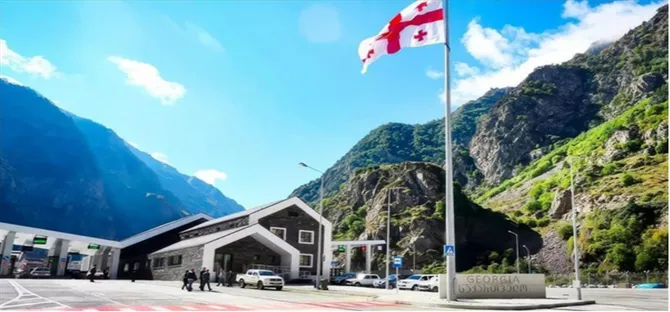
Photo: Georgia.ge
The contrasting assessments offered by the Russian and Georgian political scientists reflect fundamentally different interpretations of Moscow’s strategic objectives and Tbilisi’s motivations.
While Mikhailov views the renewed dialogue as an opportunity to strengthen regional security, expand economic cooperation and potentially restore diplomatic relations, Vasadze considers it a pragmatic but potentially asymmetric process that could increase Georgia’s geopolitical vulnerability.
Both perspectives, however, recognize the importance of economic relations, regional security and the unresolved status of Abkhazia and South Ossetia in determining the future of bilateral engagement.
For Azerbaijan, Armenia and other regional stakeholders, the consequences of Russian-Georgian rapprochement will depend largely on whether the process contributes to regional stability or becomes an instrument for expanding geopolitical influence.
For now, the Minsk meeting represents a renewed mechanism for direct communication rather than a definitive resolution of the political and territorial disagreements that have shaped Russian-Georgian relations since 2008.
Whether this mechanism evolves into meaningful normalization will depend on the substance of future negotiations, Georgia’s relations with its Western partners and Moscow’s willingness to address the fundamental disagreements between the two countries.