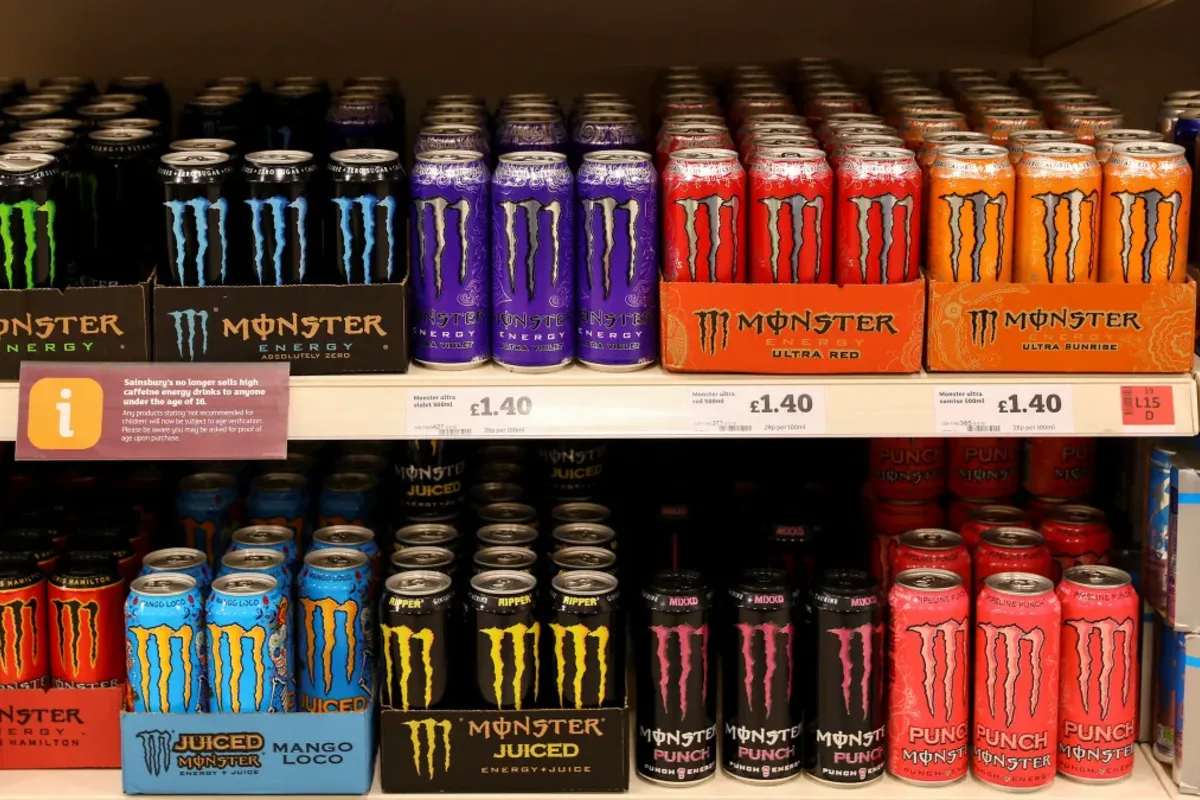
The president of Kyrgyzstan has ordered a review of a possible ban on the production and import of energy drinks. No final decision has been made. Meanwhile, neighbouring countries have taken different approaches, from age restrictions to product quality controls.
Energy drinks could face a ban in Kyrgyzstan after President Sadyr Japarov instructed the Cabinet of Ministers to consider prohibiting their production and import within one month, and to introduce appropriate regulatory measures within six months in accordance with the law.
The instruction was reported on November 5. A complete ban has not been introduced: the government has yet to examine the issue and determine what measures will be taken. (ru.kabar.kg)
The initiative has renewed a debate also relevant to other Central Asian countries: should energy drinks be removed from the market entirely, or would it be enough to restrict sales to minors and strengthen oversight of advertising and product ingredients?
Millions of Litres Consumed
Explaining the need to consider restrictions, Japarov referred to appeals from citizens and concerns about the effects of excessive energy drink consumption.
According to figures cited by the president, domestic consumption in Kyrgyzstan reached approximately 54.2 million litres in 2025. In the first half of 2026, consumption reached around 36.1 million litres.
The same data showed that approximately 25.3 million litres of energy drinks were produced domestically in 2025. Significant volumes were also imported, including from other members of the Eurasian Economic Union. (ru.kabar.kg)
The proposed measures could affect producers, importers and retailers. According to a preliminary estimate cited by the president, the state budget could lose around 1.5 billion soms in tax revenue. Japarov argued, however, that public health was more important than revenue from the industry.
The final economic impact will depend on which restrictions the authorities adopt and how they are implemented.
A Complete Ban or Age Restrictions?
While the government examines a possible ban on production and imports, another approach is being discussed in Kyrgyzstan: restricting access for children and teenagers.
On November 6, Jogorku Kenesh member Erulan Kokulov proposed banning the sale of energy drinks to people under 18. The draft legislation would cover shops, cafés, online platforms and delivery services, and introduce fines for violations.
For now, this is a proposed law, not a restriction that has entered into force. Advertising of energy drinks has already been restricted in Kyrgyzstan since 2023. (economist.kg)
Supporters of an age restriction argue that it would protect the most vulnerable group while allowing adults to decide whether to purchase the products. Supporters of a complete ban may argue that restrictions alone are insufficient if retailers fail to check customers’ ages.
In either case, enforcement will be crucial: a rule on paper does not guarantee that the products will disappear from shops or become inaccessible to teenagers.
Why Are Energy Drinks A Concern?
Energy drinks usually contain caffeine and may also include sugar and other stimulating substances. Their ingredients and caffeine content vary depending on the product and package size.
Caffeine can temporarily increase alertness, but excessive consumption may cause a rapid heartbeat, anxiety and sleep problems. The consumption of such drinks by children and teenagers is a particular concern.
Sugar content is another public health issue. The World Health Organization links excessive sugar consumption, including from sugary drinks, to obesity and other health problems. Energy drink formulations vary, however, and not all contain sugar. (www.who.int)
An assessment of the risks should consider a person’s age and health, as well as the drink’s ingredients and the amount consumed. The debate should be grounded in medical evidence and should not be reduced to the claim that every instance of energy drink consumption will necessarily cause serious illness.
What Are Other Central Asian Countries Doing?
Countries in the region have not adopted a single approach. Some have established age restrictions, while others are discussing new rules or regulating particular aspects of production and sales.
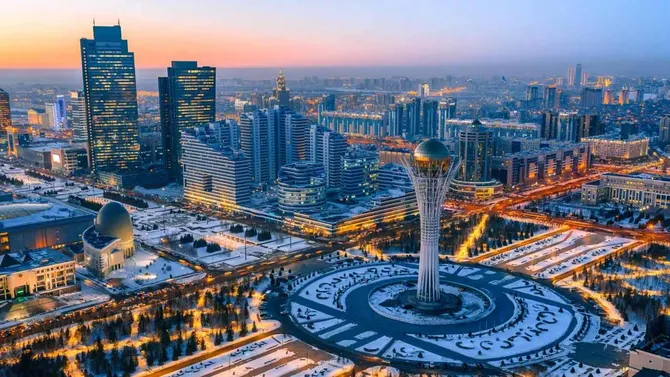
photo: getty images
Kazakhstan: Sales Prohibited to People Under 21
Since January 2025, Kazakhstan has prohibited the sale of energy drinks to anyone under the age of 21.
If a seller is uncertain about a customer’s age, they must request identification and refuse the sale if it is not provided. The law also prohibits sales through vending machines without a salesperson’s direct involvement.
Kazakhstan therefore applies an age restriction, rather than a complete ban on sales to all customers. (www.who.int)
Uzbekistan: Restrictions for Minors
Uzbekistan prohibits the sale of energy drinks to people under 18. The provision was introduced into legislation in 2019.
This is an age restriction rather than a complete ban on energy drinks for all consumers. (www.lex.uz)
Tajikistan: Sales and Quality Controls
Reports in Tajikistan citing the requirements of standards authorities point to restrictions on the sale of energy drinks to children and teenagers. However, the exact legal wording and applicable age limit require further verification against the current regulation. (asiaplus.news)
Official reporting indicates that there is no complete ban on domestic production. In February 2026, the state news agency Khovar reported that a Tajik energy drink producer had been inspected and that violations of production requirements had been identified. (khovar.tj)
photo: getty images
Turkmenistan: Further Confirmation Needed
Some publications claim that energy drinks are completely banned in Turkmenistan. However, a sufficiently reliable confirmation of a current legal measure could not be found, nor could the precise scope of any restriction on production, imports and sales be established.
It would therefore be premature to state that a comprehensive legal ban covers all of these activities without further verification. (hearings.ndbecology.gov.kz)
Which Approach Would Be More Effective?
The experience of neighbouring countries shows that Kyrgyzstan has several options. In addition to a complete ban on production and imports, these include age restrictions, advertising controls, labelling requirements, retail inspections and penalties for violations.
Each approach has supporters and raises questions about implementation. An age restriction could focus on protecting children, but it would require regular checks on retailers. A complete ban could reduce legal access more broadly, but it would also affect adult consumers, businesses and government revenue.
It is too early to say which model Kyrgyzstan will choose before the Cabinet makes its decision. The debate, however, extends beyond a single product: it concerns how governments should protect public health and where to draw the line between reducing risk and preserving consumer choice.