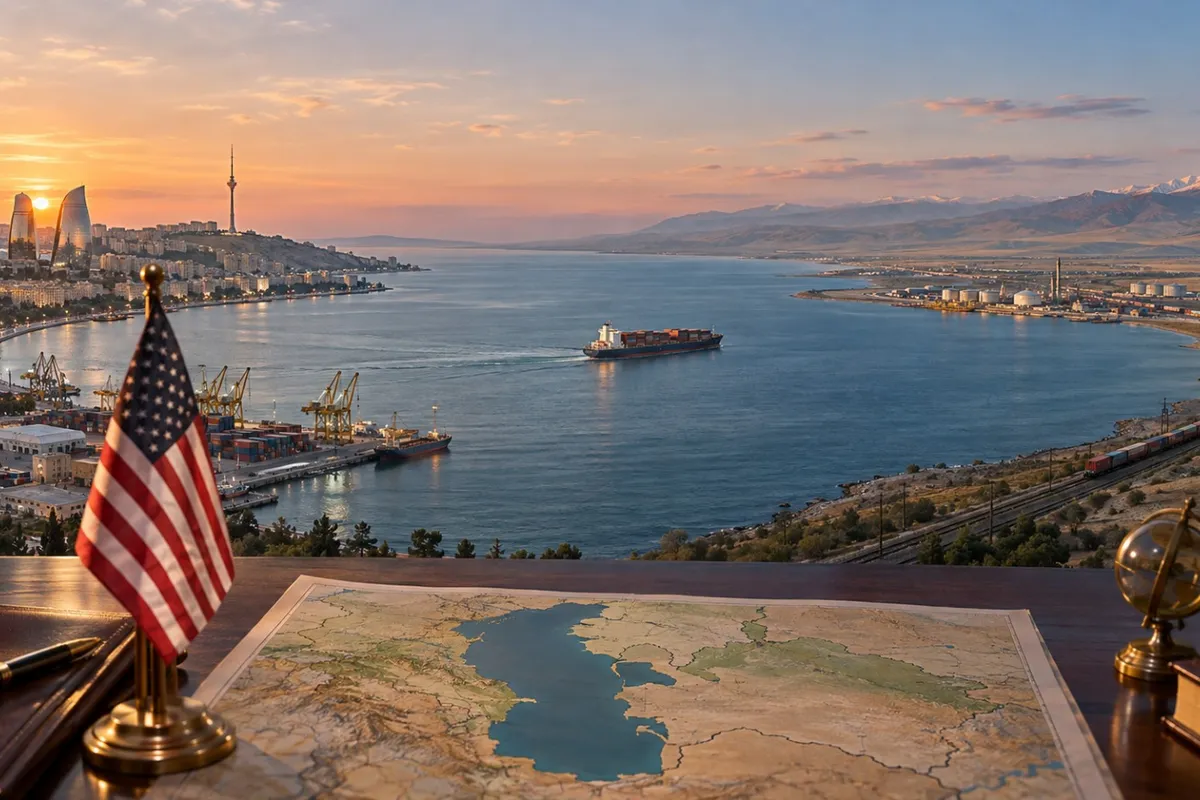
The United States is paying closer attention to Central Asia, and its interest goes far beyond a search for new sources of raw materials. Washington sees a region whose energy resources, transport routes and position between major powers could give it a more prominent role in the changing geopolitical landscape.
The reported visit to Turkmenistan by Paul Kapur, US Assistant Secretary of State for South and Central Asian Affairs, fits into this broader picture. According to the US Embassy in Ashgabat, the focus is on opportunities to expand business ties, energy cooperation and regional connectivity.
This engagement follows Secretary of State Marco Rubio’s visit to Central Asia and a meeting with the region’s foreign ministers in the C5+1 format. Established in 2015, the mechanism brings together the United States and Kazakhstan, Kyrgyzstan, Tajikistan, Turkmenistan and Uzbekistan.
For Washington, the challenge is to turn this dialogue into a lasting economic and political presence. For Central Asian countries, the opportunity is to gain another partner without sacrificing the relationships on which they already depend.
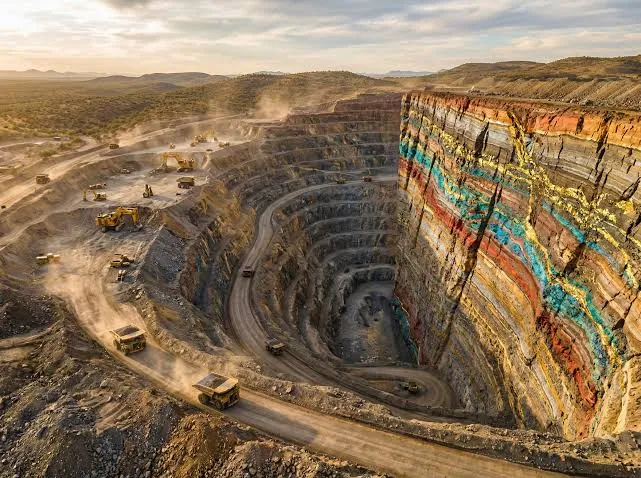
photo: getty images
Critical Minerals and Economic Interests
Central Asia’s natural resources have become increasingly relevant to the United States as it seeks to reduce its dependence on China for critical minerals and supply chains.
These materials are essential to modern technologies, from electronics and battery systems to defence manufacturing. The region’s mining potential therefore offers Washington an opportunity to diversify supplies and create openings for American investment.
The US interest extends beyond extracting raw materials. Developing processing capacity, attracting technology and building new production chains could make cooperation more valuable to Central Asian economies as well. But that will depend on whether American companies are prepared to make long-term commitments and whether regional governments can offer conditions that make such projects viable.
Energy is another important part of the equation. Kazakhstan and Turkmenistan have substantial oil and gas resources, while Uzbekistan offers opportunities in gas production and energy infrastructure. Kyrgyzstan and Tajikistan, meanwhile, have significant hydropower potential.
The scale of American business participation in the recent visit to Uzbekistan suggests that Washington wants political discussions to produce commercial results. The question is how many of these discussions will translate into investment and completed projects.
The Middle Corridor and Azerbaijan's Role
Resources are only one part of Central Asia’s appeal. The region’s geography also places it at the centre of efforts to develop transport links between Asia and Europe.
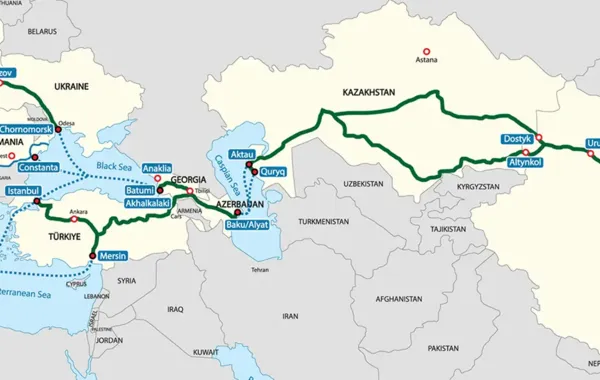
The Trans-Caspian International Transport Route, commonly known as the Middle Corridor, has acquired greater strategic importance as governments and businesses seek alternative connections across Eurasia. Its development requires cooperation across the Caspian Sea and through the South Caucasus.
This is where Azerbaijan becomes indispensable. Central Asian goods moving west across the Caspian depend on connections to Azerbaijani ports, railways and logistics networks. An effective corridor also requires coordination with other countries along the route, particularly Georgia and Türkiye.
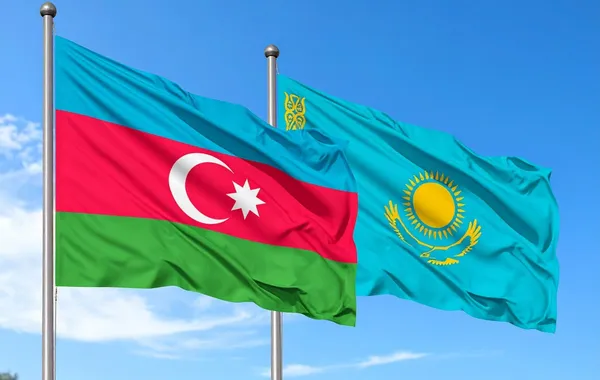
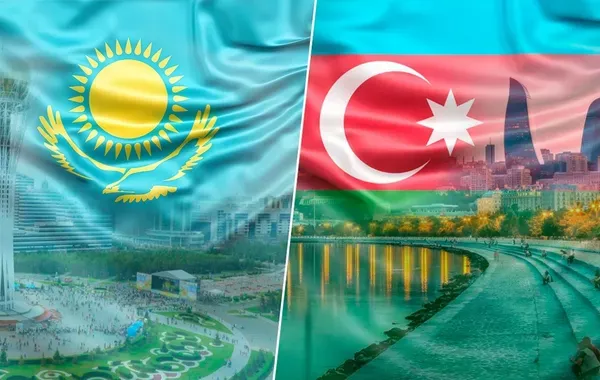
For this reason, some American experts have proposed expanding the C5+1 dialogue to include Azerbaijan. Luke Coffey has argued that a C6+1 format would better reflect the geographic and strategic links between Central Asia and the South Caucasus.
That is an expert proposal, rather than an announced US policy. Nevertheless, the argument deserves attention: a regional strategy focused on connectivity will be incomplete if it treats the Caspian Sea as a dividing line rather than a link between its eastern and western shores.
Azerbaijan has also developed increasingly close ties with Central Asian countries. Those relationships give Baku a stake in the region’s stability and in the success of routes that can connect its partners to international markets.
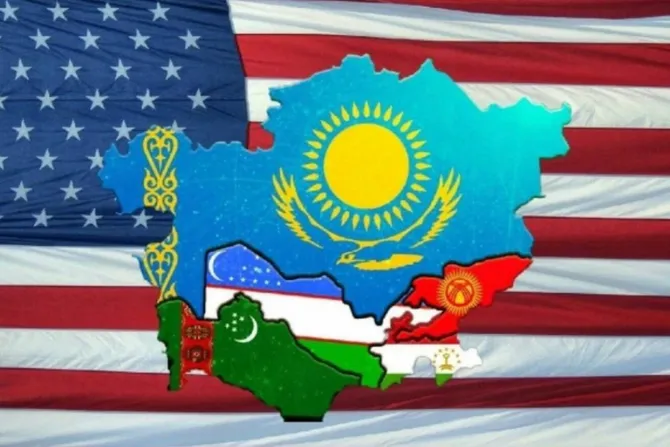
photo: getty images
Partnership Without a Geopolitical Choice
Washington appears to understand that its influence in Central Asia will be limited if it asks countries to choose between the United States, Russia and China.
Such a demand would overlook the realities of the region. Russia remains an important partner through historical, economic, security and social ties. China is a major trading partner and investor. These relationships cannot simply be replaced by American engagement, nor are Central Asian governments likely to accept a foreign policy dictated by any one power.
Rubio’s message that cooperation with Washington does not require countries to abandon their other partnerships reflects a more practical approach. If the United States can offer investment, technology and access to markets without making cooperation contingent on a geopolitical choice, its proposals may find a receptive audience.
That does not mean competition among outside powers will disappear. It means that Central Asian states will continue to judge offers according to their own interests. Washington’s success will depend less on declarations about strategic competition and more on the quality and reliability of what it delivers.
Different Countries, Different Approaches
Central Asia is often discussed as a single region, but its five countries have distinct political systems, economic priorities and approaches to foreign policy. Any effective US strategy must take these differences seriously.
Uzbekistan has sought broader international engagement, creating opportunities for discussions on investment, trade and regional connectivity. Turkmenistan, by contrast, has traditionally pursued a more cautious foreign policy centred on neutrality.
Ashgabat’s approach does not rule out cooperation with Washington or participation in Trans-Caspian initiatives. It does, however, suggest that progress is likely to depend on proposals that respect Turkmenistan’s priorities and offer clear practical benefits.
The same principle applies across the region. Central Asian governments are interested in expanding their options, but they are unlikely to welcome an approach that ignores their sovereignty or assumes that their interests are identical.
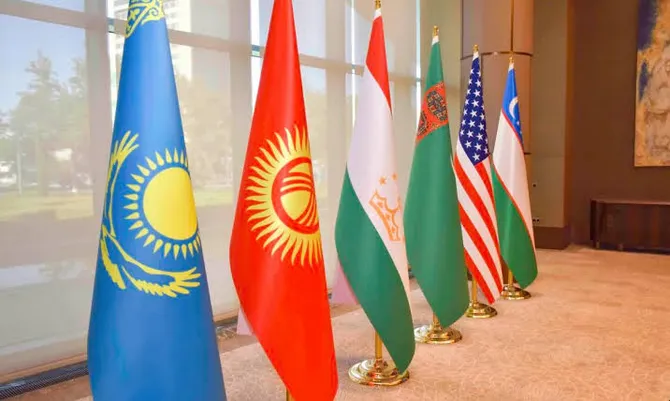
photo: getty images
A Test of Long-Term Commitment
The United States has an opportunity to become a more significant partner for Central Asia. Its interest in energy, critical minerals and transport is supported by real economic and strategic considerations. The region, in turn, has reason to welcome additional investment and stronger links to international markets.
But greater attention alone will not be enough. Washington will need sustained diplomacy, credible financing and projects that bring visible benefits to the countries involved.
The Middle Corridor illustrates both the opportunity and the challenge. It can strengthen connections between Central Asia and Europe, but its success requires investment and cooperation on both sides of the Caspian Sea. That makes Azerbaijan an important partner in any serious discussion of the region’s future connectivity.
Ultimately, the most effective American policy will be one that recognises Central Asian countries as decision-makers in their own right. They are looking for more room to pursue their interests, and the partners that help them do so will be best placed to build lasting relationships.