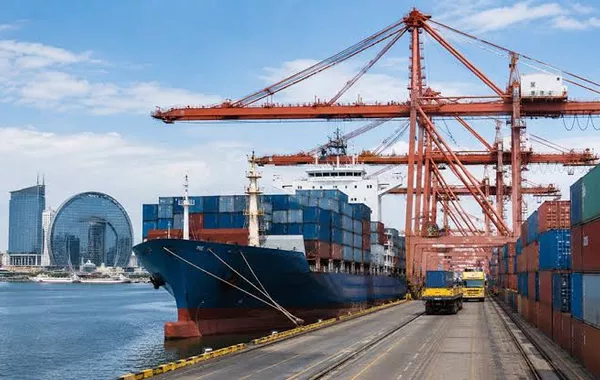
At first glance, the appearance of a small shipment of Kazakh oil in Georgia’s trade statistics may hardly seem like an event of regional significance. Yet behind the delivery of just 5,500 tonnes lies a much more consequential process: the forced restructuring of Georgia’s oil supply chains under the pressure of European sanctions and the gradual strengthening of the Caspian energy corridor through Azerbaijan.
In July 2026, Georgia imported crude oil from Kazakhstan for the first time. The shipment amounted to 5,500 tonnes worth $3.2 million. Until then, Kazakh crude had effectively been absent from Georgia’s oil import statistics.
However, it would be premature to speak of Georgia having already abandoned Russian oil. In the same month, Russia supplied Georgia with 87,400 tonnes of crude worth $36.4 million. In January-July, Russian deliveries reached 569,300 tonnes valued at $238.5 million.
Credit: russiaspivottoasia.com
In other words, what is happening today is not yet a break with Russia, but the beginning of diversification from a very low starting point.
There is another figure that illustrates the economic side of the shift particularly well. Based on declared customs values, a tonne of Kazakh oil in July cost roughly $582, while a tonne of Russian crude cost about $416. That is a difference of almost 40%.
For this reason, the Kulevi refinery’s transition away from Russian crude cannot be viewed as a routine commercial adjustment. In the short term, it means higher costs.
The Price of Access to the European Market
The main reason for Georgia’s oil pivot lies not in Astana, and not even in Tbilisi, but in Brussels.
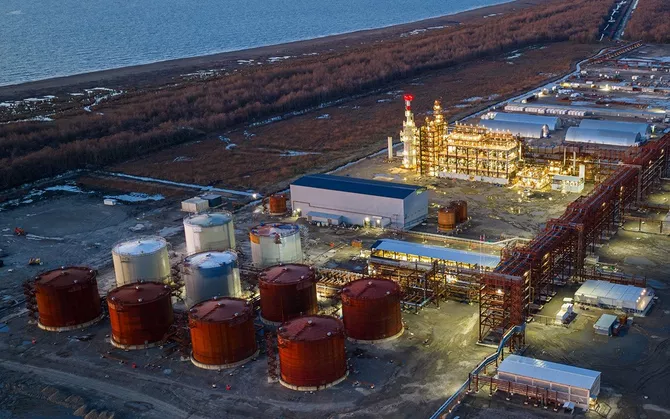
On July 23, the European Union adopted its 21st package of sanctions against Russia. The package provides for restrictions on transactions involving the Kulevi oil refinery, which processes Russian crude. At the same time, Brussels granted the facility a six-month transition period to phase out Russian feedstock.
In practical terms, Black Sea Petroleum has been confronted with a choice: continue buying cheaper Russian oil while risking access to European financial and commodity markets, or switch to more expensive crude from alternative suppliers and avoid sanctions-related isolation.
The company chose the second option.
Black Sea Petroleum had already announced on July 1 that it intended to switch entirely to non-Russian crude in August-September. Kazakh oil began arriving as early as July. The company has also signed an agreement to import Libyan crude, with the first shipment expected in the second half of August. Turkmenistan has likewise been considered among the possible alternative suppliers.
The commercial logic is clear. For a refinery, cheaper feedstock matters. But being able to sell the resulting products matters even more.
If the continued use of Russian crude restricts access to European markets, insurance, Western financing, technology and counterparties, then the price discount on Russian oil ceases to compensate for the wider risks.
From this perspective, the additional cost of Kazakh or other non-Russian crude can be seen as the price of maintaining access to Western economic infrastructure.
Tbilisi Resists, but Business Has Made Its Choice
The political position of the Georgian authorities differs noticeably from the behavior of the company itself.
Georgia’s Foreign Ministry said that the inclusion of the Kulevi refinery in the EU’s 21st sanctions package lacked sufficient factual and legal grounds. Tbilisi insists that it provided the European Commission with the necessary documentation and continues to take measures to prevent Georgian territory from being used to circumvent international sanctions.
The dispute over Kulevi began earlier.
During preparation of the EU’s 20th sanctions package, Brussels had already considered imposing restrictions on the Kulevi oil terminal. At that stage, after consultations with Tbilisi, the EU stepped back. EU Special Envoy for Sanctions David O’Sullivan explained that decision by pointing to commitments made by the Georgian authorities and the operator to comply with European sanctions requirements.
Credit: BSP
This time, however, the refinery itself came under pressure.
The result is a revealing paradox. Georgia’s political leadership continues to oppose joining anti-Russian sanctions, arguing that such steps could damage the national economy. Yet one of the country’s largest new energy projects is being forced to adjust to the EU sanctions regime in practice.
This does not mean that Tbilisi has formally joined Western sanctions against Moscow. But the Kulevi case demonstrates the limits of economic balancing: a company that intends to work with Western banks, technologies and markets cannot fully ignore EU rules.
Western Technology Versus Cheap Russian Crude
For the Kulevi refinery, this choice is especially important because of its ambitious expansion plans.
The first stage of the facility, with annual capacity of around 1.2 million tonnes, has already been commissioned. Black Sea Petroleum plans to increase total capacity to as much as 4.5 million tonnes in the future.
In February, the company signed an engineering and licensing agreement with US technology giant Honeywell, which is expected to provide process licenses, engineering solutions, specialized equipment and catalysts for the modernization of the refinery.
The company plans to broaden its product range to include aviation fuel, modern diesel products and other fuels meeting international standards. Production of aviation fuel is expected to begin in the second quarter of 2027.
This is where the strategic choice becomes obvious.
On one side is cheaper Russian crude.
On the other are Honeywell technology, Western financing, technological modernization, access to European markets and the possibility of building a modern refining industry in Georgia.
In the long term, the second set of assets is far more valuable to the company than the price difference on each tonne of crude oil.
Kazakhstan Emerges as a Major Beneficiary
Georgia’s oil shift matters not only for Georgia itself.
It coincides with Kazakhstan’s own long-term strategy to diversify export routes. For years, Astana has been heavily dependent on Russian infrastructure for oil exports, above all the Caspian Pipeline Consortium. Geopolitical and infrastructure risks in recent years have only strengthened Kazakhstan’s desire to develop alternatives.
One of the most important is the Trans-Caspian route. Kazakh oil is shipped from Aktau across the Caspian Sea to Azerbaijan and then transported further through the South Caucasus.
In July, KazTransOil shipped 155,000 tonnes of oil from Aktau into the Baku-Tbilisi-Ceyhan pipeline system, 11.5% more than a year earlier. In 2025, Kazakhstan exported around 1.2 million tonnes through BTC, while the target for 2026 is approximately 2.2 million tonnes. Astana has indicated that volumes could rise further, potentially to 2.5-3 million tonnes.
These volumes remain small compared with Kazakhstan’s exports through Russia, but the trend is clear: Astana is building additional routes to global markets and reducing dependence on a single corridor.
Azerbaijan Becomes the Central Link
This is where the Kulevi story becomes not merely Georgian, but regional.
Without Azerbaijan, large-scale diversification of Kazakh oil exports through the South Caucasus would be virtually impossible. Kazakh crude must cross the Caspian, enter Azerbaijani infrastructure, and only then continue through Georgia either toward the Mediterranean or the Black Sea.
As a result, the importance of two major routes is increasing simultaneously: Baku-Tbilisi-Ceyhan and Baku-Supsa.
The latter is particularly significant. The Baku-Supsa pipeline has been largely inactive in recent years, but agreements reached between the Georgian and Azerbaijani sides in May 2026 created conditions for restoring its operation. The Georgian Oil and Gas Corporation has indicated that the route could be used to resume transit of Central Asian oil through Georgia toward European markets.
Kazakhstan is also showing growing interest in using oil infrastructure passing through Georgia. Georgian Deputy Economy Minister Inga Pkhaladze said in August that Kazakhstan’s participation could increase budget revenues and at the same time strengthen Georgia’s geopolitical importance.
For this reason, the Kulevi refinery’s transition away from Russian crude should be viewed in a broader context.
The issue is no longer simply which crude oil one Georgian refinery will process. It is about the emergence of a more closely integrated energy chain:
Kazakhstan - Azerbaijan - Georgia - Türkiye/Europe.
What Georgia Loses - and What It Could Gain
In the short term, Tbilisi has understandable reasons to be dissatisfied.
Russian oil is cheaper. Supply routes are established. Diversification requires new contracts, different logistics, transportation across the Caspian and additional costs.
But strategically, the picture looks different.
Georgia gains the opportunity to develop its own refining industry, preserve access to Western technologies and markets, increase the transit of Kazakh oil and potentially bring the Baku-Supsa pipeline back into active use.
Some of the costs associated with more expensive crude could therefore be offset by an expansion of Georgia’s transit role.
Moreover, this is no longer only about money.
The more Central Asian energy flows move through Azerbaijan and Georgia toward Europe, the greater the strategic value of the South Caucasus as an alternative transport and energy corridor that reduces dependence on Russian routes.
Not a Break with Russia, but a Shift in the Balance
It would therefore be inaccurate to describe the current process as a sudden rupture in energy ties between Georgia and Russia.
Russia remains a major trade partner for Georgia, and in July Russian crude still vastly exceeded Kazakh oil in terms of supply volumes.
But the Kulevi case reveals something more important: where there is a direct choice between cheap Russian feedstock and access to Western markets, capital and technology, the economic balance is gradually beginning to shift.
For the Kulevi refinery, sanctions risk has become more important than the price advantage of Russian oil.
For Kazakhstan, a new market is opening and the strategic value of the Trans-Caspian route is growing.
For Azerbaijan, the importance of its oil infrastructure as the key bridge between Central Asia and Europe is increasing.
For Georgia, the situation is both a challenge and an opportunity. It is losing the advantage of cheaper feedstock, but it could gain something more valuable: a stronger role as a transit country and energy hub of the South Caucasus.
In essence, EU sanctions are accelerating a restructuring of regional oil flows that market forces alone had failed to produce for years. The first 5,500 tonnes of Kazakh oil delivered to Georgia in July matter not because of their volume, but because they signal the direction in which the energy map of the South Caucasus is beginning to change.
By Samir Muradov