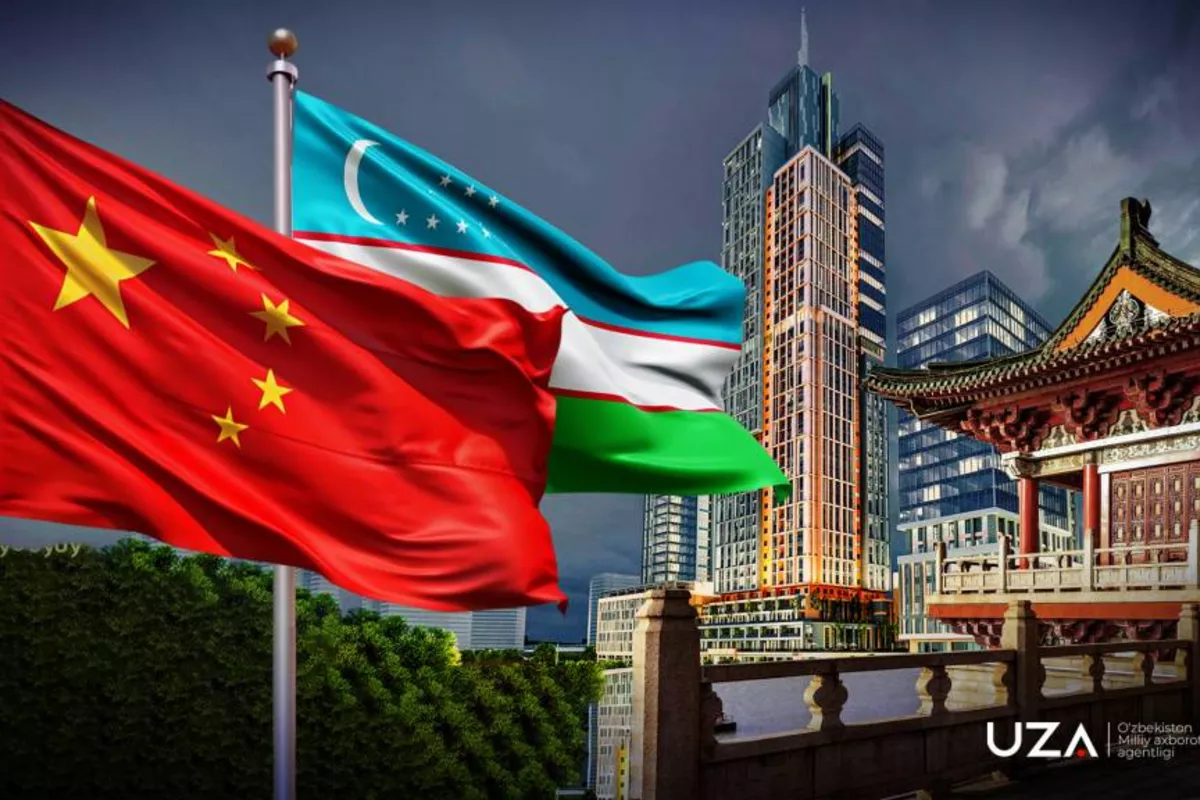
The launch of a $170 million electric bus manufacturing project in Uzbekistan’s Fergana region may look like another large Chinese investment. In reality, it is part of a much broader transformation in which China is gradually shifting from being primarily a supplier of finished goods to becoming a producer inside Uzbekistan itself.
The new plant will be built in the Yazyavan district of the Fergana region by Chinese companies Xiang Yang Tenglong Automobile and GIG Investments. The project is located in the Ijodkor special industrial zone and is expected to produce up to 700 electric buses annually once operations begin in December 2027. A second phase envisages the production of electric trucks, with part of the output intended for export markets.
This is what makes the project strategically important. The factory is not being designed simply to satisfy domestic demand. It is part of a broader attempt to turn Uzbekistan into a manufacturing platform capable of serving neighboring Central Asian markets.
The development also fits a larger pattern. China is expanding its role in Uzbekistan across electric vehicles, energy, infrastructure, logistics and industrial production, while Tashkent is actively seeking to use Chinese capital and technology to accelerate industrialization.
From Imports to Local Production
For years, Uzbekistan’s economic relationship with China was dominated by imports of machinery, vehicles, electronics and industrial equipment. That model strengthened bilateral trade but also contributed to a significant trade imbalance in China’s favor.
Now the structure is beginning to change.
One of the clearest examples is the BYD Uzbekistan Factory in the Jizzakh region, which began producing electric and hybrid vehicles in 2024. The initial investment was around $160 million, with production capacity of about 50,000 vehicles annually.
Uzbekistan and BYD have since discussed expanding output first to 200,000 vehicles and ultimately to as many as 500,000 cars per year.
That level of capacity would clearly exceed the needs of Uzbekistan’s domestic market alone. It implies an export-oriented strategy.
The new electric-bus plant in Fergana should be viewed as part of the same industrial ecosystem.
BYD is moving into passenger cars and plug-in hybrids. The Fergana project will target public transportation and, later, electric commercial vehicles.
Together, these projects point toward the emergence of a more diversified electric transport industry based largely on Chinese technology.
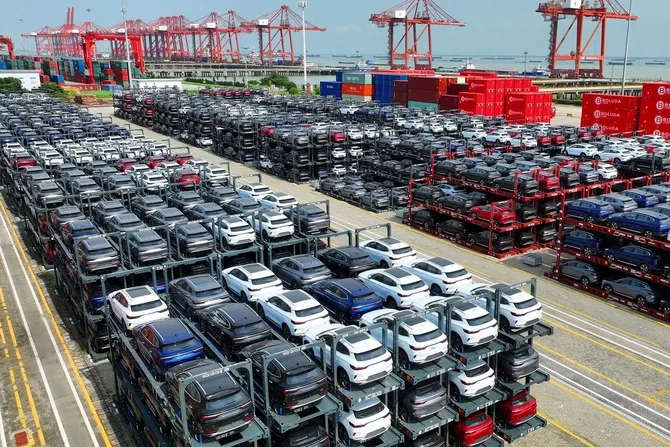
photo: getty images
China Is Already Shaping Uzbekistan’s Electric Transport Market
Chinese manufacturers have already built a strong position in Uzbekistan’s urban transport sector.
Tashkent has acquired large numbers of Chinese-made electric buses, including vehicles produced by Yutong. Samarkand has followed a similar strategy, operating Chinese electric buses on major urban routes.
This creates an important economic sequence.
First, Chinese manufacturers export finished electric buses.
Then charging infrastructure, maintenance facilities and service networks are created.
Once the market becomes sufficiently large, production can be localized.
For Chinese companies, this reduces transport costs, provides access to tax and investment incentives, and creates a longer-term presence in the local market.
For Uzbekistan, the benefit depends on how deep localization becomes.
If production is limited to assembling imported Chinese components, the country may create jobs but remain technologically dependent on foreign suppliers.
If batteries, electronics, body parts, software systems and other components are increasingly produced locally, the economic effect would be much greater.
More Than 5,600 Chinese-Linked Companies
The scale of China’s broader presence in Uzbekistan is already substantial.
According to Uzbekistan’s National Statistics Committee, by May 2026 there were 19,490 enterprises with foreign investment operating in the country.
Of these, 5,615 had Chinese capital, more than those connected with any other country.
For comparison, there were 3,308 Russian-linked enterprises, 2,216 Turkish-linked companies and 1,259 with Kazakh capital.
That means almost 29% of all foreign-invested enterprises in Uzbekistan have Chinese participation.
This represents an important shift.
Russia historically held one of the strongest positions in Uzbekistan’s commercial and industrial landscape. China has now overtaken it by the number of foreign-invested enterprises.
Chinese companies are no longer concentrated in trade. They are increasingly active in automotive manufacturing, renewable energy, construction, mining, chemicals, telecommunications and building materials.
The scale of investment is also expanding rapidly.
In late 2025, President Shavkat Mirziyoyev said Uzbekistan expected to absorb more than $15 billion in direct Chinese investment in a single year, while the broader portfolio of joint projects was approaching $90 billion.
Energy alone accounts for dozens of major Chinese-backed projects.
China Has Also Become Uzbekistan’s Largest Trading Partner
The industrial expansion reflects an equally significant shift in trade.
China overtook Russia as Uzbekistan’s largest trading partner in 2023 and has since maintained that position.
In January 2026 alone, bilateral trade between Uzbekistan and China reached around $1.62 billion, representing almost 28% of Uzbekistan’s total foreign trade.
Russia ranked second with approximately $1.09 billion.
Yet the structure of trade remains heavily imbalanced.
Most of the bilateral turnover consists of Uzbek imports from China, while Uzbekistan’s exports to the Chinese market remain much smaller.
That is precisely why localization matters.
If electric buses, cars and eventually trucks are manufactured inside Uzbekistan rather than imported as finished products, a greater share of the value chain remains inside the country.
Local production creates employment, generates demand for domestic suppliers and may eventually support exports.
In this sense, China’s industrial expansion offers Uzbekistan a possible way to reduce some of the negative effects of its trade dependence on Beijing.
Why Uzbekistan?
China’s interest in Uzbekistan is based on several structural advantages.
First, Uzbekistan has the largest population in Central Asia and therefore the region’s biggest domestic consumer market.
Second, the country already has an established automotive industry. It possesses assembly plants, engineering expertise and a network of component producers.
That makes Uzbekistan significantly more attractive than a market where foreign investors would have to create an entire industrial supply chain from the beginning.
Third, Tashkent offers industrial zones, tax incentives and strong political support for large manufacturing projects.
Finally, geography matters.
Uzbekistan sits in the center of Central Asia and borders Kazakhstan, Kyrgyzstan, Tajikistan, Turkmenistan and Afghanistan.
A production base in Uzbekistan can therefore serve not only the local market but much of the surrounding region.
For a factory capable of producing 700 electric buses annually, exports are likely to become economically important.
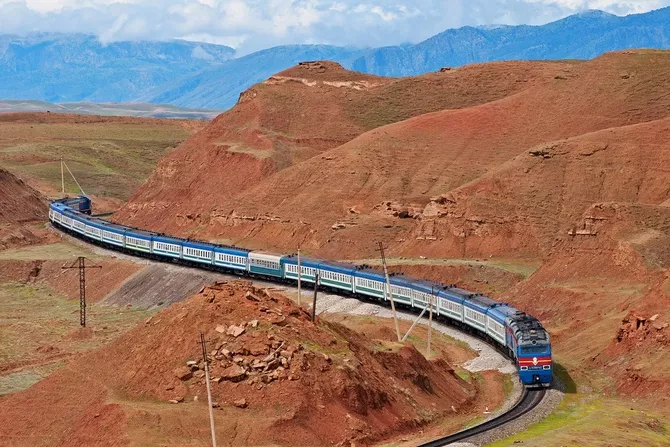
photo: getty images
The China-Kyrgyzstan-Uzbekistan Railway Could Accelerate the Trend
The developing China-Kyrgyzstan-Uzbekistan railway adds another strategic dimension.
After decades of discussion, the construction of the route is moving ahead. The railway will directly connect western China with the Fergana Valley through Kyrgyzstan.
That matters not only for transit.
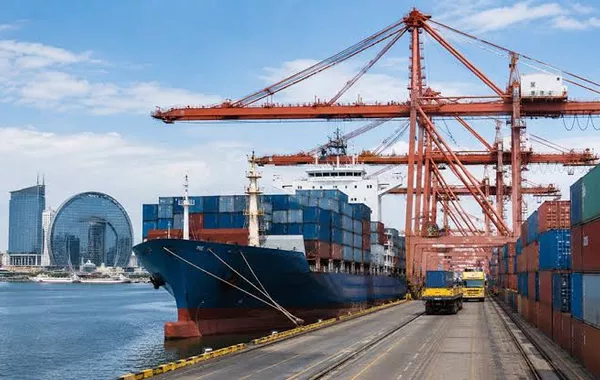
Chinese factories operating in Uzbekistan will continue to rely, at least initially, on equipment and components shipped from China.
Faster and cheaper rail connections will reduce logistics costs and make industrial production in Uzbekistan more competitive.
Fergana could benefit particularly strongly because of its proximity to Kyrgyzstan and the future rail connection.
This creates a self-reinforcing economic model: better transport infrastructure attracts more industrial investment, while more industrial production increases demand for transport infrastructure.
The Risks for Uzbekistan
The trend also creates risks.
The first is technological dependence.
If batteries, electric motors, electronics and software continue to come almost entirely from China, Uzbekistan may replace dependence on finished imports with dependence on imported components.
The second issue is the depth of localization.
Assembly plants generate fewer long-term benefits than full production chains.
The third concern is concentration.
China is already Uzbekistan’s largest trading partner, the leading source of foreign-invested enterprises and an increasingly important player in energy, transport and industrial development.
The challenge for Tashkent is therefore to benefit from Chinese investment without allowing economic modernization to become excessively dependent on one external partner.
From Market to Manufacturing Hub
The direction of change is nevertheless clear.
China is no longer simply selling Uzbekistan vehicles, equipment and technology.
It is increasingly moving parts of its production system into the country.
BYD is building an automotive base in Jizzakh.
The $170 million Fergana project will produce electric buses and eventually electric trucks.
More than 5,600 enterprises with Chinese capital are already operating across Uzbekistan.
Meanwhile, new transport infrastructure is being built to connect Chinese industrial centers more directly with the Uzbek economy.
This means Beijing is gradually integrating Uzbekistan into a broader Chinese-centered industrial network across Eurasia.
For China, the benefit is a manufacturing base in Central Asia’s largest market and a potential platform for regional exports.
For Uzbekistan, the opportunity is industrialization, jobs, technology transfer and a stronger position as a regional production center.
The decisive question will be localization.
If Chinese factories create local supply chains, engineering capacity and export-oriented industries, the current investment wave could significantly transform Uzbekistan’s economy.
If they remain primarily assembly operations dependent on imported Chinese components, the form of economic dependence will change, but the underlying imbalance will remain.
That is why the Fergana electric bus project matters far beyond its planned production of 700 vehicles per year.
China is no longer simply selling Uzbekistan the future of electric transport. It is increasingly producing that future inside Uzbekistan itself.