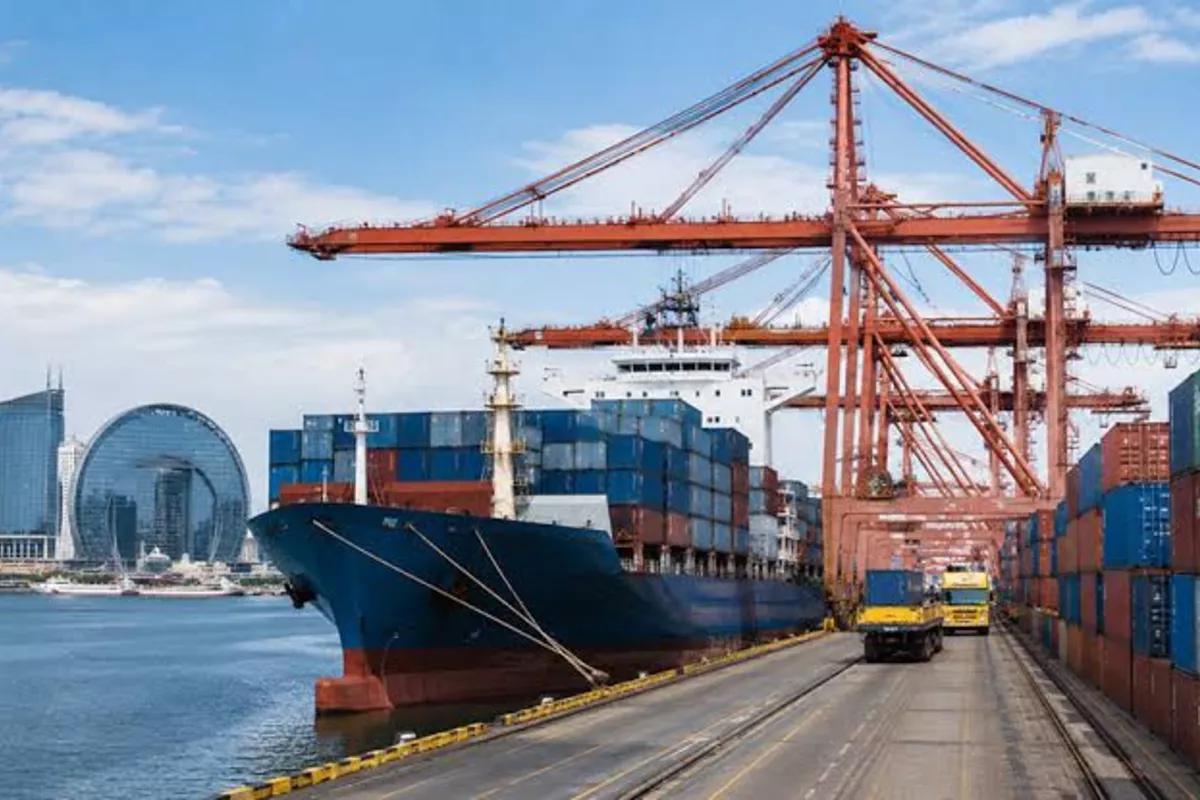
Plans by Azerbaijan and Uzbekistan to establish a joint fleet on the Caspian Sea could become one of the two countries’ most practical transport initiatives. Unlike broad political declarations about developing the Middle Corridor, dedicated vessels could directly affect shipping costs, service frequency and cargo delivery times.
Demand for such a project is already taking shape. Transit freight between Uzbekistan and Azerbaijan reached 1.4 million tonnes in 2025. In the first half of 2026, it increased by another 12.2% year-on-year to 675,000 tonnes. During the August summit in Tashkent, Uzbek President Shavkat Mirziyoyev called for faster progress on the joint fleet. The two sides are also discussing a joint venture between Uzbekistan’s Uztemiryulkargo and the Azerbaijan Caspian Shipping Company, or ASCO. (Euronews, Report)
The central question is whether new vessels can remove the Caspian logistics bottleneck. The short answer is that they can significantly relieve it, but vessels alone will not turn the Middle Corridor into a fully competitive Eurasian trade route.
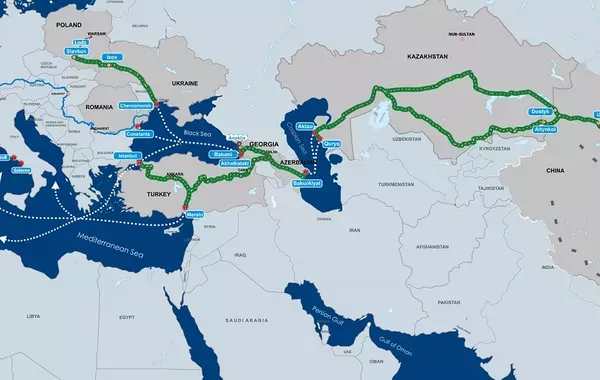
photo: getty images
Maritime Access for a Landlocked Country
The project is particularly important for Uzbekistan, one of only two doubly landlocked countries in the world. Reaching a seaport requires Uzbek cargo to cross at least two international borders, making the country heavily dependent on the infrastructure, regulations and transport policies of its neighbours.
Along the Middle Corridor, Uzbek goods must travel by rail through Kazakhstan to the ports of Aktau or Kuryk, or through Turkmenistan to Turkmenbashi. They then cross the Caspian Sea, are unloaded at the Port of Baku in Alat and continue through Azerbaijan, Georgia and Türkiye towards European markets.
Every change of transport mode increases both costs and uncertainty. A container may arrive at a Caspian port on time but then wait several days for a vessel. A delayed ferry can subsequently disrupt the railway schedule on the western shore of the Caspian.
For Tashkent, therefore, a joint fleet is about more than investing in shipping. It represents an opportunity to secure access to maritime transport capacity despite having no Caspian coastline. Uzbekistan could reserve space for its exporters, plan shipments around regular schedules and reduce its dependence on vessels available on the spot market.
Why the Caspian Remains a Bottleneck
The Middle Corridor is a complex multimodal system. Its main weakness is not simply its length, but the number of borders, ports and transfers between rail, road and maritime transport.
The OECD identifies unpredictable delivery times, high costs, insufficient port capacity and weak coordination among national operators as some of the corridor’s main problems. According to its assessment, congestion at ports and border crossings can add 10 to 15 days to delivery times, and in some cases as much as 20 to 30 days. (OECD)
The Caspian section is particularly vulnerable. Unlike railways, where trains can operate according to relatively stable timetables, maritime transport depends on the availability of suitable vessels, weather conditions, berth congestion and the amount of cargo accumulated at the port.
When sailings are irregular, transport operators may wait until they have assembled a sufficiently large cargo consignment. This weakens one of the Middle Corridor’s main potential advantages: faster delivery between Asia and Europe.
The size of the fleet is not the only issue. Its composition matters just as much. According to official data, ASCO’s merchant fleet consists of 56 vessels: 23 tankers, 13 ferries, 16 dry-cargo ships, two Ro-Ro vessels and two Ro-Pax ships.
Tankers do not address the container transport problem, while many of the other vessels serve different routes and types of cargo. What the Middle Corridor particularly needs are rail ferries, container vessels and Ro-Ro ships operating according to predictable schedules. (Azerbaijan’s Transit Coordination Council)
A small number of specialised vessels assigned to a regular service could therefore be more useful than a larger fleet dispersed across different operations.
What a Joint Fleet Could Change
The first advantage would be guaranteed capacity. If certain vessels are allocated specifically to Uzbek cargo, exporters will be able to plan shipments according to a published timetable instead of waiting for available space.
The second benefit would be the introduction of regular services. For businesses, the theoretical maximum capacity of a ship is less important than the number of guaranteed weekly departures and the reliability of the schedule. A regular ferry service would allow railway arrivals, port operations and onward train departures from Alat to be coordinated more effectively.
The third advantage would be the possibility of creating a unified commercial model. The proposed joint venture between Uztemiryulkargo and ASCO may ultimately prove more important than the ownership of the vessels themselves. The Uzbek company controls part of the rail transport chain, while the Azerbaijani operator manages the maritime section. If properly integrated, they could offer customers a single contract, a through tariff and a guaranteed delivery window.
The two sides are already discussing discounts on cargo handling, comprehensive tariff packages, streamlined logistics procedures and priority services for containerised and export cargo. If these measures are combined into a single transport product, the joint fleet could do more than increase capacity. It could make the entire route more predictable.
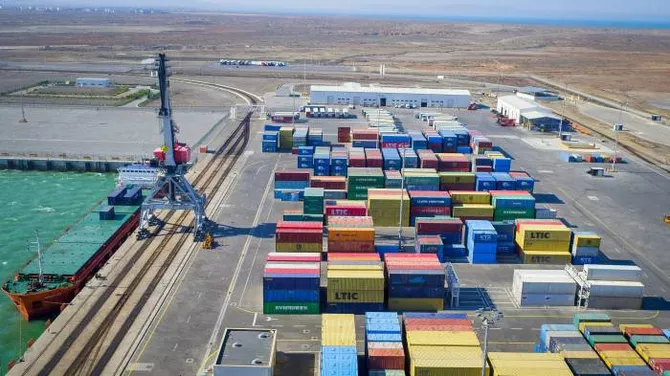
photo: getty images
Azerbaijan’s Infrastructure is Preparing for Growth
For Azerbaijan, the Uzbek initiative reinforces the country’s position as the principal western gateway of the Caspian. Baku is already investing in railways, ports and new vessels to increase its transit capacity.
The annual capacity of the Baku-Tbilisi-Kars railway is being increased from 1 million to 5 million tonnes. The Port of Baku’s capacity at Alat is expected to rise from 15 million to 25 million tonnes per year. Azerbaijan has also ordered new vessels for its Caspian merchant fleet. (Official website of the President of Azerbaijan)
These investments are interdependent. Expanding the port will have only a limited effect without sufficient shipping capacity. New vessels, meanwhile, may remain underused if railways and terminals cannot process cargo quickly enough. A joint Azerbaijan-Uzbekistan fleet could help synchronise these investments while providing the infrastructure with a reliable base volume of freight.
The China-Kyrgyzstan-Uzbekistan railway, which is currently under development, could create additional demand. In the future, it may direct some Chinese cargo towards the Caspian. Uzbekistan would then become not only a source of national exports but also a transit hub connecting China with the South Caucasus.
The World Bank estimates that, with the necessary investments and policy reforms, freight volumes along the Middle Corridor could triple by 2030, while travel times could be reduced by half. Achieving that scenario, however, will require both infrastructure development and the removal of administrative barriers. (World Bank)
Why Vessels Alone Will Not Be Enough
Despite its potential advantages, a joint fleet cannot remove every constraint affecting the route.
The two countries have not yet publicly disclosed the number or type of vessels, their cost, financing arrangements or delivery schedule. Without these details, it is impossible to assess the actual increase in capacity.
If the project is limited to a few general-purpose dry-cargo ships, its impact on container transit will be modest. If it includes rail ferries and Ro-Ro vessels operating regular services, the effect could be considerably greater.
Guaranteed cargo volumes will also be essential. A shipping line needs sufficient freight in both directions. Empty return journeys increase operating costs, which are eventually passed on to exporters. Azerbaijan and Uzbekistan will therefore need not only to acquire or build vessels but also to secure long-term contracts with freight owners.
Schedule coordination represents another condition for success. Trains from Uzbekistan, Caspian ferries and onward railway services from Alat to Georgia must operate as components of a single system. Otherwise, additional vessels could simply move the queue from the sea to a rail terminal or port storage area.
The corridor also requires integrated electronic documentation, real-time container tracking, coordinated customs procedures and transparent pricing. Cargo owners are less interested in separate charges imposed by multiple operators than in the final cost and delivery time from the point of origin to the destination.
In other words, the project must address both physical and operational capacity. New vessels are hard infrastructure. Unified tariffs, digital documents, coordinated schedules and customs integration are the “soft infrastructure” without which the ships cannot deliver their full commercial value.
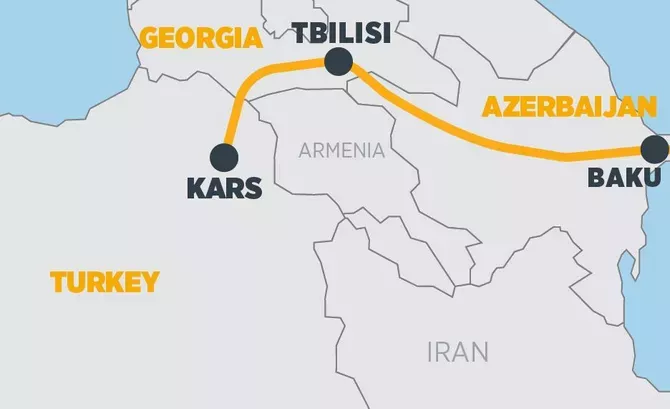
photo: getty images
The Project’s Strategic Significance
For Uzbekistan, the joint fleet is an instrument of transport diversification. It would reduce excessive dependence on any single export direction and provide another route to Türkiye and European markets.
This does not mean abandoning northern or southern transport routes. Uzbekistan is seeking to create competition among different corridors and make its foreign trade more resilient to political crises, border restrictions and infrastructure disruptions.
For Azerbaijan, the project would strengthen its position as a transport hub between Central Asia and Europe. Baku would gain additional guaranteed freight volumes for the Port of Baku, the Baku-Tbilisi-Kars railway and ASCO.
The initiative could also change the structure of bilateral transport relations. Uzbekistan would no longer be merely a customer using Azerbaijani infrastructure. It would become a potential co-investor in part of the transport system. That would give both countries a stronger and more durable interest in the corridor’s development.
The project also fits into a broader political trend. Azerbaijan increasingly presents itself and Central Asia as part of a common geopolitical and geo-economic space. Deeper transport integration with Uzbekistan gives this concept a practical foundation.
Predictability Matters More Than the Number of Ships
New vessels can reduce the shortage of maritime capacity on the Caspian, but they cannot by themselves eliminate the entire logistics bottleneck. That bottleneck is the product of limited specialised tonnage, irregular sailings, port delays, fragmented tariffs and insufficient coordination among railway, maritime and customs operators.
The success of the joint fleet should therefore not be measured only by the number of vessels acquired. More meaningful indicators would include the number of guaranteed weekly sailings, average waiting times at ports, the cost of transporting a container and the share of cargo delivered within the promised timeframe.
If Azerbaijan and Uzbekistan combine new ships with a joint operator, a through tariff, priority port handling and synchronised railway schedules, the Caspian could be transformed from the most unpredictable section of the Middle Corridor into its central transport bridge.
If the project is limited to acquiring additional tonnage without reforming the wider logistics chain, the bottleneck may become less severe, but it will not disappear.
By Murad Samedov