Kazakh President Kassym-Jomart Tokayev’s initiative has opened a debate over the boundaries of Turkic integration. Supporters see an opportunity to strengthen dialogue with a major power, while critics fear that a Russian presence could limit the organization’s independence.
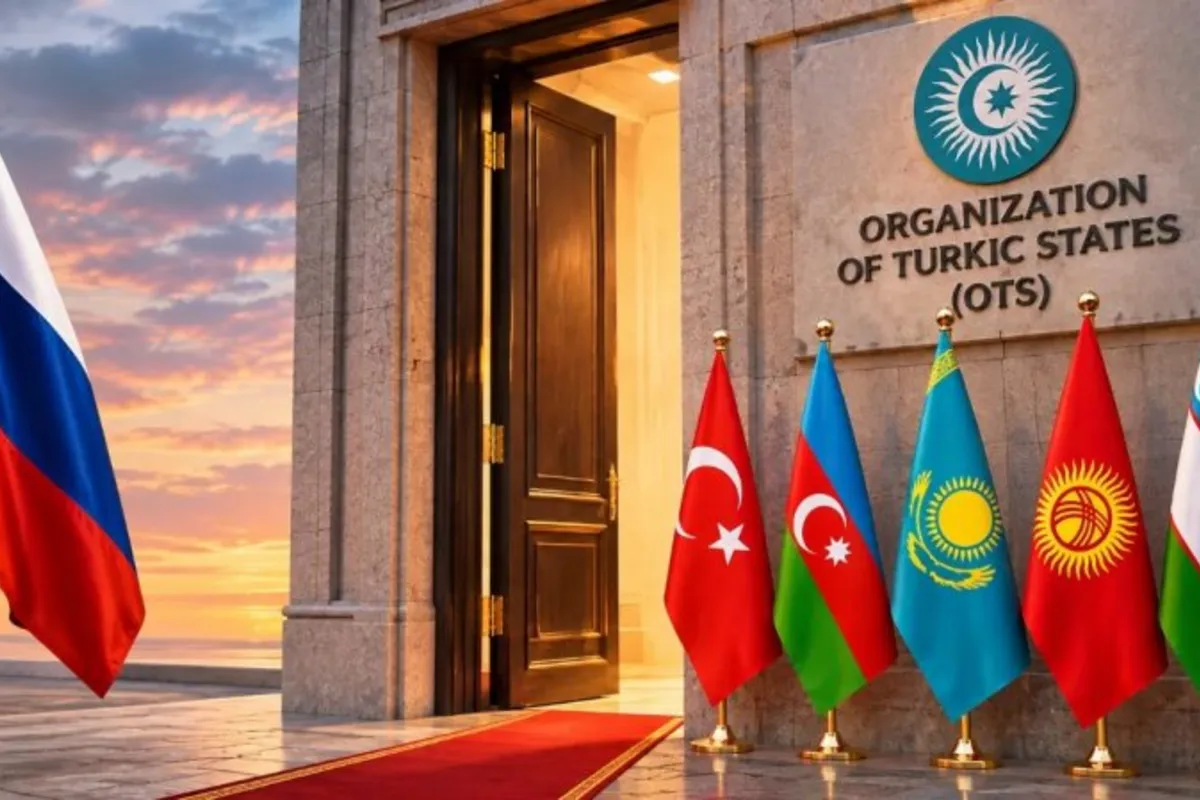
Tokayev’s proposal to involve Russia in the work of the Organization of Turkic States has become one of the most discussed outcomes of the bloc’s summit in Ankara.
He suggested considering Moscow’s participation through the “OTS+” format or granting it observer status.
The distinction matters: Tokayev did not propose admitting Russia as a full member of the OTS. Nevertheless, his initiative has raised a broader question: how close can cooperation between the Turkic organization and Russia become, and what would it mean for the bloc’s independence?
No decision on Russia’s participation was announced at the summit. Moscow, for its part, welcomed the idea but said it had not received an official invitation.
What did Tokayev Propose?
Speaking at the 13th OTS summit on October 30, Tokayev said Russia had maintained close ties with the Turkic world for centuries and was home to many Turkic peoples.
In his view, Russian participation could enhance the organization’s international standing. He urged OTS members to respond positively to Moscow’s interest and consider two options: participation in the “OTS+” format, designed for cooperation with external partners, or observer status.
The OTS currently has five full members: Azerbaijan, Kazakhstan, Kyrgyzstan, Türkiye and Uzbekistan. Hungary, Turkmenistan and the Turkish Republic of Northern Cyprus have observer status.
The “OTS+” format provides a framework for cooperation with outside partners and does not in itself mean joining the organization. Observer status creates a more lasting institutional relationship but does not grant voting rights in decision-making.
photo: getty images
Why did Astana Put Forward the Initiative?
Tokayev explained his proposal by pointing to Russia’s historical and cultural ties with the Turkic world and the possibility of strengthening the OTS’s international standing. The initiative may also reflect Kazakhstan’s broader interests, although its unstated motives cannot be established with certainty.
First, Kazakhstan has a strong interest in maintaining a working relationship with Russia, its immediate neighbor and an important economic partner. At the same time, Astana is developing relations with Türkiye, Azerbaijan, Central Asian countries and other international partners.
In that context, the proposal can be seen as an attempt to combine the development of Turkic integration with dialogue with Moscow and reduce the likelihood that Russia will view a stronger OTS as a threat to its interests.
Notably, Tokayev used the same speech to reaffirm Kazakhstan’s position that the OTS is not a military alliance and should not become one in the future. This may be read as a signal that Astana wants the organization to retain a primarily political, economic and cultural role.
There is also a cultural dimension. The Russian Federation includes republics home to Tatars, Bashkirs, Chuvash, Sakha and other Turkic peoples. Their historical and linguistic ties with other parts of the Turkic world are significant. The question is which mechanism would best serve those ties: cooperation with cultural institutions and regions, or Russia’s participation in an intergovernmental organization.
Moscow’s Response: Interest, but No Official Invitation
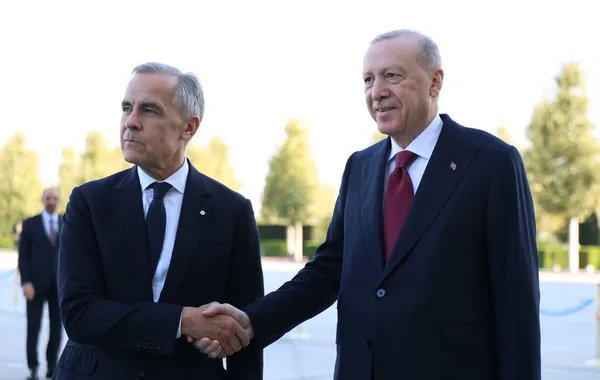
The Kremlin responded positively. Russian presidential spokesman Dmitry Peskov said Russia’s participation in the OTS would be understandable and appropriate, given the presence of peoples of Turkic origin in the country.
He stressed, however, that Moscow had not received an official invitation. Peskov also made clear that the discussion concerned participation by the Russian Federation as a whole, rather than individual Russian regions.
For Moscow, potential cooperation with the OTS could provide an additional platform for dialogue with Türkiye and the Turkic states of Central Asia and the South Caucasus. It could also give Russia a closer view of the development of regional initiatives, including transport projects.
The Kremlin’s positive response does not mean, however, that the format or conditions of Russian participation have been agreed upon, or that all OTS members share the same position.
Türkiye’s Response: Cooperation is Possible, but Rules Apply
One of the most substantive public assessments in Türkiye came from Kürşad Zorlu, deputy chairman of the ruling Justice and Development Party and head of its relations with Turkic states. He described the issue as sensitive and recalled the criteria for observer status.
According to Zorlu, rules adopted at the 2021 Istanbul summit require an applicant to recognize a Turkic or related language as a state or official language throughout the country, rather than only in a particular region.
Based on that explanation, Russia faces a significant formal obstacle: Turkic languages have official status in several Russian republics, but not throughout the federation. This is an assessment of how the rule could apply; the matter would need to be considered through the OTS’s own procedures.
Zorlu also pointed to the “OTS+” format, which allows flexible cooperation with third countries. According to him, a high-level meeting with an external partner requires the joint approval of the organization’s members.
The Turkish politician also suggested discussing the restoration of cultural cooperation with Russia’s Turkic republics through TÜRKSOY. He said that cooperation with them had effectively been frozen since 2015.
His comments therefore should not be read as either unconditional support for Russian observer status or a definitive rejection. Zorlu identified legal constraints and pointed to other possible channels for engagement. His assessment as a ruling-party official should not automatically be treated as a formal decision by the Turkish government or the OTS as a whole.
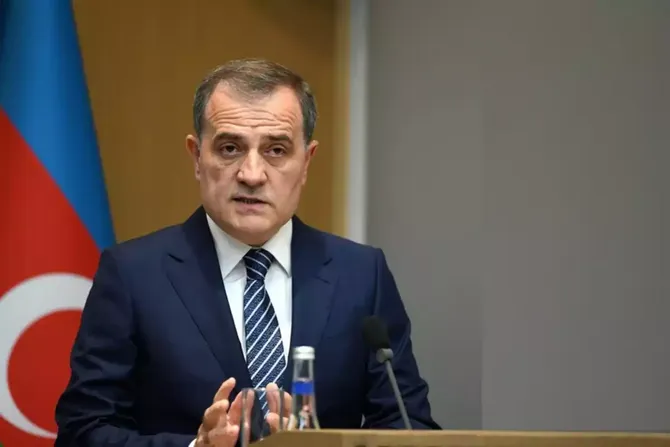
photo: getty images
Azerbaijan and Other States: No Common Decision Yet
Azerbaijan, represented at the summit by Foreign Minister Jeyhun Bayramov, is one of the organization’s founding members. For Baku, the OTS is an important platform for strengthening ties with Türkiye and Central Asia, including in trade, transport and political dialogue.
Azerbaijan has an interest both in developing relations with Russia and in strengthening the independence of Turkic cooperation. In any discussion of Russian participation, the terms would therefore matter: which issues would be discussed with Moscow, what access it would have to the organization’s work, and whether members would retain full control over their common agenda.
At the time of writing, no confirmed public position by Baku specifically addressing Tokayev’s proposal was identified. It would be premature to suggest that Azerbaijan either supports or opposes it.
Similarly, there is no basis to claim that Kyrgyzstan or Uzbekistan has officially supported or rejected Russian participation. At the summit, Uzbek President Shavkat Mirziyoyev called for expanded international cooperation through the “OTS+” format. General support for that mechanism, however, is not the same as a specific decision on Moscow. The summit ended without an announced agreement on Russian participation.
Countries’ positions could differ depending on the format proposed. An OTS meeting with Russia on a specific economic issue is different from a permanent Russian presence as an observer.
What Could Russia Offer the Organization?
If governed by agreed rules, cooperation could produce practical benefits.
First, there are cultural and academic ties. Dialogue with representatives of Russia’s Turkic peoples could support language studies, heritage preservation, educational programs and academic exchanges. Restoring such contacts through specialized cultural organizations would be one possible avenue.
Second, Russia remains an important neighbor and economic partner for several OTS countries. Cooperation on transport, trade and humanitarian issues could help address specific matters of mutual interest.
Third, regular dialogue could reduce distrust surrounding Turkic integration. If Moscow sees the organization as a platform for regional cooperation rather than a hostile bloc, that could create more favorable conditions for engagement.
Each of these outcomes, however, would depend on the substance of any agreement. Russia’s presence at the negotiating table would not in itself guarantee economic gains or eliminate disagreements.
The Central Risk: Could the OTS Lose Its Independence?
Russia is much larger than individual OTS states in territory, population, and combined political and military power. The question therefore concerns more than formal voting rights: it also concerns actual influence.
Even an observer without a vote can use diplomatic weight, bilateral relationships and economic instruments to advance its interests. This does not mean Moscow would necessarily dictate OTS decisions, but it is a risk the organization’s members would have to consider.
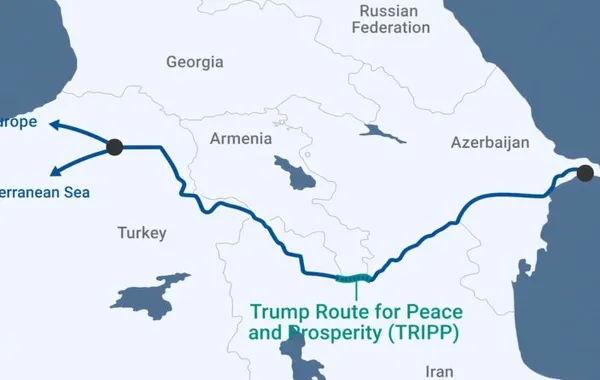
Discussions could become particularly sensitive around projects that OTS countries view as ways to diversify their external ties. The Middle Corridor, running through Central Asia, the Caspian Sea and the South Caucasus toward Europe, creates additional transport options, including a route bypassing Russia.
Russian participation in dialogue would not automatically halt the corridor’s development. But a permanent Russian presence in the organization could raise a question: how freely would OTS countries be able to discuss projects affecting Russian transport and economic interests?
For Azerbaijan and Kazakhstan, which play important roles in trans-Caspian shipping, preserving the freedom to develop different routes is particularly significant.
Could Russia Become a Full Member?
For now, that is a hypothetical scenario. Tokayev proposed participation through “OTS+” or observer status, not full membership.
If full membership were ever placed on the agenda, it would require separate consideration of the legal conditions and the agreement of the organization’s states. Its political consequences would also be considerably greater than participation in meetings with external partners.
Full membership would bring Russia into the organization’s decision-making mechanisms and change its internal balance. The OTS would then have to consider whether it remained primarily an organization of Turkic states or was taking on a broader Eurasian character.
Such a transformation could expand opportunities for dialogue, but it could also weaken the organization’s original identity and make common positions harder to reach. Deeper institutional ties with Moscow could also complicate cooperation with Western partners amid sanctions on Russia. The precise risks would depend on the projects, participants and restrictions involved; cooperation alone would not automatically extend sanctions to every OTS country.
Which Format Looks Most Realistic?
At this stage, “OTS+” appears to be the most concrete option for discussion. It would allow dialogue on specific subjects while leaving OTS members to jointly determine its scope.
Observer status would create a closer and more permanent relationship but, according to Zorlu’s explanation, raises the question of compliance with the existing language criterion. Full Russian membership remains a matter of theoretical debate.
Tokayev’s proposal has brought an important challenge for the OTS into focus: how to develop relations with major neighbors while retaining the ability to set its own priorities. The answer will depend not only on whether the organization’s members want to cooperate with Russia, but also on the terms, the areas of cooperation and the guarantees of equality they are prepared to agree upon.
By Anar Musayev