Photo credit: Anadolu Agency
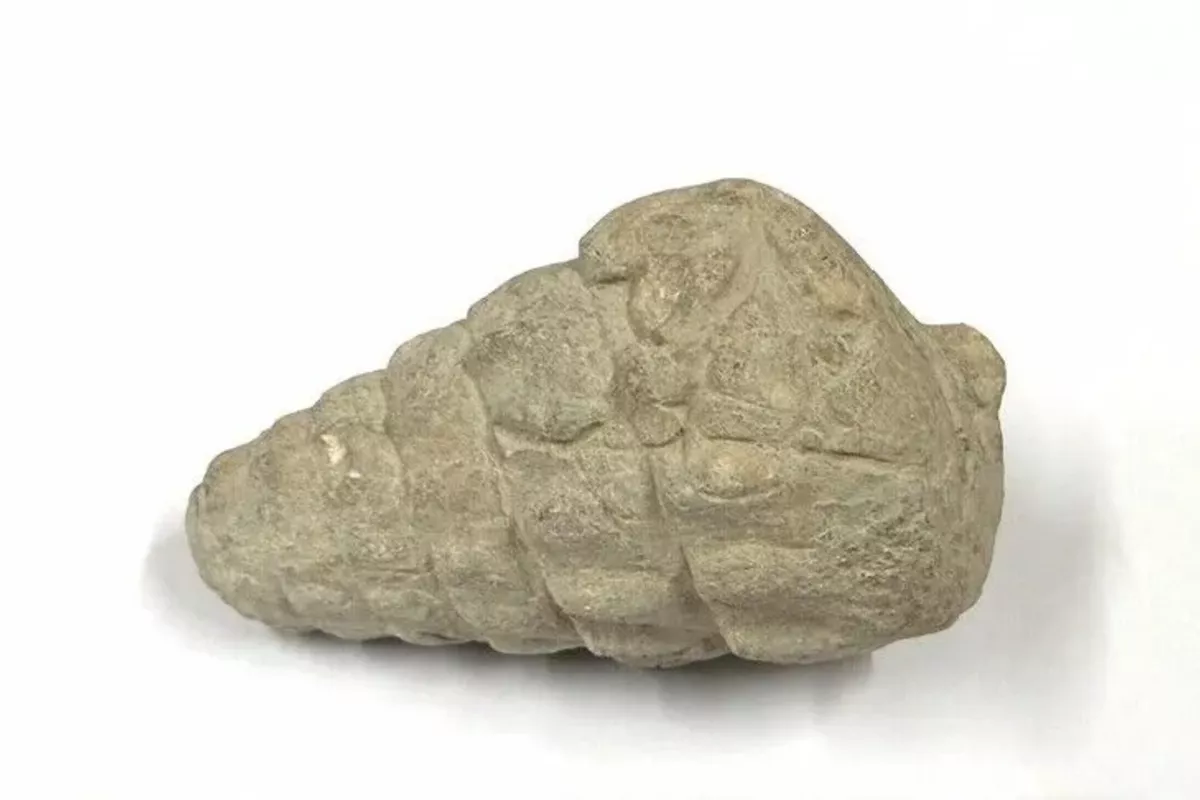
A fossil of a gastropod that lived along the shores of the ancient Tethys Sea around 66 million years ago has been discovered during archaeological excavations in Türkiye’s capital, Ankara.
Türkiye’s Culture and Tourism Minister Mehmet Nuri Ersoy announced the discovery, saying the fossil was found at Kulhoyuk, an archaeological site in the Oyaca neighborhood of Ankara’s Golbasi district, according to Anadolu Agency.
“During our excavations in Golbasi’s Oyaca area, a gastropod fossil that lived on the shores of the Tethys Sea 66 million years ago was discovered,” Ersoy said in a social media post.
Gastropods are a class of mollusks that includes snails and slugs.
Researchers believe the fossil dates to one of the final stages of the Tethys Sea, a prehistoric body of water that began forming about 250 million years ago and once covered parts of what is now Central Anatolia.
The discovery is particularly intriguing because the fossilized creature lived tens of millions of years before Kulhoyuk was established.
Archaeologists estimate that Kulhoyuk dates back roughly 5,000 years and is associated with the Hattian and Hittite civilizations. Researchers are therefore investigating the possibility that ancient inhabitants found the fossil elsewhere and deliberately brought it to the settlement.
“The fossil is believed to date from the final phases of the Tethys Sea. The assessment that it may have been brought to the settlement by Kulhoyuk residents thousands of years ago makes the discovery even more remarkable,” Ersoy said.
If confirmed, the finding could offer clues not only about the region’s ancient geological history but also about how prehistoric objects were collected, transported and potentially valued by people living at Kulhoyuk.
The fossil is the latest in a series of notable discoveries at the site. Archaeologists recently identified what they believe are the earliest-known seed remains of Ankara’s distinctive “Sevgi Cicegi,” or Love Flower, inside a 4,000-year-old Hittite vessel.
Excavations at Kulhoyuk have been underway since 2021 as part of a long-term archaeological program supported by the Turkish presidency. The project is led by Associate Professor Derya Yilmaz Tekin on behalf of Ankara University and the Culture and Tourism Ministry.
Ersoy said continued excavations are expected to reveal more about the history of Kulhoyuk and its ancient inhabitants.
Share on social media