Middle Corridor Faces New Crisis: Key Challenges Ahead
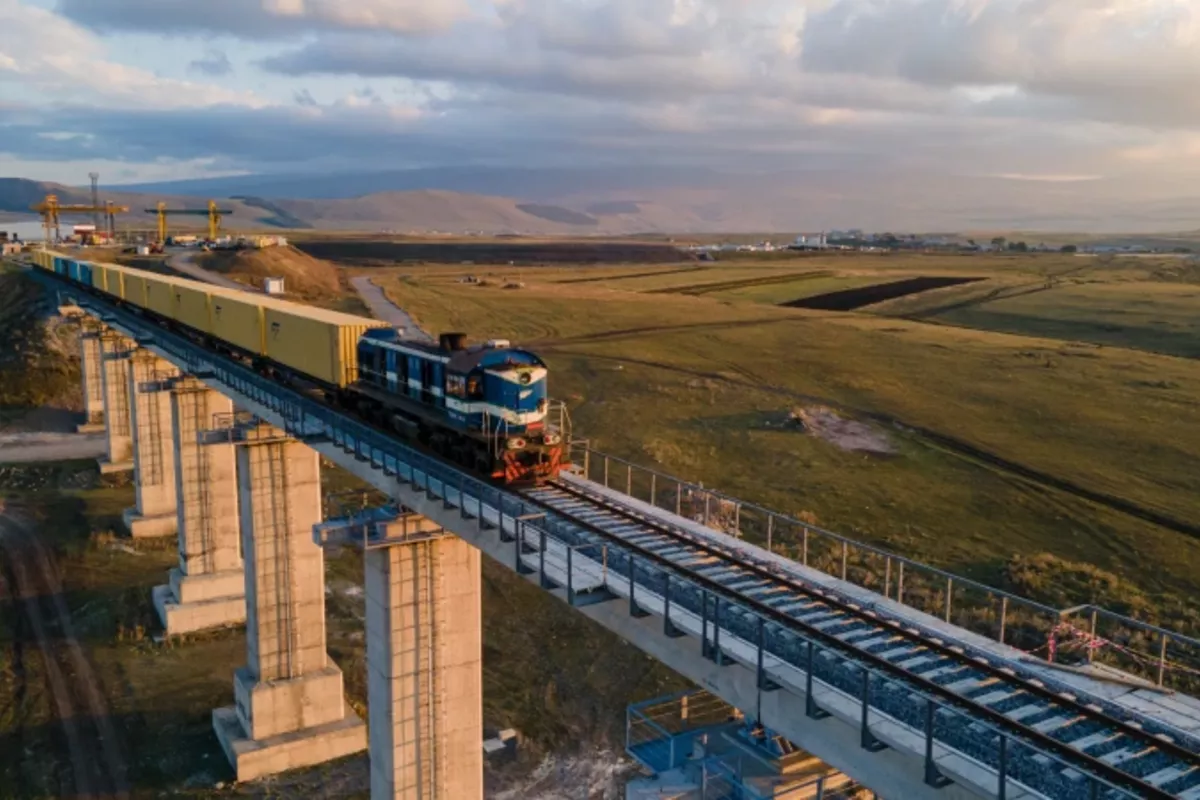
Global politics continues to reaffirm a longstanding reality: transport routes are not merely economic infrastructure but a vital component of the strategic stability of both states and entire regions. What was once viewed simply as an alternative trade route between Asia and Europe is rapidly emerging as a key artery of global logistics. This refers to the Middle Corridor, which links China, Kazakhstan, Azerbaijan, Georgia, and Türkiye with European markets.
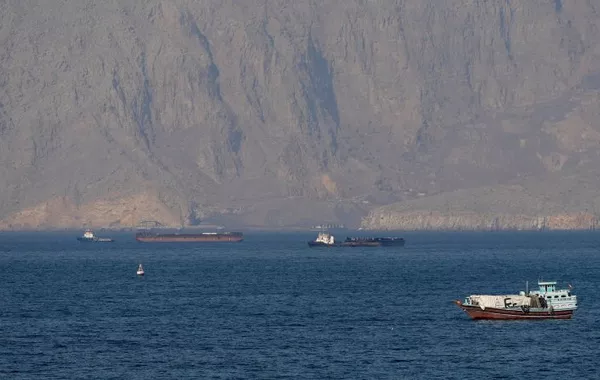
The sharp deterioration of the situation in the Middle East and the risks it poses to maritime shippin, particularly the potential closure of the Strait of Hormuz, have significantly increased interest in this route. For many international trading companies, the Middle Corridor has effectively become a safeguard against further disruptions to traditional shipping lanes. This shift is already reflected in concrete indicators.
Recent data show that demand for container transportation along the Middle Corridor has risen by 450-500 percent in just one week compared with the same period last year. Azerbaijani transport and logistics expert Rauf Agamirzayev noted on his Facebook page that such rapid growth has placed considerable pressure on existing infrastructure. Cargo volumes at the ports of Aktau and Baku have surged, and container processing times have increased roughly threefold.
The Trans-Caspian International Transport Route, another name for the Middle Corridor, attracts carriers not only for its safety but also for its speed. Cargo transit along the route takes around 15 days, whereas the traditional sea route used by most companies requires approximately 45 to 55 days. In today’s volatile trade environment, this difference is significant. According to Agamirzayev, the growing load is already affecting key sections of the route. The Baku-Tbilisi-Kars railway line has effectively reached its physical capacity in recent days. Over the past week alone, traffic on the line increased by 35 percent, while train queues at border crossings stretched for several kilometers.
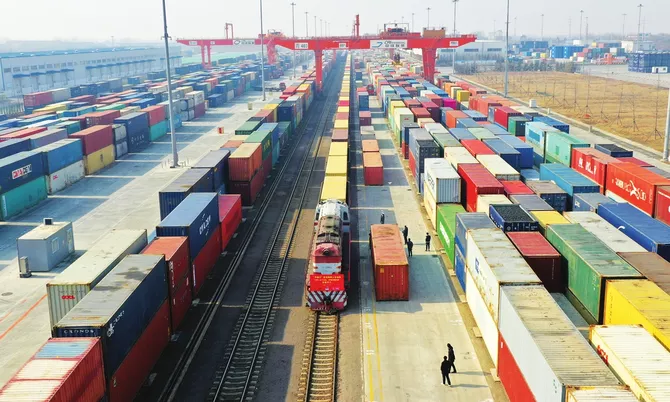
Photo: cnsphoto
Earlier, in an interview with AZERTAC, Acting Secretary General of the TITR Association Nurgul Zhakupova stated that container traffic along the route had already begun increasing last year. In 2025, total container traffic reached 76,900 TEUs, marking a 36 percent increase compared with 2024. In response to growing demand, KTZ Express JSC plans to acquire six new vessels, while the Azerbaijan Caspian Shipping Company CJSC intends to complete the construction of a Ro-Pax vessel and is considering building two additional container ships. In addition, members of the TITR Association are working on establishing a regular container feeder service in the Black Sea.
The recent surge in these figures following the escalation of hostilities in the Middle East is not surprising. Modern transport systems function as interconnected networks: when one route becomes unsafe or blocked, cargo flows are redirected elsewhere. This dynamic is particularly evident today in the South Caucasus. Armed conflicts continue both north and south of Azerbaijan, while its neighboring countries are under severe sanctions. In such circumstances, international carriers naturally turn to alternative routes, with the Middle Corridor appearing the most stable and reliable option.
The rise in cargo traffic actually began after the outbreak of the war in Ukraine and has continued as geopolitical tensions have grown. Even without the new Middle East crisis, container traffic along the corridor was expected to increase in 2026. However, the latest developments have triggered a dramatic acceleration.
Experts note that the greatest pressure is currently falling on the ports of Azerbaijan, Kazakhstan, and Turkmenistan. If the Strait of Hormuz or other traditional trade routes are disrupted, the Middle Corridor may face even greater demand, meaning transit countries must prepare accordingly. The Alat International Sea Trade Port in Baku currently handles up to 150,000 twenty-foot containers, with plans to expand capacity to 260,000. Kazakhstan’s ports have more limited capabilities, highlighting the need for modernization on the western Caspian coast to ensure large-scale, uninterrupted transit. Shipping companies across the Caspian must also accelerate dredging operations, particularly in light of the sea’s ongoing shallowing.
The Baku-Tbilisi-Kars railway corridor deserves particular attention. In the current regional crisis, this project has proven its importance, despite earlier predictions that it would be unprofitable and unnecessary. Without this route linking the port of Alat with Georgia’s Black Sea ports, efficient international shipping would be far more difficult.
Modernization of the BTK sections in Georgia was completed in 2025, significantly expanding the line’s capacity. Several infrastructure projects in Türkiye are also expected to be completed within the next two to three years, which will further increase the corridor’s throughput and allow it to handle larger cargo volumes.
Another important issue remains the TRIPP project. Azerbaijan has not abandoned its communications initiative through Armenia. Although the conflict between the United States, Israel, and Iran has delayed progress, the project remains on the agenda. Construction is already underway in Türkiye on the Kars-Iğdır-Aralik-Dilucu railway line. The future railway, stretching 224 kilometers to the border with Nakhchivan, will connect with the BTK line, integrate with the Nakhchivan railway network, and eventually link to the Zangezur Corridor. In the long term, this could create a continuous railway ring connecting the countries of the South Caucasus with Türkiye. However, its realization will largely depend on the outcome of the current military tensions.
Overall, recent events have accelerated a trend that has been developing for several years. The Middle Corridor is gradually evolving from an alternative route into a central element of Eurasian logistics. The current crisis in the Middle East is only reinforcing this shift, prompting global trade to seek faster, safer, and more politically stable transport routes.
By Tural Heybatov