With only a few days remaining before Armenia’s parliamentary elections, an IRI poll suggests that 32% of respondents intend to vote for the ruling Civil Contract party, up from 24% in March. Samvel Karapetyan’s Strong Armenia party ranks second with 6%, compared with 9% in the previous survey.
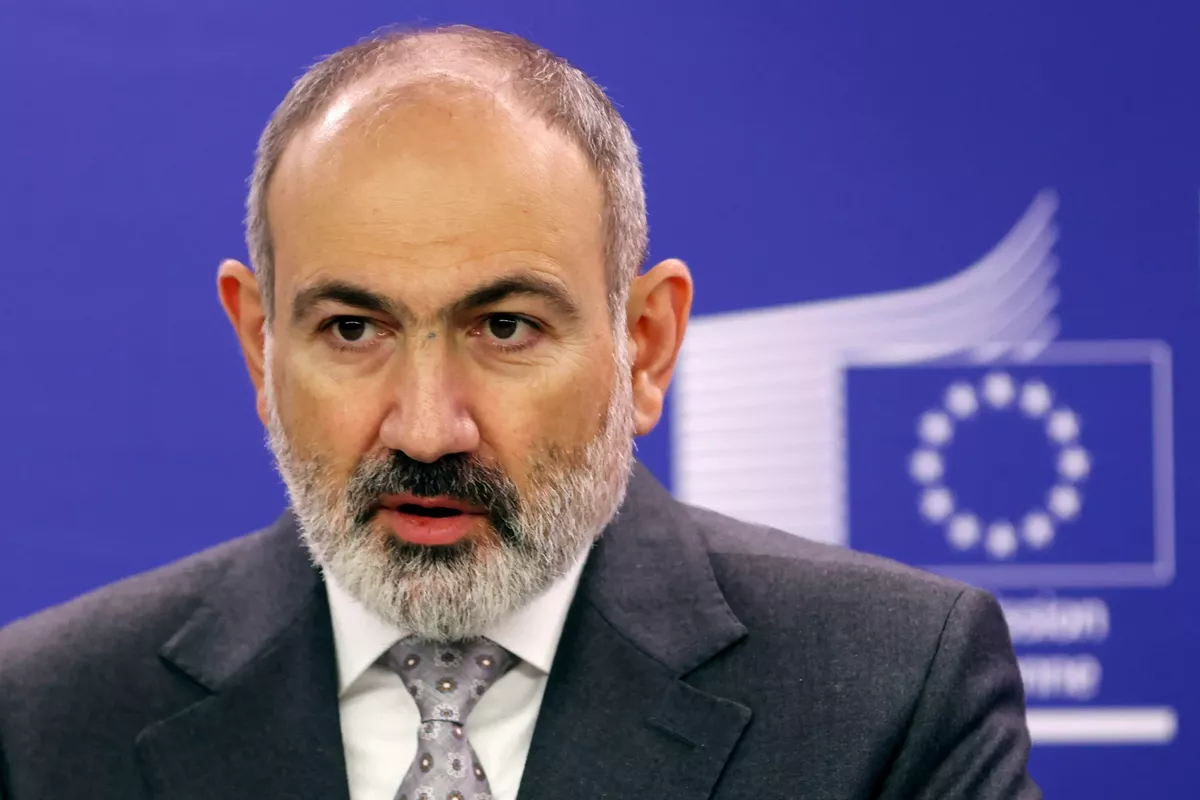
Public trust in political leaders is distributed as follows: current Prime Minister Nikol Pashinyan at 29%, Strong Armenia leader Samvel Karapetyan at 8%, Armenia Alliance leader and former President Robert Kocharyan at 4%, and Prosperous Armenia leader Gagik Tsarukyan at 3%.
The latter three political forces generally support a pro-Russian orientation for Armenia. Meanwhile, Russia has intensified its efforts to influence Armenia’s political and information space, employing methods similar to those previously seen in Moldova and Georgia. Despite this pressure, Pashinyan continues to lead in most pre-election forecasts.
At the same time, 40% of respondents say they trust no political figure at all. This creates the central paradox of the 2026 elections: an unpopular incumbent prime minister remains the frontrunner largely because the opposition is even weaker and more fragmented. As a result, the Civil Contract party could translate a relatively modest share of the vote into a dominant parliamentary position if rival forces remain divided. Even if several opposition parties individually secure 8-10%, they would still face significant obstacles in forming a viable coalition.
Credit: Shutterstock
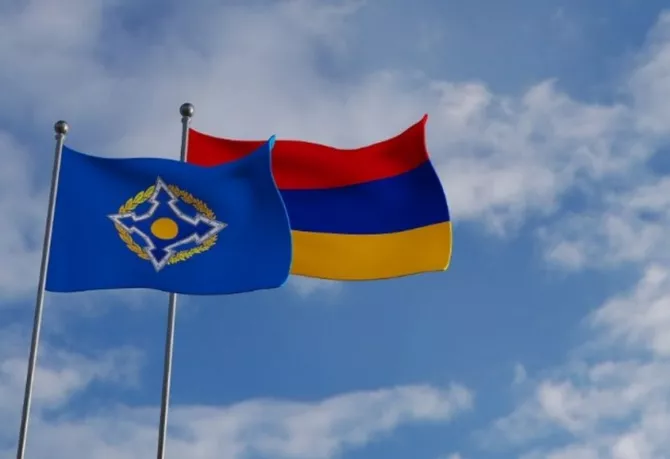
Armenia, long regarded as a close Russian ally, began a more explicit shift towards the West several years ago following Nikol Pashinyan’s rise to power. In February 2024, for example, Pashinyan froze Armenia’s participation in the CSTO military alliance. Later, in March 2025, Armenia adopted legislation launching the EU accession process, marking a formal and significant turn towards European integration. Against this backdrop, the parliamentary elections on 7 June are widely viewed as Russia’s last realistic opportunity to reverse Armenia’s Western trajectory before it becomes irreversible.
Russia’s strong interest in Pashinyan’s defeat has been reflected in an extensive disinformation campaign, including allegations of government corruption, sexual scandals and other abuses. These narratives began circulating roughly 14 months before the June 2026 elections, marking an unusually early and sustained effort compared with previous Russian influence operations in other countries.
In late May 2026, Russia escalated matters further by imposing restrictions on imports of several Armenian products, ranging from flowers and mineral water to cognac. The measures reportedly affect exports that account for up to 90% of output in certain Armenian industries. The list includes alcohol (particularly cognac and wine, historically among Armenia’s key exports), Jermuk mineral water, a widely recognised Armenian brand in the Russian market, flowers, trout and other fish products, as well as fruit and vegetables.
Russian officials, commenting on the restrictions, directly cited “unfriendly steps” taken by the Armenian authorities, including Yerevan’s pursuit of EU membership and the extradition of Russian citizens to third countries. This framing effectively acknowledges a political motivation behind the measures, despite their presentation as sanitary or regulatory actions.
Under Eurasian Economic Union (EAEU) rules, member states are generally prohibited from imposing standard import restrictions. However, exceptions exist, allowing protective measures in cases of sanitary or phytosanitary non-compliance. Before escalating disputes to legal proceedings, members are expected to engage in bilateral consultations and negotiations, which experts regard as the preferred mechanism for resolving disagreements. In this case, however, no such consultations were reportedly undertaken before the restrictions were imposed on Armenian goods.
This situation further suggests that Russia is formally operating within EAEU legal frameworks while using sanitary exemptions as a tool of political pressure. Similar “sanitary” trade restrictions were previously imposed by Russia on Georgia in 2006, Moldova in 2006 and 2013, and Ukraine in 2014, each following pro-Western political shifts in those countries. Russia’s broader objectives, in this context, are seen as undermining public trust in Armenian state institutions, deepening political polarisation, challenging democratic discourse and weakening the decision-making capacity of the Armenian leadership.
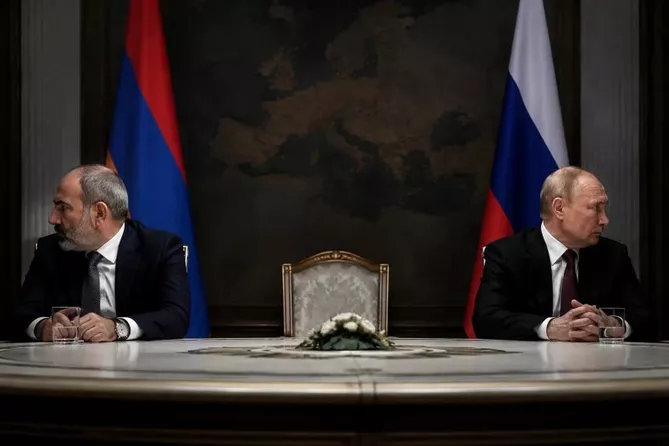
As noted, Russia’s pressure campaign against Armenia appears to have begun earlier and to be more intensively coordinated than in previous post-Soviet cases, underscoring the strategic importance Moscow assigns to Armenia in the South Caucasus. At the same time, many of Russia’s traditional instruments of influence - security guarantees, political alignment and ideological proximity - have been weakened following two wars between Azerbaijan and Armenia, during which Russia, despite being Armenia’s security partner, did not intervene decisively.
Credit: AI-generated
Within Armenian society, which recalls Russia’s inaction during the 2020 and 2023 conflicts with Azerbaijan, Kremlin warnings increasingly function not as deterrents but as arguments in favour of Pashinyan. Each new statement from Moscow reinforces a perception among some voters that Russia failed to protect Armenia at critical moments, yet now expects political compliance in return. These dynamics are also linked to fears of a so-called “Ukrainian scenario”, referring to the instability that followed Ukraine’s pro-Western shift in 2014. Russian messaging appears aimed at a society still affected by wartime trauma and concerns about renewed instability.
However, analysts assess the likelihood of a large-scale military escalation along these lines as extremely low, given the absence of a shared border between Russia and Armenia and Russia’s ongoing military engagement in Ukraine. Any direct intervention would also require transit through third countries or access to secure land corridors, making such a scenario both logistically and politically highly improbable.
Although Russia maintains the 102nd Military Base in Armenia, personnel numbers there have reportedly been reduced due to the war in Ukraine. A military parade held in Yerevan on 28 May is also viewed as an indirect signal intended to limit the visibility or involvement of Russian troops from the base in any potential post-election unrest.
Nevertheless, according to this assessment, Russia may already have undermined its own influence over the electoral process before voting has even begun. Through threats, confrontational rhetoric and “sanitary” trade restrictions, it has inadvertently provided Nikol Pashinyan with a powerful campaign narrative, portraying Russia itself as an adversarial force.
The outcome of Armenia’s parliamentary elections will shape the country’s future geopolitical orientation, its foreign policy direction and the trajectory of the Armenia-Azerbaijan peace process. The vote will also serve as a public assessment of Pashinyan’s strategy: normalisation with Azerbaijan, deeper cooperation with Europe and the United States, and a gradual reduction in dependence on Russia.