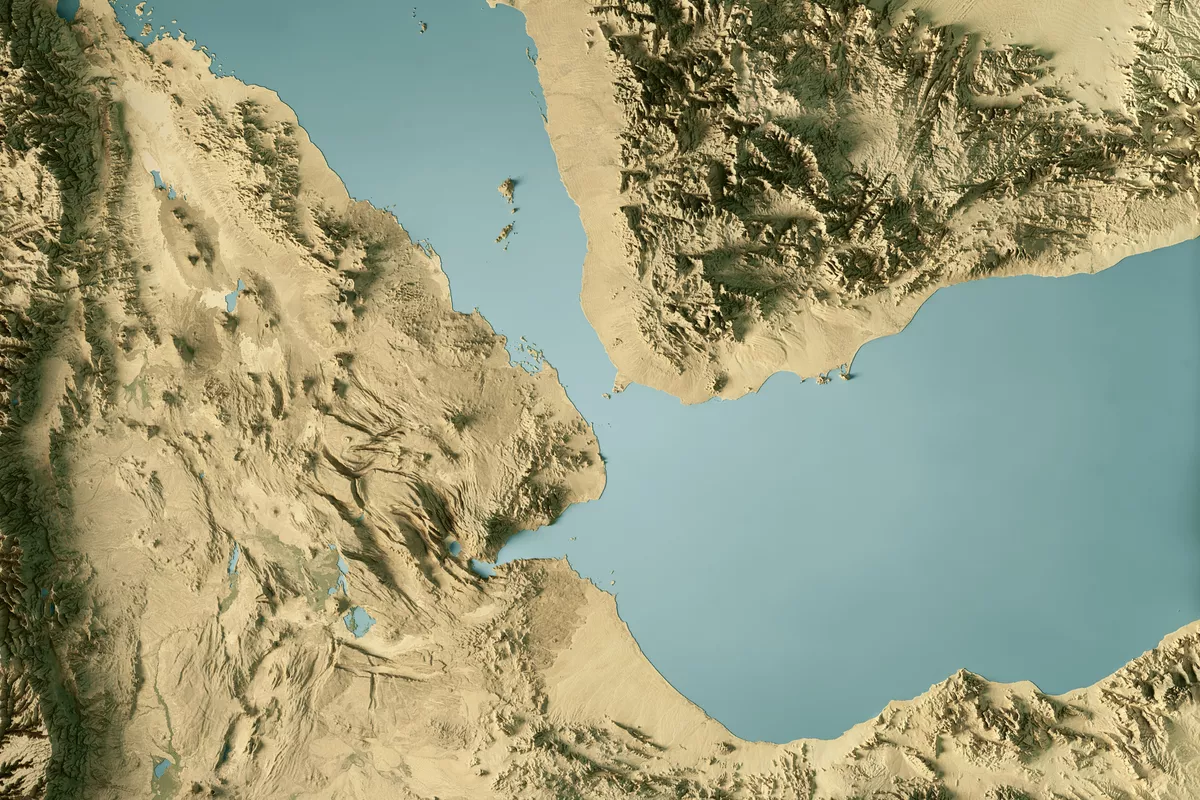
The Yemeni Houthis’ declaration of a maritime blockade targeting Saudi-linked shipping has pushed the regional escalation into a new and potentially far more dangerous phase. The issue is no longer limited to another confrontation between the Ansar Allah movement and Riyadh. It now concerns the security of one of the most important maritime corridors connecting Asian producers with European markets.
The Houthis have presented the measure as a response to what they describe as the long-running Saudi-led siege and restrictions imposed on Yemen’s ports and airports. They have threatened to prevent vessels associated with Saudi Arabia from passing through the Bab el-Mandeb Strait.
On July 23, the movement claimed that it had attacked two Saudi oil tankers, the Encelia and the Layla. Saudi authorities confirmed that the Encelia had been struck and that a fire aboard the vessel had subsequently been brought under control. The reported attack on the Layla, however, had not been independently verified by Reuters at the time of reporting.
This distinction is important. The current situation should not yet be described as the complete closure of Bab el-Mandeb. Rather, the Houthis appear to be attempting to establish a selective blockade against vessels linked to Saudi Arabia while simultaneously creating a broader atmosphere of insecurity for commercial shipping.
The central question is therefore not whether the Houthis can physically seal the entire strait. They do not necessarily need to exercise continuous military control over the waterway to disrupt maritime traffic.
Repeated attacks, or even a credible and persistent threat of missile and drone strikes, could be enough to make insurers raise premiums, persuade shipping companies to suspend voyages and force shipowners to reroute their vessels. In this sense, Bab el-Mandeb could become commercially unusable for some operators even while remaining formally open.
The Bab el-Mandeb Strait connects the Red Sea with the Gulf of Aden. Together with the Red Sea and the Suez Canal, it forms part of the shortest maritime route between Asia and Europe.
According to the US Energy Information Administration, approximately 12% of global seaborne oil trade and 8% of worldwide liquefied natural gas trade passed through Bab el-Mandeb during the first half of 2023. These are historical figures rather than current 2026 traffic data, but they demonstrate the strategic importance of the route under normal operating conditions.
If ships are unable or unwilling to use the Red Sea-Suez route, they must travel around southern Africa via the Cape of Good Hope. This increases voyage times, fuel consumption, crew expenses, insurance premiums and freight rates.
EIA calculations showed that a typical petroleum cargo travelling from the Persian Gulf to the Amsterdam-Rotterdam-Antwerp trading hub required approximately 19 days through the Suez Canal, compared with almost 35 days when sailing around the Cape of Good Hope.
The consequences would therefore extend far beyond the oil market. More expensive shipping would affect liquefied natural gas, petroleum products, food, industrial equipment, electronics, vehicles and other goods transported between Asia and Europe. Higher logistics costs would eventually be incorporated into consumer prices.
Former US associate deputy energy secretary Randa Fahmy has warned that the widening conflict could expose the global oil market to a major shock. She has also pointed to the additional danger posed by Houthi activity around Bab el-Mandeb.
The danger becomes considerably greater when developments in Bab el-Mandeb are considered alongside the disruption of traffic through the Strait of Hormuz.
Hormuz and Bab el-Mandeb perform different but interconnected functions. Hormuz is one of the world’s most important routes for oil and gas exports from the Persian Gulf. Bab el-Mandeb, meanwhile, provides access from the Indian Ocean and Gulf of Aden to the Red Sea and the Suez Canal.
Pressure on both waterways would therefore affect different sections of the same global energy and logistics system. It could restrict Gulf energy exports while simultaneously undermining the shortest transportation route between Asia and Europe.
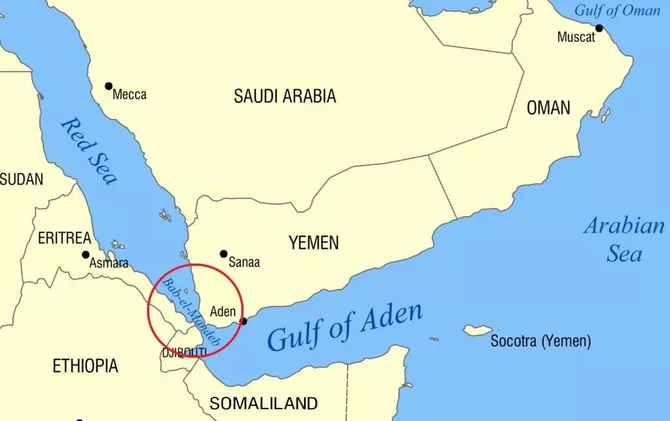
photo: CEGIT
However, the often-cited figure of 30% requires careful interpretation. The World Bank has estimated that the Suez Canal-Red Sea-Bab el-Mandeb corridor historically carried around 30% of global container traffic. This figure relates to the Red Sea and Suez route under normal conditions; it should not be presented as the share of global container shipping that would automatically disappear because of the simultaneous disruption of Hormuz and Bab el-Mandeb.
Saudi Arabia has spent decades developing alternatives to the Strait of Hormuz. Its East-West crude oil pipeline transports oil from the kingdom’s eastern production areas to the Red Sea port of Yanbu.
The geography of Yanbu, however, must be understood correctly. Tankers carrying Saudi oil from Yanbu to Europe can travel north through the Red Sea and the Suez Canal without passing through Bab el-Mandeb.
The greatest difficulty would arise for cargoes travelling from Yanbu toward Asian markets. Those vessels would normally sail south through Bab el-Mandeb and then east into the Indian Ocean. If the southern exit from the Red Sea became unsafe, Asia-bound ships would have to use much longer and more expensive routes, potentially travelling north through Suez before going around Africa.
The Joint Maritime Information Center, a maritime security information body associated with the Bahrain-based Combined Maritime Forces, reported that sources close to the Houthis claimed the movement had completed preparations for attacks and deployed missiles and drones near Bab el-Mandeb.
That information should not be described as an independent JMIC confirmation. In the same advisory, the center stated that it had not yet observed significant changes in vessel routes and that commercial traffic was continuing at the time of the report.
Subsequent developments nevertheless demonstrated that the warnings were beginning to influence the behaviour of shipping companies. Reuters reported that at least five tankers changed course following the Houthi threats, with some vessels reversing direction or indicating alternative routes through the Suez Canal.
Even so, Bab el-Mandeb had not been fully closed as of July 24. Shipping data cited by Reuters showed that 32 commodity tankers passed through the strait on July 23, compared with 26 on the previous day. Traffic through the Strait of Hormuz, by contrast, had been reduced much more sharply.
This suggests that the most likely immediate scenario is not the complete military closure of Bab el-Mandeb but the establishment of a selective and unstable risk regime. Saudi-linked vessels may become direct targets, while other operators could continue using the route depending on their ownership, cargo, destination and assessment of the threat.
Some analysts have described the Houthi escalation as the opening of a “second front.” Yet that expression does not fully reflect the nature of the crisis.
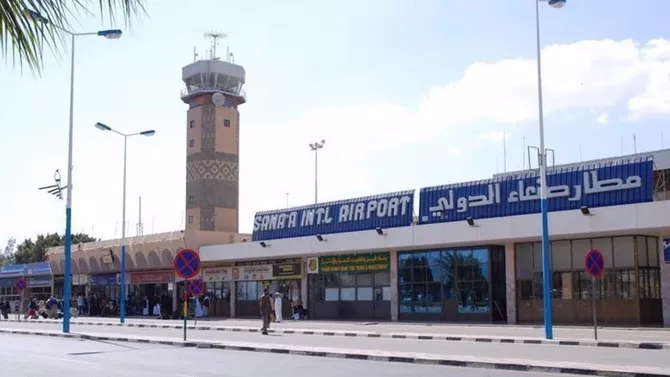
photo: Peoples Dispatch
A traditional second front normally refers to an additional theatre of direct warfare between identifiable states or military blocs. In the present case, the military confrontation may remain geographically limited, while its economic effects spread across Europe, Asia and Africa.
The escalation also risks reigniting conflict inside Yemen. Yemen’s internationally recognized government claimed responsibility for a strike on Sanaa airport, saying that it had acted to prevent an Iranian aircraft from landing in the Houthi-controlled capital. The Houthis blamed Saudi Arabia for the incident, carried out retaliatory attacks and subsequently announced their maritime blockade.
Even if the confrontation is outwardly presented as a conflict between the Houthis, Saudi Arabia and Yemen’s internationally recognized authorities, its strategic context is much broader. Yemen has once again become one of the arenas through which the confrontation between Iran and the United States, as well as the struggle over regional energy infrastructure, is being conducted.
Iranian Parliament Speaker Mohammad Bagher Ghalibaf has warned that if Iran is prevented from selling its oil, other regional producers will also be unable to export theirs safely. The statement indicates that Tehran views pressure on regional energy routes as a possible instrument of deterrence and retaliation.
At the same time, US President Donald Trump has spoken about the possibility of a “massive attack” on Iran that could be larger than previous operations. Diplomatic contacts between Washington and Tehran have continued intermittently, but they have not yet produced a durable mechanism capable of containing the escalation.
Can the Houthis close Bab el-Mandeb?
A complete and lasting military blockade would be difficult to enforce. It would require sustained surveillance, sufficient missile and drone stocks, reliable targeting capabilities and the ability to withstand counterstrikes from regional and international forces.
But a formal blockade is not the only form of closure.
If attacks become frequent enough, the cost of insurance rises sharply and major shipping companies decide that the risk is unacceptable, the strait could become partially closed in commercial terms. The Houthis would not need to stop every vessel. They would only need to convince enough shipowners that passage was no longer economically or physically safe.
For the moment, Bab el-Mandeb remains open. Nevertheless, the attacks on Saudi shipping and the rerouting of several tankers show that the threat is already influencing commercial decisions.
The most realistic danger is therefore not that every vessel will suddenly disappear from the strait, but that traffic will become increasingly selective, expensive and unpredictable.
If the pressure on Bab el-Mandeb continues while the Strait of Hormuz remains severely disrupted, the consequences will reach far beyond Yemen, Saudi Arabia or Iran. They will be felt at European ports, Asian factories, African food markets and in the prices paid by consumers around the world.
The military front may remain in the Middle East, but the economic front would become global.