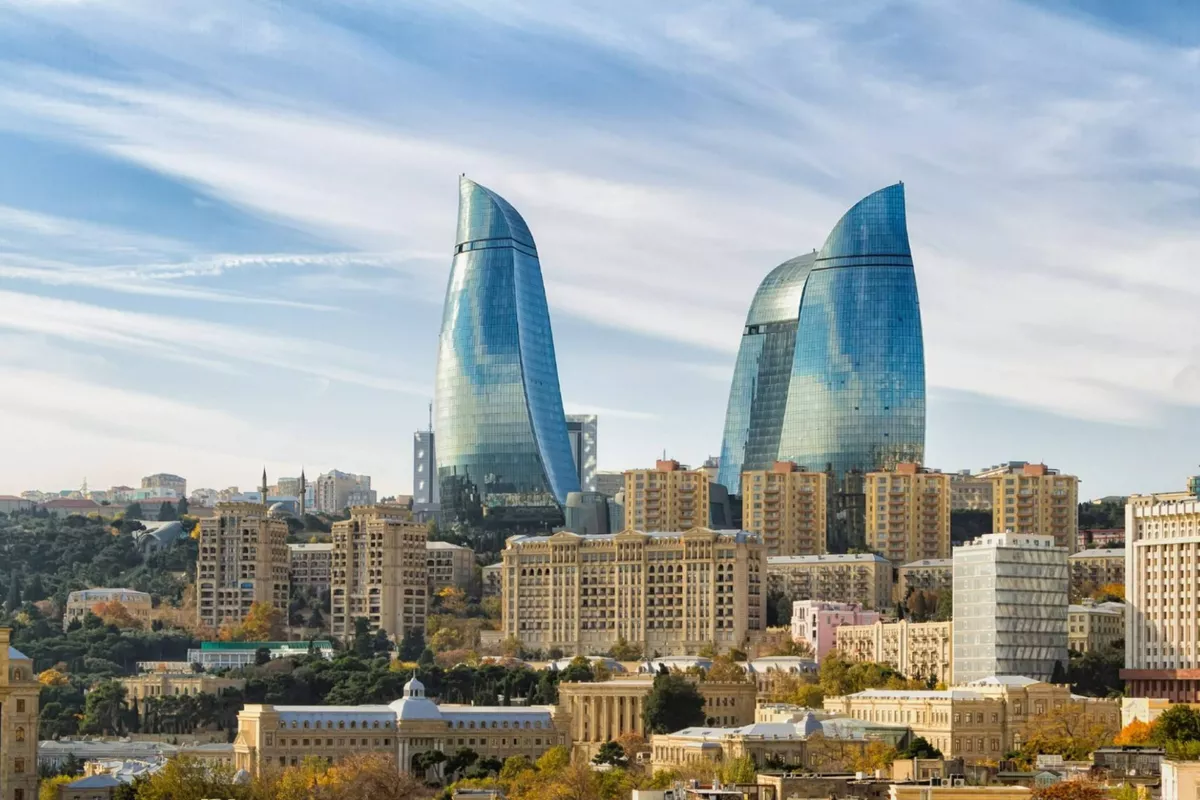
In international politics, a country’s influence is not always determined by the size of its territory or population. History offers numerous examples of relatively small states acquiring influence far beyond what their formal characteristics might suggest. The Netherlands achieved this through trade and maritime logistics, Switzerland through diplomatic mediation, and Singapore through a combination of strategic geography, advanced infrastructure, and pragmatic foreign policy.
Modern Azerbaijan is likewise seeking to move beyond the traditional role of a small post-Soviet republic. Its growing foreign policy significance stems from several factors: its position between Europe and Asia, energy resources, transport infrastructure, military and political capabilities, and ability to maintain relations with competing centres of power.
This makes it possible to speak of Azerbaijan’s gradual emergence as a middle power. Such status, however, is not conferred by an official decision. It is demonstrated by the extent to which a country can influence regional developments, advance international initiatives, and transform its geographical advantages into tangible political instruments.
From restoring territorial control to a new diplomatic challenge
The most significant change in Azerbaijan’s position in recent years has been the restoration of control over territories that remained outside Baku’s jurisdiction for decades. The outcome of the Second Karabakh War in 2020 and the events of September 2023 fundamentally altered the military and political landscape of the South Caucasus.
Within Azerbaijan, these developments are directly associated with the political course pursued by President Ilham Aliyev. Indeed, for many years, the country’s leadership simultaneously strengthened the armed forces, developed relations with Türkiye and Israel, maintained channels of communication with Russia, and expanded energy cooperation with Europe.
Military victory alone, however, does not guarantee lasting peace. Historical experience shows that the most difficult phase often begins after the end of a conflict. Following the Second World War, France and Germany had to build an entire system of economic interdependence to prevent a recurrence of past wars. Egypt and Israel, too, underwent a lengthy transition from ending armed confrontation to establishing practical coexistence after the Camp David Accords.
Azerbaijan’s ability to strengthen its position will therefore depend not only on its capacity to defend the results already achieved, but also on whether it can transform the new regional reality into a functioning system of peace, trade, and open communications.
The Washington milestone and the peace process
An important milestone came on 8 August 2025, when the agreed text of the agreement on the establishment of peace and interstate relations between Azerbaijan and Armenia was initialled in Washington. The foreign ministers of the two countries initialled the document in the presence of Ilham Aliyev, Nikol Pashinyan, and US President Donald Trump.
A joint declaration was signed at the same time, in which the parties confirmed the need to continue their work towards the final signing and ratification of the agreement. From a legal perspective, it is therefore important to distinguish between the initialling of an agreed text and a peace treaty that has entered into force. The Washington documents created the political foundation for a settlement, but the practical durability of peace will depend on the completion of subsequent procedures and implementation of the agreements reached. (Joint Declaration of 8 August 2025)
The significance of the Washington process extends beyond Azerbaijani-Armenian relations. If borders are opened and transport routes restored, the South Caucasus could gradually move away from the logic of dividing lines and towards the model of a transit region.
Similar transformations have already taken place elsewhere. After the end of the Cold War, Central European countries used transport connectivity and cross-border trade as instruments of economic rapprochement. Replicating this experience in the South Caucasus will require considerably more time and political trust, but the economic rationale is clear: reopening communications could connect the Caspian basin, Central Asia, Türkiye, and European markets through shorter routes.
photo: getty images
The Washington visit also had separate significance for Azerbaijani-US relations. Baku and Washington signed a memorandum establishing a Strategic Working Group tasked with preparing a Charter on Strategic Partnership. This does not represent a completed alliance, but rather the beginning of the institutionalisation of cooperation in security, energy, trade, and regional connectivity. (Memorandum on the Strategic Working Group)
From balancing to a multi-vector foreign policy
For many years, Azerbaijan’s foreign policy has been based on avoiding one-sided dependence. Baku has developed allied relations with Türkiye, maintained an energy partnership with the European Union, engaged with the United States, preserved working relations with Russia, participated in the Non-Aligned Movement, and simultaneously expanded its ties with China, Central Asia, the Islamic world, and African states.
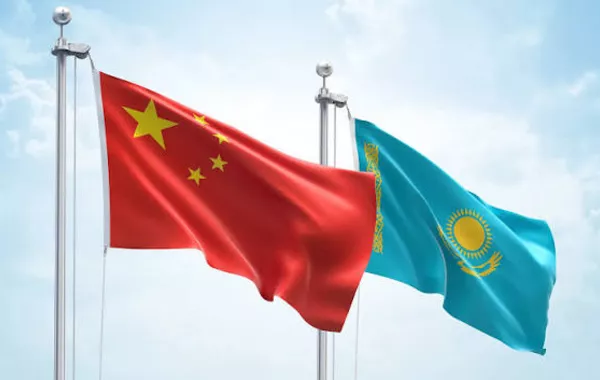
This approach bears some resemblance to the policies pursued by several other small and medium-sized states. Kazakhstan also seeks to cooperate simultaneously with Russia, China, the European Union, Türkiye, and the United States. The United Arab Emirates combines a strategic partnership with the West with active engagement across Asia and Africa. Indonesia, while remaining Southeast Asia’s largest country, avoids rigid alignment with any single military-political bloc.
Such a strategy provides room for manoeuvre but requires careful calculation. The sharper the rivalry between global centres of power becomes, the more difficult it is to maintain an equidistant position. A multi-vector policy can therefore work only when a state possesses its own resources, infrastructure, and clearly defined value for external partners.
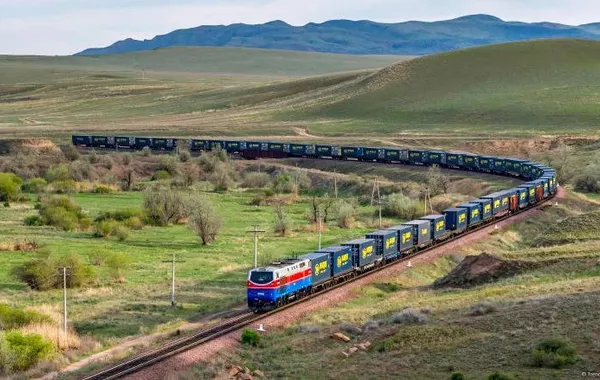
Azerbaijan has such assets. They include its energy resources, the Caspian Sea, the Southern Gas Corridor, the Baku-Tbilisi-Kars railway, and the prospects for developing the Middle Corridor between China and Europe.
Why Europe regards Azerbaijan as an important partner
Azerbaijan’s relations with Europe cannot be reduced solely to political declarations. They have a very concrete economic foundation.
According to the Council of the European Union, the EU accounted for approximately 41.2% of Azerbaijan’s foreign trade in 2024 and was the largest market for Azerbaijani exports. Azerbaijan, in turn, supplied around 5% of the natural gas consumed in the EU. This is not a dominant share of the overall European market, but Azerbaijani supplies are particularly important for several countries in Southern and Southeastern Europe. (Council of the EU data)
Historically, energy routes have always had a political dimension. The construction of the Baku-Tbilisi-Ceyhan oil pipeline enabled Caspian oil to reach the Mediterranean without passing through Russian pipelines. The Southern Gas Corridor later created a direct route for Azerbaijani gas supplies to Europe.
Following the outbreak of the Russia-Ukraine war and the EU’s efforts to reduce its dependence on Russian fuel, the role of alternative suppliers increased. In March 2026, European Council President António Costa and Ilham Aliyev once again described Azerbaijan as a reliable partner in diversifying Europe’s energy supplies. (Joint EU-Azerbaijan press statement)
At the same time, relations between Baku and European institutions are not free of disagreements. Human rights, political freedoms, and the operating environment for the media regularly become subjects of criticism. It is therefore more accurate to speak not of unconditional political alignment, but of a pragmatic partnership based on energy, trade, security, and transport interests.
Azerbaijan’s hosting of the European Political Community summit in May 2028 could become another indicator of the country’s growing integration into Europe’s political architecture. Notably, Azerbaijan’s candidacy was also supported by Armenia. Against the backdrop of their previous confrontation, this development carries symbolic significance in its own right. (Ilham Aliyev’s address at the EPC summit)
photo: xalqqazeti
The Turkic dimension and the Islamic world
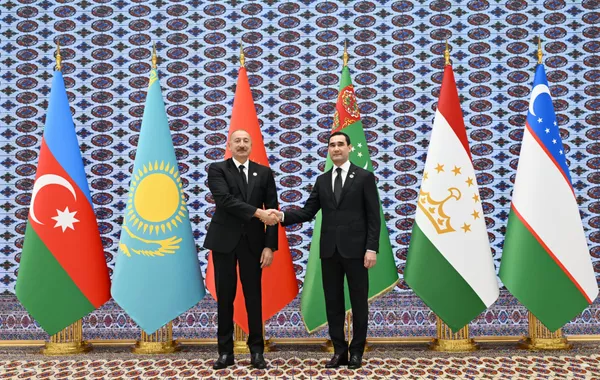
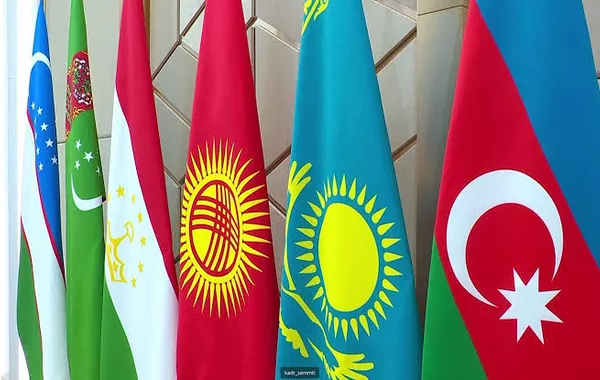
Türkiye occupies a special place in Azerbaijan’s foreign policy. Following the 2021 Shusha Declaration, relations between the two countries formally acquired the character of an alliance. At the same time, Baku actively participates in the Organization of Turkic States, cooperating with Kazakhstan, Uzbekistan, Kyrgyzstan, and Turkmenistan.
The growing importance of the Turkic format is explained not only by shared history and culture. Central Asia is becoming an increasingly important source of raw materials and transit flows, while Azerbaijan serves as the region’s natural gateway to Türkiye and Europe across the Caspian Sea.
Baku does not, however, limit itself to Turkic integration. Its membership of the Organisation of Islamic Cooperation and accession to the D-8 provide additional opportunities to develop relations with countries in the Middle East, South Asia, and Africa.
For Azerbaijan, these different dimensions are not necessarily contradictory. Its own model combines a Turkic identity, membership of the Islamic world, the secular character of the state, and engagement with Europe. This position at the intersection of different political and cultural spaces can itself be regarded as a foreign-policy asset.
Multilateral diplomacy as an instrument of influence
Middle powers are generally unable to impose their own rules on the international system. They can, however, expand their influence through organisations, coalitions, and issue-specific initiatives. Canada has traditionally relied on peacekeeping diplomacy, Norway on conflict mediation, Qatar on providing negotiating platforms, and Singapore on economic and technology forums.
Azerbaijan follows a similar logic, although it has chosen its own areas of focus. From 2019 to 2023, the country chaired the Non-Aligned Movement. In 2024, Baku hosted COP29, where participants agreed on a target of increasing annual climate finance for developing countries to $300 billion by 2035. Assessments of the conference’s outcomes varied, but the very fact that an agreement was reached among nearly 200 participants constituted a significant diplomatic achievement. (COP29 outcomes according to the UNFCCC)
In May 2026, Baku hosted the 13th World Urban Forum. According to the United Nations, more than 57,000 people from 176 countries participated in person and online, making the Baku forum the largest in the event’s 24-year history. (WUF13 outcomes)
In July 2025, Khankendi hosted a summit of the Economic Cooperation Organization. For Baku, the choice of venue carried not only organisational but also political significance: Azerbaijan’s leadership was demonstrating Karabakh’s return to the international economic and diplomatic agenda. As part of the inaugural ECO Week, events were also held in Shusha, Aghdam, and Lachin. (ECO Summit in Khankendi)
Azerbaijan also chaired the Conference on Interaction and Confidence Building Measures in Asia in 2024-2026. Hosting CICA and Organisation of Islamic Cooperation summits could further increase the country’s diplomatic visibility. Yet the number of events alone does not automatically translate into political influence. What ultimately matters is the substance of the decisions adopted at these forums and whether they lead to practical follow-up.
President Ilham Aliyev has played a defining role in shaping Azerbaijan’s modern foreign-policy model. The consistent course pursued under his leadership has already produced a range of strategic results: the restoration of territorial integrity and sovereignty, stronger national security, broader international partnerships, and the preservation of the country’s independence amid intensifying rivalry among global powers. The next stage should be to convert these achievements into long-term advantages - lasting peace, open communications, new investment, and the development of the non-oil sector.
It is already possible to conclude that Azerbaijan is steadily consolidating its position as a middle power capable of influencing regional processes and contributing to a broader international agenda. Its current activism is not the product of a temporary or accidental geopolitical environment, but the result of a long-term strategy based on strengthening the state, making effective use of its geographical and economic advantages, and pursuing an independent foreign policy.