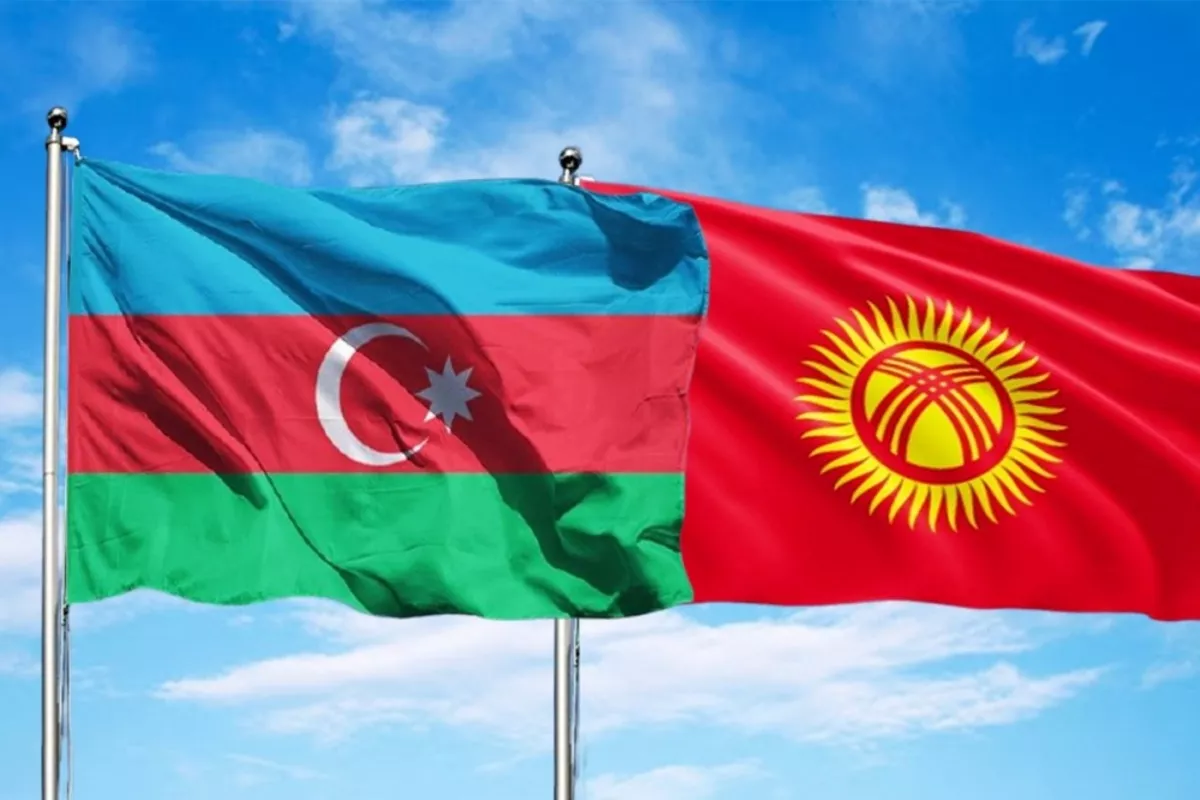
Relations between Azerbaijan and Kyrgyzstan have intensified considerably in recent years. While cooperation was previously based largely on linguistic, cultural and historical affinities, Baku and Bishkek are now seeking to give their bilateral ties more tangible political, economic and infrastructural substance.
The clearest indication of this shift was the signing of the Treaty on Allied Relations on July 31, 2026. The agreement elevated the formal status of bilateral cooperation, but a new designation alone does not guarantee qualitative change. Its practical significance will depend on whether the two countries can translate political commitments into sustainable economic projects, stronger trade and improved transport connectivity.
Political momentum
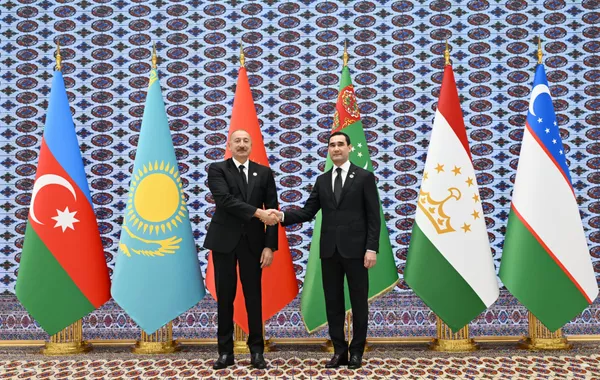
The current rapprochement is underpinned by regular high-level dialogue. Azerbaijani President Ilham Aliyev has made two state visits and four working visits to Kyrgyzstan. Kyrgyz President Sadyr Japarov has visited Azerbaijan once on an official visit and once on a state visit, in addition to making six working trips.
This frequency of contact reflects mutual interest, but there is another factor at play. Azerbaijan and Kyrgyzstan participate in several common regional platforms, including the Organization of Turkic States, the Commonwealth of Independent States and the Shanghai Cooperation Organisation, in which Baku holds dialogue partner status. Consequently, bilateral engagement often develops in parallel with multilateral diplomacy.
The political relationship acquired a more institutional foundation in April 2022, when the Declaration on Strategic Partnership and the memorandum establishing the Interstate Council were signed in Baku. The two countries have concluded a total of 119 documents. Although this represents a broad legal framework, the actual depth of cooperation is determined not by the number of agreements but by how effectively they are implemented.
The treaty on allied relations can be viewed as part of Baku’s broader effort to strengthen ties with Central Asian states. For Bishkek, meanwhile, Azerbaijan is an attractive partner because of its independent foreign policy, energy resources and position along routes connecting Central Asia with the South Caucasus, Türkiye and European markets.
The transport dimension
Transport is among the most promising areas of cooperation. As a landlocked country, Kyrgyzstan depends on transit corridors crossing neighboring states. Due to its location on the Caspian Sea, Azerbaijan can offer Bishkek an additional route to Western markets.
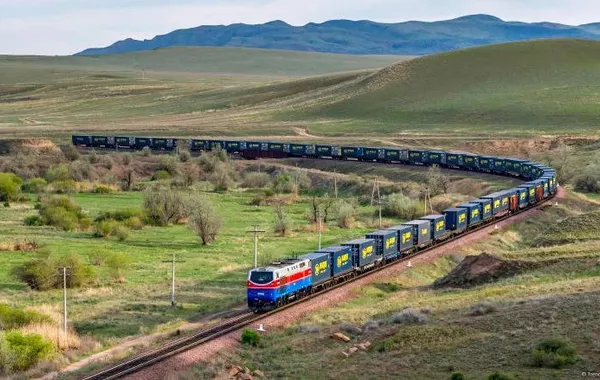
This primarily concerns the Middle Corridor, which connects China and Central Asia with Europe through the Caspian Sea, Azerbaijan, Georgia and Türkiye. Kyrgyzstan does not yet occupy the same position in this system as Kazakhstan. However, the development of the China-Kyrgyzstan-Uzbekistan railway could potentially enhance its role in Eurasian freight transportation.
This is equally important for Baku. The more Central Asian countries use Trans-Caspian infrastructure, the greater the potential demand for Azerbaijani ports, railways and logistics centers. Azerbaijan’s interest in closer ties with Kyrgyzstan is therefore driven not only by political and cultural solidarity but also by pragmatic economic considerations.
Air connectivity is also contributing to closer relations. AZAL currently operates four scheduled weekly flights on the Baku-Bishkek-Baku route, as well as one non-scheduled weekly flight between Baku and Issyk-Kul. Direct flights are important for business ties and tourism, but they will not substantially increase economic exchange without stronger corporate links, higher investment and lower transportation costs.
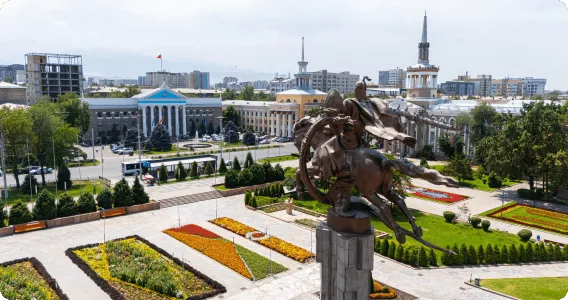
photo: AZAL
Trade is growing, but from a low base
Political relations between Azerbaijan and Kyrgyzstan continue to develop faster than economic cooperation. This is a common feature of relations among many post-Soviet states: intensive interstate dialogue is not always accompanied by comparable growth in trade and investment.
According to data from Azerbaijan’s State Customs Committee, bilateral trade turnover reached $77.2 million in 2025, representing an increase of 93 percent compared with the previous year. The longer-term change is also significant. Trade expanded from approximately $10.8 million in 2022 to nearly $65 million in 2023. Despite subsequent fluctuations, the overall trajectory has therefore been clearly upward.
However, these figures require context. Even after rapid percentage growth, the absolute volume of bilateral trade remains modest compared with Azerbaijan’s commerce with Türkiye, Kazakhstan or Uzbekistan. The $77.2 million recorded in 2025 also accounted for only a small fraction of Azerbaijan’s total foreign trade. The gap between strong political relations and relatively limited commercial exchange supports the assessment that economics remains the least developed component of the partnership.
The two governments have set an ambitious target of increasing annual trade turnover to $500 million. Reaching that level would mean expanding trade more than sixfold compared with the 2025 figure. It would require more than simply increasing existing supplies. The two countries would need to diversify the range of traded goods, reduce logistics costs, support joint ventures and connect Kyrgyz businesses more closely to Trans-Caspian transport routes.
The two economies currently have limited complementarity. Azerbaijan is an oil and gas exporter with expanding transport infrastructure, while Kyrgyzstan remains heavily dependent on services, agriculture, gold mining, remittances from migrant workers and trade with neighboring countries.
Potential areas of cooperation include agriculture, food production, tourism, pharmaceuticals, logistics, renewable energy and digital services. Azerbaijani companies may also find opportunities in Kyrgyzstan’s infrastructure sector. This, however, would require predictable business conditions, reliable investment protection, direct contacts between companies and more efficient transportation links.
The Azerbaijan-Kyrgyzstan Development Fund provides an additional mechanism for supporting joint projects. Its contribution should ultimately be assessed through measurable results: the number of commercially viable projects it finances, the amount of private capital it attracts and its impact on trade and employment.
During the Azerbaijani president’s July 2026 visit, three joint projects implemented within the framework of the fund were inaugurated, while eight additional initiatives were launched. This indicates that the financial mechanism is beginning to produce practical activity. It is nevertheless too early to determine whether these projects will significantly alter the structure and scale of bilateral economic relations.
Economic performance will therefore be the main test of the new treaty. If the upgraded status merely leads to more official visits and additional documents, its practical significance will remain limited. If the two countries establish sustainable joint ventures, launch transport projects and move closer to the $500 million trade target, the relationship will acquire a more durable foundation.
Soft power and symbolic diplomacy
Humanitarian and symbolic initiatives occupy a prominent place in bilateral relations. With Azerbaijan’s financial support, the Kyrgyz-Azerbaijani Friendship Park, the Nizami Ganjavi Secondary School and the Heydar Aliyev Gymnasium Complex were established in Bishkek. In Baku, a school has been named after Kyrgyz writer Chingiz Aitmatov, and a monument to him has been erected in the city’s Binagadi district.
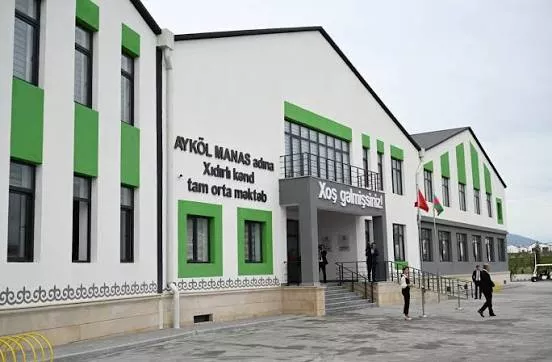
photo: getty images
With financial support from the Kyrgyz government, the Aykol Manas Secondary School, designed for 528 pupils, was built in the village of Khidirli in Azerbaijan’s Aghdam district. The project has particular political significance because it was implemented in an area where post-war reconstruction is one of Azerbaijan’s main priorities.
Such initiatives help foster favorable public perceptions of bilateral relations. However, humanitarian cooperation should not be confined to monuments, parks and commemorative naming. University exchanges, joint research, student programs, literary translations and professional networks could have a more lasting impact.
The establishment of sister-city relations between Baku and Bishkek, as well as between Goychay and Kant, provides additional platforms for interaction. Their effectiveness, however, will depend on whether municipal ties produce concrete educational, tourism and business projects.
The broader regional context
The rapprochement between Baku and Bishkek is unfolding amid the growing geopolitical importance of Central Asia. China, Russia, Türkiye, the European Union, the United States and the Gulf states are all paying greater attention to the region. Central Asian governments, for their part, are seeking to diversify their international partnerships and reduce dependence on any single political or transport route.
Azerbaijan occupies a distinctive position in this emerging landscape. It is not a Central Asian state, but the Caspian Sea enables it to serve as a connecting link between Central Asia and the South Caucasus. Baku is also developing separate cooperation formats with Kazakhstan, Uzbekistan, Turkmenistan, Tajikistan and Kyrgyzstan.
For Kyrgyzstan, closer relations with Azerbaijan provide additional room for foreign-policy maneuver without necessarily creating tensions with its traditional partners. Baku does not claim a dominant role in Central Asia and is therefore perceived primarily as an additional diplomatic, economic and transport partner.
At the same time, the importance of shared Turkic identity should not be overstated. Cultural affinity facilitates political dialogue, but it does not eliminate differences in geography, economic interests and foreign-policy priorities. Kyrgyzstan remains closely connected to Russia, China and its Central Asian neighbors, while Azerbaijan’s foreign policy is more heavily focused on the South Caucasus, Türkiye, European energy markets and Trans-Caspian connectivity.
The two countries also operate within different economic environments. Kyrgyzstan is a member of the Eurasian Economic Union, while Azerbaijan is not. This creates both opportunities and regulatory complications. Kyrgyzstan can potentially serve as an additional point of access to the Eurasian market, but differences in customs procedures, technical standards and transport routes may also limit bilateral commerce.
What will determine the alliance’s viability?
The transition from strategic partnership to allied relations demonstrates the political willingness of Baku and Bishkek to deepen cooperation. The viability of this model, however, will be determined by several practical indicators:
growth in bilateral trade and investment;
progress towards the $500 million trade target;
Kyrgyzstan’s participation in Trans-Caspian transportation;
the establishment of commercially sustainable joint ventures;
stronger educational and technological exchanges;
the effective operation of the Interstate Council;
the implementation of previously signed agreements.
Relations between Azerbaijan and Kyrgyzstan can currently be described as politically active and culturally substantial, but still insufficiently supported by economic ties. The rise in bilateral trade to $77.2 million is encouraging, particularly given the low level recorded only a few years ago. Yet it remains a starting point rather than evidence that economic cooperation has already caught up with the political relationship.
The treaty on allied relations creates an opportunity to change this balance, although the outcome will depend on the practical work of both governments and the private sector.
The key question is not how frequently the two sides invoke the language of brotherhood, partnership and alliance, but whether they can build a system of mutual interests capable of surviving changes in the political environment. That is what distinguishes a functional alliance from a diplomatically attractive but largely symbolic arrangement.