Over the past decade, global attention has been focused primarily on the economic and technological rivalry between the United States and China. Against this backdrop, India’s rapid rise has long remained underestimated. Yet New Delhi is increasingly asserting itself not merely as one of the world’s fastest-growing economies, but also as an independent geopolitical power capable of proposing large-scale infrastructure initiatives and building international coalitions around them.
One of the most ambitious expressions of this strategy is the India-Middle East-Europe Economic Corridor, better known as IMEC. The initiative was unveiled during the G20 Summit held in New Delhi on September 9-10, 2023, and received the backing of India, the United States, Saudi Arabia, the United Arab Emirates, France, Germany, Italy and the European Union.
Officially, IMEC is presented as an international transport and economic initiative designed to connect South Asia with European markets. Its significance, however, extends far beyond logistics. The project represents an attempt to establish a new geoeconomic architecture across Eurasia-one capable of competing with China’s Belt and Road Initiative while simultaneously strengthening the positions of India, the United States, the Gulf monarchies and the European Union.
The project envisages two interconnected sections. The eastern route is intended to link Indian ports with the UAE by sea. The northern section would transport cargo from the Gulf through Saudi Arabia and Jordan to Israel’s Mediterranean coast, from where goods would continue to Europe by sea.
In the longer term, the corridor is expected to incorporate railways, port infrastructure, motorways, high-speed data cables, energy networks and pipelines for hydrogen and other forms of clean energy. IMEC is therefore conceived not simply as a trade route, but as an integrated infrastructure system combining transport, energy and digital connectivity.
Supporters of the initiative argue that it could significantly reduce delivery times between India and Europe, lower transportation costs, ease pressure on traditional maritime routes and strengthen the resilience of global supply chains. This objective has become particularly important after the pandemic, wars and the crisis in the Red Sea exposed the vulnerability of global trade to the disruption of individual transport chokepoints.
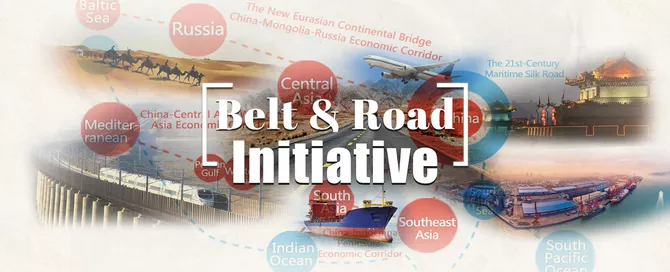
photo: CGTN
India Moves Beyond South Asia
For New Delhi, IMEC is an important instrument in India’s transformation from a regional power into one of the architects of the emerging international order. The Indian leadership is seeking to expand its influence beyond South Asia and establish the country as a key economic and political partner for both the Middle East and Europe.
India has already been actively developing trade relations with the UAE, Saudi Arabia, Israel and other regional states. For New Delhi, the Gulf monarchies are no longer merely suppliers of energy resources. They are increasingly becoming sources of investment and partners in high technology, logistics, food security and industrial production.
Against this background, IMEC complements minilateral formats such as I2U2, which brings together India, Israel, the United States and the UAE. Such mechanisms enable New Delhi to participate in shaping regional rules without joining rigid military-political alliances and while preserving the strategic autonomy that has traditionally defined Indian foreign policy.
The project also offers India an opportunity to present its partners with an alternative to China’s Belt and Road Initiative. Whereas Beijing has relied primarily on bilateral financing and infrastructure construction involving Chinese companies, New Delhi is promoting a multilateral model involving the United States, the EU, the Gulf monarchies and private capital.
IMEC has not yet reached the scale of China’s global infrastructure network. Its political importance lies elsewhere: for the first time, India has put forward its own vision of transcontinental connectivity and secured the support of leading Western and Middle Eastern states.
Haifa as a Strategic Hub
One of the central elements of IMEC’s western section is expected to be the Israeli port of Haifa. In 2022, a consortium comprising India’s Adani Ports and Special Economic Zone and Israel’s Gadot Group won a tender to privatise the port for approximately $1.2 billion. The Indian company acquired a 70 per cent stake, while its Israeli partner received 30 per cent.
The transaction had not only commercial but also strategic significance. By gaining control over one of the most important ports in the eastern Mediterranean, Indian business secured a potential gateway to European markets. At the same time, India strengthened its presence in a critical component of Israel’s transport infrastructure.
Under the proposed IMEC route, cargo arriving by rail from the Gulf would be shipped from Haifa to European ports. Yet Israel’s central role also makes the project vulnerable to political and military crises.
The war in Gaza, which began after the Hamas attack on Israel on October 7, 2023, sharply worsened the regional environment and brought the process of normalisation between Israel and Saudi Arabia to a halt. There is no sufficient basis to claim that the attack was carried out specifically to derail IMEC. Nevertheless, the subsequent escalation objectively damaged the political conditions necessary for the corridor’s implementation.
Before the outbreak of the war, Riyadh appeared to be moving gradually towards a possible agreement with Israel under US mediation. Such a deal could have provided the diplomatic foundation for a railway route linking the UAE, Saudi Arabia and Jordan with Israel’s Mediterranean coast. After October 2023, however, this process was effectively frozen.
The American Strategy of Competing with China
For the United States, IMEC represents an instrument for preserving influence in the Middle East amid China’s expanding presence. Over the past several years, Beijing has significantly strengthened its economic position in the region, becoming the largest trading partner of several Middle Eastern countries and deepening relations with both Iran and the Arab monarchies.
Washington is seeking to offer regional states an alternative infrastructure model in which US strategic interests are combined with India’s economic potential, the financial resources of Saudi Arabia and the UAE, and the technologies and markets of the European Union.
In this context, IMEC is intended to demonstrate that the United States and its partners are capable not only of criticising Chinese initiatives, but also of proposing their own long-term projects. At the same time, Washington gains an opportunity to strengthen cooperation between Israel and Arab countries by integrating their relations into a broader economic framework.
The initiative is consistent with the US strategy of preventing any single power from dominating the Middle East. Washington views China’s growing influence, Russia’s military presence and Iran’s regional activities as challenges to the existing balance of power.
The Iranian nuclear programme, Tehran’s development of ballistic missiles and the activities of armed groups aligned with Iran remain particular concerns for the United States and its regional partners. Houthi attacks on commercial vessels in the Red Sea have demonstrated that local conflicts can directly affect the global economy.
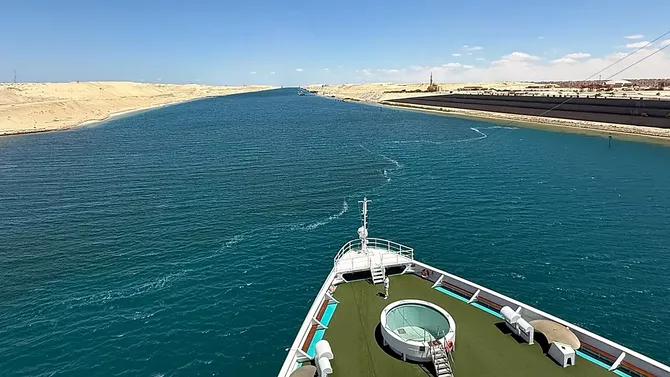
photo: euronews
The Suez Canal and the Vulnerability of Existing Routes
A significant share of trade between India and the European Union passes through the Arabian Sea, the Bab el-Mandeb Strait, the Red Sea and the Suez Canal. This remains one of the most important transport routes in global commerce, but it is also highly vulnerable.
Houthi attacks on commercial shipping forced many companies to redirect vessels around Africa via the Cape of Good Hope. This increased travel times, fuel costs, insurance premiums and freight charges.
For India, the creation of an alternative route is therefore not only a matter of economic efficiency, but also of strategic security. IMEC will not fully replace the Suez Canal, as maritime transport remains the cheapest way of moving bulk cargo. It could, however, provide an additional route for higher-value products, container shipments, urgent deliveries and energy infrastructure.
The principal advantage of IMEC lies not in displacing existing routes, but in diversifying them. The greater the number of transport links connecting Asia and Europe, the lower global trade’s dependence on a single canal, strait or conflict zone.
The Interests of Saudi Arabia and the UAE
For Saudi Arabia and the UAE, participation in IMEC forms part of a broader strategy of economic diversification. Both countries are seeking to reduce their dependence on oil exports by investing in transport infrastructure, logistics, industry, tourism, digital technologies and renewable energy.
IMEC could transform the Gulf states from raw-material exporters into major transit, manufacturing and logistics hubs. Railways, modern ports, logistics centres and digital systems could create new sources of revenue and employment.
For Riyadh, the project is consistent with the goals of Saudi Vision 2030, which envisages a profound modernisation of the country’s economy. The UAE, which has already emerged as one of the region’s principal trade and logistics centres, expects to strengthen the role of its ports, particularly Jebel Ali.
Trade figures demonstrate that there is a substantial economic basis for such cooperation. The European Union maintains a considerable volume of trade with Saudi Arabia and the UAE, while India has consistently expanded its commercial and investment ties with the Gulf states, Israel and Jordan.
The participants therefore have a genuine economic interest in establishing new supply chains. Yet the existence of commercial incentives does not automatically guarantee that political disagreements can be overcome.
Türkiye and the Competition Between Corridors
Türkiye has emerged as one of the most vocal critics of the initiative. President Recep Tayyip Erdoğan has argued that any transport corridor linking Asia and Europe should not bypass Turkish territory. Ankara maintains that Türkiye’s geographical position makes it a natural bridge between the two continents.
As an alternative to IMEC, Türkiye has promoted the Development Road project, which envisages the construction of railway and motorway links from Iraq’s planned Grand Faw Port through Iraqi and Turkish territory to Europe.
For Ankara, this is not only about commercial gain. Türkiye seeks to consolidate its status as the principal energy and logistics hub between Asia, the Middle East and Europe. A corridor passing through Israel and the eastern Mediterranean would objectively reduce the strategic importance of the Turkish route.
Nevertheless, competing projects are not necessarily mutually exclusive. The growth of trade between Asia and Europe is generating demand for multiple routes. IMEC, the Middle Corridor through Central Asia and the South Caucasus, the Türkiye-Iraq Development Road and the Suez Canal could coexist while serving different categories of cargo and different markets.
Competition will be determined not only by distance, but also by customs efficiency, security, transportation costs, political stability and the quality of infrastructure.
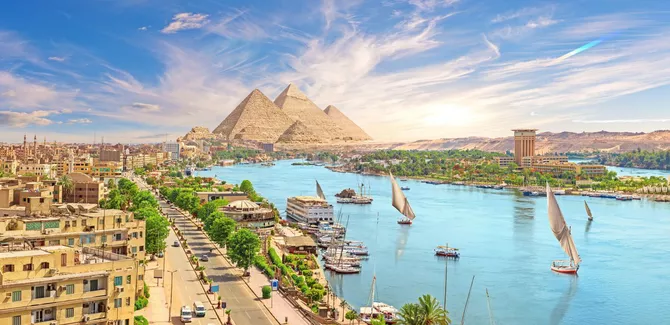
photo: Sem Elegant Voyage
The Egyptian Factor
Egypt also views IMEC with caution. Revenues from the Suez Canal are an important source of foreign currency for the Egyptian economy. The emergence of an alternative route between India and Europe could potentially redirect part of the existing cargo flow.
However, the likelihood of IMEC fully replacing the Suez Canal is extremely low. The corridor would require several transfers between maritime and railway transport, inevitably increasing costs and demanding complex coordination.
Despite the existing risks, the Suez Canal will retain its central role in the transportation of oil, liquefied natural gas, raw materials and bulk cargo. IMEC is more likely to become a competitor in selected segments and an additional route during periods of crisis than a complete replacement for Egypt’s transport artery.
The Eastern Section Is Advancing More Rapidly
Despite political obstacles, individual elements of IMEC are gradually acquiring practical substance. The most visible progress has been recorded on the eastern section connecting India and the UAE.
A system of accelerated cargo exchange and digitalised customs clearance is being developed between the Indian ports of Mundra and Jawaharlal Nehru and the UAE’s Jebel Ali Port. The intergovernmental framework agreement concluded between India and the UAE in 2024 created an institutional foundation for the development of this section.
In practice, this involves the creation of a “virtual trade corridor” that enables the advance exchange of cargo data, reduces bureaucratic procedures and accelerates customs clearance. It demonstrates that IMEC can develop gradually even when the entire route cannot yet function as a single integrated system.
The situation surrounding the northern section is far more complicated. Its implementation requires the construction or modernisation of railways through Saudi Arabia and Jordan, the harmonisation of infrastructure, the coordination of tariffs and border procedures, and the establishment of stable political relations between all participants.
The absence of normalised relations between Saudi Arabia and Israel remains the principal obstacle. Without a political decision by Riyadh, the creation of a fully operational land route to Haifa is virtually impossible.
Additional risks arise from instability in Gaza, Lebanon, Syria and Yemen, Houthi attacks in the Red Sea and continuing tensions surrounding Iran’s nuclear programme. Each of these factors can delay investment and increase the overall cost of the project.
From a Single Corridor to Modular Implementation
The existing circumstances are forcing participants to reconsider their initial approach to IMEC. Instead of waiting for the simultaneous launch of the entire route, increasing attention is being given to modular implementation.
This model envisages the phased development of those sections that are already politically and logistically viable. Priority areas include maritime links between India and the UAE, digital customs systems, port expansion, the construction of individual railway lines and the development of energy infrastructure.
Such an approach allows participants to preserve the broader strategic concept even in the absence of progress on one of its sections. Individual elements of the project could begin generating economic benefits before the corridor is completed as a whole.
Modularity may ultimately become the principal condition for IMEC’s viability. The Middle East is characterised by significant political volatility, meaning that any large-scale project dependent on the simultaneous consent of all regional actors risks remaining on paper indefinitely. Phased development would make the initiative more resilient to regional crises.
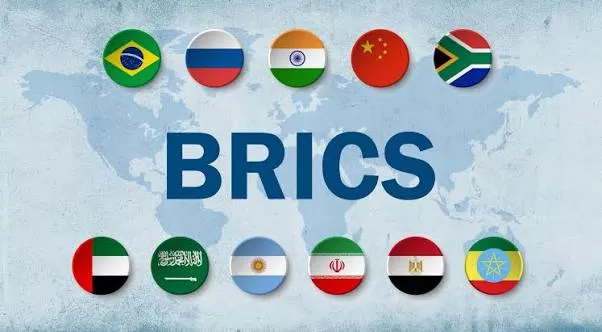
photo: getty images
Geoeconomics Rather Than Ideological Blocs
IMEC reflects a broader transformation of the international system. India, Saudi Arabia and the UAE are no longer prepared to remain merely objects of great-power competition. They increasingly seek to influence the rules governing trade, investment and regional security.
At the same time, the emerging order cannot be reduced to a simple division between Western and Chinese blocs. India maintains close relations with Russia, cooperates with the United States and Europe, remains a member of BRICS and simultaneously participates in Western-backed infrastructure initiatives. Saudi Arabia and the UAE likewise continue to develop relations with Washington, Beijing and Moscow.
IMEC should therefore not be viewed exclusively as an anti-China project. For most of its participants, it is a means of diversifying partnerships and expanding room for foreign policy manoeuvre. Even if Washington sees the corridor as an instrument of competition with Beijing, India and the Arab states will seek to avoid making a rigid choice between competing centres of power.
The Project’s Prospects
IMEC possesses considerable economic and strategic potential, but its success is far from guaranteed. Its main advantage is the convergence of the long-term interests of India, the Gulf states, the United States and Europe. All are interested in diversifying trade routes, strengthening infrastructure and reducing dependence on vulnerable transport chokepoints.
At the same time, the project faces serious constraints. These include the absence of Saudi-Israeli normalisation, the war in Gaza, the activities of Iran-aligned armed groups, competition from Türkiye and China, high construction costs and the need to harmonise the legislation and procedures of several states.
IMEC should be viewed neither as a project destined to fail nor as a ready-made alternative to the Suez Canal and China’s Belt and Road Initiative. At this stage, it is better understood as a strategic concept whose individual components are gradually moving towards practical implementation.
Its significance lies in the fact that India has, for the first time, emerged as the initiator of an infrastructure system capable of connecting South Asia, the Middle East and Europe. Even partial implementation would strengthen New Delhi’s position as one of the principal centres of the emerging multipolar world.
Ultimately, the fate of IMEC will depend not only on investment volumes and infrastructure quality, but also on the ability of regional states to separate long-term economic interests from political, religious and ideological conflicts.
The corridor could become the foundation of a new stage of international cooperation, but only if the participating countries are prepared to build pragmatic relations, respect one another’s sovereignty and ensure the security of cross-border trade. IMEC is therefore both an economic initiative and a test of the political maturity of the entire region.