Central Asia is rapidly becoming a space where the interests of the world’s major economic powers increasingly intersect. China, Russia, the European Union, Türkiye, South Korea, the Gulf states, Japan and the United States are all looking for opportunities in a region that was once viewed primarily through the lens of Russian and Chinese influence.
Now, South Korea is becoming an increasingly visible player.
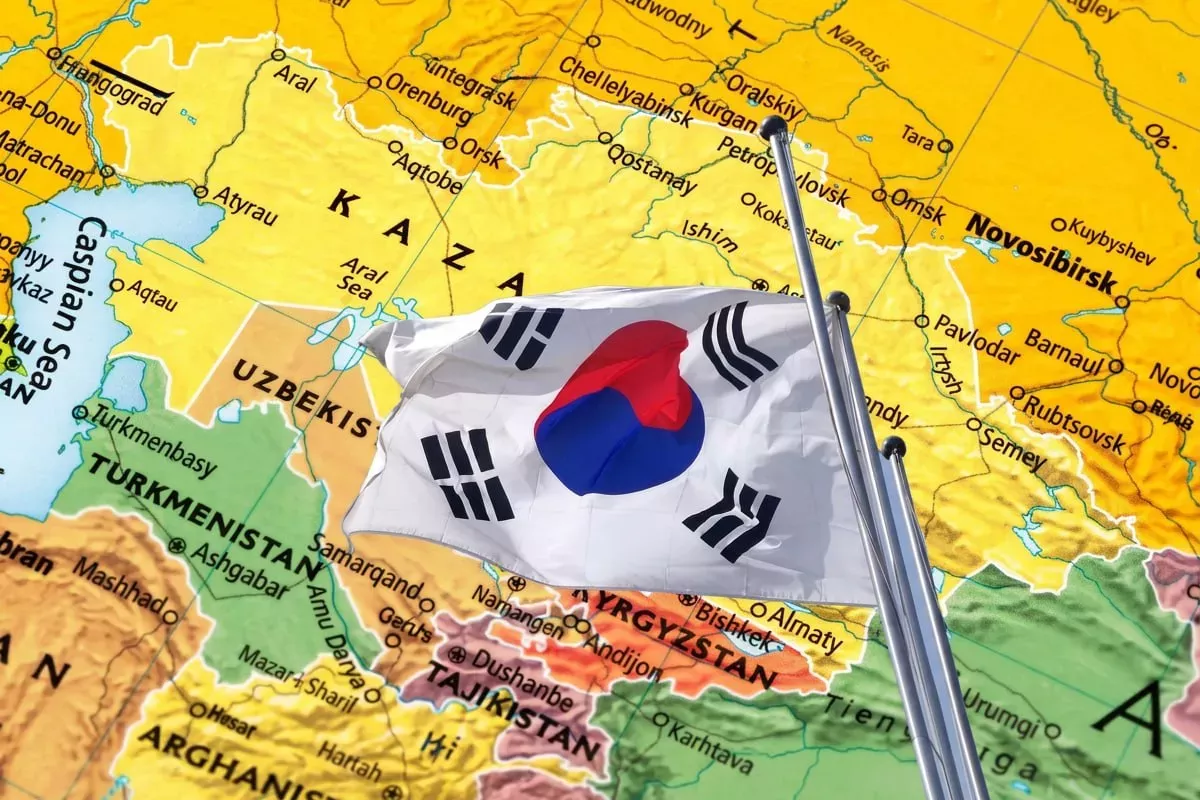
On 16 September 2026, Seoul hosted the first ever South Korea-Central Asia Summit, bringing together the leaders of Kazakhstan, Uzbekistan, Turkmenistan, Kyrgyzstan and Tajikistan. More than 70 agreements and memorandums were signed during the three-day summit, covering energy, mining, infrastructure, technology and investment. The countries also agreed to establish a regular summit format, with meetings to be held every two years. Kazakhstan will host the next summit in 2028.
But the number of agreements is less important than the sectors in which Seoul is seeking cooperation. South Korea is focusing on critical minerals, nuclear energy, manufacturing, artificial intelligence, digitalisation and new production chains.
This means that South Korea’s interest in Central Asia is becoming more than a diplomatic initiative. It is evolving into a long-term economic strategy.
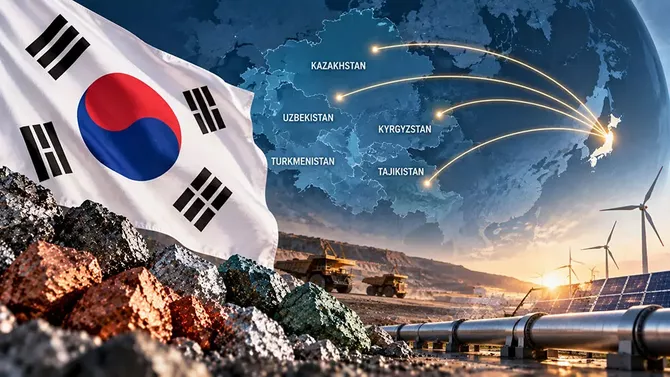
photo: Kitco
Trade Remains Far Smaller Than China’s and Russia’s
The scale of South Korea’s presence can be seen in the numbers.
In 2025, South Korea’s trade with the five Central Asian countries totalled $5.7 billion. Central Asian exports to South Korea accounted for around $1 billion, while imports from South Korea reached approximately $4.7 billion.
By comparison, China’s trade with Central Asia exceeded $100 billion for the first time in 2025, reaching $106.3 billion. Chinese exports to the region amounted to $71.2 billion, while imports from Central Asia reached $35.1 billion.
Russia also maintains a significantly larger trade relationship with the region. In 2025, Russian trade with the five Central Asian countries approached $50 billion. Kazakhstan and Uzbekistan alone accounted for approximately $27.4 billion and $13 billion respectively.
South Korea therefore remains far behind China and Russia in terms of trade volume.
But this is also the defining feature of Seoul’s strategy: it is seeking to compete not through the sheer size of trade, but through technology, investment and the integration of Central Asia into global manufacturing and supply chains.
photo: getty images
Kazakhstan and Uzbekistan Are Seoul’s Main Partners
Almost 87% of South Korea’s trade with Central Asia in 2025 was concentrated in Kazakhstan and Uzbekistan.
Kazakhstan accounted for $3.2 billion, or about 56% of South Korea’s regional trade. Uzbekistan accounted for $1.7 billion, or more than 30%. Kyrgyzstan accounted for $508 million, Tajikistan for $196 million and Turkmenistan for $45.2 million.
The investment figures are even more revealing.
In 2025, South Korean investment and loans to the five Central Asian countries exceeded $1.5 billion. Kazakhstan received around $1 billion, while Uzbekistan received approximately $474.5 million. More than 1,700 companies with South Korean capital are now operating across the region.
This means Seoul has already established an economic foundation for further expansion.

photo: Anadolu Agency
Why South Korea Needs Critical Minerals
South Korea’s main strategic interest is not simply to increase exports of cars, machinery or electronics.
Seoul also wants more reliable access to the raw materials required by its industrial economy.
Kazakhstan, Uzbekistan and other Central Asian countries possess reserves of uranium, copper, lithium, rare earth elements and other critical minerals.
At the Seoul summit, the countries agreed to develop cooperation across the entire value chain - from geological exploration and mining to processing and the production of finished goods. South Korea also proposed establishing rare-metal centres in Central Asia for joint research and specialist training.
This fundamentally changes the nature of the relationship.
Seoul is not simply seeking to purchase Central Asian raw materials. It is seeking to combine those resources with South Korean technologies for processing and manufacturing.
That model could become South Korea’s main competitive advantage in the region.
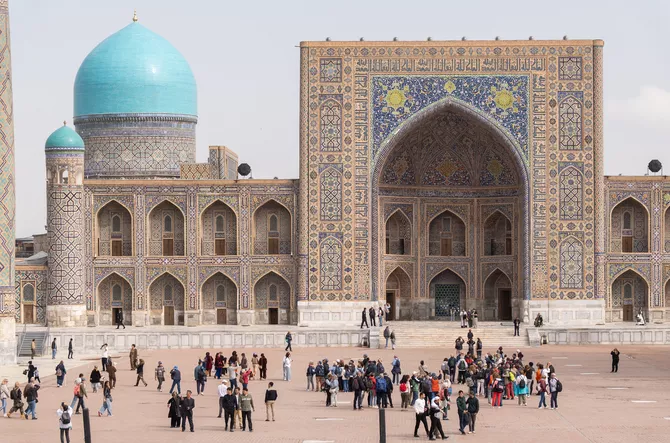
photo: adventurous kate
Uzbekistan: Korean Technology for Industrial Modernisation
Uzbekistan has a particularly strong interest in this approach.
In January-July 2026, Uzbekistan’s trade turnover with South Korea reached $1.1 billion. Uzbek exports amounted to just $37.5 million, while imports from South Korea reached $1.037 billion. During the first six months of the year, South Korean investment and loans directed into Uzbekistan’s fixed capital reached $216.4 million.
There are now around 730 companies with South Korean capital operating in Uzbekistan.
At first glance, the trade balance appears highly uneven.
However, a significant share of South Korean imports consists of machinery and technology used to modernise Uzbekistan’s industrial base. In 2025, machinery and transport equipment accounted for 60.7% of Uzbekistan’s imports from South Korea.
In other words, part of the current trade deficit is simultaneously an investment in Uzbekistan’s future production capacity.
What Is China Doing?
China retains an enormous advantage in terms of scale.
But Beijing is also accelerating the institutionalisation of its relations with Central Asia.
In June 2025, the second China-Central Asia Summit was held, bringing together President Xi Jinping and the leaders of the five Central Asian states. The countries signed the Astana Declaration and a treaty on permanent good-neighbourliness, friendship and cooperation. China also designated 2025 and 2026 as years for high-quality development of China-Central Asia cooperation.
Beijing is simultaneously expanding cooperation in manufacturing, transport infrastructure, green energy, agriculture and green minerals.
In June 2026, China and the Central Asian states held a special meeting on trade and economic cooperation in Urumqi. China said it was ready to increase imports from the region while expanding cooperation in green minerals, e-commerce, digital investment and industrial and raw material supply chains.
The most important figure is perhaps the simplest one: China-Central Asia trade has already exceeded $100 billion.
Beijing’s response therefore does not appear to be based on openly competing with Seoul. Instead, China is deepening an economic system that is already deeply established in the region.
China offers Central Asia what South Korea is only beginning to scale up: infrastructure, capital, manufacturing capacity, logistics and access to the enormous Chinese market.
At the same time, Beijing is increasingly moving beyond simple resource extraction towards processing and the creation of production chains within the region.
photo: getty images
China Is Strengthening Its Position in the Same Sectors
Kazakhstan provides a particularly revealing example.
On 22 September, just days after the South Korea-Central Asia summit, Chinese officials held talks in Beijing with Kazakhstan’s First Deputy Prime Minister Nurlybek Nalybayev.
The Chinese side stressed the importance of expanding cooperation in trade, investment, artificial intelligence and green minerals.
This does not mean the meeting was organised as a direct response to South Korea.
But the timing - and the overlap in strategic sectors - illustrates an important trend: China is not prepared to surrender space in the sectors that are emerging as new engines of Central Asia’s growth.
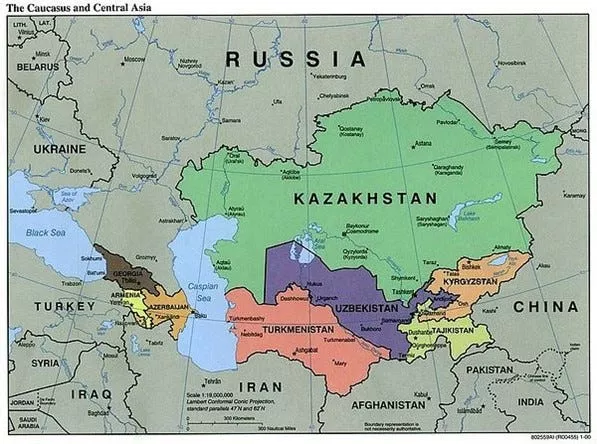
photo: Asia Sentinel
What Is Russia Doing?
Russia’s strategy is different.
Moscow does not offer the same technological proposition as South Korea, but it retains other advantages: geography, historical ties, transport infrastructure, energy, labour markets, the Eurasian Economic Union and the Collective Security Treaty Organization.
Russia is therefore seeking to preserve deep economic and institutional integration with the region.
In 2025, Russia’s trade with Central Asia reached approximately $50 billion. The portfolio of joint Kazakhstan-Russia projects includes 177 projects worth more than $55 billion, of which 122 have already been completed.
In April 2026, the foreign ministers of the Central Asian states and Russia again discussed trade, energy, transport and logistics. Particular attention was also given to security cooperation and coordination in combating terrorism, transnational crime, drug trafficking and other threats.
This is an important part of Russia’s strategy: Moscow is reinforcing not only its economic ties but also its political and security relationships.
The result is three distinctly different models of engagement.
South Korea: technology + investment + manufacturing.
China: infrastructure + capital + trade + manufacturing + critical minerals.
Russia: energy + trade + transport + security + labour migration + institutional integration.
Is a New Competition for Central Asia Emerging?
It would be premature to describe the situation as direct confrontation between South Korea, China and Russia.
Seoul’s trade volumes remain significantly smaller, and its political presence in the region is much more limited.
But the nature of the competition is changing.
South Korea is offering Central Asia precisely what the region increasingly needs: access to advanced industrial technologies and global manufacturing chains.
China is strengthening its own programmes in industrial cooperation, digital trade and mineral processing.
Russia is reinforcing trade and economic ties, transport links and political and security mechanisms.
At the same time, the Central Asian states themselves are gaining greater room for manoeuvre.
They can increasingly choose between different sources of capital, technology and markets rather than relying predominantly on a single external power.
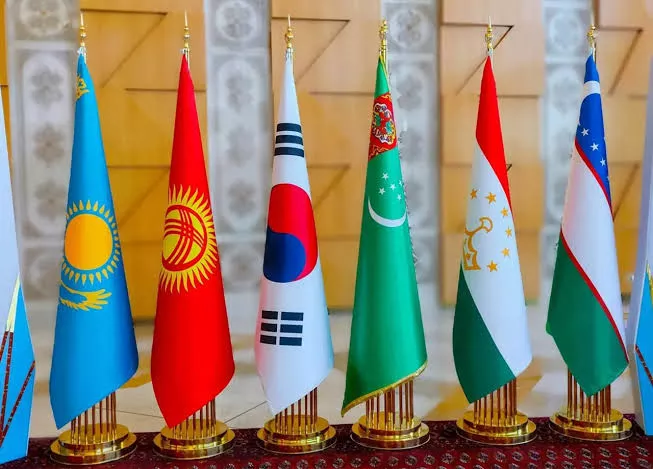
photo: The Astana Times
Central Asia Is Becoming a Multi-Vector Economy
The most important change is not simply that South Korea is “entering” Central Asia.
The deeper transformation is that Central Asia itself is becoming increasingly open to competition among external partners.
China is already the region’s largest economic player. Russia retains significant political, economic and security influence. But South Korea, the European Union, Türkiye, the Gulf states, Japan and the United States are becoming increasingly active alongside them.
That is why the first South Korea-Central Asia Summit should be viewed as part of a much broader process.
Central Asia is gradually moving from a region where Russia and China were the dominant external players toward becoming one of the key arenas of global competition for critical minerals, technology, industrial production, energy and transport routes.
For Kazakhstan, Uzbekistan and the other Central Asian states, this creates new opportunities.
But it also raises a fundamental question: can they use the growing interest of outside powers to accelerate their own industrialisation - or will they remain primarily suppliers of raw materials for other countries’ production chains?
The answer will determine whether the current international interest in Central Asia becomes another geopolitical cycle - or the beginning of a genuinely new economic era.
By Anar Musayev