Central Asia’s place in Azerbaijan’s contemporary foreign policy is linked, above all, to the new geopolitical significance of the country’s geographic position. Although geographically located in the South Caucasus, Azerbaijan’s historical and cultural ties, linguistic and civilizational connections, transport infrastructure, energy policy, and position on the Caspian Sea also make it the western link in Central Asia’s political and economic system. In other words, Azerbaijan is more than a South Caucasian state: it is an active participant in a wider geopolitical space where the Caucasus, Central Asia, the Middle East, the Black Sea basin, and Europe intersect.
President Ilham Aliyev has stated that Azerbaijan and the countries of Central Asia form a ‘single historical, cultural, geographical and geopolitical space,’ characterizing the Caspian Sea less as a physical barrier than as a symbol of strategic unity, economic potential, and historical co-operation 1. This perspective reflects a conceptual shift in Azerbaijan’s regional policy: the Caspian is no longer a boundary separating regions but a principal line of communication enabling their economic and political integration. Several interrelated factors determine Central Asia’s importance for Azerbaijan. First, the region gives Azerbaijan strategic depth to the east of the Caspian and access to Asian markets, including China. Second, the growing economic potential of Kazakhstan, Uzbekistan, Turkmenistan, Kyrgyzstan, and Tajikistan makes Azerbaijan a natural partner in their transport, energy, and investment projects. Third, the Central Asian states’ need for alternative export and transit routes enhances the regional importance of Azerbaijan’s port, railway, road, shipping, and energy infrastructure. Fourth, stronger political coordination among the Turkic states expands Azerbaijan’s room for maneuver in the region.
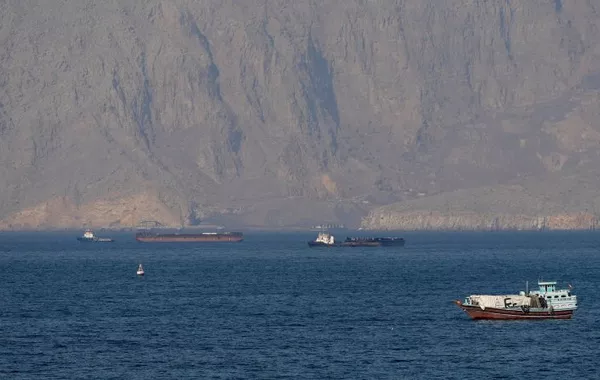
Azerbaijan’s importance to Central Asia is equally fundamental. With no direct access to the world’s oceans, the states of the region need reliable and diversified routes to external markets. In this respect, Azerbaijan is one of the shortest strategic bridges for transporting Central Asian goods toward Europe via the Caspian Sea, the Baku International Sea Trade Port, the Baku-Tbilisi-Kars railway, and Türkiye. Azerbaijan’s existing transport infrastructure also offers Central Asian states alternative routes not only westward but toward Iran, the Persian Gulf, the Black Sea basin, and the Mediterranean. A number of international institutions likewise emphasize that the Middle Corridor is not merely a China-Europe land bridge; it is, first and foremost, an economic mechanism that expands regional trade among Azerbaijan, Kazakhstan, Georgia, and other corridor countries 2.
This mutual importance has become more apparent since 2022. Disruptions to global supply chains, heightened political and commercial risks associated with traditional northern routes amid the Russia-Ukraine war, rising demand for alternative links between Europe and Asia, and states’ desire to reduce their dependence on particular transport routes have all intensified interest in the Trans-Caspian route. Yet it would be mistaken to regard the Middle Corridor’s significance as merely a temporary consequence of geopolitical crisis. The long-term character of infrastructure projects, growing freight volumes, port expansion, and the development of common tariff arrangements and digital customs mechanisms indicate that the route is gradually becoming a durable regional economic system.
Another important reason for Azerbaijan’s growing attention to Central Asia is the principle of geographic and political diversification in its foreign policy. By developing relations simultaneously with Europe, the United States, Türkiye, Russia, China, the Middle East, and Central Asia, Baku seeks to avoid unilateral dependence on any one center of power. From this perspective, Central Asia is, for Azerbaijan, less an arena of rivalry than a sphere of partnership in which shared interests are reconciled and the principles of sovereignty and mutual benefit prevail. The importance that Azerbaijan and the states of the region attach in their foreign policies to territorial integrity, state sovereignty, non-interference in internal affairs, and multi-vector diplomacy also increases their political compatibility.
The relations emerging between Azerbaijan and Central Asia cannot be adequately explained within the framework of conventional bilateral diplomacy. They involve functional regionalism: the formation of a common sphere of activity through transport, energy, trade, investment, digital communications, and humanitarian ties. This model does not create a supranational political union or constrain states’ sovereignty. Rather, it increases interdependence and resilience while preserving each country’s independent foreign policy. Taken together, relations between Azerbaijan and Central Asia may be characterized by geopolitical and geoeconomic complementarity.
The countries of Central Asia possess energy resources, critical raw materials, agricultural products, industrial goods, and expanding consumer markets. Azerbaijan, in turn, has developed port, shipping, railway, and energy infrastructure capable of facilitating the westward movement of these resources. Central Asia’s production and export potential is thus complemented by Azerbaijan’s transit capacity. For Azerbaijan, the growth of transit freight not only raises port and railway revenues but also creates conditions for the development of warehousing, insurance, customs services, freight forwarding, ship repair, industrial zones, and value-adding processing enterprises.
Azerbaijan’s role for Central Asia is not limited to that of a transit country providing transport services. Baku also serves as a connecting platform for the region’s political and economic relations with Türkiye and Europe. The Azerbaijan-Türkiye alliance, the Baku-Tbilisi-Kars railway, the Southern Gas Corridor, and the emerging green energy route toward the Black Sea provide a multilayered infrastructure base for Central Asia’s westward integration. In this sense, Azerbaijan is more than a geographic passage for Central Asia: it is a strategic gateway to the economic and political space of Türkiye and Europe.
Explaining the rapprochement between Azerbaijan and the Central Asian countries solely in terms of geopolitical and economic interests does not fully capture the nature of their relations. Among the principal foundations of interstate cooperation are the peoples’ shared historical memory, common spiritual values, religious and cultural affinity, and social trust. While material interests make political partnership necessary, cultural and spiritual affinity gives that partnership social legitimacy and longevity.
The peoples of Azerbaijan, Kazakhstan, Kyrgyzstan, Uzbekistan, and Turkmenistan speak languages of the Turkic family and share ethnic and cultural roots, mythological and literary heritage, and similar customs and traditions. This affinity functions as a form of ‘soft infrastructure’ in the development of political relations. Communication in the same or closely related languages, shared historical figures and literary heritage, the Novruz tradition, a connection to Islamic civilization, hospitality, and family values help societies accept cooperation initiatives advanced by their governments.
One of the clearest indications of the importance Azerbaijan attaches to Central Asia is the substantial strengthening in recent years of the treaty and legal basis of its bilateral relations. Azerbaijan has now established relations at the level of strategic partnership or alliance with every state in the region. In addition to ensuring continuity in political dialogue, these documents provide a legal and political framework for cooperation in transport, energy, investment, security, defense, humanitarian affairs, and international organizations. By around mid-2026, Azerbaijan had established alliances with Kazakhstan, Uzbekistan, and Kyrgyzstan, and strategic partnerships with Tajikistan and Turkmenistan. This architecture demonstrates Baku’s transition from episodic diplomacy toward a systematic, long-term regional policy. Although the alliance and strategic partnership documents were signed in different years, their recent activation and supplementation with new mechanisms form part of a coherent regional course.
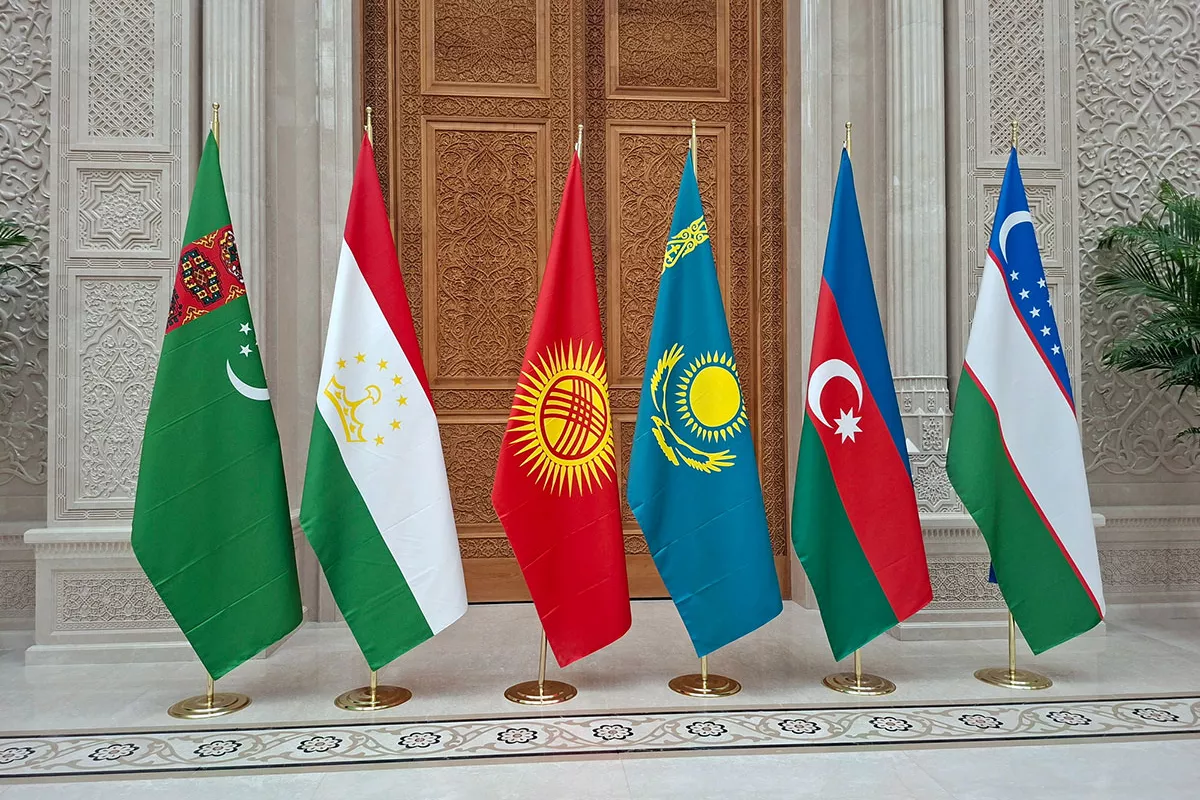
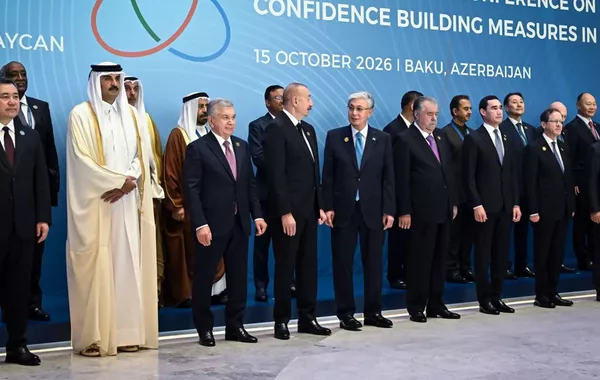
A new phase in Azerbaijan-Central Asia relations is also associated with Azerbaijan’s inclusion in the format of the Consultative Meetings of the Heads of State of Central Asia. President Ilham Aliyev participated in this format as a guest of honor for the first time in Dushanbe in 2023 and for a second time in Astana in 2024. At the Seventh Consultative Meeting, held in Tashkent in November 2025, a decision was made on Azerbaijan’s full participation in the format 3. Accordingly, the 2026 Cholpon-Ata meeting was not Ilham Aliyev’s first participation in the format overall, but his first as a full member. An informal meeting of the heads of state of Azerbaijan and the Central Asian countries took place in Cholpon-Ata, Kyrgyzstan, on 31 July 2026. The presidents of Azerbaijan, Kazakhstan, Kyrgyzstan, Uzbekistan, Tajikistan, and Turkmenistan participated, and the Cholpon-Ata Declaration was signed at its conclusion. The representation of six states in a single format may be viewed in political and analytical discourse as the emergence of a ‘C6’ configuration-the five Central Asian states and Azerbaijan. For now, however, the term denotes a platform for consultation and coordination among heads of state, rather than a supranational organization.
The broader significance of the Cholpon-Ata meeting lies in Azerbaijan’s departure from the status of an external partner or guest in Central Asian cooperation. Baku is no longer merely a neighbor connected to the region across the Caspian; it is a full participant in its political consultations, transport policy, energy strategy, and humanitarian agenda. Azerbaijan’s inclusion in this format demonstrates a change in the political meaning of geography: contemporary regional systems are defined not only by land borders but also by transport, energy and digital networks, and shared interests.
Developments between Azerbaijan and Central Asia indicate the emergence of a new regional order. A defining feature of this order is the close interconnection of geopolitics and geoeconomics. Strategic partnership and alliance agreements reinforce transport and investment projects with political commitments; the Middle Corridor and energy cables, in turn, sustain political rapprochement through concrete economic interests. Cultural and spiritual affinity generates public trust and legitimacy for these processes. The success of Azerbaijan’s policy toward Central Asia also depends on maintaining balanced relations with every state in the region. Ethnic and linguistic affinity with Turkic-speaking states is an important advantage for cooperation, but regional policy should not be confined to Turkic solidarity. The strategic partnership with Tajikistan demonstrates Azerbaijan’s more inclusive approach. This approach regards Central Asia as a space of shared security, transport, economic development, and civilizational connections rather than one defined by ethnic boundaries. The overall trajectory of these developments therefore supports the conclusion that Azerbaijan and Central Asia are gradually becoming an integrated geopolitical and geoeconomic space.
Find the original article here