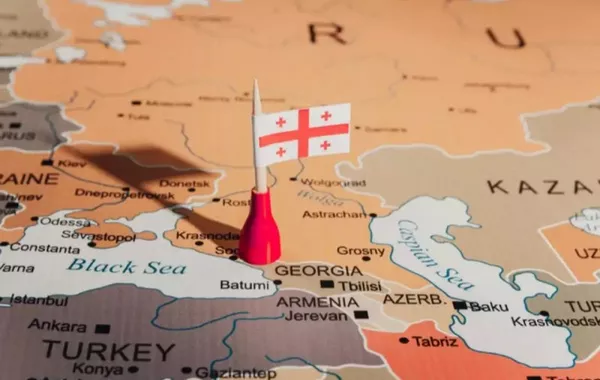
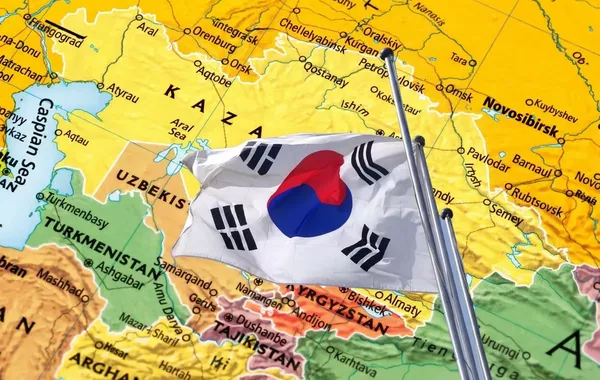
The debate over religious clothing in Azerbaijani schools raises several issues at once: freedom of religion, the right to education, school uniform requirements and the secular character of public institutions. To assess the situation accurately, it is important to distinguish between the content of adopted regulations and their application in practice, while also considering the experience of other countries.
Azerbaijan is not the only predominantly Muslim country to restrict religious elements in school attire. Similar requirements exist in Kazakhstan and Uzbekistan. In Tajikistan, restrictions are broader and extend beyond the education system. However, the existence of comparable rules does not mean that the legal situations in these countries are identical.

photo: getty images
What has changed in Azerbaijan
On 21 September 2026, Azerbaijan’s Cabinet of Ministers amended the requirements governing student clothing in state general education institutions. Under the resolution, additional clothing elements that undermine the uniformity of the prescribed school dress code or conflict with the principle of secular general education are not permitted. At the same time, school pedagogical councils may authorise the wearing of national clothing and its elements during events dedicated to history, culture, and national and spiritual values.
The word “hijab” is not explicitly mentioned in this provision. It is therefore more accurate to refer to school uniform requirements and the secular nature of education, while considering separately how these rules may apply to religious headscarves.
In July 2026, amendments were also made to the Law on General Education, requiring students and teachers in state schools to comply with clothing requirements. The law stipulates that requirements for teachers are determined separately. Consequently, rules concerning female students cannot automatically be applied to female teachers.
This distinction has practical significance. A report that a student was denied access to classes, a decision concerning a teacher, and the wording of a regulatory document are different matters, each requiring separate verification.
Kazakhstan: restrictions through school uniform rules
n Kazakhstan, mandatory school uniform requirements are set out in Order No. 26 of the Ministry of Education and Science, dated 14 January 2016. The document prohibits the inclusion of clothing elements reflecting religious affiliation in school uniforms. This provision serves as the basis for restricting students’ wearing of the hijab.
Kazakhstan’s approach is linked to the secular nature of its education system. The rule is framed as applying to all religious denominations, although public debate most often focuses on the Islamic headscarf.
Disputes over its enforcement nevertheless continue. In September 2026, conflicts were reported between schools and families who objected to requirements that students remove their hijabs. This demonstrates that the existence of a formal rule does not, in itself, resolve questions concerning children’s access to education or the procedures for settling disagreements.
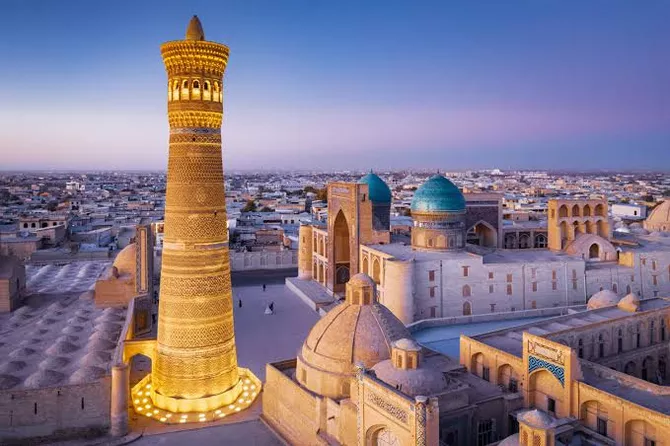
photo: getty images
Uzbekistan: religious elements explicitly listed
In Uzbekistan, official uniform requirements for students in state schools require them to remain inside school buildings without headwear, except during certain events. The document also explicitly prohibits the inclusion in school uniforms of elements reflecting religious or confessional affiliation. Examples listed include the hijab, kippah and other religious attributes.
In terms of wording, Uzbekistan’s rules are more specific than Azerbaijan’s September 2026 resolution: the hijab is explicitly mentioned. At the same time, a comparison of the legal documents alone does not establish that these requirements are enforced in the same way across different schools.
For comparison with Azerbaijan, the key point is the regulatory mechanism itself: both countries impose clothing requirements in state general education institutions.
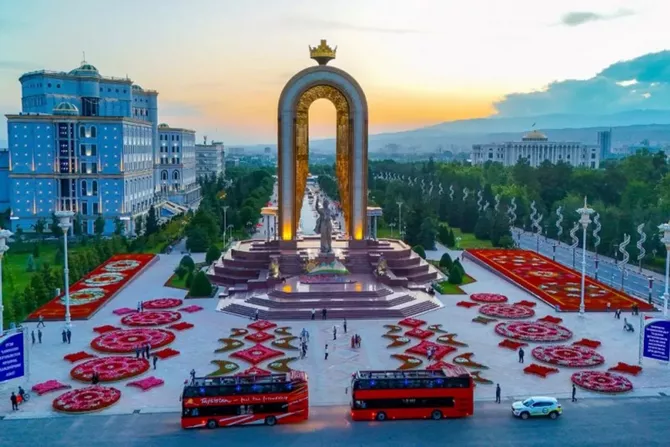
photo: getty images
Tajikistan: restrictions extend beyond schools
In Tajikistan, restrictions on religious clothing in educational institutions have existed for many years. In 2024, the country adopted legislation banning the import, sale, promotion and wearing of clothing deemed “alien to national culture”. This wording has been applied to the hijab.
The Tajik case differs in scope. It involves broader regulation of clothing, whereas the Azerbaijani resolution under discussion applies to students in state schools.
For this reason, grouping all such measures under the single label of a “hijab ban” is not sufficiently precise. It is necessary to specify where a restriction applies, whom it affects and which legal document it is based on.
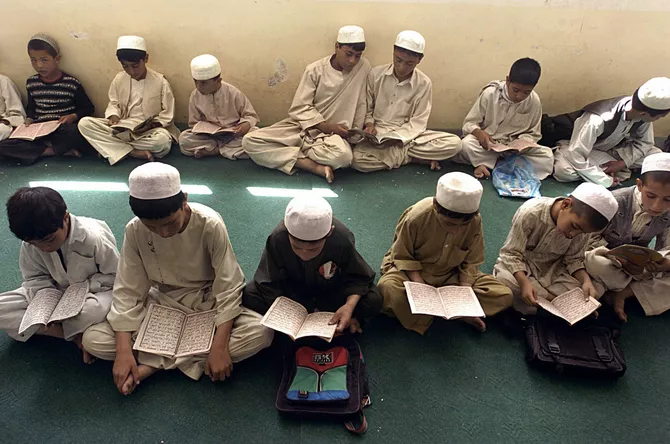
photo: getty images
What the comparison shows
The experience of the three Central Asian countries confirms that restrictions on religious clothing in educational settings exist in societies with predominantly Muslim populations. Azerbaijan’s requirements are therefore not an isolated phenomenon.
However, international comparison does not replace an assessment of a specific measure. Such an assessment depends on the clarity of the rules, consistency in their enforcement, the availability of appeal procedures and the consequences for children’s education.
Supporters of restrictions view a uniform dress code as a way to preserve the secular character of schools and maintain a common environment for students. Opponents point to freedom of religion and the risk that disputes over clothing may result in missed classes or interruptions to education. This debate cannot be reduced solely to the state’s attitude towards religion.
In Azerbaijan’s case, the most accurate conclusion is that the country has clarified its school clothing requirements by linking them to uniformity and the secular nature of education. Comparable mechanisms exist in Kazakhstan and Uzbekistan, while Tajikistan applies broader restrictions.
Any further assessment of Azerbaijani practice will depend on specific decisions made by schools and the procedures through which they are reached. These circumstances, alongside the text of the legislation, make it possible to discuss the issue substantively, without political slogans or sweeping generalisations.