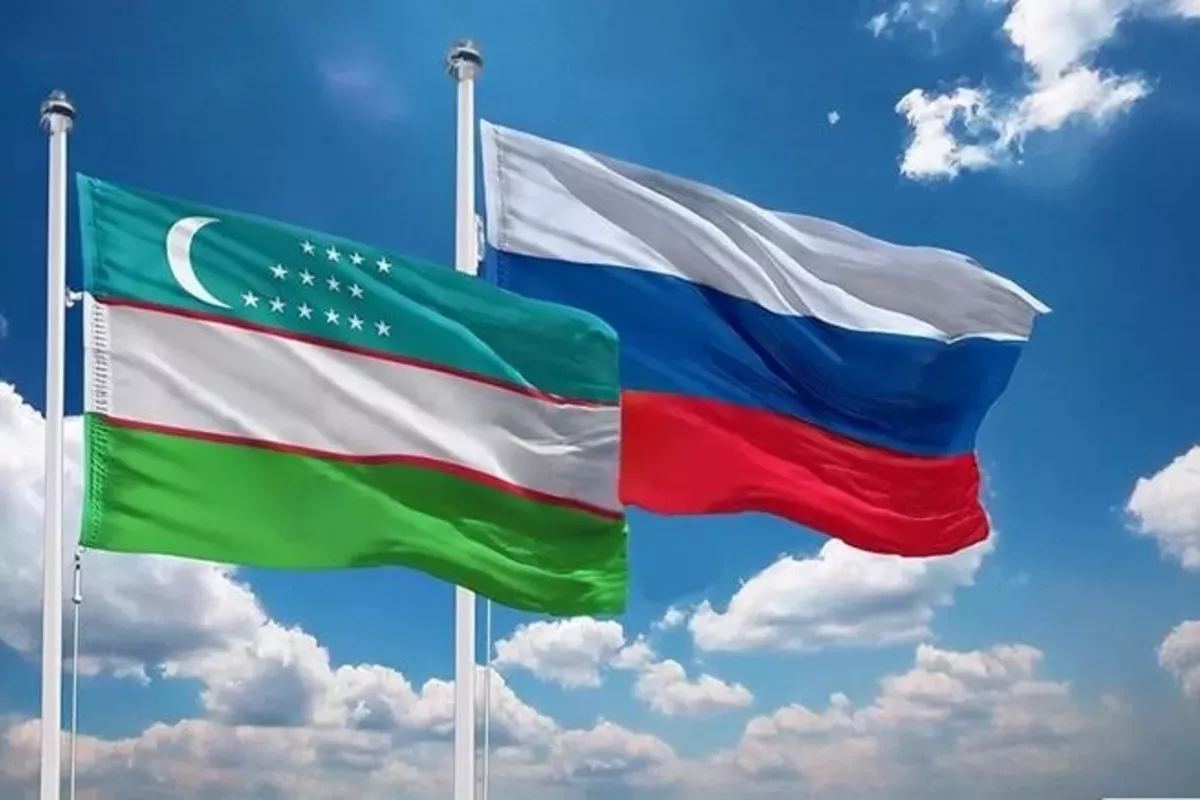
Russia’s announcement that it is seeking to create direct land communication routes with Uzbekistan reflects more than a transport upgrade. It signals a broader strategic effort to reshape logistics networks across Eurasia at a time when global trade routes are being reconfigured by sanctions, shifting alliances, and competition over connectivity corridors. The proposal was outlined by Russian Deputy Prime Minister Marat Khusnullin during the 16th International Economic Forum “Russia - Islamic World: KazanForum,” where he emphasized both historical travel challenges and future infrastructure ambitions.
Khusnullin recalled his earlier travel experiences to Tashkent by Kamaz truck, noting that parts of the route lacked proper roads. Against this backdrop, he stated that Russia would “strive to create direct land communication routes between our countries.” The issue was also discussed during a working meeting with Uzbekistan’s Deputy Prime Minister Jamshid Khodjaev, with a focus on transport infrastructure, trade facilitation, and the development of the International North-South Transport Corridor. According to reports, trade turnover between the two countries is growing, with around 80 Russian regions involved in cooperation and more than 3,000 enterprises with Russian capital operating in Uzbekistan. Russian investment in the Uzbek economy exceeds 4 trillion rubles ($54.6 billion), underscoring the scale of economic interdependence already in place.
Infrastructure as a Tool of Geopolitical Adaptation
Russia’s emphasis on direct land routes to Uzbekistan must be understood within the context of broader geopolitical constraints and adaptation. Since 2022, Russia has faced significant restrictions on access to Western markets and logistics systems, prompting a structural reorientation toward Asia and the Global South. In this environment, Central Asia-particularly Uzbekistan-has gained importance as both a transit hub and an economic partner.
The proposed land route is not merely about road construction. It represents an attempt to secure predictable, sovereign-controlled supply chains that bypass external bottlenecks. Direct overland connectivity reduces reliance on third-country transit routes that may be subject to political pressure or infrastructural limitations. For Moscow, strengthening connectivity with Uzbekistan helps ensure that trade flows remain stable despite external sanctions pressure and shifting global logistics patterns.
Uzbekistan, for its part, occupies a central geographic position in Central Asia. It borders all other major Central Asian states and has long served as a natural corridor between Russia, China, and South Asia. By enhancing land routes, Russia effectively reinforces Uzbekistan’s role as a regional logistics hub while deepening bilateral economic dependence.
The focus on infrastructure also aligns with Russia’s broader efforts to sustain influence in post-Soviet space through economic integration rather than military or political dominance alone. Transport corridors, rail networks, and road systems have become key instruments of long-term strategic positioning, replacing earlier models of direct political control.
The North-South Corridor and Competing Connectivity Projects
A central element of the discussions between Russian and Uzbek officials was the International North-South Transport Corridor (INSTC), a multi-modal network designed to connect Russia with the Indian Ocean via Iran and Central Asia. The corridor is intended to reduce shipping times between Northern Europe, Russia, and South Asia, offering an alternative to traditional maritime routes through the Suez Canal.
Uzbekistan’s potential role in this system is increasingly significant. While it is a landlocked country, its position allows it to serve as a transit bridge linking multiple competing infrastructure initiatives. These include China’s Belt and Road Initiative, the Russia-led Eurasian Economic Union logistics framework, and emerging regional trade routes connecting South Asia with Central Asia.
Russia’s push for direct land routes to Uzbekistan can therefore be seen as part of a broader competition over connectivity architecture in Eurasia. Infrastructure corridors are no longer neutral development projects; they are strategic assets that shape trade dependencies, political influence, and regional alignments.
By strengthening bilateral land connectivity, Russia increases its leverage within this networked environment. It ensures that Uzbekistan remains integrated into Russian-led logistics systems even as it simultaneously engages with Chinese and other international initiatives. This multi-vector positioning is characteristic of Central Asia’s current geopolitical balancing act.
Economic Integration and Long-Term Regional Implications
The economic dimension of Russia’s engagement with Uzbekistan remains a key driver of the proposed transport expansion. According to reported data, trade turnover between the two countries continues to grow steadily. Around 80 Russian regions are currently involved in economic cooperation with Uzbekistan, and more than 3,000 enterprises with Russian capital operate within the country. Russian investment exceeds 4 trillion rubles ($54.6 billion), reflecting deep structural integration between the two economies.
Improved land connectivity would likely accelerate these trends by reducing transport costs, shortening delivery times, and increasing the reliability of supply chains. This would benefit sectors ranging from energy and manufacturing to agriculture and construction materials. For Uzbekistan, improved infrastructure links with Russia could support industrial modernization and export diversification, particularly as the country seeks to attract foreign investment and expand its manufacturing base.
However, deeper integration also raises questions about dependency. As Uzbekistan becomes more embedded in Russian trade and logistics networks, its economic exposure to external shocks and political pressures may increase. Balancing this relationship with parallel engagement in Chinese, European, and regional initiatives will remain a central policy challenge for Tashkent.
For Russia, the long-term implication is the consolidation of a Eurasian economic space anchored by infrastructure rather than ideology. Even as Moscow faces constraints in Western markets, it continues to build a network of interconnected regional partnerships that preserve its role as a central logistics and trade hub.
Conclusion: A Corridor Strategy for a Fragmented World
Russia’s plan to develop direct land routes with Uzbekistan reflects a broader transformation in how regional influence is exercised in Eurasia. Transport infrastructure has become a strategic instrument, shaping not only economic outcomes but also geopolitical alignment and long-term dependency structures.
The discussions at KazanForum, including the meeting between Marat Khusnullin and Jamshid Khodjaev, highlight a deliberate effort to deepen connectivity while embedding it within larger frameworks such as the International North-South Transport Corridor. With growing trade volumes, expanding investment flows, and thousands of operating enterprises, the Russia-Uzbekistan economic relationship is already substantial. Enhanced land routes would likely accelerate this trajectory.
Ultimately, the initiative reflects a shift toward “corridor geopolitics,” where roads, railways, and logistics networks define influence as much as military or diplomatic power. In this evolving landscape, Uzbekistan’s geographic position makes it a pivotal node, and Russia’s infrastructure ambitions suggest a long-term strategy aimed at preserving relevance and connectivity in a rapidly changing Eurasian order.