What are CAATSA Sanctions and What Could Lifting Them Mean for Türkiye?
US President Donald Trump's announcement that Washington intends to lift sanctions on Türkiye could mark a potential turning point in bilateral relations.
The move is expected to affect defense cooperation, the future of Türkiye's participation in the F-35 fighter jet program, and broader strategic ties between the two NATO allies.
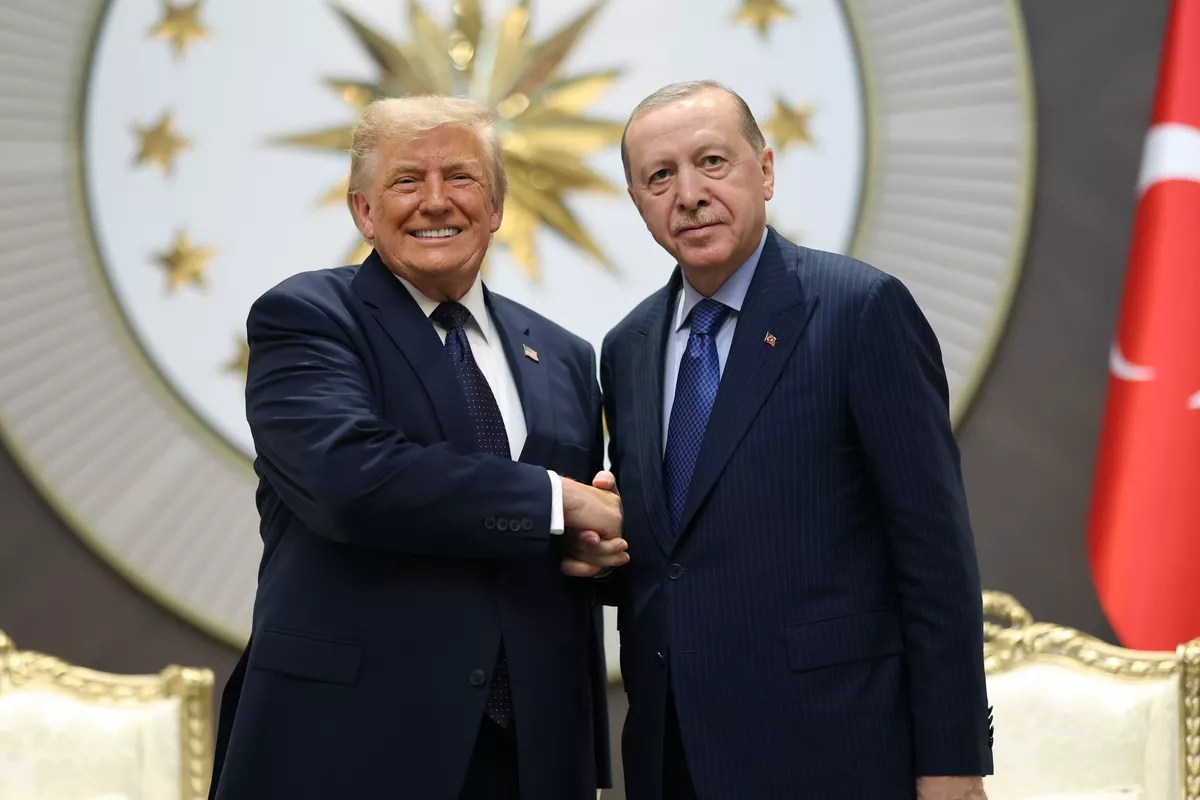
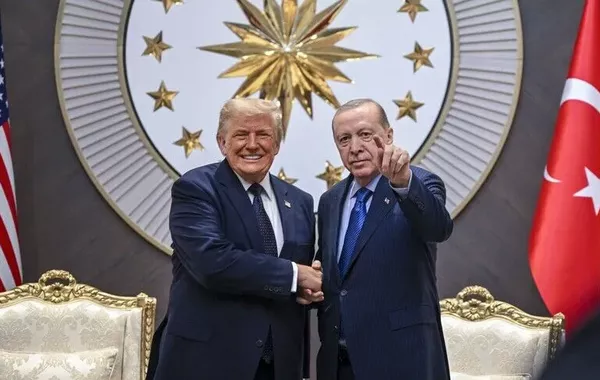
Ahead of the NATO summit in Ankara, Trump said Tuesday that the US intends to remove sanctions imposed on Türkiye under the Countering America's Adversaries Through Sanctions Act (CAATSA).
"We're going to be taking the sanctions off. It's time to do that ... We don't want to sanction friends. It's very simple," Trump told reporters before closed-door talks with Turkish President Recep Tayyip Erdogan.
Trump also said he is working with US Secretary of State Marco Rubio and Defense Secretary Pete Hegseth to finalize the decision.
The White House has not yet announced when the measures would formally be lifted or if any permanent repeal of CAATSA would require congressional action.
While the US president can modify or waive certain sanctions authorities, CAATSA is a federal law enacted by Congress in 2017, meaning permanently terminating sanctions requires procedures established under US law.
What is CAATSA?
The US imposed CAATSA sanctions on Türkiye in December 2020 after Ankara acquired the Russian-made S-400 air defense system.
The sanctions came about a year after Türkiye was removed from the F-35 fighter jet program in 2019 over US concerns that operating the S-400 alongside the F-35 could compromise the stealth aircraft's sensitive technology and interoperability within NATO.
Türkiye has consistently maintained that purchasing the S-400 was a sovereign decision aimed at strengthening its air defense capabilities.
Turkish officials have rejected US security concerns and previously proposed establishing a joint technical commission to examine the compatibility of the S-400 and F-35 systems.
What Sanctions were Imposed?
The CAATSA measures did not target Türkiye's armed forces or its broader economy.
Instead, they focused on Türkiye's Presidency of Defense Industries (SSB), the government agency responsible for managing the country's defense industry, military procurement and modernization programs, as well as several senior officials.
The sanctions included:
- A ban on US export licenses and authorizations for the SSB.
- Restrictions preventing US financial institutions from providing the SSB with loans or credits exceeding $10 million within a 12-month period.
- A prohibition on assistance from the US Export-Import Bank for exports to the SSB.
- Requirements for US authorities to oppose loans from international financial institutions that could benefit the SSB.
- Visa restrictions on designated officials.
Turkish officials criticized the sanctions as unjust and an infringement on the country's sovereignty.
Analysts say the sanctions ultimately benefited Türkiye's defense industry by accelerating investment in indigenous military technologies, including drones.
How Could Lifting Sanctions Affect Türkiye?
Analysts say removing the sanctions could provide strategic, economic and technological benefits for Türkiye.
One of the most significant outcomes could be reopening discussions on Türkiye's participation in the F-35 program.
Asked about restoring F-35 sales to Ankara, Trump said he would "certainly consider" the issue, describing Türkiye as "much more loyal than other countries."
"The F-35 is the best plane by far," Trump said, adding that the US has "an obligation" to maintain equipment sold to partners.
He also dismissed concerns over Türkiye's S-400 acquisition, saying the Turkish-US relationship is "better, probably than it's ever been."
Lifting the sanctions could restore the SSB's access to US export licenses, financing mechanisms and broader defense cooperation, potentially facilitating military procurement, technology transfers and joint defense projects.
Analysts also say ending the sanctions could remove a longstanding source of friction between Ankara and Washington, creating opportunities for closer strategic cooperation within NATO.
Find the original article here